
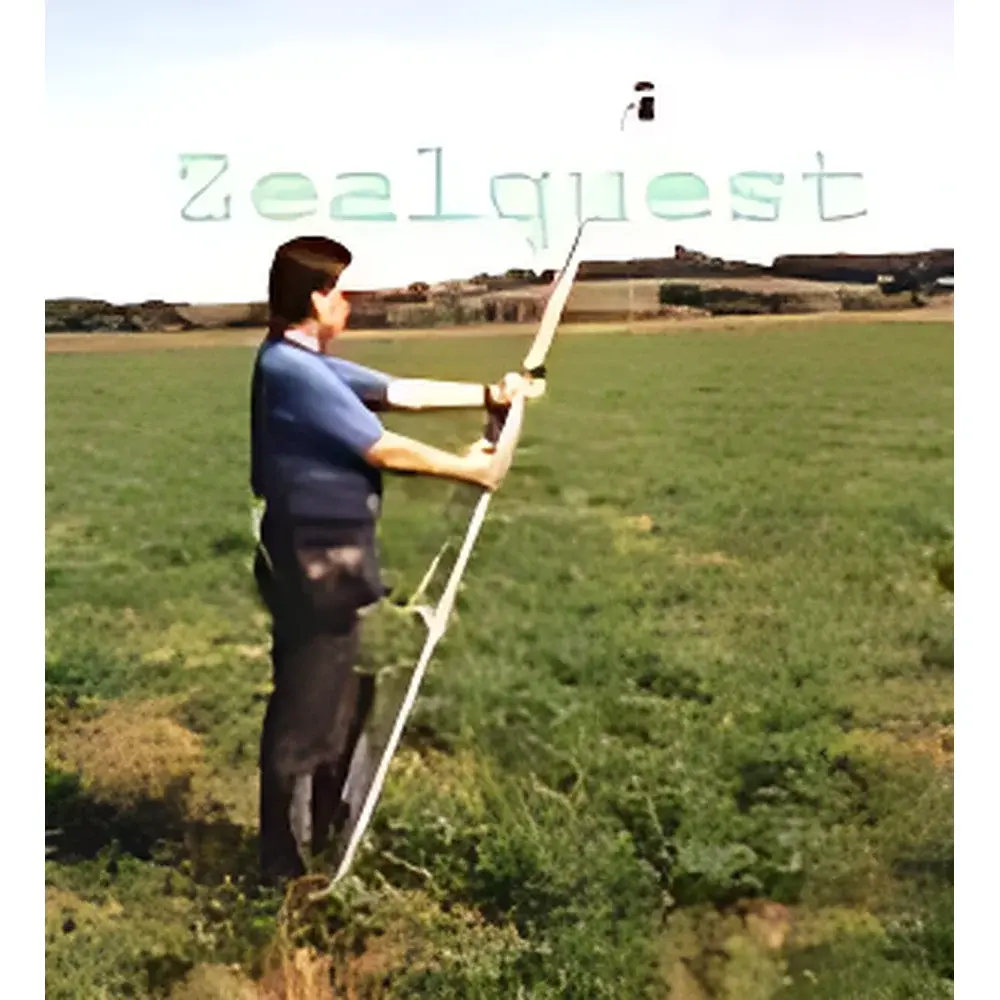
CropScan MS5 / MS87 / MS16R Multispectral Radiometer
| Origin | USA |
|---|---|
| Manufacturer Type | Authorized Distributor |
| Origin Category | Imported |
| Model | CropScan MS5 / MS87 / MS16R |
| Price | Upon Request |
Overview
The CropScan MS5, MS87, and MS16R Multispectral Radiometers are field-deployable, laboratory-calibrated optical instruments engineered for precise measurement of spectral reflectance, transmittance, and radiance across discrete bands in the visible (VIS), near-infrared (NIR), and shortwave infrared (SWIR) regions. These instruments operate on the fundamental principle of passive optical remote sensing: all natural surfaces—including vegetation—interact uniquely with incident electromagnetic radiation through absorption, reflection, scattering, and transmission. Spectral signatures derived from these interactions serve as quantitative proxies for biophysical and biochemical properties such as chlorophyll content, leaf area index (LAI), water status, nitrogen concentration, and photosynthetic efficiency. Designed specifically for agronomic and ecological field research, CropScan radiometers enable high-reproducibility ground-truthing of airborne and satellite-based remote sensing campaigns, supporting calibration/validation (Cal/Val) workflows required under NASA’s CEOS standards and ESA’s Sentinel validation protocols.
Key Features
- Three configurable models: MS5 (5-band fixed-filter), MS87 (8-band narrowband centered at discrete wavelengths), and MS16R (16-band tunable filter wheel covering 450–1750 nm)
- Optical bandwidths optimized for vegetation indices: includes canonical bands for NDVI (660 nm & 810 nm), PRI (531 nm), WI (900 nm), and SWIR-based water stress indicators (1550–1750 nm)
- Calibrated against NIST-traceable standards; factory calibration certificates provided with each unit
- Integrated cosine-corrected diffuser for hemispherical irradiance measurements compliant with ISO 9060:2018 Class C specifications
- Ruggedized aluminum housing rated IP65 for outdoor operation under variable temperature (−10 °C to +50 °C) and humidity conditions
- USB 2.0 interface with real-time spectral acquisition; compatible with Windows-based CropScan Acquisition Software v4.x
Sample Compatibility & Compliance
The CropScan radiometers are validated for use with heterogeneous natural targets including row crops (e.g., maize, soybean, cotton), forage species (alfalfa, clover), orchard canopies, and natural grassland ecosystems. Measurements adhere to ASTM E259-22 (Standard Practice for Specifying and Testing Spectral Bandpass Characteristics of Optical Instruments) and support data traceability requirements under ISO/IEC 17025:2017 for environmental testing laboratories. Instrument output is compatible with FAO’s WaPOR database structure and supports metadata tagging per CF-1.8 conventions for netCDF-based spectral datasets. All models meet electromagnetic compatibility (EMC) requirements per FCC Part 15 Subpart B and CE EN 61326-1:2013 for industrial scientific equipment.
Software & Data Management
CropScan Acquisition Software provides full control over integration time, averaging cycles, dark current subtraction, and spectral normalization. Raw digital numbers (DN) are converted to calibrated radiance (W·m⁻²·sr⁻¹·nm⁻¹) or reflectance (%) using user-supplied reference panel spectra (e.g., Spectralon® 99% diffuse reflector). Export formats include CSV, ASCII, and netCDF4, enabling direct ingestion into ENVI, QGIS, R (‘raster’, ‘spectral’ packages), and Python (‘pandas’, ‘xarray’, ‘scikit-learn’) environments. Audit trails—including operator ID, GPS timestamp, ambient temperature, and instrument serial number—are embedded in file headers to satisfy GLP-compliant documentation needs. Software supports batch processing for time-series analysis and automated index computation (e.g., NDVI, EVI, MCARI, OSAVI).
Applications
- Ground validation of UAV- and satellite-derived vegetation indices (e.g., Landsat 9 OLI-2, Sentinel-2 MSI, PlanetScope)
- Development and refinement of empirical and mechanistic crop stress models (drought, nutrient deficiency, pest infestation)
- High-throughput phenotyping in controlled-environment agriculture and field breeding trials
- Long-term ecological monitoring of land cover change, invasive species spread, and post-fire recovery dynamics
- Calibration of proximal sensors in automated irrigation systems and precision agriculture platforms
- Support for USDA ARS and EU Horizon-funded projects requiring Tier-1 in-situ spectral reference data
FAQ
What spectral range does the MS16R cover, and how is band selection performed?
The MS16R operates from 450 nm to 1750 nm using a motorized filter wheel with user-selectable interference filters; band center positions and full width at half maximum (FWHM) are defined per configuration sheet.
Is factory recalibration required annually?
Yes—annual NIST-traceable recalibration is recommended for ISO/IEC 17025 compliance; optional extended warranty includes scheduled calibration services.
Can the radiometer be mounted on a drone or tractor-mounted boom?
Yes—MS-series units include standardized ¼”-20 threaded mounting points and support external 12 V DC power; vibration-dampened brackets are available upon request.
Does the system comply with FDA 21 CFR Part 11 for electronic records?
While not a regulated medical device, the software supports electronic signature capture, audit logs, and secure user authentication—features aligned with Part 11 principles for research data integrity.
Are spectral response functions (SRFs) provided for each filter channel?
Yes—each instrument ships with measured SRFs (wavelength vs. relative transmission) in CSV format, enabling radiative transfer modeling and sensor fusion with hyperspectral libraries.







