
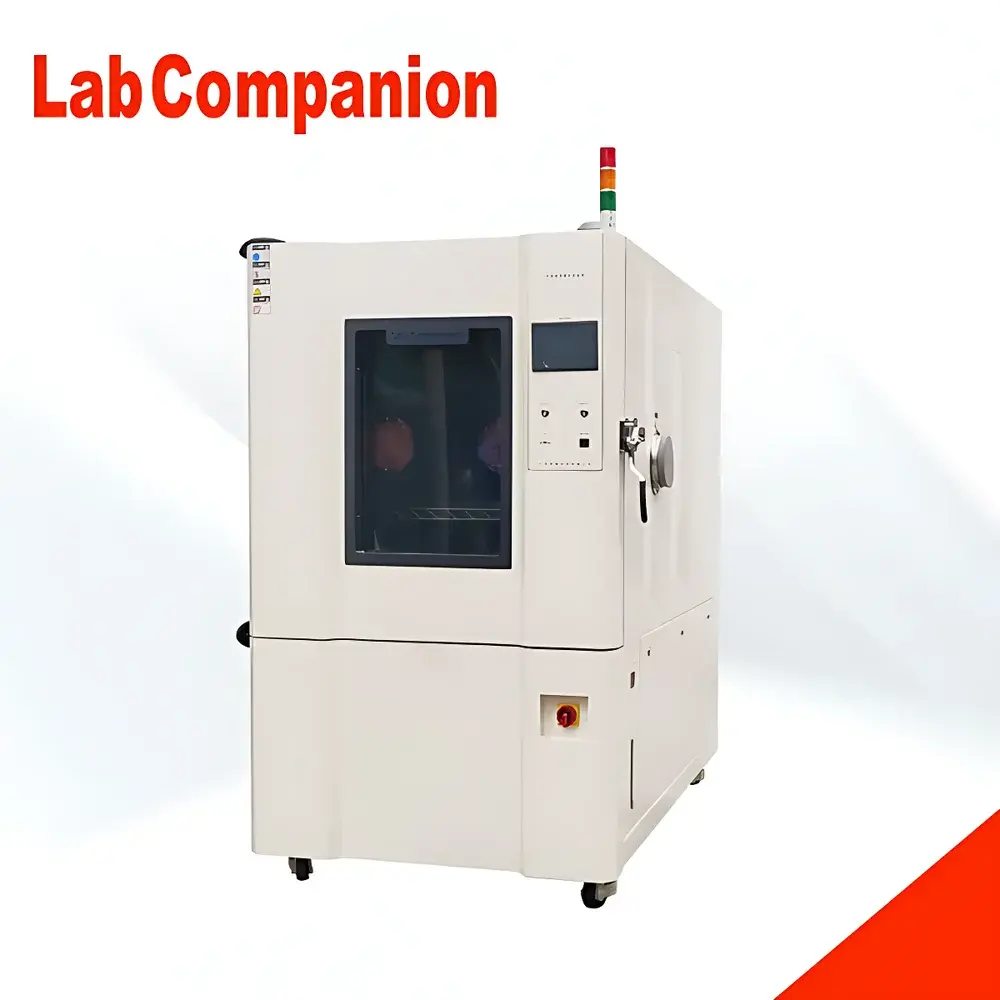
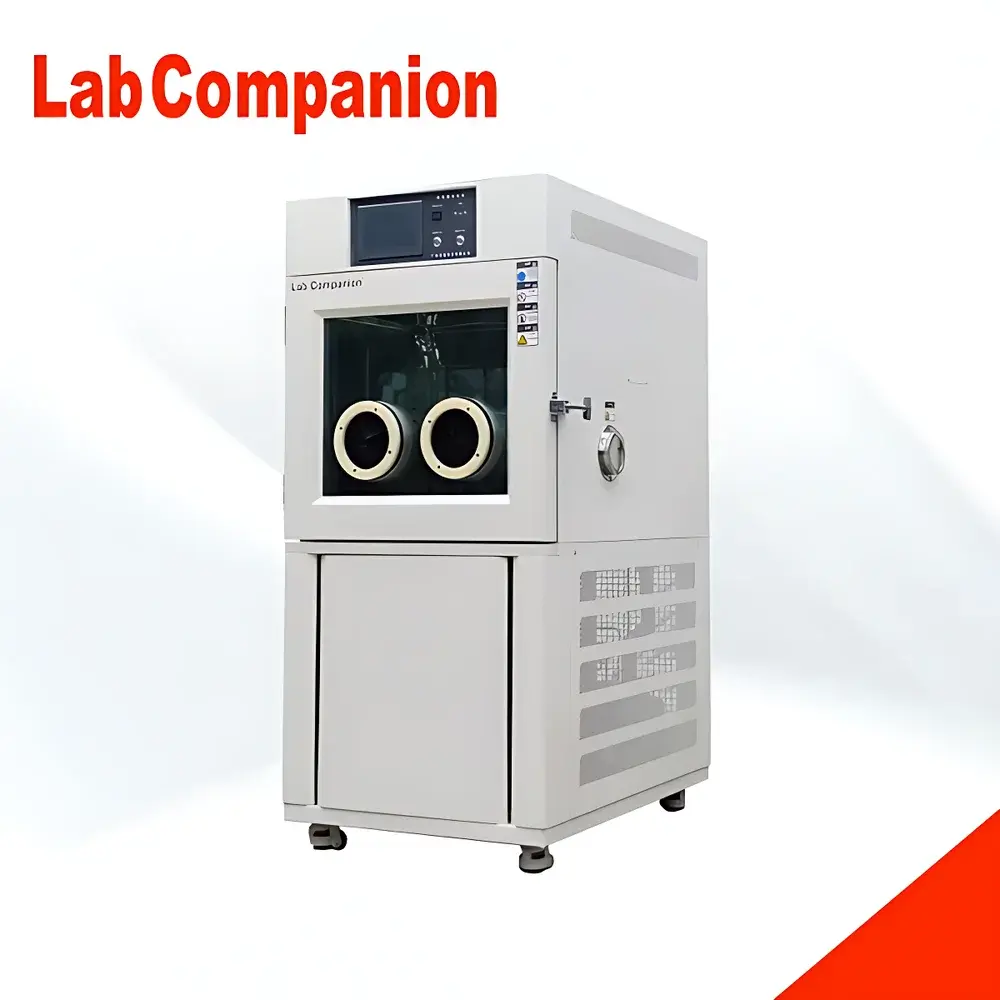
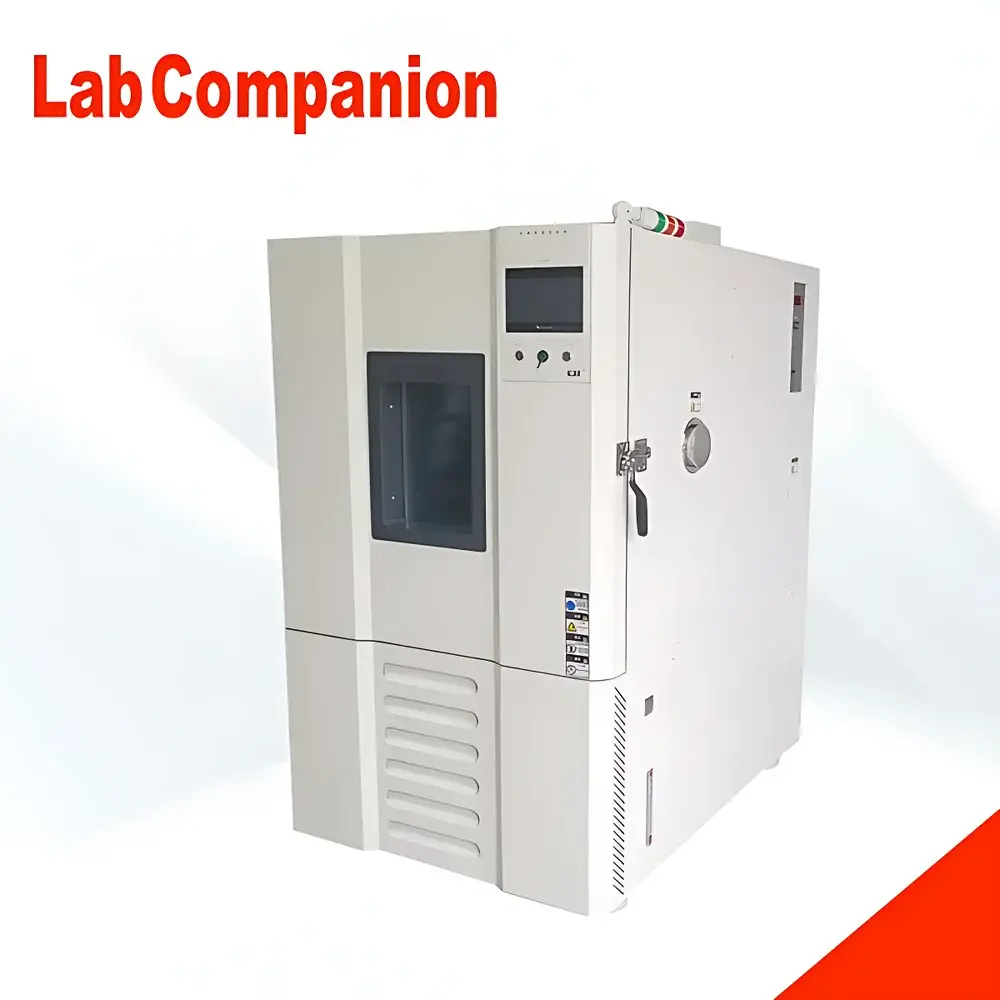
LabCompanion PHP-80 Benchtop Temperature and Humidity Controlled Environmental Test Chamber
| Brand | LabCompanion |
|---|---|
| Origin | Guangdong, China |
| Manufacturer Type | Direct Manufacturer |
| Product Category | Domestic |
| Model | PHP-80 |
| Instrument Type | Benchtop |
| Cooling Method | Air-Cooled |
| Temperature Range | 0–150 °C |
| Humidity Range | 30–98% RH |
| Internal Chamber Dimensions | 400 × 500 × 400 mm (W × H × D) |
Overview
The LabCompanion PHP-80 is a precision-engineered benchtop environmental test chamber designed for reliable, repeatable simulation of temperature and humidity stress conditions in quality control, R&D, and compliance testing environments. Based on forced-air convection thermodynamics and vapor-pressure-controlled humidification, the chamber delivers stable thermal-hygrometric profiles across its full operational range—enabling accelerated aging, material stability assessment, packaging validation, and electronic component reliability testing. Its compact footprint (400 × 500 × 400 mm internal volume), air-cooled refrigeration architecture, and dual PID-controlled heating/humidification systems make it suitable for laboratories with space constraints yet demanding metrological requirements. The unit complies with fundamental environmental test standards including IEC 60068-2-1 (cold), IEC 60068-2-2 (dry heat), IEC 60068-2-30 (damp heat cyclic), and ISO 16750-4 (road vehicles—environmental conditions), serving as a foundational tool for GLP-aligned testing workflows.
Key Features
- Stainless steel (SUS304) interior chamber with 100 mm high-efficiency insulation: polyurethane foam + ultra-fine glass fiber—minimizing thermal bridging and ensuring low heat loss.
- Double-glazed, electrically heated anti-condensation observation window (250 × 300 mm visible area) with integrated LED lighting for real-time sample monitoring without moisture interference.
- Robust air circulation system: multiple centrifugal fans drive laminar airflow through dedicated ducts containing heating elements, evaporator coils, and humidity generators—achieving ≤±0.5 °C temperature uniformity and ≤±3% RH humidity uniformity (per IEC 60068-3-5).
- Intelligent control platform: 7-inch capacitive touchscreen PLC controller (C100 series) with programmable ramp-soak profiles, data logging via USB/R232/Ethernet, and configurable alarm thresholds.
- Comprehensive safety architecture: dual-stage overtemperature protection (mechanical & electronic), compressor high/low pressure cutouts, motor overcurrent detection, phase failure and leakage protection, dry-run prevention for humidifier, and automatic water-level sensing with fail-safe shutdown.
- Benchtop form factor with castor-mounted base, reversible left/right hinged door (400 × 500 mm aperture), and two φ50 mm cable ports with silicone plugs—optimized for integration into modular lab layouts.
Sample Compatibility & Compliance
The PHP-80 accommodates a broad spectrum of non-hazardous solid and packaged samples—including PCB assemblies, polymer films, pharmaceutical blister packs, automotive sensors, and battery modules—within its 200 kg/m² uniformly distributed load capacity. Chamber materials meet RoHS Directive 2011/65/EU and UL 61010-1 electrical safety requirements. Humidification uses deionized or filtered tap water (recommended filtration: 5-stage reverse osmosis or ultrafiltration) to prevent mineral deposition in the stainless steel steam generator and capillary feed lines. All operational parameters—including setpoints, ramp rates, dwell times, and fault logs—are timestamped and exportable for audit trails compliant with FDA 21 CFR Part 11 (when used with validated software configuration) and ISO/IEC 17025 documentation protocols.
Software & Data Management
The embedded C100 controller supports up to 100 programmable test sequences, each with 99 segments (ramp/soak/humidity modulation). Real-time graphs display actual vs. target temperature and RH curves, while historical data is stored internally (≥30 days at 1-min intervals) and exportable via USB flash drive in CSV format. Optional Ethernet connectivity enables remote monitoring and integration into centralized LIMS or MES platforms using Modbus TCP protocol. Audit trail functionality records operator ID, parameter changes, alarm events, and calibration interventions—supporting traceability under GLP, GMP, and ISO 9001 quality management systems.
Applications
- Accelerated life testing of electronic enclosures and conformal coatings under combined thermal-hygrometric stress.
- Stability studies for medical device packaging per ASTM F1980 and ISO 11607-1.
- Material property evaluation: coefficient of thermal expansion (CTE), hygroscopic swelling, and dimensional stability of composites and elastomers.
- Validation of environmental conditioning protocols for battery cell cycling per UN 38.3 Section 40.3.
- Pre-conditioning of test specimens prior to mechanical or electrical performance verification (e.g., tensile strength, insulation resistance).
FAQ
What is the recommended water quality for humidification?
Deionized water or filtered tap water (≤5 ppm total dissolved solids) is required. Unfiltered municipal water causes scale buildup in the humidifier reservoir and steam nozzles, leading to inconsistent RH output and premature maintenance cycles.
Can the PHP-80 operate continuously at 150 °C and 98% RH simultaneously?
No. Maximum humidity is constrained by saturation limits at elevated temperatures; at 150 °C, the theoretical maximum RH is <1%. The specified 30–98% RH range applies within the 20–85 °C operating band per ASHRAE fundamentals.
Is external ventilation or exhaust ducting required?
No ducting is needed—the air-cooled condenser exhausts heat upward from the top panel. Ensure ≥500 mm clearance above the unit for unrestricted airflow and thermal dissipation.
Does the chamber support automated calibration verification?
Yes—via optional NIST-traceable PT100 sensor probes (not included) and built-in sensor offset adjustment functions accessible through service mode, enabling in-house verification per ISO/IEC 17025 Clause 6.5.
What is the minimum ambient condition for safe operation?
Ambient temperature must be maintained between 5 °C and 35 °C with relative humidity ≤85% RH and atmospheric pressure 86–106 kPa. Operation outside this envelope may compromise refrigerant cycle efficiency and humidity control accuracy.
Related Products



