
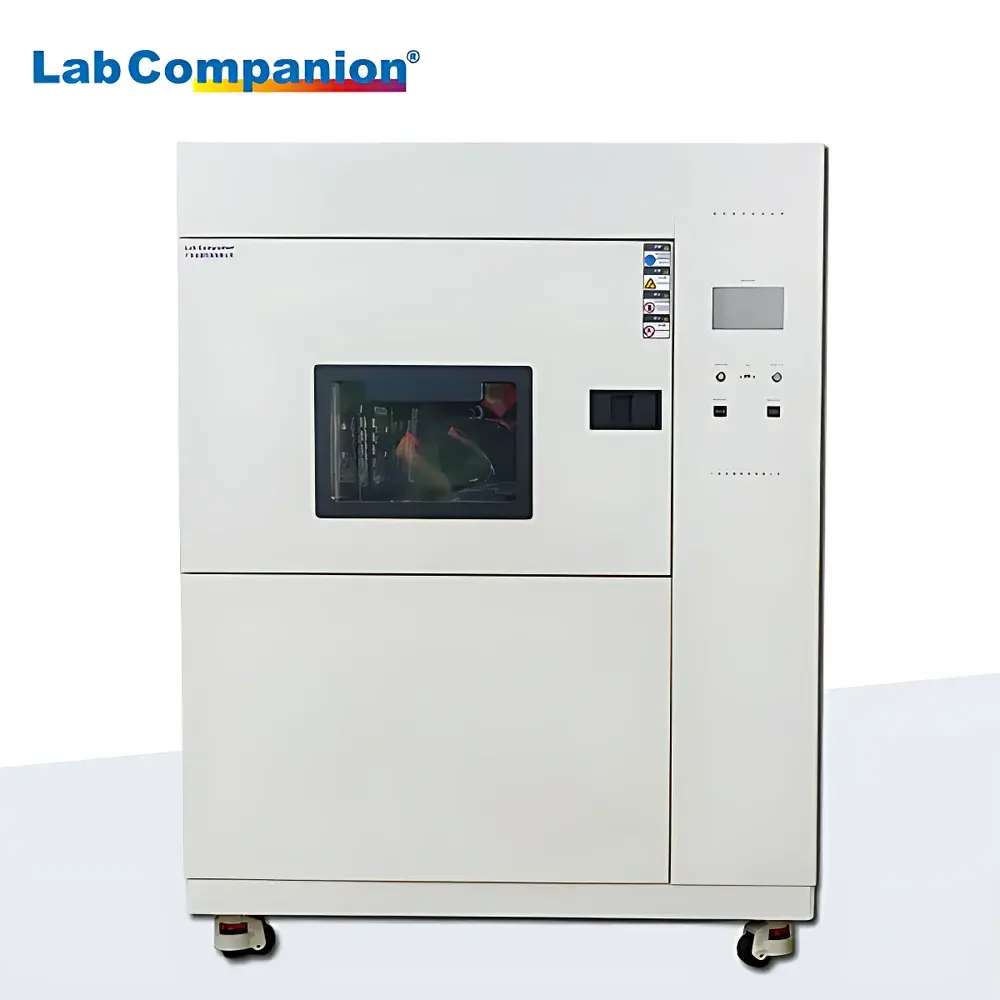
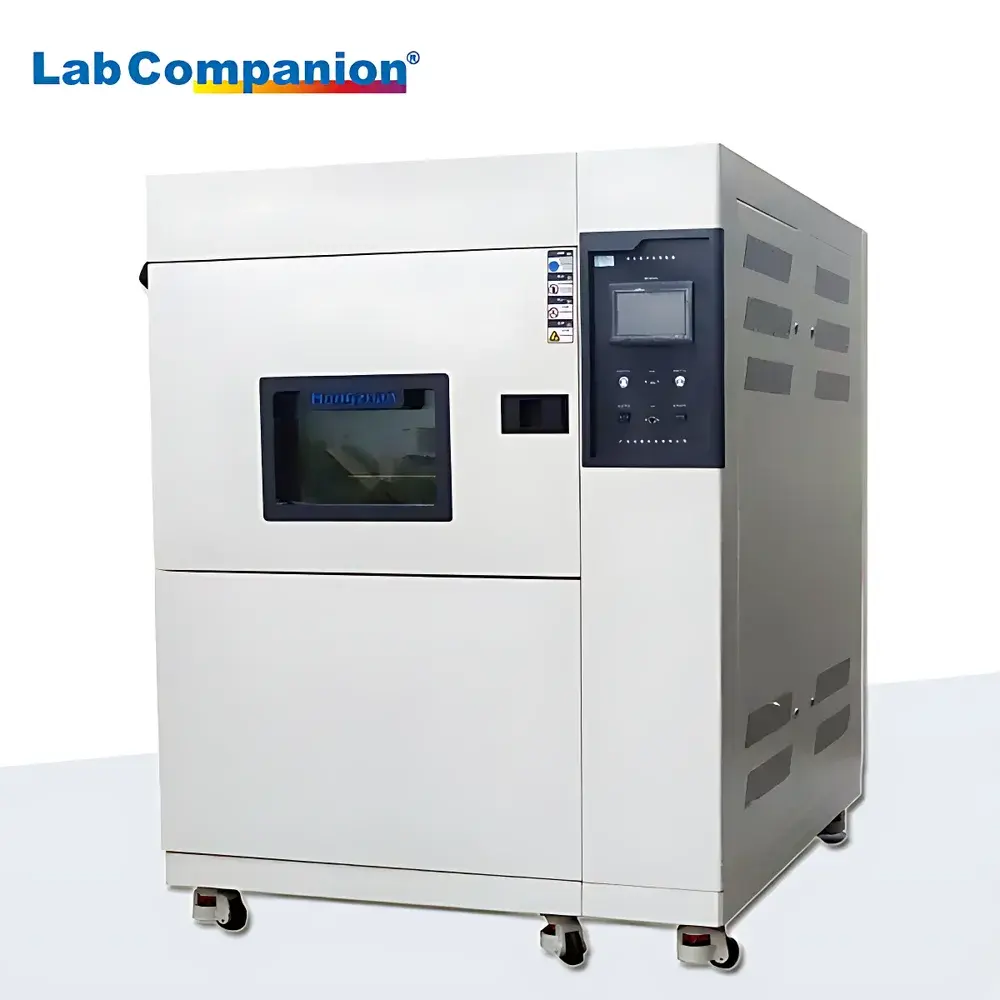
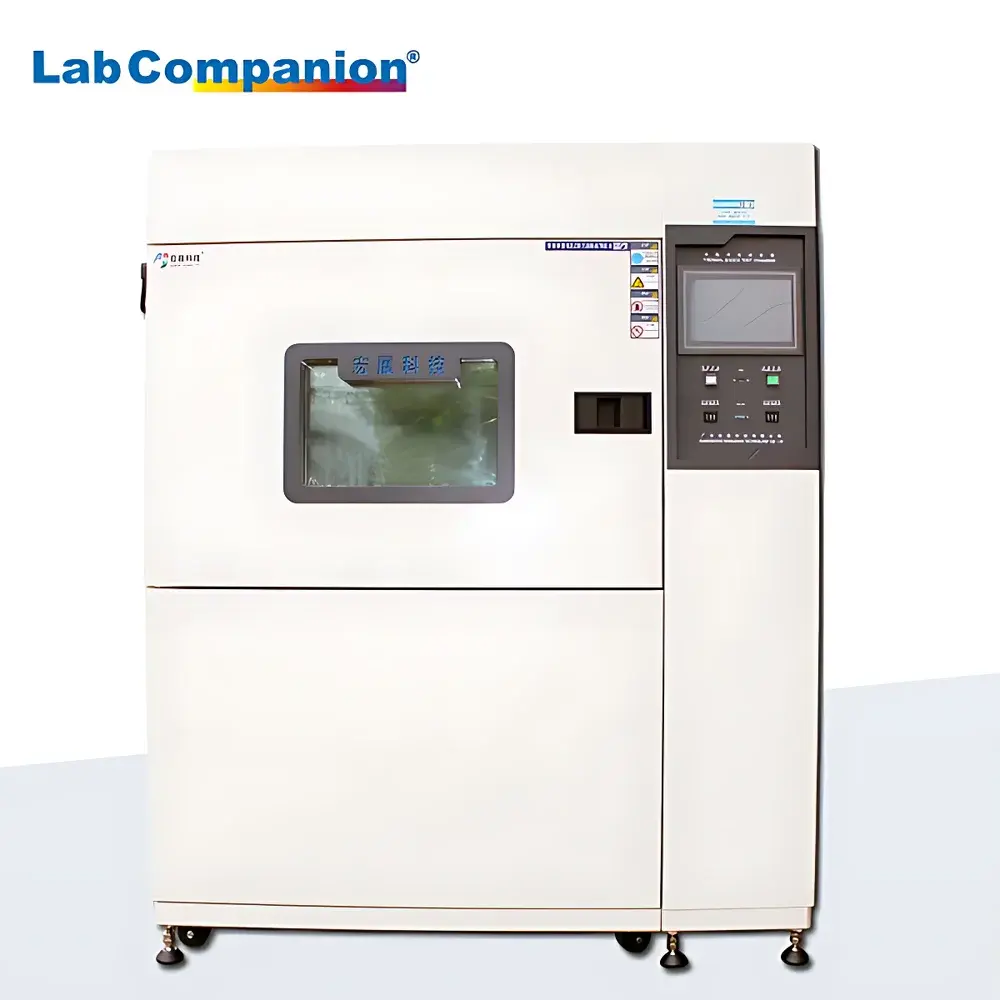
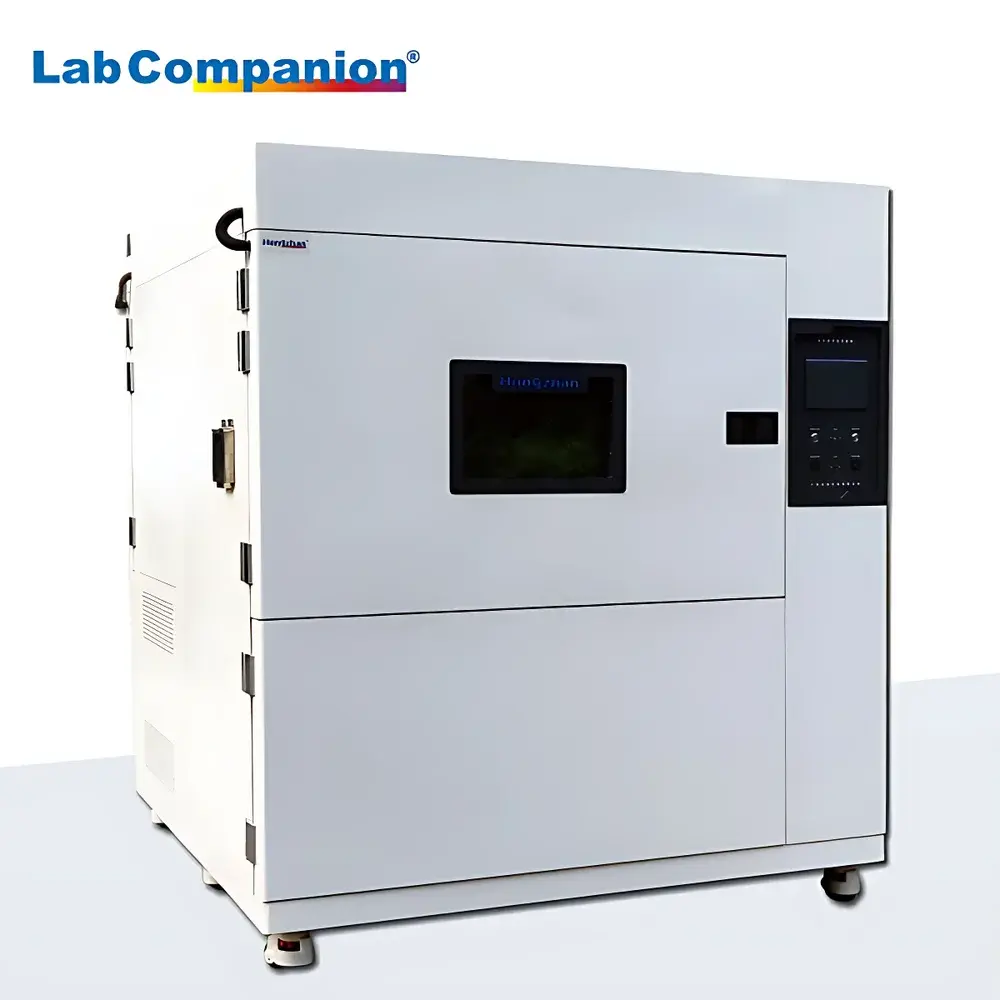
LabCompanion TSU-80A Thermal Shock Test Chamber
| Brand | LabCompanion |
|---|---|
| Origin | Guangdong, China |
| Manufacturer Type | Direct Manufacturer |
| Model | TSU-80A |
| High-Temperature Range | +60 °C to +200 °C |
| Low-Temperature Range | −78 °C to 0 °C |
| Thermal Shock Range | −55 °C to +150 °C |
| Temperature Stability | ±2 °C |
| Heating Rate | +60 °C to −200 °C ≤ 20 min |
| Cooling Rate | +20 °C to −75 °C ≤ 60 min |
Overview
The LabCompanion TSU-80A Thermal Shock Test Chamber is an engineered environmental test system designed for rapid, repeatable thermal cycling between extreme high- and low-temperature zones. Based on the two-chamber (hot/cold) pneumatic door-switching architecture, it subjects specimens to abrupt temperature transitions—simulating real-world operational stresses encountered by electronic components, aerospace materials, automotive modules, and hermetically sealed devices during field deployment or storage. Unlike single-chamber ramp-based systems, the TSU-80A eliminates thermal mass interference by maintaining independent hot and cold reservoirs at steady-state conditions prior to transfer, enabling precise control over shock magnitude, dwell time, and transition speed. Its core function aligns with standardized thermal shock protocols defined in MIL-STD-810H Method 503.7, JEDEC JESD22-A104F, and IEC 60068-2-14, supporting qualification testing under GLP-compliant laboratory environments.
Key Features
- Two-zone independent chamber design with pneumatically actuated insulated transfer door for sub-5-second specimen transfer
- Stable high-temperature zone: +60 °C to +200 °C, maintained within ±2 °C uniformity across working volume
- Cryogenic low-temperature zone: −78 °C to 0 °C, achieved via cascade refrigeration with dual-stage compressors and eco-friendly R404A/R23 refrigerant blend
- Verified thermal shock range: −55 °C to +150 °C (operational envelope per IEC 60068-2-14)
- Heating rate: +60 °C → +200 °C ≤ 20 minutes (chamber-only, no load); cooling rate: +20 °C → −75 °C ≤ 60 minutes (no-load condition)
- Internal workspace dimensions: 500 W × 400 H × 400 D mm (80 L net volume), accommodating up to 30 kg static load on stainless-steel sample shelf
- Integrated safety interlocks including over-temperature cutoff, refrigerant pressure monitoring, door position verification, and emergency stop circuit
Sample Compatibility & Compliance
The TSU-80A accommodates standard industry sample formats—including PCB assemblies, plastic-encapsulated ICs, solder joints, battery cells, optical sensors, and polymer housings—without requiring custom fixtures. Its internal chamber geometry and airflow management ensure minimal thermal gradient deviation (< ±2 °C) during dwell phases. The system supports test execution per multiple international standards: MIL-STD-810H (Method 503.7), JEDEC JESD22-A104F (Temperature Cycling), IEC 60068-2-14 (Change of Temperature), and ASTM D6273 (Thermal Shock Resistance of Coatings). All firmware and controller logs are timestamped and audit-ready, facilitating traceability in ISO/IEC 17025-accredited labs. Optional validation packages include IQ/OQ documentation aligned with FDA 21 CFR Part 11 requirements for electronic records and signatures.
Software & Data Management
Controlled via a 10.1-inch capacitive touchscreen HMI running embedded Linux OS, the TSU-80A provides intuitive programming of multi-step thermal shock profiles—including ramp/dwell/transfer sequences, cycle repetition counts, and failure-triggered abort logic. Real-time data logging captures chamber temperatures (hot zone, cold zone, test space), door status, compressor discharge pressure, and elapsed cycle time at user-defined intervals (1–60 sec resolution). Export formats include CSV and PDF reports with embedded calibration metadata. For enterprise integration, optional Ethernet/IP and Modbus TCP interfaces enable remote supervision through SCADA or LIMS platforms. All logged data includes immutable timestamps and operator ID tags, satisfying GLP/GMP data integrity requirements.
Applications
- Qualification testing of semiconductor packages (QFN, BGA, CSP) per JEDEC reliability standards
- Evaluation of solder joint integrity and intermetallic growth in automotive ECUs
- Validation of adhesive bond strength and sealant performance under cyclic thermal stress
- Accelerated aging studies for lithium-ion battery modules exposed to extreme ambient gradients
- Material compatibility assessment of optical coatings, OLED substrates, and MEMS encapsulants
- Pre-shipment stress screening for medical electronics operating in variable climate zones
FAQ
What is the maximum specimen weight supported without compromising thermal performance?
The standard sample shelf supports up to 30 kg static load; however, for optimal thermal recovery stability, recommended specimen mass is ≤7.5 kg (per IEC 60068-2-14 guidance on thermal mass ratio).
Does the system meet regulatory requirements for GxP-compliant laboratories?
Yes—when configured with optional 21 CFR Part 11 software module and calibrated per ISO/IEC 17025 procedures, the TSU-80A supports audit-ready electronic records, role-based access control, and full change history tracking.
Can the unit be integrated into an automated test cell?
Absolutely—the built-in RS485, Ethernet/IP, and dry-contact I/O ports allow seamless synchronization with robotic handlers, barcode scanners, and centralized test management systems.
Is nitrogen purging available as a factory option?
Yes—optional inert gas purge kit (N₂ or dry air) minimizes oxidation during high-temperature dwells, particularly for copper-metallized or moisture-sensitive samples.



