
LabCompanion OVEN-216 Vertical Precision Hot Air Oven
| Brand | LabCompanion |
|---|---|
| Origin | Guangdong, China |
| Manufacturer Type | Direct Manufacturer |
| Country of Origin | China |
| Model | OVEN-216 |
| Price Range | USD 1,400 – 3,150 |
| Max Operating Temperature | 200–300 °C |
| Product Type | Hot Air Aging Test Chamber |
| Category | Aging Chamber |
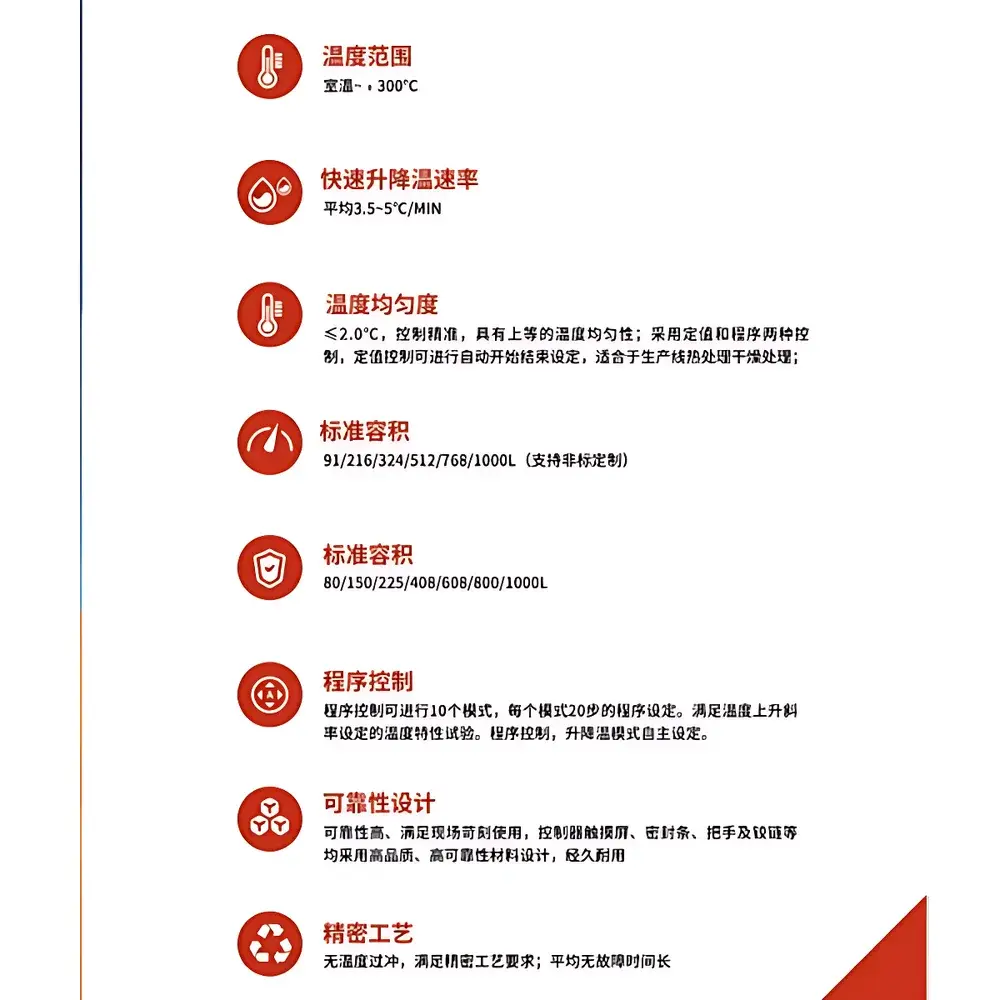
| Temperature Range | Ambient +10 °C to 300 °C |
| Temperature Uniformity | ±2.0 °C |
| Temperature Fluctuation | ±0.5 °C |
| Temperature Deviation | ±2.0 °C |
| Heating Rate | ≤60 min (from ambient +20 °C to 200 °C, no-load) |
| Cooling Rate | 0.7–1.0 °C/min (natural convection cooling) |
| Interior Dimensions (W×H×D) | 600 × 600 × 600 mm |
| Power Supply | 220 V AC, 50/60 Hz |
| Total Power | 3.8 kW |
| Net Weight | 180 kg |
Overview
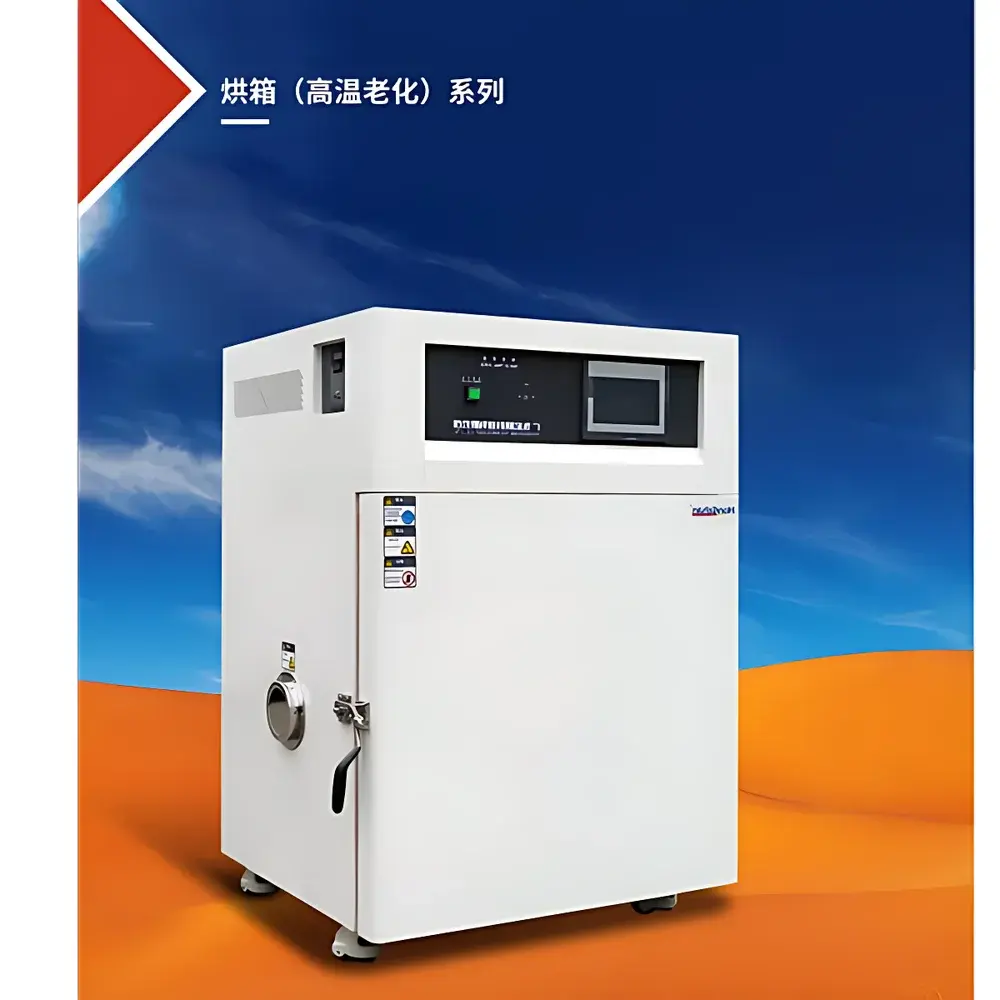
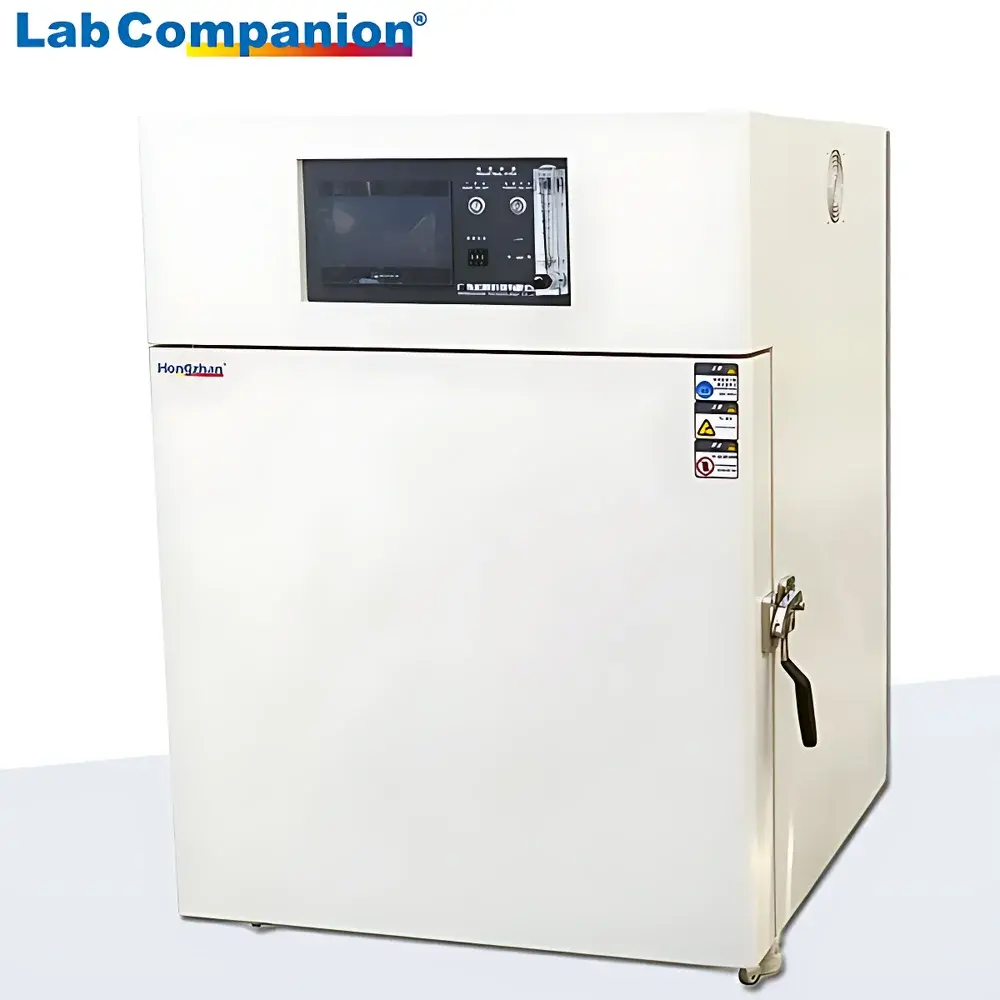
The LabCompanion OVEN-216 is a vertically oriented, microprocessor-controlled hot air oven engineered for precision thermal aging, drying, sterilization, and heat treatment applications in industrial quality control laboratories, R&D facilities, and academic research environments. It operates on the principle of forced convection heating—using a high-efficiency axial fan and optimized airflow ducting to circulate heated air uniformly across the working chamber. This architecture ensures stable thermal conditions essential for ASTM D573, ISO 188, ISO 289, and IEC 60068-2-2 compliant aging tests on elastomers, plastics, adhesives, and electronic components. The chamber is designed for continuous operation at temperatures up to 300 °C, with calibrated performance verified under no-load and standardized load conditions per IEC 60068-3-5.
Key Features
- Forced-air circulation system with rear-mounted axial fan and symmetrical baffle-guided airflow path, achieving ±2.0 °C temperature uniformity across the effective volume (per ISO 16750-4 Annex A).
- Triple-layer safety architecture: mechanical overtemperature cut-off dial (+15 °C offset), digital controller-based overtemp alarm, and independent dry-run protection sensor positioned between blower and heater elements.
- C100 programmable touchscreen controller (Weinview HMI) supporting both constant-value and multi-segment ramp-soak profiles; real-time PV/SV display, dual-mode curve visualization (real-time/historical), and onboard data logging for up to 600 days at user-selectable intervals (1–60 s).
- Robust thermal insulation using high-density, low-conductivity glass fiber (≥100 mm thickness), minimizing external surface temperature rise and energy consumption during extended dwell cycles.
- Stainless steel (SUS304) interior chamber with seamless welded corners, corrosion-resistant exterior housing (electrostatically coated cold-rolled steel), and triple-lip silicone gasket door seal ensuring Class II air-tightness per EN 61000-6-4.
- Fail-safe interlock system: door remains mechanically locked until programmed cycle completes or emergency power-down is executed; manual reset required after any safety event.
Sample Compatibility & Compliance
The OVEN-216 accommodates standard test specimens conforming to ASTM D395, ISO 1431, and GB/T 3512 specifications—including rubber dumbbells, polymer strips, PCB substrates, and encapsulated semiconductor packages. Its 600 L internal volume supports stacked sample racks (two adjustable stainless steel shelves included). All thermal performance metrics—including uniformity, fluctuation, and deviation—are validated per ISO/IEC 17025-accredited procedures using NIST-traceable PT100 sensors. The unit meets CE marking requirements (EMC Directive 2014/30/EU, Low Voltage Directive 2014/35/EU) and complies with electrical safety standards IEC 61010-1 for laboratory equipment. Optional calibration certificates (traceable to CNAS) are available upon request.
Software & Data Management
Data integrity and audit readiness are ensured through built-in features aligned with FDA 21 CFR Part 11 and GLP/GMP principles. The C100 controller logs timestamped temperature readings with automatic backup to internal flash memory—even during unexpected power loss. USB 2.0 interface enables secure export of CSV-formatted datasets; Ethernet (LAN) port supports direct integration into local lab networks for remote monitoring via LabCompanion UMC1000-compatible SCADA software. Optional firmware upgrade enables basic PLC-style logic sequencing (e.g., auto-triggering auxiliary devices upon reaching setpoint). All logged data includes operator ID fields, cycle identification tags, and checksum-verified metadata to support regulatory review.
Applications
- Accelerated thermal aging of elastomeric seals, O-rings, and gasket materials per ASTM D573 and ISO 188.
- Pre-conditioning of polymeric packaging films prior to permeability or tensile testing.
- Drying of moisture-sensitive analytical reagents and reference standards under controlled thermal gradients.
- Heat stabilization of printed circuit board laminates before solderability assessment (IPC-TM-650 2.6.25).
- Sterilization validation studies for reusable laboratory tools requiring dry-heat protocols (e.g., 160 °C for 120 min).
- Thermal stress screening of passive electronic components (resistors, capacitors) under JEDEC JESD22-A108 conditions.
FAQ
What is the recommended ambient operating environment for the OVEN-216?
The unit must be installed in a climate-controlled room maintained between +5 °C and +35 °C, with relative humidity ≤80% RH non-condensing and adequate ventilation to dissipate exhaust heat.
Does the OVEN-216 support rapid cooling?
No—it relies on natural convection cooling only; forced cooling or refrigerated assist is not integrated. Typical cooldown rate ranges from 0.7 to 1.0 °C/min depending on setpoint and ambient conditions.
Can the controller store multiple test programs?
Yes—the C100 HMI supports up to 128 user-defined profiles, each with up to 99 segments (ramp/soak), with password-protected editing and version history tracking.
Is third-party calibration documentation included with shipment?
A factory-issued metrology certificate (NIST-traceable) is provided standard; full ISO/IEC 17025 calibration reports with uncertainty budgets are available as an optional add-on.
What electrical infrastructure is required for installation?
A dedicated 220 V AC, 50/60 Hz single-phase circuit protected by a 20 A residual-current circuit breaker (RCCB) is mandatory. Grounding resistance must not exceed 4 Ω per IEC 60364-5-54.



