
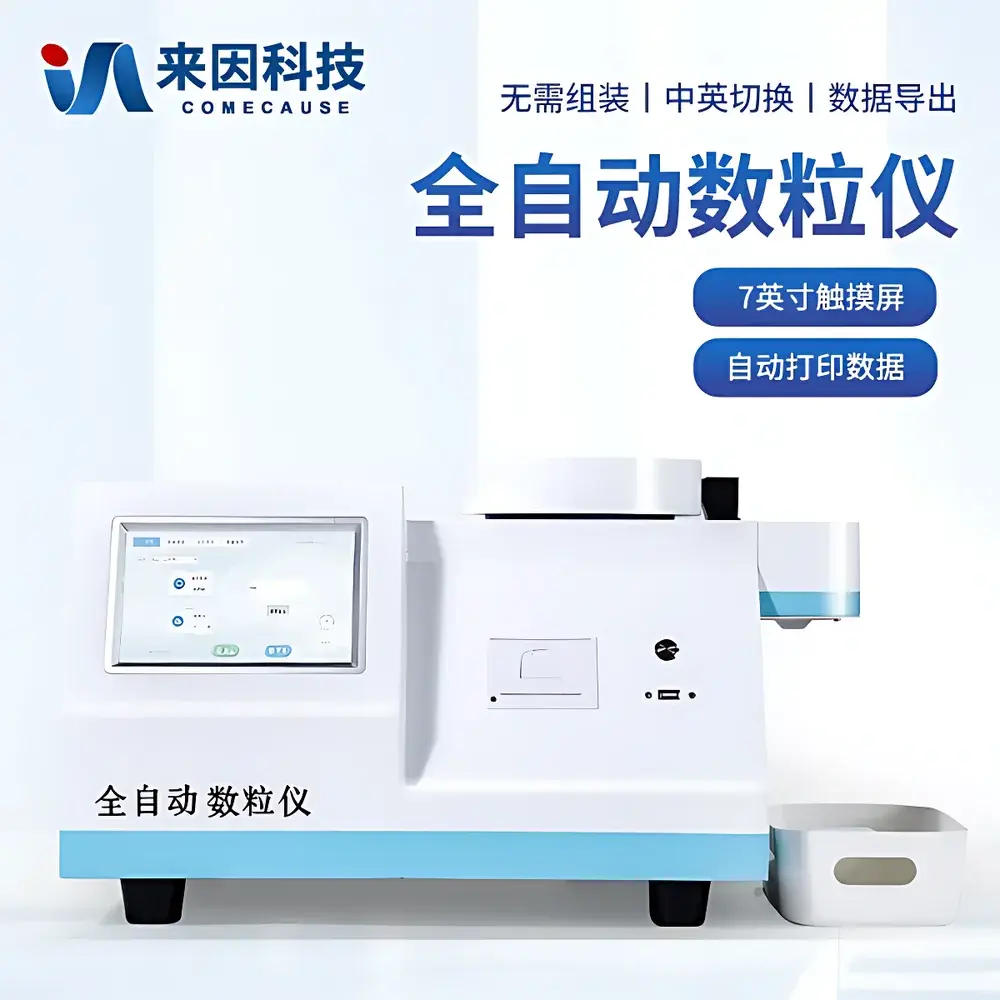
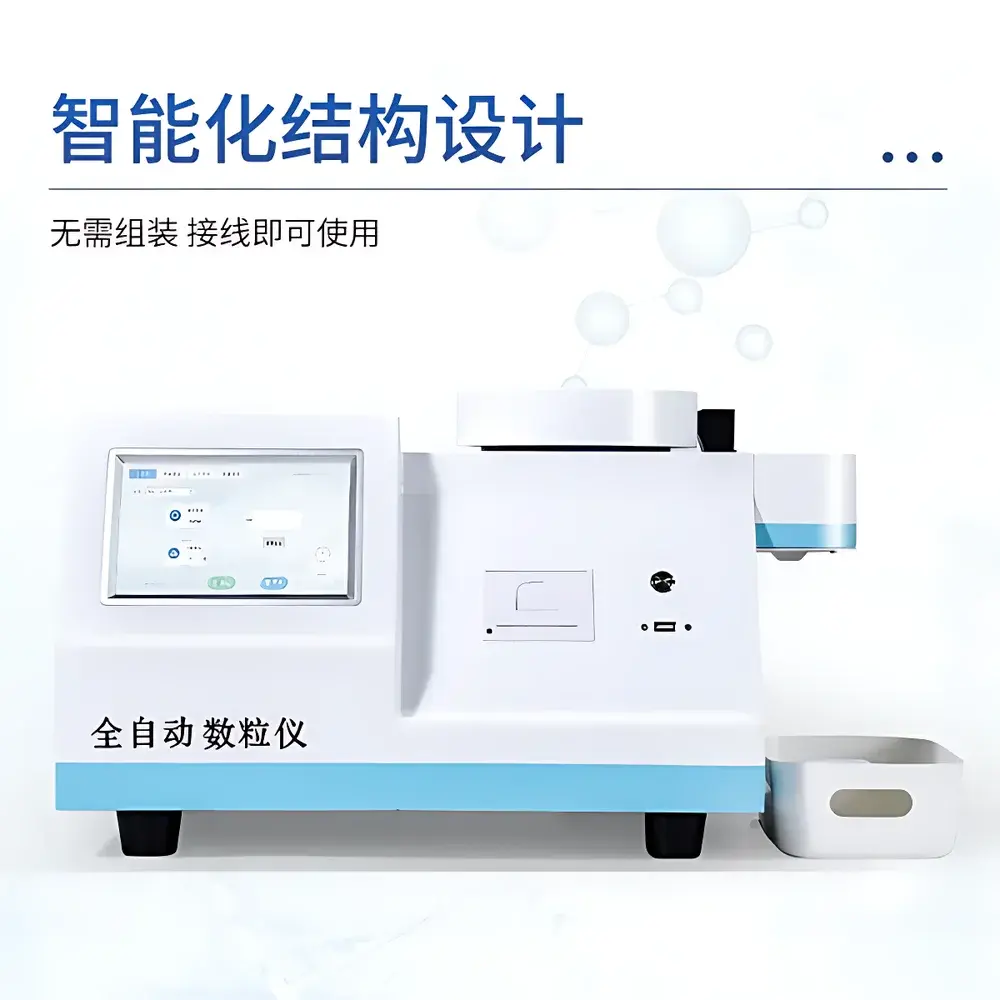
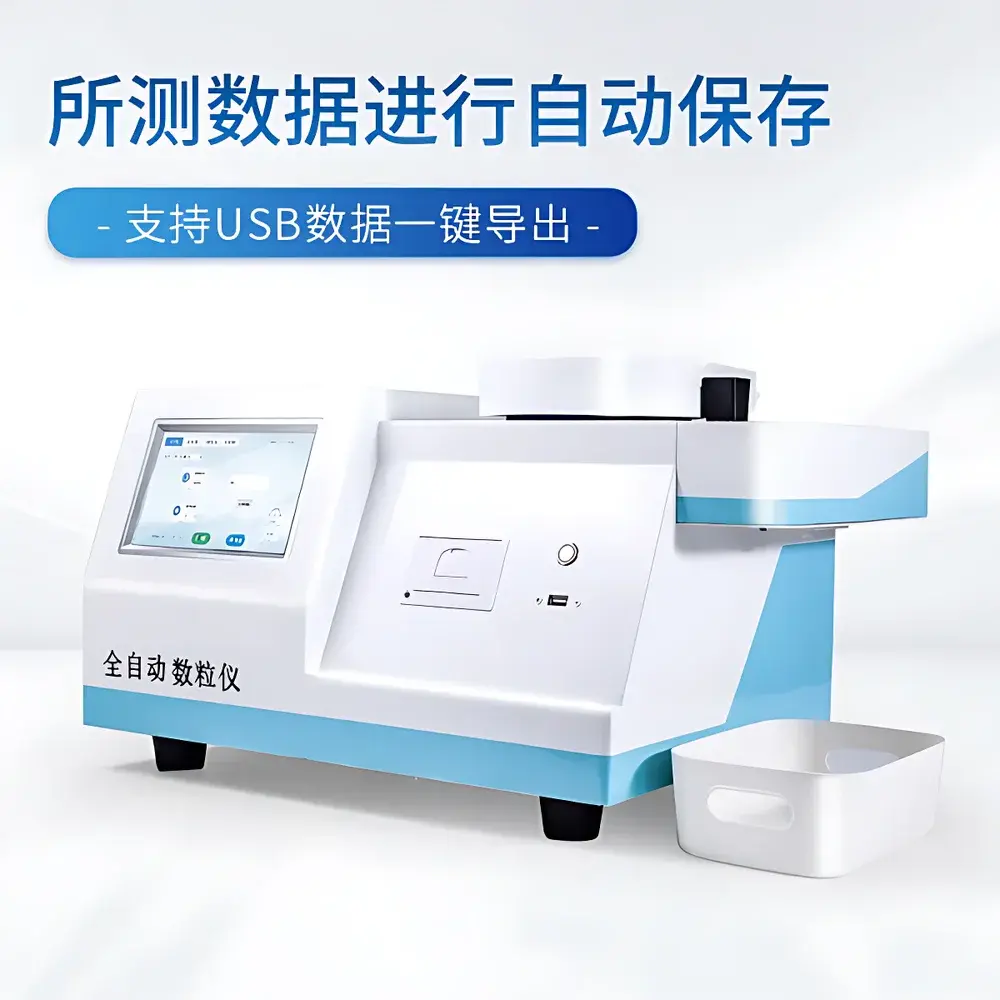
COMECAUSE IN-SL01 Automated Seed Counter & Rotational Sampling System
| Brand | COMECAUSE |
|---|---|
| Origin | Shandong, China |
| Manufacturer Type | Direct Manufacturer |
| Country of Origin | China |
| Model | IN-SL01 |
| Price | USD 2,380 (approx.) |
| Application Scope | Maize, rice, wheat, soybean, sesame, vegetable seeds, melon & vegetable crop seeds |
| Counting Accuracy | ±0.2% |
| Maximum Counting Speed | 1,000–2,000 seeds/min |
Overview
The COMECAUSE IN-SL01 Automated Seed Counter & Rotational Sampling System is an engineered solution for high-throughput, metrologically traceable seed quantification and subsampling in agricultural research, seed certification, quality control laboratories, and commercial seed processing facilities. Based on optoelectronic sensing combined with precision vibratory feed control and synchronized rotational cup indexing, the system converts discrete biological units—individual seeds—into statistically robust, auditable digital counts. Unlike manual counting or basic photoelectric counters, the IN-SL01 integrates real-time counting logic with dynamic sample partitioning, enabling both absolute enumeration (e.g., for thousand-kernel weight determination per ISO 6558 or ISTA Rules) and multi-aliquot distribution (e.g., for germination testing or replicated field trials). Its architecture adheres to core principles of measurement repeatability, environmental resilience, and procedural transparency—critical for GLP-compliant seed testing labs and ISO/IEC 17025-accredited facilities.
Key Features
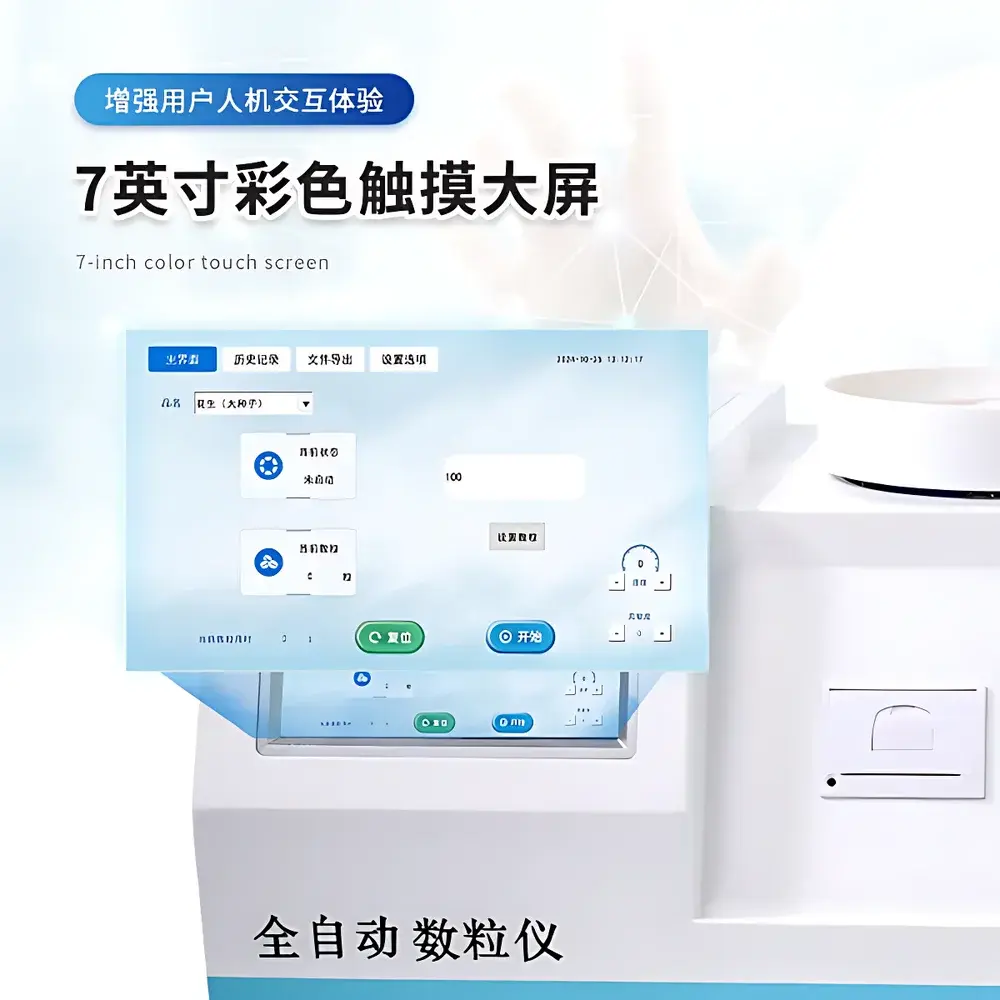
- 7-inch full-color capacitive touchscreen interface with intuitive navigation, supporting both landscape and portrait modes for ergonomic operation in lab and production environments.
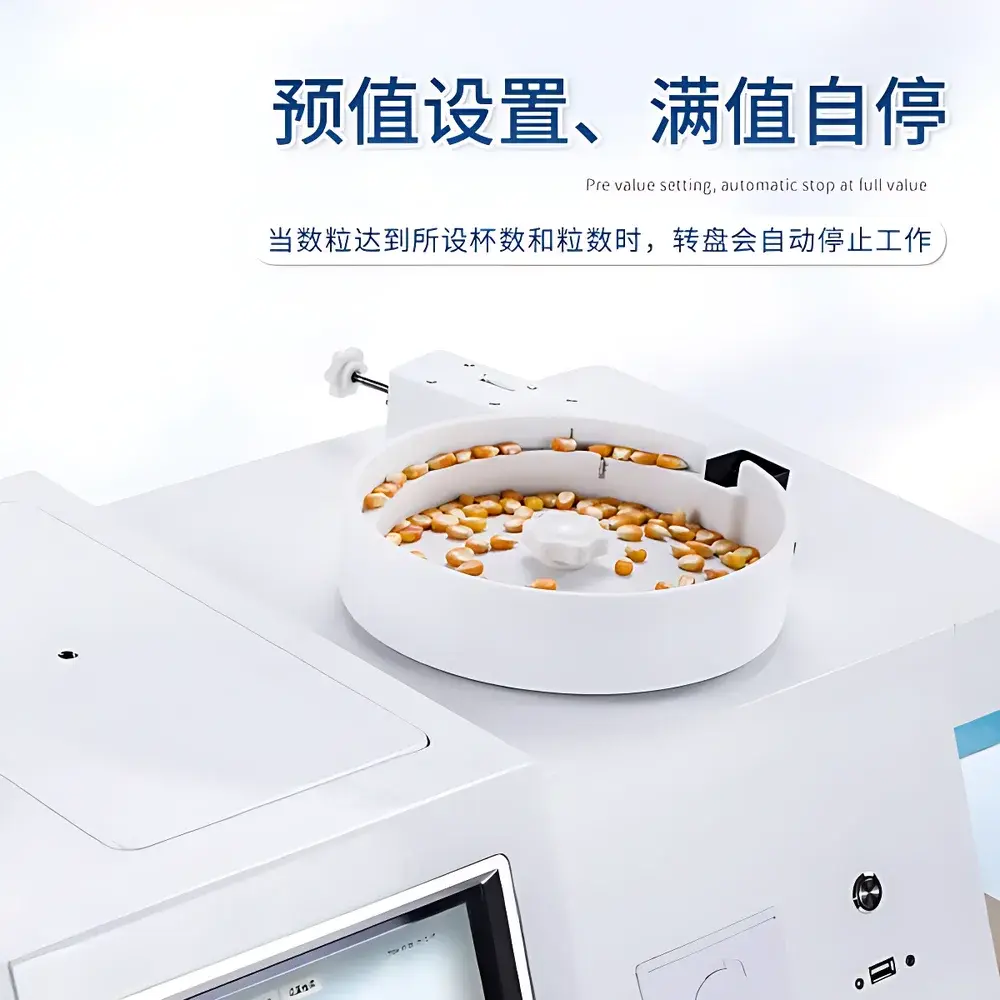
- Pre-set target counting function: users define desired seed count per batch; system automatically halts upon reaching threshold, with final fine-count adjustment via decelerated feed mode to ensure ±0.2% accuracy.
- Customizable seed profiles: operators configure vibration intensity (0–10 scale), feed rate, and optical sensitivity per species—optimized for morphologically diverse seeds ranging from 0.5 mm (e.g., lettuce) to 23 mm (e.g., maize kernels).
- Integrated thermal label printer: generates adhesive-backed labels containing variety name, counted quantity, date/time stamp, operator ID (optional), and batch ID—fully compliant with traceability requirements under national seed labeling regulations (e.g., USDA Federal Seed Act, China’s Crop Seed Labeling Regulations).
- Local data management: all sessions stored internally with timestamp, seed type, count value, and system parameters; supports pagination, search-by-date, and selective or bulk deletion.
- USB mass storage export: raw CSV files include full audit trail—count sequence, timestamps, error flags (e.g., jam detection, double-pass events), and calibration metadata—facilitating integration with LIMS or ERP systems.
- Bilingual UI (English/Chinese) with one-touch language toggle—designed for multinational breeding programs and cross-border seed trade compliance.
Sample Compatibility & Compliance
The IN-SL01 accommodates a broad spectrum of agricultural seeds without mechanical modification: monocots (rice, wheat, maize), dicots (soybean, rapeseed, tomato), oilseeds (sesame, flax), and horticultural crops (carrot, onion, pepper). Its non-contact optical sensor array tolerates surface texture variation, minor dust adhesion, and moderate moisture content (RH <85%). The system meets electromagnetic compatibility (EMC) Class B requirements per IEC 61326-1 and operates reliably across −10°C to +50°C ambient conditions. While not certified to FDA 21 CFR Part 11 out-of-the-box, its audit-trail-capable data logging architecture supports validation for regulated environments—including ISTA-certified labs, national seed quality supervision centers, and GMP-aligned seed coating facilities—when deployed with documented SOPs and periodic verification against NIST-traceable reference standards.
Software & Data Management
Firmware v3.2+ includes embedded SQLite database management, automatic session backup, and time-stamped event logging (power-on, count start/end, print trigger, USB insertion). Data export preserves ISO 8601 timestamps and UTF-8 encoding for multilingual variety names. No cloud dependency: all operations execute locally, ensuring data sovereignty—a critical requirement for national seed banks and government agronomy institutes. Optional RS-232 or Ethernet module (sold separately) enables remote status monitoring and scheduled firmware updates via secure SSH/TFTP protocols. Calibration logs—including daily zero-check records and quarterly linearity verification reports—are exportable and structured for inclusion in internal QA documentation packages.
Applications
- Seed Certification & ISTA Testing: Precise isolation of exact seed numbers for purity analysis, germination assays (ISTA Rule 5.3.1), and vigor testing—eliminating inter-operator variability in “100-seed” or “4×100-seed” sub-sampling protocols.
- Breeding Program Efficiency: Accelerated thousand-kernel weight (TKW) determination across hundreds of F₂ or DH lines; automated generation of equal-replicate samples for yield trials or disease resistance screening.
- Commercial Seed Packaging: Inline or offline verification of fill weight equivalence for unit-dose packets (e.g., pelleted lettuce seeds); real-time rejection of under/over-filled lots based on programmable tolerance bands.
- Academic Research & Teaching: Quantitative plant phenotyping workflows; hands-on demonstration of statistical sampling theory, measurement uncertainty, and automation ethics in agri-biotech curricula.
- National Food Security Monitoring: Standardized seed lot inventory auditing for emergency reserve depots, where rapid, bias-free stock reconciliation directly impacts deployment readiness.
FAQ
What seed size range is supported?
Seeds measuring 0.5 mm to 23 mm in longest dimension—validated for cereals, legumes, oilseeds, and horticultural species.
Can the system handle irregularly shaped or clustered seeds?
Yes—adjustable vibration intensity and dual-sensor logic reduce bridging and double-counting; however, pre-cleaning to remove chaff or broken fragments is recommended for optimal accuracy.
Is calibration required before each use?
No routine recalibration is needed; however, daily verification using a certified reference sample (e.g., 1000 ± 1 seeds) is advised per ISO/IEC 17025 Clause 7.7.
Does the device support network connectivity or LIMS integration?
Native USB export enables seamless LIMS ingestion; optional communication modules (RS-232/Ethernet) provide real-time status polling and remote diagnostics.
What maintenance is required?
Monthly cleaning of optical sensors and feed chute with lint-free cloth and isopropyl alcohol; annual inspection of vibrator motor alignment and belt tension by authorized service technician.





