
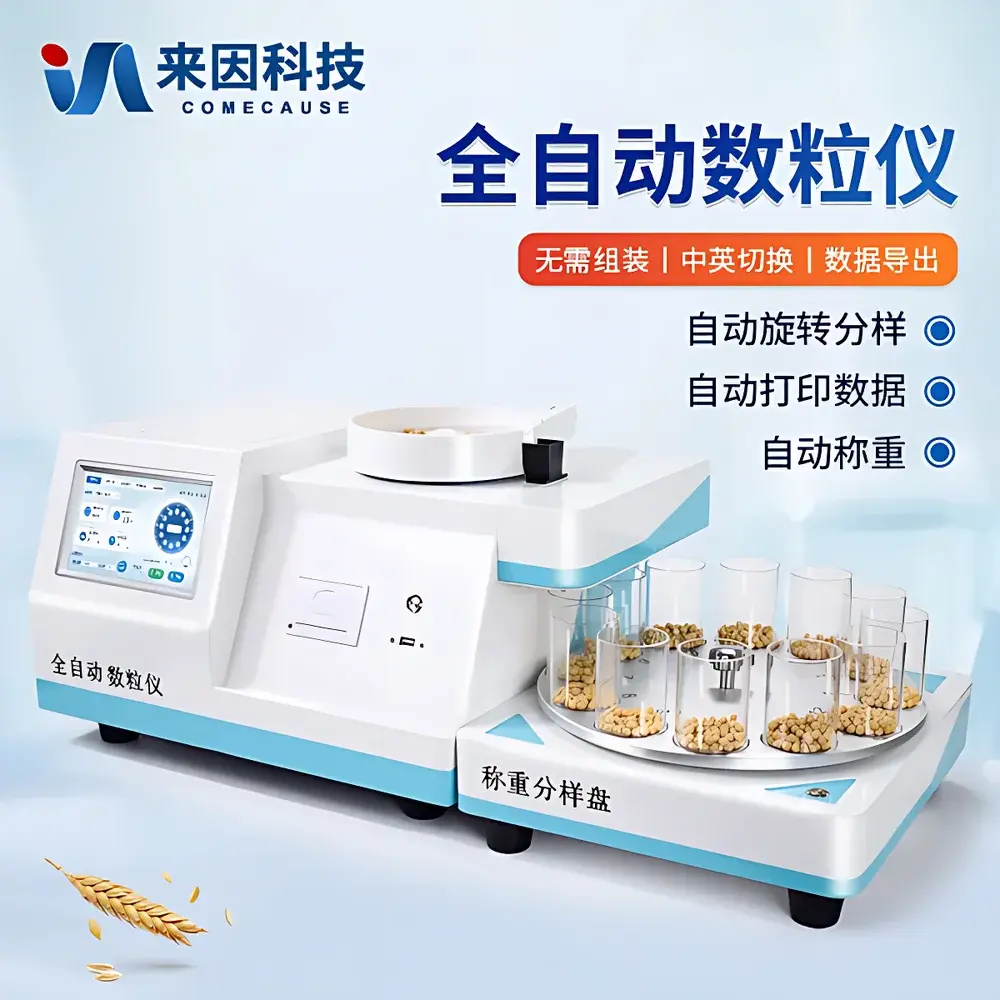
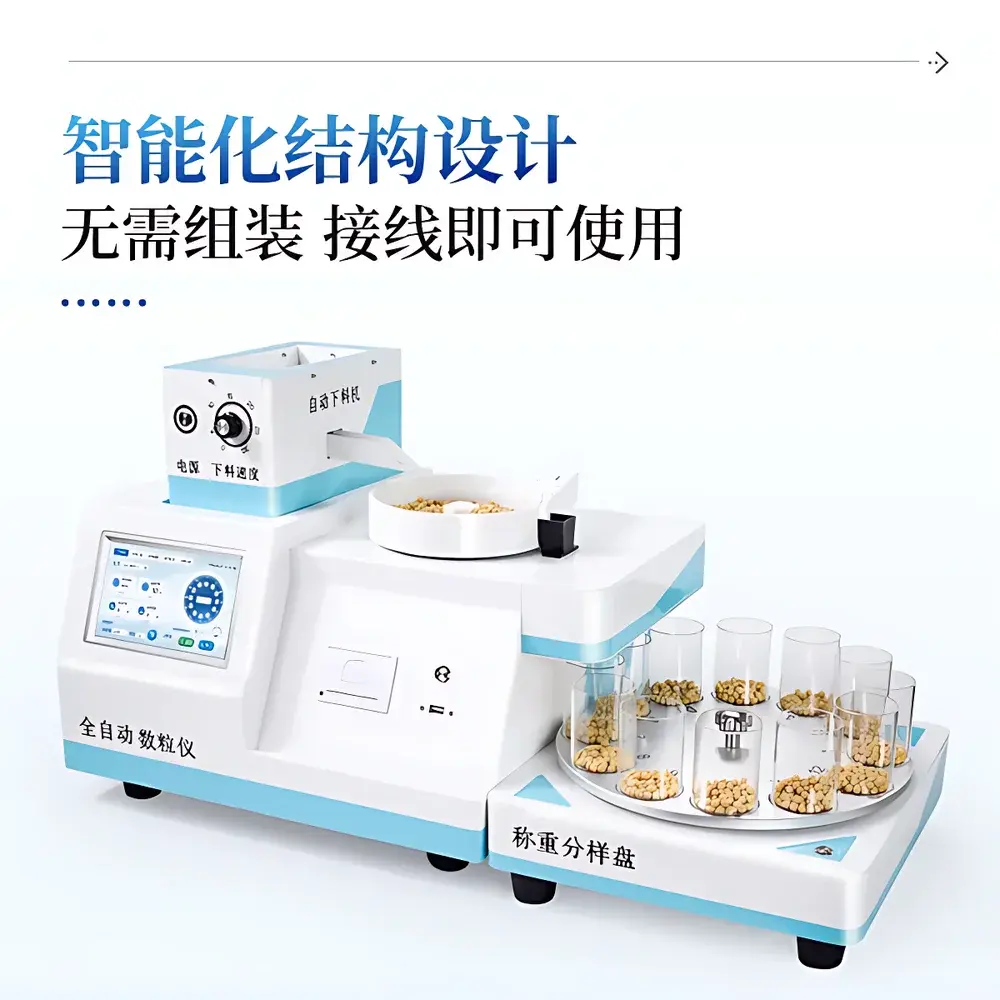
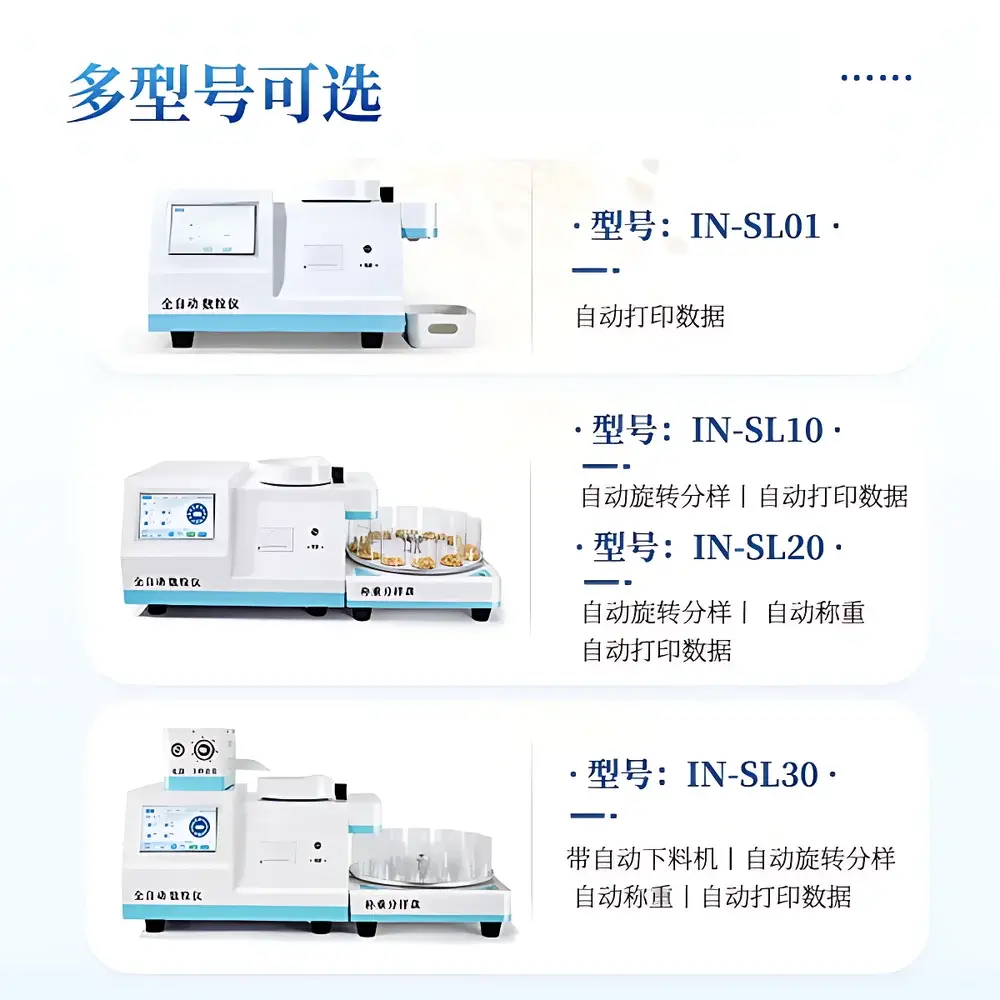
COMECAUSE IN-SL20 Fully Automatic Multifunctional Seed Counter & Sample Divider
| Brand | COMECAUSE |
|---|---|
| Origin | Shandong, China |
| Manufacturer Type | Direct Manufacturer |
| Instrument Category | Electronic Automatic Seed Counter |
| Model | IN-SL20 |
| Applicable Samples | Corn, rice, wheat, soybean, sesame, vegetable seeds, pharmaceutical tablets, pearls, micro-components |
| Counting Accuracy | ±2‰ |
| Maximum Counting Speed | 1000–2000 seeds/min |
| Seed Length Range | 0.5–23 mm |
| Counting Capacity | 1–9999 seeds per cup |
| Pre-set Stop Range | 1–9999 (0000 = continuous mode) |
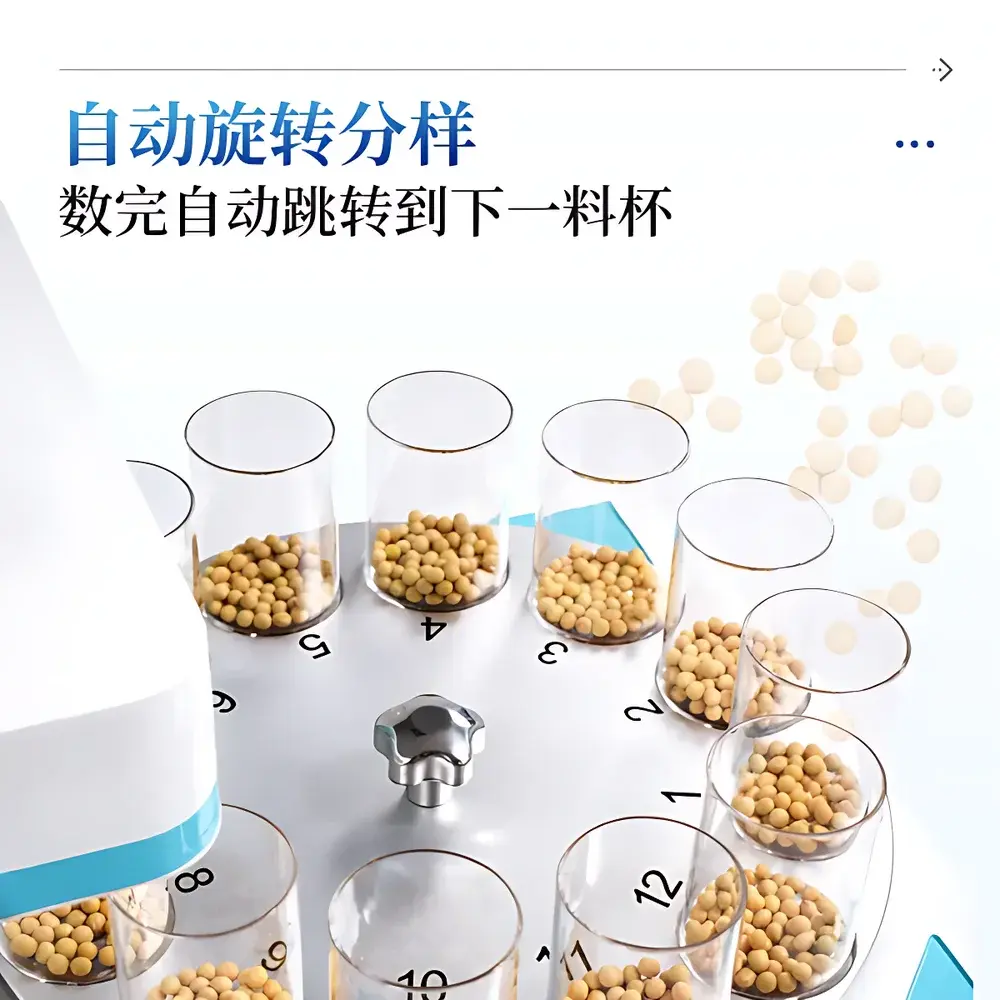
| Sample Cups | 12 rotating cups (60 × 80 mm H) |
| Built-in Precision Weighing Module | Yes, for automatic 1000-seed weight calculation |
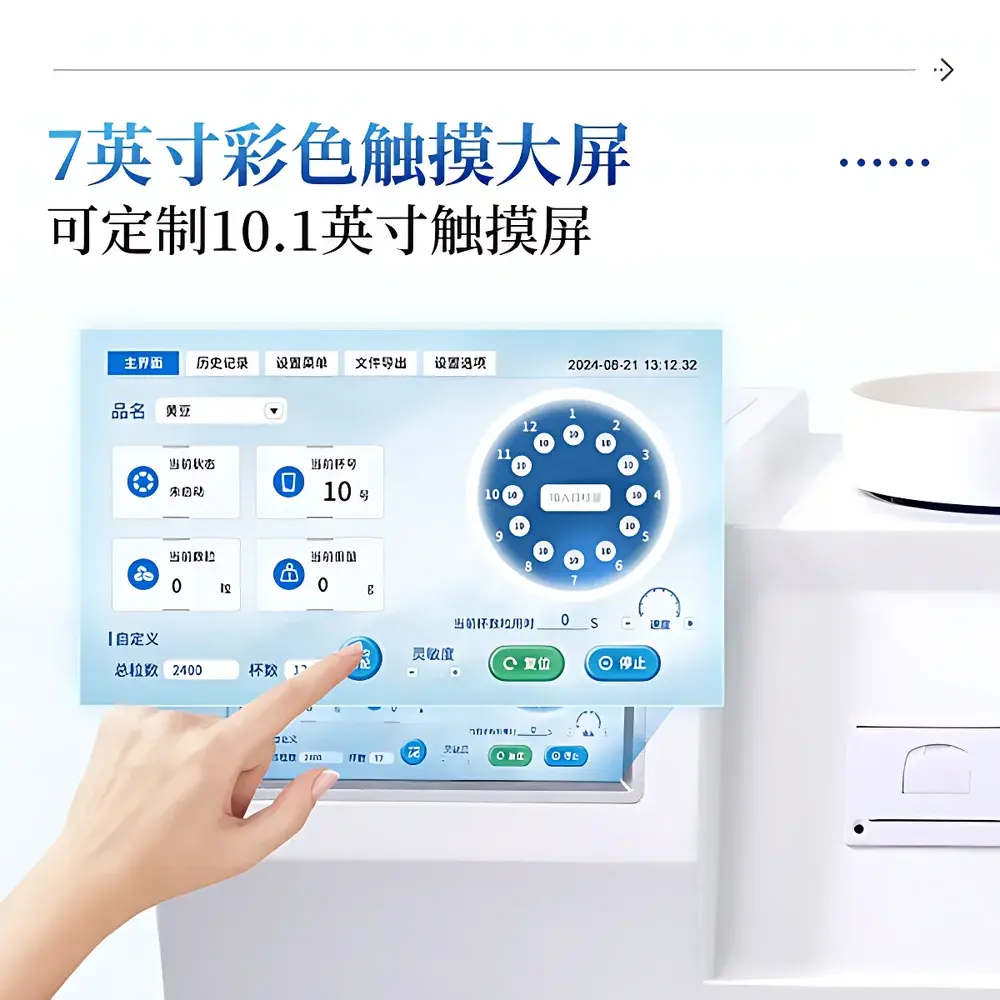
| Display | 7-inch color capacitive touchscreen (optional 10.1-inch upgrade) |
| Data Output | Thermal label printer (adhesive), USB export, local history storage |
| Power Supply | AC 220 V, 50 Hz (export variants: 100/110/200/240 V, 50/60 Hz) |
| Operating Environment | −10 °C to 50 °C, RH < 85% |
| Noise Level | ≤80 dB(A) |
| Continuous Operation Time | ≥8 hours |
Overview
The COMECAUSE IN-SL20 Fully Automatic Multifunctional Seed Counter & Sample Divider is an optically driven, image-based particle counting and distribution system engineered for high-reproducibility enumeration of biological and industrial granular materials. It operates on the principle of real-time digital imaging combined with adaptive threshold segmentation and morphological analysis—enabling reliable discrimination of individual seeds, tablets, or micro-components even under partial occlusion or surface adhesion conditions. Unlike manual counting or basic photoelectric counters, the IN-SL20 integrates dynamic motion control, multi-stage velocity modulation, and in situ gravimetric validation into a single workflow. Designed for compliance-critical environments—including ISO/IEC 17025-accredited seed testing labs, GMP-compliant pharmaceutical QC facilities, and GLP-aligned agricultural research centers—the instrument delivers traceable, audit-ready results without external balance integration or post-processing software dependency.
Key Features
- Optimized optical path design with uniform LED backlighting and adjustable focus lens, supporting accurate detection across seed length range of 0.5–23 mm.
- Intelligent deceleration algorithm: automatically reduces disc rotation speed during final 5–10% of target count to minimize inertial overshoot and maintain ±2‰ counting accuracy.
- 12-position rotating sample cup carousel with programmable cup assignment, enabling parallel batch division and statistical sub-sampling (e.g., for germination assays or purity analysis).
- Built-in high-resolution load cell (0.01 g resolution) synchronized with counting events—automatically computes and logs 1000-seed weight per cup without manual transfer to external balances.
- 7-inch capacitive touchscreen interface with dual-language support (English/Chinese), configurable UI themes, and intuitive icon-driven navigation compliant with IEC 62366-1 usability standards.
- Real-time status monitoring: visual indicators for “Idle”, “Counting”, “Paused”, “Completed”, and fault diagnostics (e.g., jam detection, sensor timeout, weight calibration drift).
- Programmable sensitivity (0–10 scale) and vibration profile (acceleration/deceleration ramp rates), allowing optimization for irregular shapes (e.g., curled soybean cotyledons, flattened sesame seeds).
- Thermal adhesive-label printer integrated into main chassis—generates tamper-evident labels with timestamp, variety name, count value, weight, 1000-seed mass, and operator ID.
- Local data management: stores ≥10,000 test records with full metadata (date/time, user ID, sample ID, cup sequence, duration, environmental log). Supports USB mass-storage export in CSV format compatible with LIMS and statistical packages (e.g., JMP, R, SAS).
Sample Compatibility & Compliance
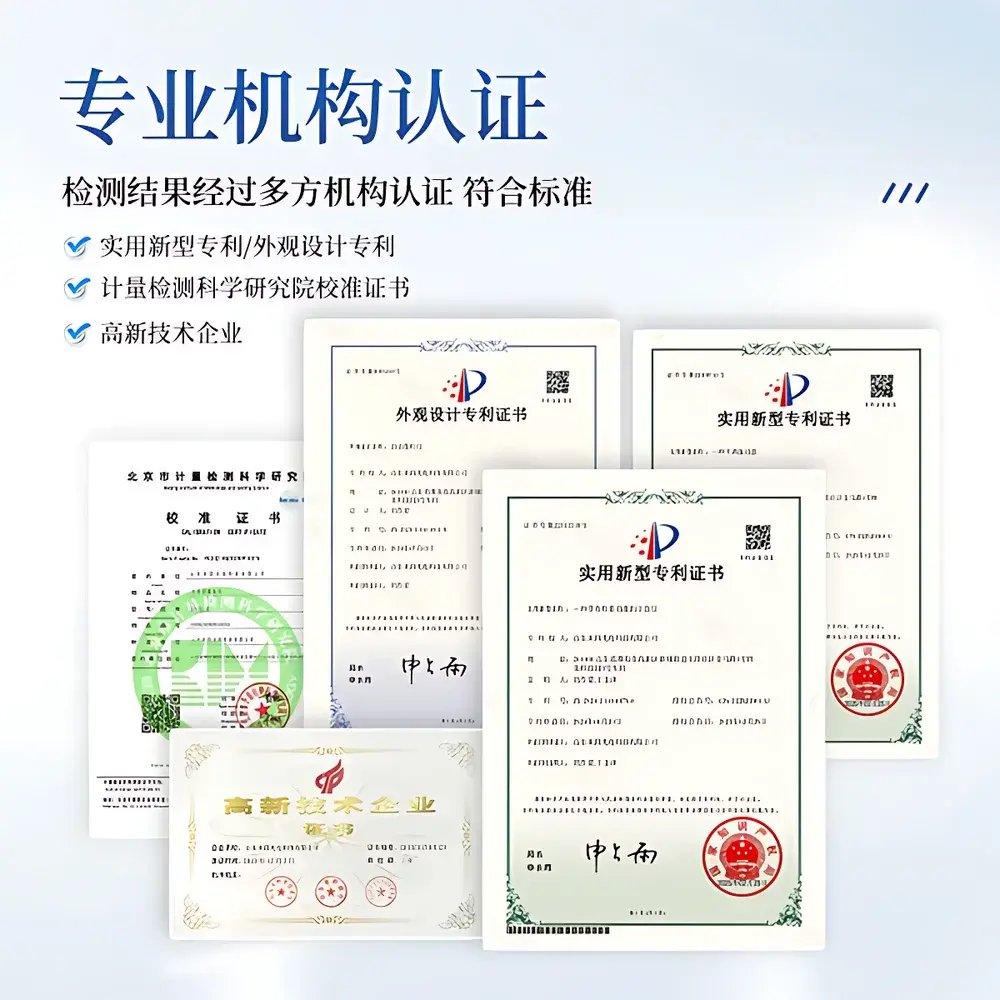
The IN-SL20 accommodates diverse particulate matrices requiring regulatory-grade enumeration: cereal grains (maize, rice, wheat), legumes (soybean, mung bean), oilseeds (sesame, rapeseed), horticultural seeds (tomato, lettuce, pepper), pharmaceutical solid dosage forms (tablets, capsules), and precision-engineered micro-parts (e.g., watch gears, microfluidic components). Its counting performance meets ASTM D7678 (Standard Test Method for Counting Seeds Using Automated Image Analysis), ISO 11520-1 (Seed sampling—Part 1: General principles), and USP (Automated Particle Counting in Pharmaceutical Manufacturing). The embedded audit trail—recording all parameter changes, start/stop events, and calibration actions—satisfies FDA 21 CFR Part 11 requirements for electronic records and signatures when deployed with password-protected user roles and time-stamped log exports.
Software & Data Management
Firmware v3.2+ supports role-based access control (Administrator, Technician, Operator) with encrypted local storage. All counting sessions generate immutable .csv files containing: sample identifier, species code, cup index, counted particles, measured mass (g), calculated 1000-seed weight (g), elapsed time (s), ambient temperature/humidity (if optional sensor installed), and operator login hash. Data export via USB adheres to NIST SP 800-88 Rev. 1 sanitization guidelines—no residual memory traces remain after deletion. Optional network module (sold separately) enables secure HTTPS API integration with enterprise LIMS platforms using RESTful endpoints and OAuth 2.0 authentication.
Applications
- Agricultural seed certification: rapid determination of purity, germination sample preparation, and thousand-kernel weight (TKW) profiling per ISTA Rules.
- Pharmaceutical quality control: verification of tablet/capsule fill count prior to blister packaging; deviation trending for process capability analysis (Cp/Cpk).
- Food safety laboratories: quantification of foreign material fragments in milled grain batches per AACC Method 25-10.0A.
- Academic plant science: high-throughput phenotyping of mutant lines based on seed number per silique or pod.
- Materials science: statistical sampling of ceramic microspheres or polymer beads for size distribution correlation studies.
FAQ
Does the IN-SL20 require routine optical recalibration?
No—factory-calibrated CMOS imaging module maintains stability over 24 months under normal lab conditions. Annual verification using NIST-traceable seed reference standards is recommended for ISO 17025 compliance.
Can the instrument handle sticky or dusty seeds without cleaning between runs?
Yes—integrated air purge nozzles (optional accessory) remove residual dust; non-stick PTFE-coated feed chute minimizes adhesion. For highly hygroscopic samples (e.g., freshly threshed rice), optional desiccant chamber integration is available.
Is raw image data stored for forensic review?
No—only processed binary masks and centroid coordinates are retained to conserve memory. Full-frame images are not captured or stored, ensuring GDPR/CCPA compliance and reducing cybersecurity attack surface.
What maintenance intervals are specified for the weighing module?
Internal load cell zero-point verification is performed automatically at power-on; annual external calibration with Class M1 weights (±0.02 g tolerance) is required for metrological traceability.
How is firmware updated?
Via signed .bin file loaded from USB drive—digital signature validation prevents unauthorized code injection. Update log entries are appended to system audit trail with SHA-256 hash verification.






