
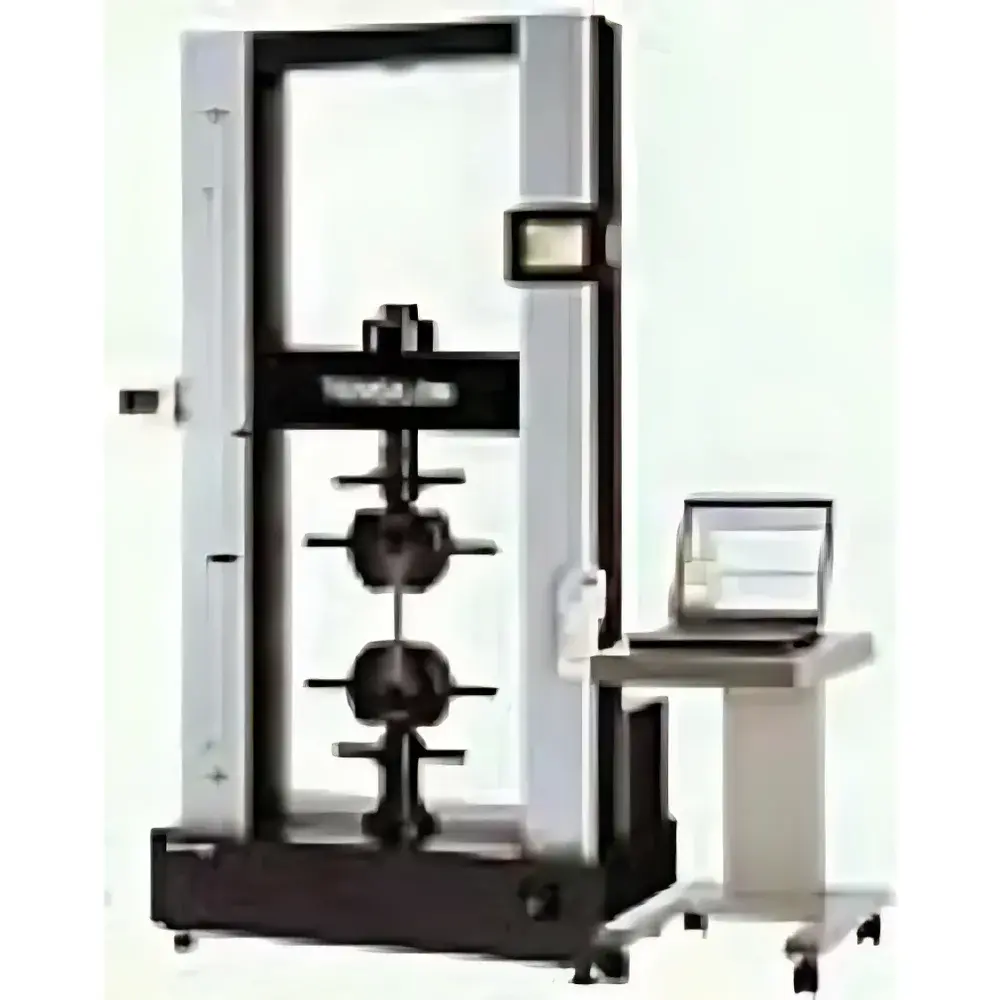
A&D RTF-2325 / RTF-2430 / RTF-1325 Universal Testing Machine
| Brand | A&D |
|---|---|
| Origin | Japan |
| Model | RTF-2325 / RTF-2430 / RTF-1325 |
| Accuracy Class | 0.5 |
| Load Capacity Range | 1 kN to 300 kN |
| Test Width | 420 mm / 590 mm |
| Crosshead Speed | 0.0005–500 mm/min or 0.0005–1000 mm/min |
| Load Accuracy | ±0.5% of reading (standard), ±1% of reading (optional range) |
| Sampling Interval | 1 ms |
| Input Channels | Up to 13 |
| Display | Optional full-color capacitive touchscreen with real-time force-displacement curve plotting |
| Data Storage | ≥10 preconfigured test profiles with auto-save/resume on power cycle |
| Test Modes | Tensile, Compression, Flexural, Peel, Cyclic, Creep, Stress Relaxation |
Overview
The A&D RTF Series Universal Testing Machine is an electromechanical static materials testing system engineered for high-precision mechanical property evaluation in R&D laboratories, quality control environments, and accredited testing facilities. Based on the principles of controlled displacement and load-controlled actuation, the RTF platform employs a robust dual-column load frame with enhanced structural rigidity—increased by 30% over prior generations—to minimize deflection and ensure metrological stability under dynamic and static loading conditions. Designed to meet ISO 7500-1:2018 (Class 0.5) and ASTM E4 compliance requirements for verification of force-measuring instruments, the system integrates A&D’s proprietary high-stability load cells, low-noise signal conditioning electronics, and closed-loop servo control architecture. Its modular design supports standardized specimen geometries per ISO 6892-1, ASTM D638, ASTM D790, ISO 179, and EN 13924, enabling traceable, repeatable characterization of elastic modulus, yield strength, ultimate tensile strength, elongation at break, flexural modulus, peel adhesion, and creep compliance across diverse material classes.
Key Features
- Class 0.5 accuracy certified per ISO 7500-1:2018—validated through third-party calibration reports traceable to NMIJ/AIST (Japan)
- High-rigidity dual-column frame with reinforced base and crosshead assembly to suppress parasitic bending moments during high-load testing
- Real-time data acquisition at 1 ms sampling interval, supporting transient event capture and high-fidelity stress-strain curve reconstruction
- 13-channel analog/digital input capability for synchronized acquisition of auxiliary sensors (e.g., extensometers, environmental chambers, video extensometry)
- Optional full-color capacitive touchscreen interface with intuitive icon-driven navigation, real-time dual-axis plotting (force vs. displacement, stress vs. strain), and tactile feedback confirmation
- Predefined test method library compliant with ISO, ASTM, JIS, and GB standards—including tensile, compression, three-point/four-point bend, peel, cyclic fatigue, and creep protocols
- Auto-save/resume functionality: last active test configuration—including load cell ID, speed profile, trigger thresholds, and data export settings—is retained across power cycles without manual reinitialization
Sample Compatibility & Compliance
The RTF Series accommodates specimens ranging from thin polymer films (<0.1 mm) to structural steel coupons (up to 300 kN ultimate load). Standardized grips include wedge-action pneumatic clamps, hydraulic self-tightening jaws, and specialized fixtures for peel testing (90°/180°), shear, and torsion. The system supports integration with extensometers meeting ISO 9513 Class 1 accuracy for strain measurement, as well as environmental chambers (−70°C to +300°C) and humidity control units. All firmware and embedded software comply with ISO/IEC 17025:2017 documentation requirements for test method validation, and audit trails—including operator ID, timestamped parameter changes, and raw data checksums—are maintained in accordance with GLP and FDA 21 CFR Part 11 principles when paired with optional MAST software.
Software & Data Management
MAST (Materials Analysis & Standardized Testing) software serves as the primary control and analysis environment. It provides role-based user access control, electronic signature support, and automated report generation in PDF/A-1b format with embedded metadata (test standard, calibration certificate IDs, instrument serial numbers). Raw data is stored in vendor-neutral CSV and XML formats, with optional encryption and network backup to NAS or LIMS-compatible servers. Advanced post-processing includes modulus calculation via secant/tangent methods, yield point detection using ISO 6892-1 Annex B offset methods, and statistical batch analysis across up to 999 test records. All software modules undergo annual verification against NIST-traceable reference datasets.
Applications
Validated use cases span regulated and non-regulated sectors: mechanical property certification of aerospace fasteners (AMS 2300), biocompatibility testing of implant-grade polymers (ISO 10993-12), peel strength validation of medical device packaging (ISO 8553), tensile characterization of recycled automotive thermoplastics (SAE J2116), flexural performance of green building composites (ASTM D7264), and creep lifetime modeling of elastomeric seals in energy infrastructure. Additional applications include wire rope certification (ISO 3154), textile tensile grading (ISO 13934-1), and adhesive bond strength assessment for EV battery module assembly (UL 1642 Annex B).
FAQ
What calibration standards does the RTF Series conform to?
The system complies with ISO 7500-1:2018 Class 0.5 for force measurement verification and ISO 5893:2002 for displacement accuracy. Factory calibration certificates are issued with uncertainty budgets referenced to NMIJ AIST standards.
Can the RTF integrate with existing LIMS or MES platforms?
Yes—via TCP/IP API (RESTful JSON endpoints) and OPC UA server option, supporting bidirectional data exchange including sample ID, test parameters, pass/fail status, and raw time-series datasets.
Is the touchscreen interface suitable for cleanroom or glove-box operation?
The optional IP65-rated touchscreen enclosure meets ISO 14644-1 Class 5 environmental requirements and supports gloved operation with adjustable touch sensitivity thresholds.
How is traceability maintained for multi-user laboratory environments?
Each test record embeds digital signatures, hardware-generated UUIDs, cryptographic hash of raw data blocks, and immutable audit logs accessible only via administrator credentials—fully aligned with ISO/IEC 17025:2017 clause 7.10.
What is the warranty coverage and service response protocol?
Standard warranty includes 24 months parts-and-labor coverage with optional extended service plans including on-site preventive maintenance, remote diagnostics, and NIST-traceable recalibration every 12 months.



