


COMECAUSE IN-ZS300 Portable Soil Heavy Metal Analyzer
| Brand | COMECAUSE |
|---|---|
| Model | IN-ZS300 |
| Origin | Shandong, China |
| Manufacturer Type | OEM/ODM Producer |
| Instrument Class | Portable Field Analyzer |
| Detection Principle | Colorimetric Spectrophotometry (Multi-Wavelength) |
| Detection Channels | 4 Fixed-Position Cuvette Slots |
| Test Matrix | Soil, Fertilizer, Food, Vegetables, Fruits |
| Target Analytes | Pb, As, Cr, Cd, Hg, Ni, Al, F, Ti, Se, Fe, Zn, Mn, Cu |
| Measurement Range | 0.001–9999 (unitless absorbance-derived concentration index) |
| Repeatability | ≤0.03% (measured with K₂Cr₂O₇ standard solution) |
| Optical Sources | 4 LED-based monochromatic light sources (680±2 nm red, 420±2 nm blue, 510±2 nm green, 590±4 nm orange) |
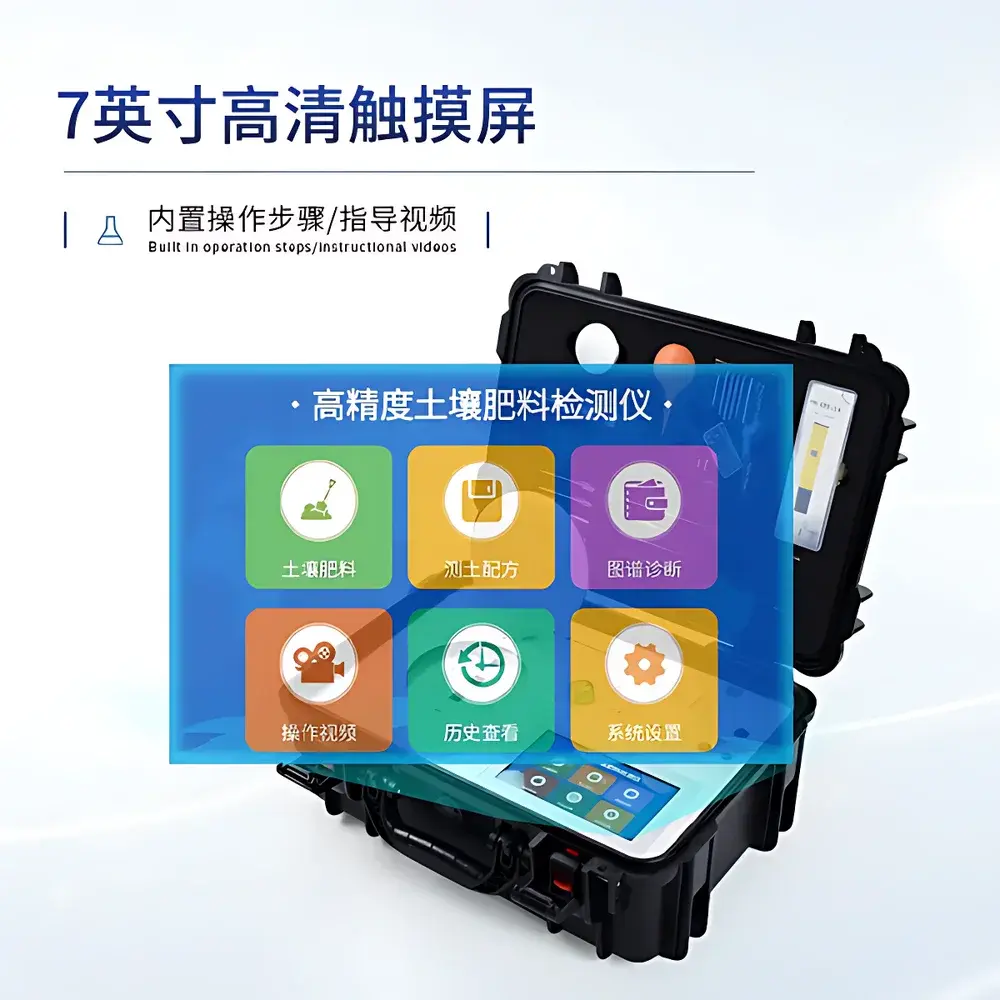
| Display | 7.0″ TFT-LCD, 1024×600 resolution |
| Operating System | Android 5.1, Quad-core CPU ≥1.8 GHz, 16 GB internal storage |
| Power Supply | AC 220±22 V / DC 12 V + 5 V |
| Environmental Rating | IP65 |
| Dimensions | 470 × 340 × 210 mm |
| Weight | ≤5.2 kg |
| Data Output | Built-in thermal printer, Wi-Fi cloud upload, USB export (CSV), QR-coded report generation |
| Compliance | Designed for field-deployable environmental screening per ISO 11047 (soil sampling), ASTM D6317 (heavy metal extraction), and aligned with US EPA Method 6010D/7000B preparatory workflows |
Overview
The COMECAUSE IN-ZS300 Portable Soil Heavy Metal Analyzer is a field-deployable spectrophotometric instrument engineered for rapid, on-site semi-quantitative assessment of heavy metal contaminants in soil and agricultural matrices. It operates on the principle of colorimetric reaction kinetics coupled with multi-wavelength absorbance measurement—where target metals (e.g., Pb, Cd, As, Cr, Hg) react with proprietary chelating reagents to form chromophores with defined extinction coefficients. Absorbance at four discrete wavelengths (420 nm, 510 nm, 590 nm, 680 nm) is measured simultaneously across four fixed-position optical channels, enabling cross-channel validation and interference correction. Unlike laboratory-grade ICP-MS or AAS systems, the IN-ZS300 is not intended for regulatory compliance-level quantification but serves as a validated prescreening tool—providing trace-level detection sensitivity (sub-ppm equivalent response) with high repeatability (≤0.03%) and minimal operator dependency. Its design prioritizes ruggedness, battery autonomy (>10 h), GPS-tagged georeferencing, and seamless integration into digital environmental monitoring workflows.
Key Features
- Four independent, solid-state optical channels with thermally stabilized LED sources (lifespan >100,000 h), each calibrated to ±2 nm wavelength tolerance.
- Integrated sample processing guidance: step-by-step on-device video tutorials and real-time procedural prompts eliminate reliance on paper manuals—critical for field technicians with variable training backgrounds.
- Dual authentication security: fingerprint + password login with role-based user accounts, ensuring audit-trail integrity for GLP-aligned operations.
- Embedded thermal printer generating tamper-evident reports including sample ID, GPS coordinates, analyst ID, timestamp, channel-specific absorbance values, derived indices, and scannable QR codes linking to cloud-stored raw data.
- Android 5.1 platform with quad-core processor and 16 GB onboard storage—supports offline operation, firmware updates via USB/Wi-Fi, and local history review without network connectivity.
- IP65-rated enclosure with shock-absorbing PVC composite housing and recessed, light-tight cuvette chamber (15.7 cm diameter遮光 cover) to eliminate ambient stray-light interference during measurement.
- Auto-calibration sequence embedded within assay workflow—no manual zeroing or warm-up required; instrument stability maintained at <0.3% drift over 60 min (transmittance mode).
Sample Compatibility & Compliance
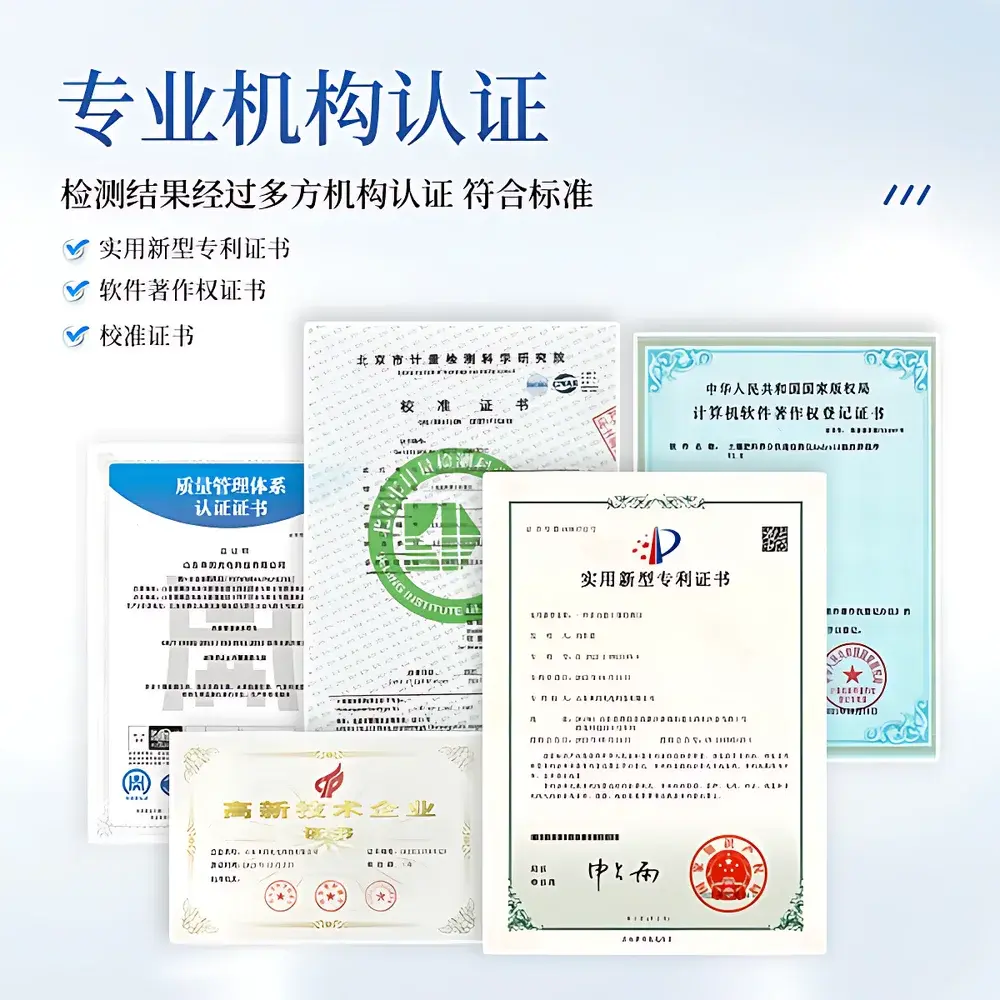
The IN-ZS300 supports standardized aqueous extracts prepared from soil, fertilizer, fruit, vegetable, and food samples using acid digestion or chelation-based extraction protocols consistent with ISO 11047 (soil sampling), ASTM D6317 (extraction of metals from solid waste), and EPA SW-846 Method 3050B pre-treatment guidelines. While not certified for final regulatory reporting under 40 CFR Part 136 or EU Directive 2009/128/EC, it delivers repeatable relative indices suitable for tiered decision-making: initial site triage, hotspot delineation, and longitudinal remediation tracking. All reagent kits are pre-formulated and lot-controlled; batch-specific calibration curves are auto-loaded via QR code scan. The system meets electromagnetic compatibility (EMC) requirements per IEC 61326-1 and carries national utility model patent certification (CN217878921U).
Software & Data Management
Data acquisition, annotation, and transmission are managed through the COMECAUSE AgriCloud™ platform—a secure, ISO 27001-aligned SaaS environment provisioned with dedicated tenant accounts per organization. Each uploaded record includes geotagged metadata, operator credentials, instrument serial number, and full audit logs compliant with FDA 21 CFR Part 11 principles (electronic signatures, time-stamped revisions, immutable history). Export options include CSV, Excel, and PDF; custom dashboards support spatial heatmapping of contamination gradients across farm parcels or industrial sites. The companion WeChat Mini Program enables remote access to historical datasets, trend analysis, and automated alert thresholds—facilitating real-time collaboration between field staff and central QA/QC teams.
Applications
- Agricultural land risk screening: Rapid stratified sampling across grain belts or horticultural zones to identify Pb/Cd-exceeding plots prior to planting—enabling dynamic crop zoning and irrigation source verification.
- Brownfield preliminary assessment: On-the-spot evaluation of legacy industrial sites (e.g., smelters, electroplating facilities) to define Phase I ESA boundaries and prioritize excavation targets.
- Emergency response deployment: Immediate post-incident mapping of As/Hg plumes following tailings dam failures or illegal dumping events—supporting containment strategy formulation within 2-hour windows.
- Remediation performance monitoring: Bi-weekly in-situ tracking of Cr(VI) reduction or Cd phytoextraction efficiency using identical sampling points and reagent lots to ensure inter-temporal comparability.
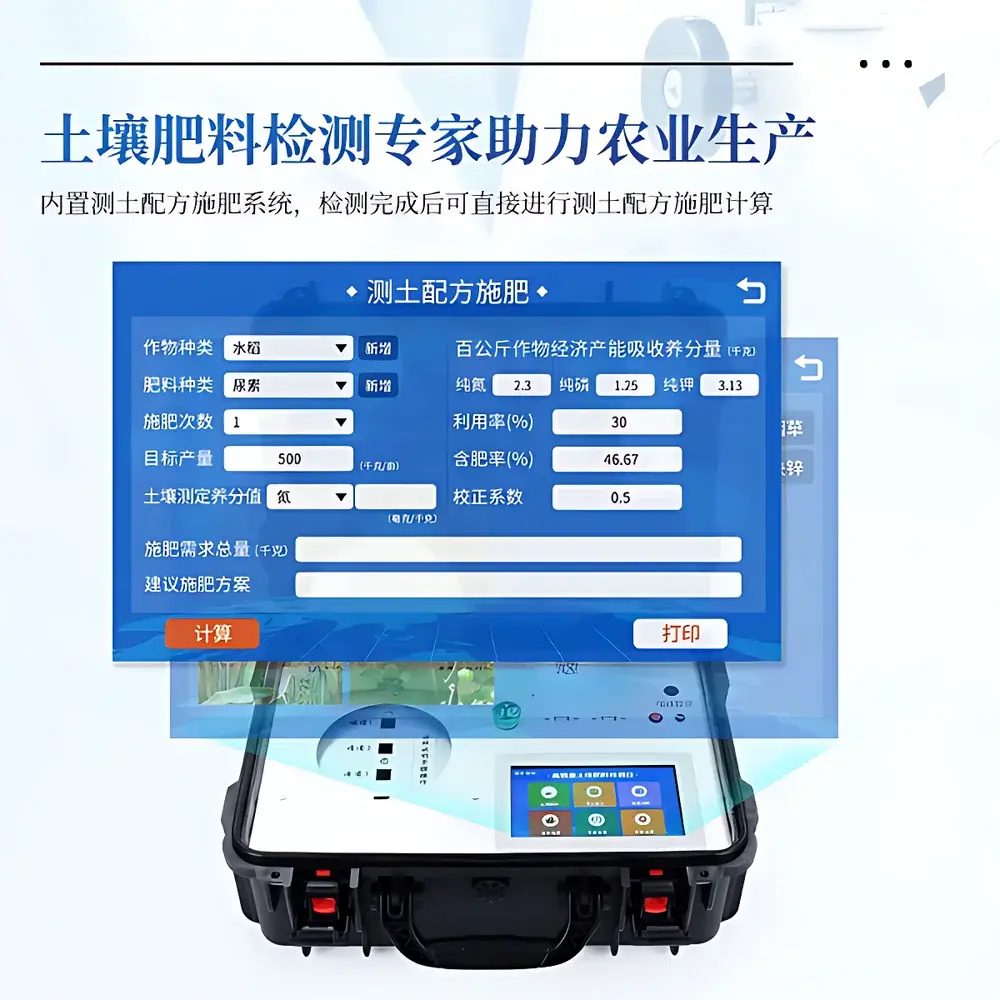
- Extension service support: Integration with county-level soil fertility databases to cross-reference heavy metal indices with NPK and organic matter data—informing balanced nutrient management advisories.
FAQ
Is the IN-ZS300 compliant with ISO/IEC 17025 for accredited testing?
No—it is designed for field screening, not accredited laboratory analysis. Confirmatory quantification requires ICP-OES or GF-AAS per ISO 11047 Annex B.
Can the instrument quantify total vs. bioavailable metal fractions?
It measures extractable (chelator-accessible) fractions only; speciation requires sequential extraction or XRD/XANES follow-up.
What is the shelf life of included reagent kits?
18 months unopened at 4–25°C; 7 days after first opening when stored desiccated and protected from light.
Does the device support third-party LIMS integration?
Yes—via RESTful API endpoints and HL7-compliant data schema; documentation available under NDA.
How is measurement traceability maintained across instruments?
Each unit ships with NIST-traceable photometric verification standards and factory calibration certificates valid for 12 months.
Related Products







