
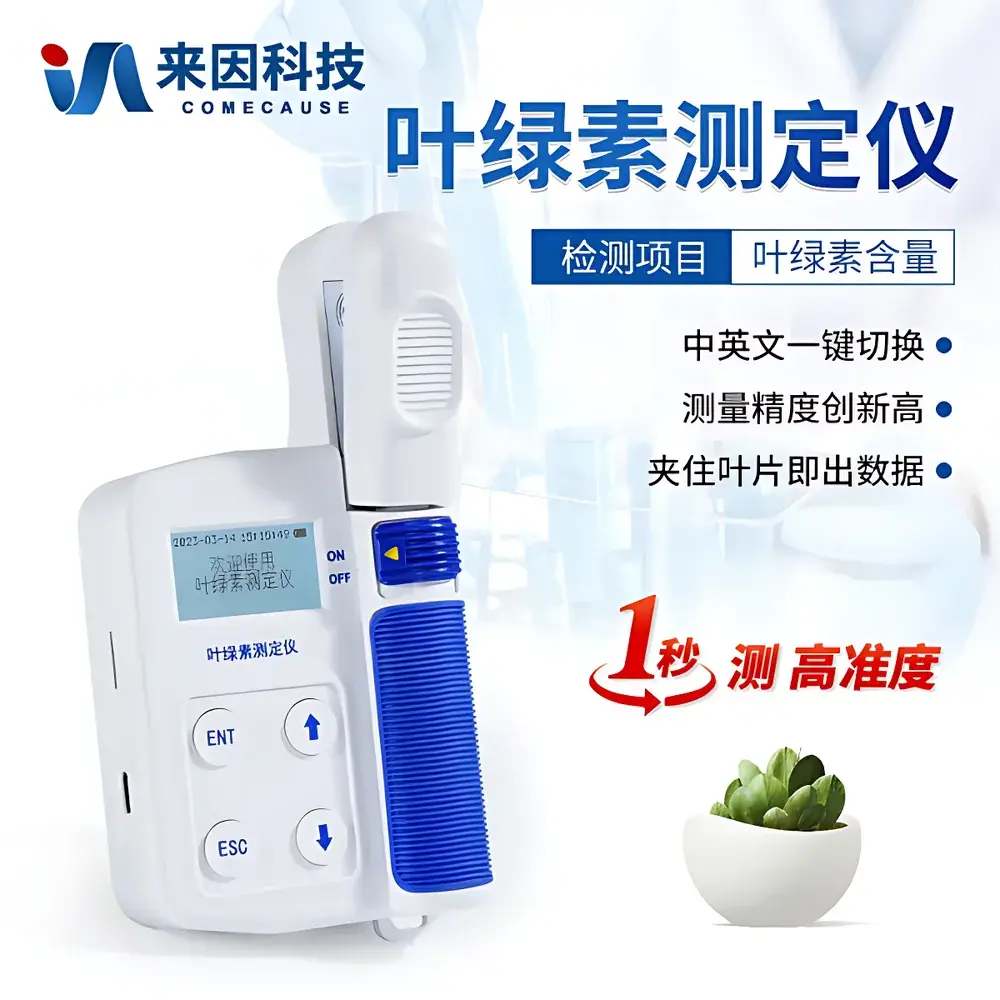
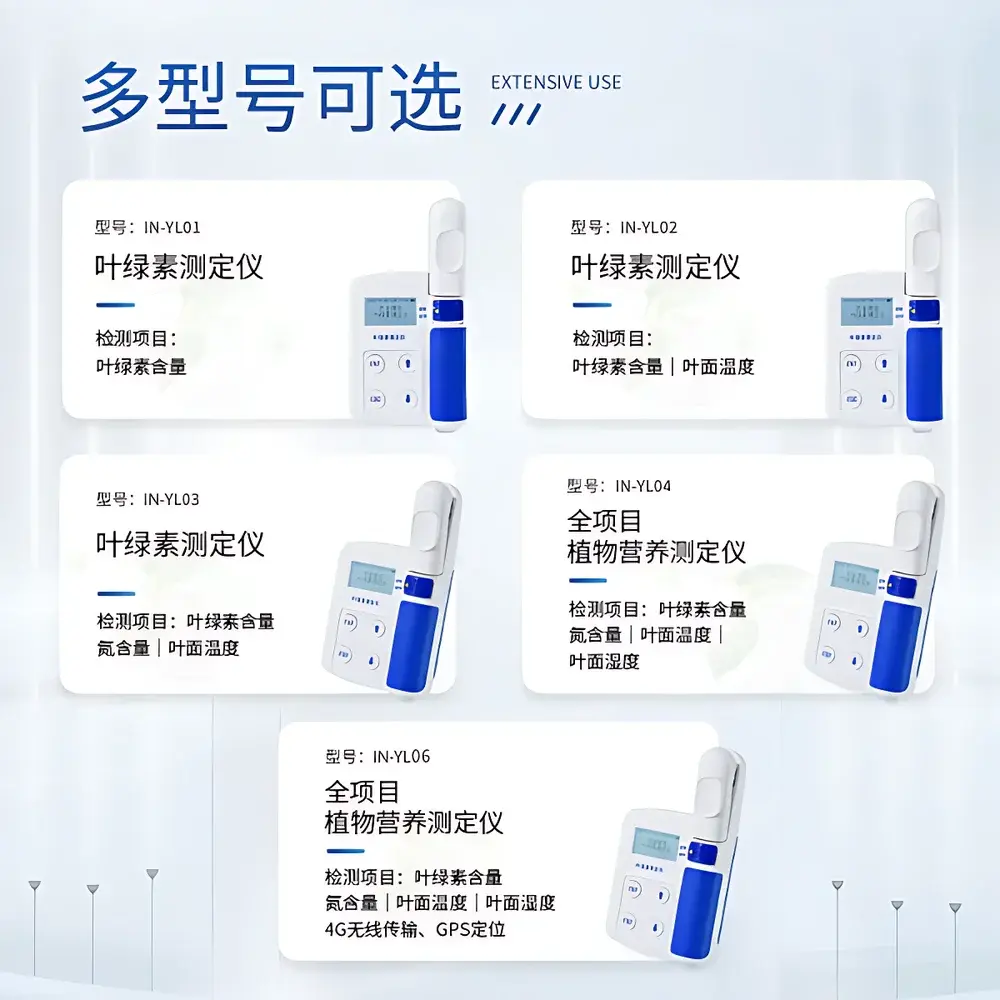
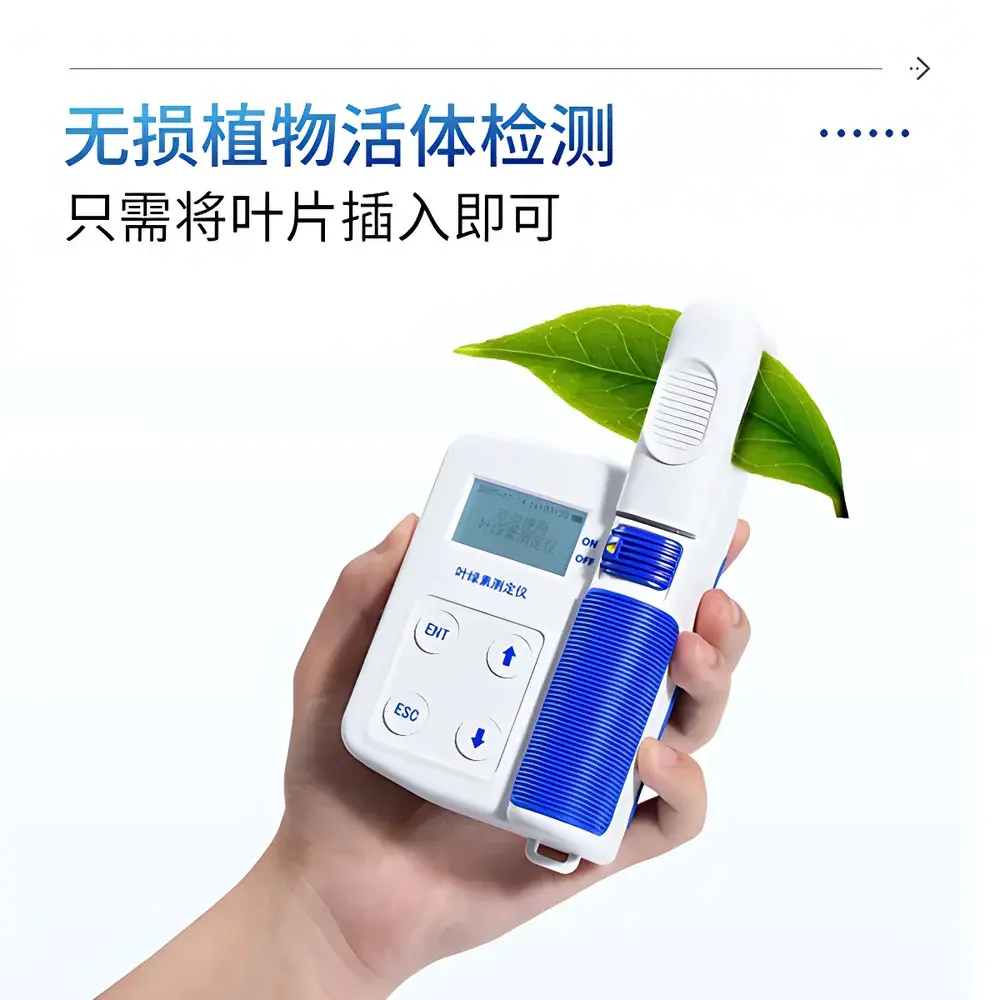
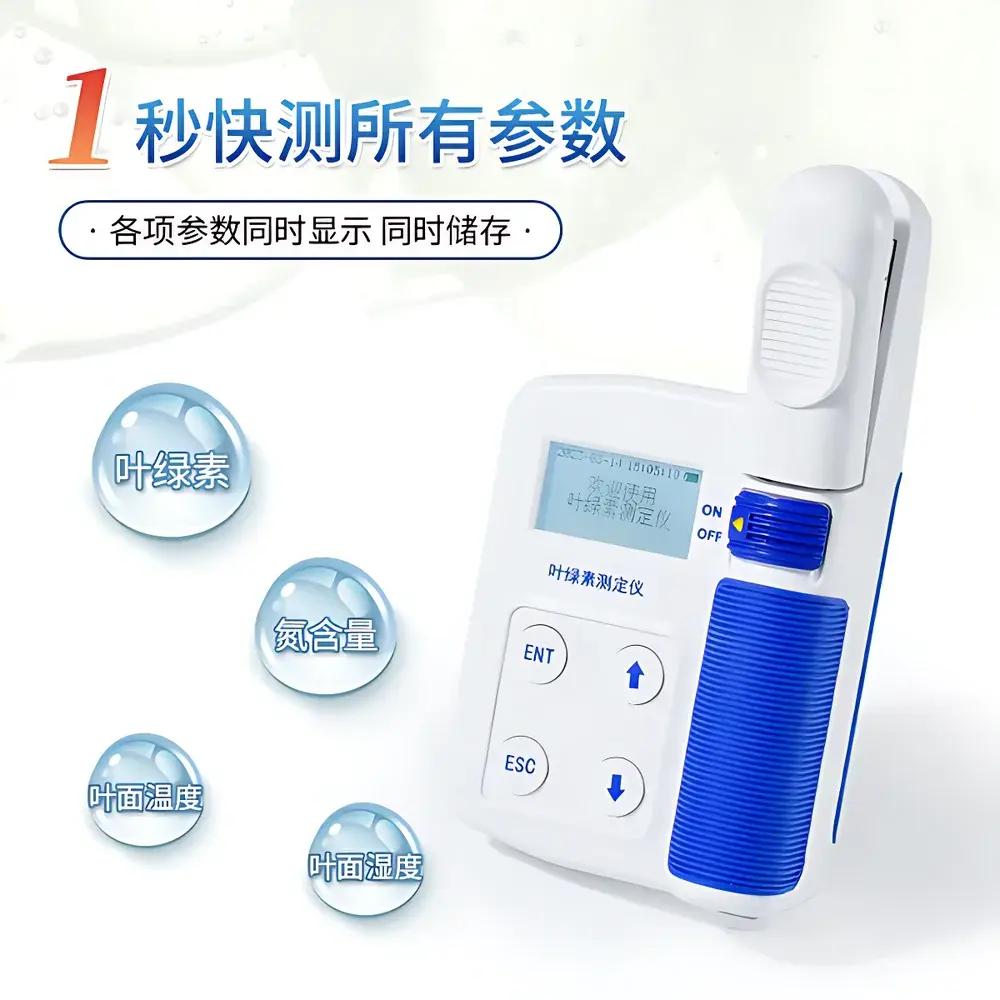
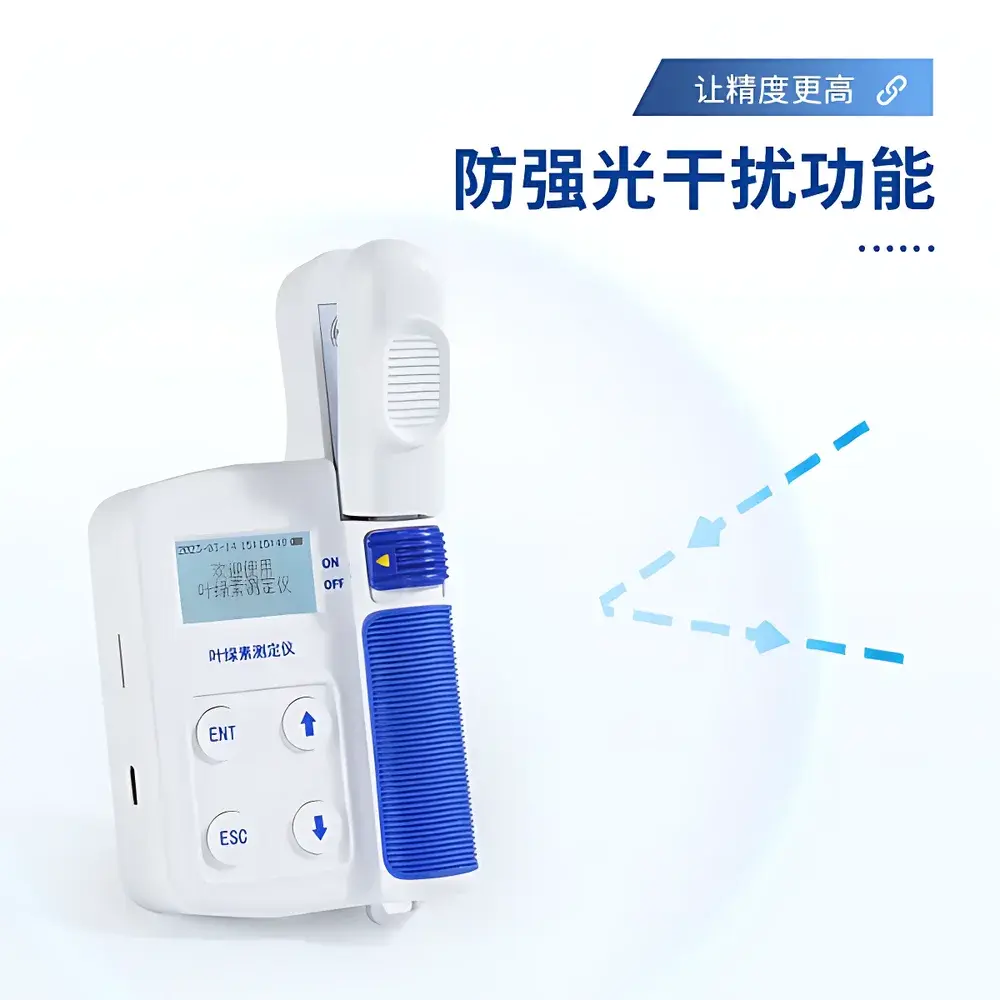
COMECAUSE IN-YL01 Portable SPAD Chlorophyll Meter
| Brand | COMECAUSE |
|---|---|
| Origin | Shandong, China |
| Manufacturer | Yes |
| Model | IN-YL01 |
| Measurement Range | 0.0–99.99 SPAD |
| Measurement Time | <0.8 s |
| Measurement Area | 2 mm × 3 mm |
| Accuracy | ±1.0 SPAD (at 0–50 SPAD, 25 °C) |
| Repeatability | ±0.3 SPAD (at 0–50 SPAD) |
| Data Storage | 16 GB internal flash memory (grouped storage supported) |
| Power Supply | 4.2 V rechargeable Li-ion battery (3000 mAh) |
| Weight | 230 g |
| Operating Temperature | −10 °C to +50 °C |
| Relative Humidity | ≤85% RH (non-condensing) |
| Display | High-contrast LCD (sunlight-readable) |
| Interface | USB-C for data export & charging |
| Language | Dual-language UI (English/Chinese), toggleable |
| Compliance | Designed per IEC 61000-4 EMC standards |
Overview
The COMECAUSE IN-YL01 Portable SPAD Chlorophyll Meter is a field-deployable optical instrument engineered for non-destructive, real-time assessment of relative chlorophyll content in intact plant leaves. It operates on the principle of dual-wavelength transmittance photometry: two light-emitting diodes—centered at 650 nm (red, strongly absorbed by chlorophyll a and b) and 940 nm (near-infrared, minimally absorbed and used as a reference for leaf thickness and structural interference)—illuminate a defined 2 mm × 3 mm leaf area. The ratio of transmitted intensities at these wavelengths is converted via a calibrated algorithm into the Soil-Plant Analysis Development (SPAD) index—a dimensionless, unitless value empirically correlated with chlorophyll concentration (µg/cm²) across diverse species under controlled calibration conditions. Unlike destructive lab-based spectrophotometric methods requiring solvent extraction, the IN-YL01 enables rapid (<0.8 s per measurement), operator-independent quantification without leaf excision or tissue disruption—making it suitable for longitudinal monitoring, high-throughput phenotyping, and precision agronomic decision support.
Key Features
- Optical architecture optimized for field robustness: Sealed optical path, dust-resistant aperture, and temperature-compensated photodiode detection ensure stable SPAD output across −10 °C to +50 °C ambient conditions.
- High repeatability: ±0.3 SPAD standard deviation (n ≥ 10, same leaf position, 0–50 SPAD range), validated against NIST-traceable leaf reference standards.
- Integrated 16 GB flash memory supporting hierarchical data grouping (e.g., by crop, growth stage, plot ID), enabling structured field data capture without external software dependency.
- USB-C interface supports simultaneous charging and direct file transfer (FAT32-formatted .csv exports); optional microSD card slot allows offline backup and cross-platform compatibility.
- Sunlight-readable monochrome LCD with adjustable contrast and auto-backlight control—designed for extended outdoor use under variable irradiance.
- Low-power system architecture: 3000 mAh Li-ion battery delivers ≥8 hours of continuous operation (typical usage: 500+ measurements per charge); includes overcharge protection and state-of-charge indicator.
- Bilingual firmware (English/Chinese) with single-button language switching—facilitates multinational field teams and training environments.
Sample Compatibility & Compliance
The IN-YL01 is validated for use with dicot and monocot leaves exhibiting typical mesophyll structure and thickness (0.1–0.5 mm). It performs reliably on common agricultural species including maize (Zea mays), rice (Oryza sativa), wheat (Triticum aestivum), soybean (Glycine max), and cotton (Gossypium hirsutum). While SPAD values are inherently semi-quantitative and influenced by leaf anatomy, nitrogen status remains the dominant physiological driver across most C3 and C4 crops under standard irrigation and light regimes. The instrument conforms to IEC 61000-4 electromagnetic compatibility requirements for portable field instrumentation. Its design supports Good Laboratory Practice (GLP) and Good Agricultural Practice (GAP) workflows: all measurements include timestamp, sequential ID, and optional user-defined group tags—enabling traceability in regulatory or research-grade documentation. Though not FDA 21 CFR Part 11-certified out-of-box, audit-ready data logs (with immutable timestamps and no post-hoc editing capability) meet baseline requirements for field trial reporting under ISO 22000 and FAO crop monitoring protocols.
Software & Data Management
No proprietary desktop software is required. Data export occurs via drag-and-drop file access over USB-C or microSD card—generating comma-separated values (.csv) files containing columns: Measurement_ID, Timestamp (YYYY-MM-DD HH:MM:SS), SPAD_Value, Group_Tag, Battery_Level (%), and Ambient_Temp_C (if sensor-equipped). Each file header includes instrument serial number and firmware version for full provenance tracking. Internal memory permits on-device review, sorting, and selective deletion of anomalous readings—critical for maintaining data integrity during multi-day surveys. Exported datasets integrate natively with Excel, R, Python (pandas), and GIS platforms (QGIS, ArcGIS) for spatial interpolation, time-series analysis, or variable-rate application (VRA) map generation. Optional GPS module integration (sold separately) embeds WGS84 coordinates into each record, enabling georeferenced nutrient mapping compatible with ISO 11783 (ISOBUS) telemetry systems.
Applications
- Nitrogen Status Monitoring: Quantify in-season N sufficiency in cereals and legumes to guide top-dressing decisions, reducing fertilizer input by 15–30% while maintaining yield parity.
- Variable-Rate Fertilization (VRF) Support: Generate SPAD-based prescription maps for auto-steered spreaders or fertigation controllers, aligning nutrient delivery with spatial heterogeneity.
- Crop Breeding & Phenotyping: Screen large populations for nitrogen-use efficiency (NUE) traits or stay-green characteristics in early-generation trials—accelerating selection cycles without destructive sampling.
- Ecophysiological Research: Track chlorophyll dynamics in response to drought, salinity, or heavy metal stress across experimental plots or natural gradients.
- Extension & Advisory Services: Equip extension agents with objective, real-time diagnostics to demonstrate nutrient deficiency symptoms and validate management interventions on-farm.
FAQ
What does SPAD stand for, and how is it related to actual chlorophyll concentration?
SPAD stands for Soil-Plant Analysis Development. It is an empirical index derived from the logarithmic ratio of red-to-infrared light transmittance. While not a direct µg/cm² measurement, SPAD correlates linearly with extracted chlorophyll content (R² > 0.92 in calibration studies on wheat, rice, and maize) when instrument-specific calibration curves are applied.
Can the IN-YL01 be used on conifer needles or mosses?
Its optical design assumes planar, translucent leaf geometry. Performance on needle-like or highly reflective tissues is not validated; users should conduct preliminary correlation trials against lab-extracted chlorophyll before operational deployment.
Is factory recalibration required, and how often?
The device ships with factory calibration verified against NIST-traceable leaf standards. Annual verification is recommended for mission-critical applications; COMECAUSE provides certified recalibration services with documented uncertainty budgets.
Does the instrument compensate for leaf thickness automatically?
Yes—the 940 nm reference channel corrects for scattering effects attributable to thickness, water content, and epidermal structure, improving inter-species comparability within the validated range.
How is data security and integrity maintained during field use?
All measurements are written directly to flash memory with write-once semantics: no editing or overwriting is possible after acquisition. Timestamps are hardware-generated and cannot be altered, satisfying basic ALCOA+ principles (Attributable, Legible, Contemporaneous, Original, Accurate) for field data governance.




