
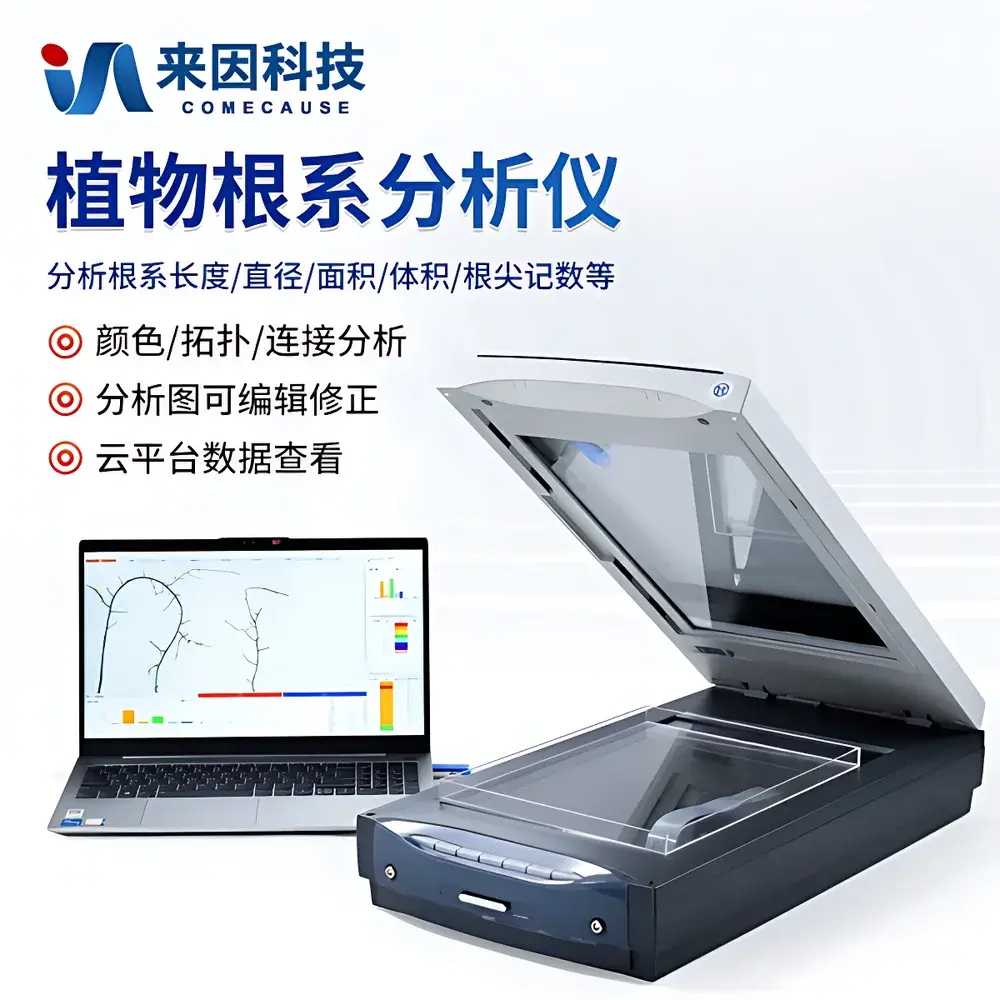
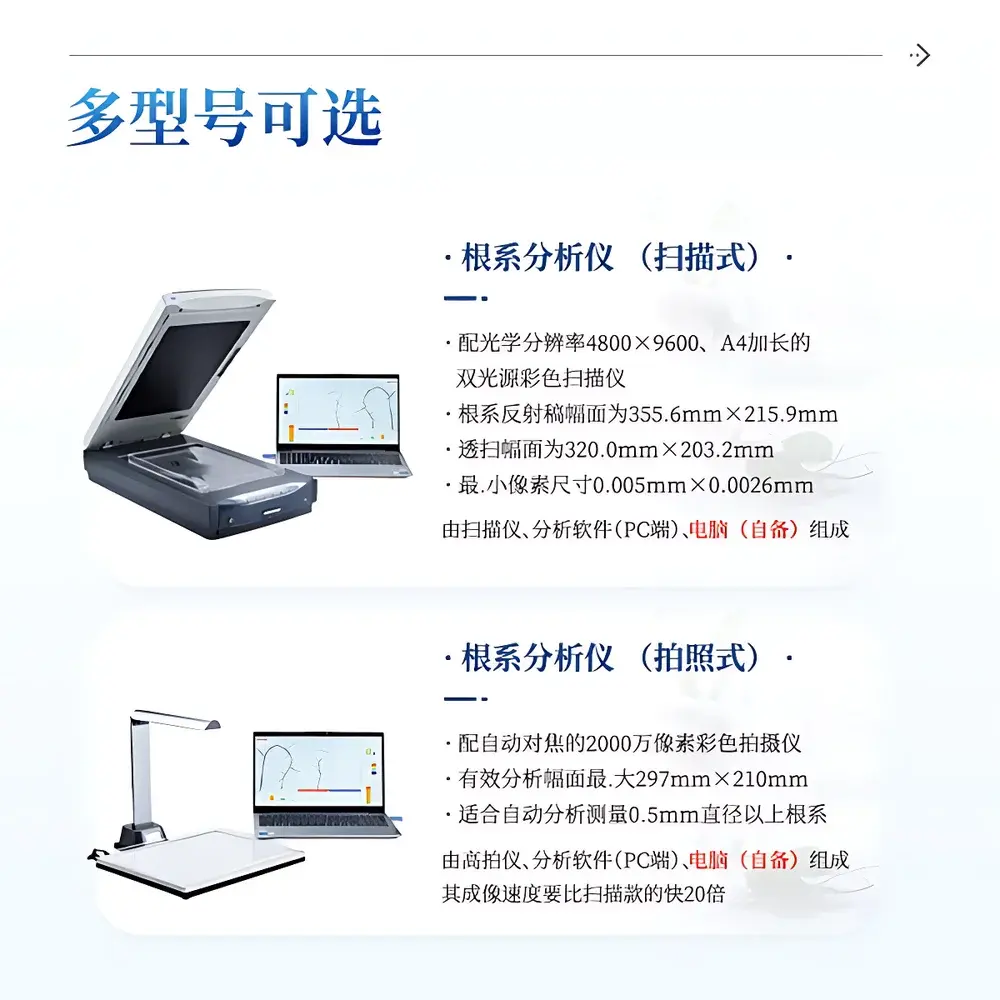
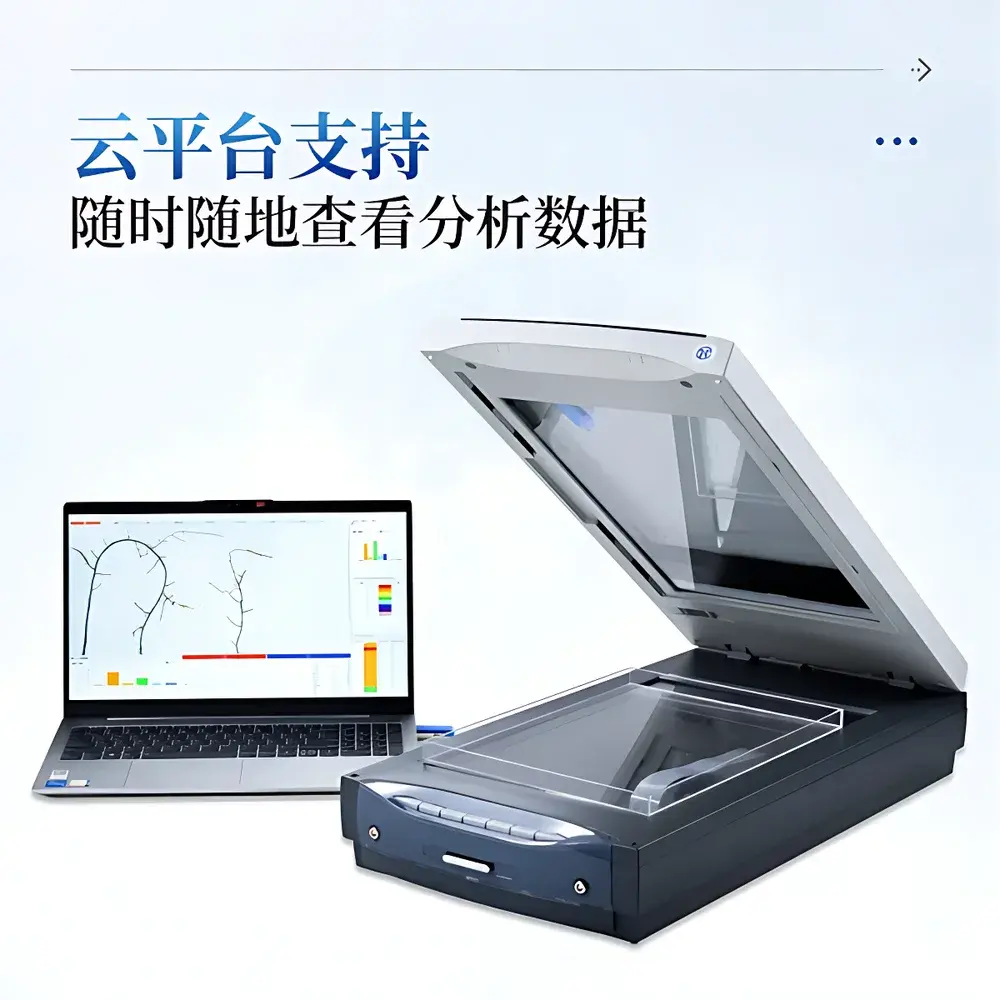
COMECAUSE IN-GX02 Plant Root Imaging & Morphometric Analysis System
| Brand | COMECAUSE |
|---|---|
| Model | IN-GX02 |
| Origin | Shandong, China |
| Manufacturer Type | OEM Manufacturer |
| Optical Resolution | 4800 × 9600 dpi (reflective), 6400 × 9600 dpi (max) |
| Scan Area (Reflective) | 355.6 mm × 215.9 mm |
| Pixel Size | ≥ 0.005 mm × 0.0026 mm |
| Light Source | Dual Cold Cathode Fluorescent Lamp (CCFL) |
| Interface | USB 2.0 |
| Supported Formats | TIFF, JPEG |
| Software | Proprietary root morphometric analysis suite with hardware dongle encryption |
| Cloud Integration | Yes (web-based data sync and remote access) |
| OS Compatibility | Windows 10 Professional/Enterprise (64-bit) |
Overview
The COMECAUSE IN-GX02 Plant Root Imaging & Morphometric Analysis System is a high-precision, non-destructive digital phenotyping platform engineered for quantitative analysis of excised plant root systems. It operates on the principle of high-resolution optical scanning combined with algorithm-driven morphometric segmentation and topological reconstruction. Unlike in situ imaging modalities (e.g., minirhizotrons or X-ray CT), the IN-GX02 is optimized for post-extraction root analysis—enabling reproducible, standardized measurement of morphological and architectural traits under controlled laboratory conditions. The system integrates a dual-illumination A4+ flatbed scanner with calibrated diffuse lighting to eliminate shadow artifacts and ensure uniform contrast across heterogeneous root samples—including fine laterals, root hairs, nodules, and adventitious structures. Its core function is to convert digitized 2D root images into statistically robust, biologically interpretable metrics aligned with established plant phenotyping ontologies (e.g., Plant Ontology, PO:0009005). Designed for use in academic research, breeding programs, and regulatory-compliant agronomic trials, the IN-GX02 supports GLP-aligned data capture through audit-trail-enabled software logging and encrypted analysis workflows.
Key Features
- Dual-source CCFL illumination system with dedicated calibration zones to suppress glare, shadowing, and vignetting—critical for accurate diameter and branching detection across dense root mats.
- High-fidelity optical resolution up to 6400 × 9600 dpi (interpolated), yielding sub-5 µm effective pixel size (≥0.005 mm × 0.0026 mm), sufficient to resolve root hairs and cortical cell patterns in dicotyledonous species.
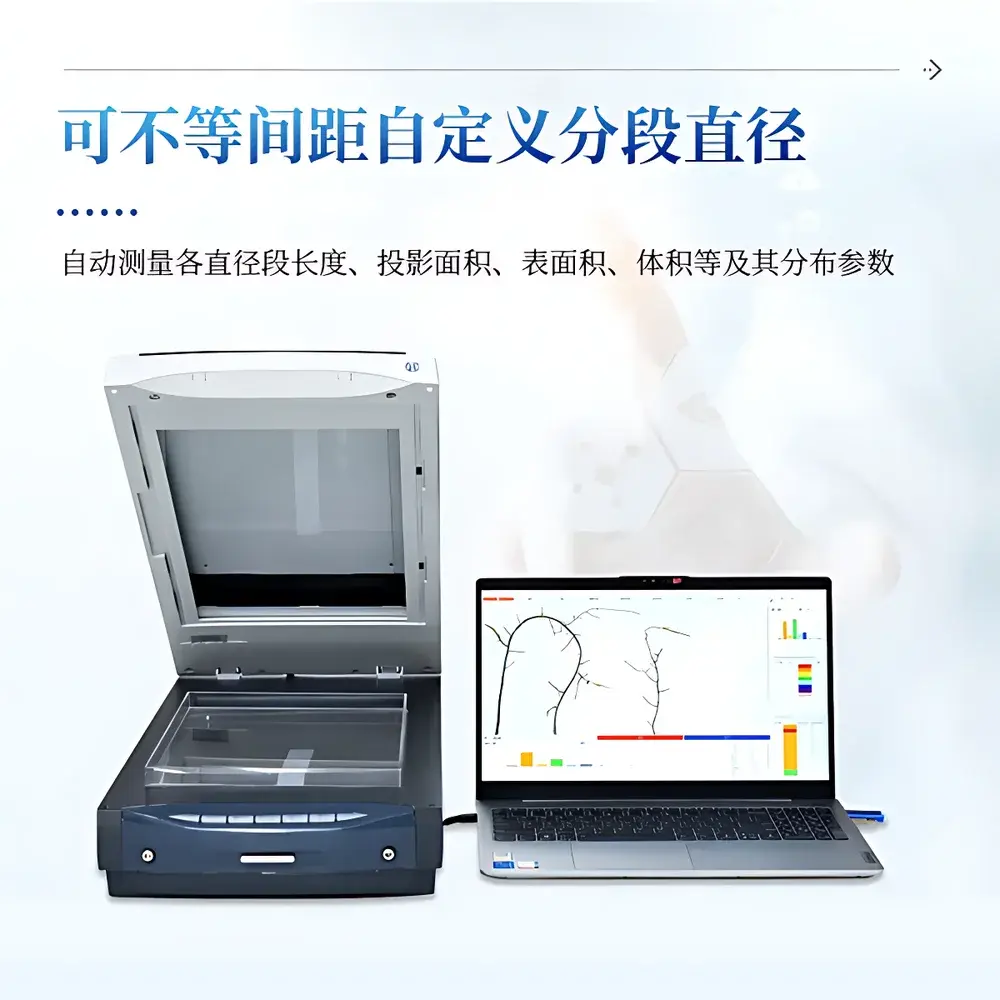
- Proprietary morphometric engine performing non-statistical, pixel-level geometric computation—measuring total root length, average and median diameter, surface area, volume (via cylinder approximation), tip count, fork count, cross-over density, and fractal dimension (box-counting method).
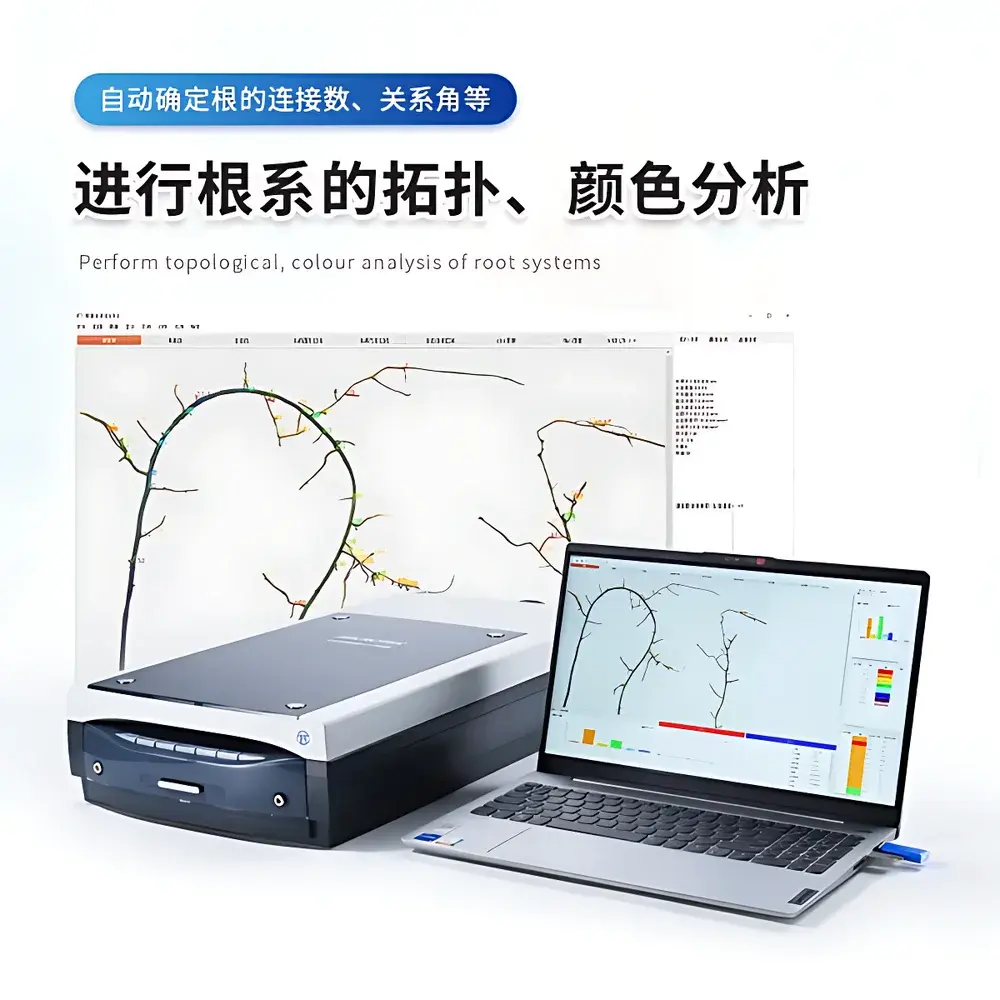
- Advanced topology module enabling hierarchical root classification: automatic primary root identification, branch-order assignment, connection mapping, and angular distribution analysis (gravitropic angle, lateral emergence angle).
- Color-based segmentation capability: quantifies spatial distribution and morphometrics of roots by hue—supporting differentiation of live/dead tissue, nitrogen-fixing nodules, pathogen-infected zones, or pigment-labeled genotypes.
- Customizable diameter binning: user-defined, non-uniform diameter intervals (e.g., 0–0.1 mm, 0.1–0.3 mm, >0.3 mm) with per-bin reporting of length, projected area, surface area, and volume.
- Fully automated batch processing for >100 samples per session, including auto-crop, background subtraction, noise filtering, and manual correction layer support for operator-reviewed refinement.
Sample Compatibility & Compliance
The IN-GX02 accepts washed root systems from hydroponic, agar, sand, or soil-grown plants—provided roots are fully separated from substrate and laid flat on the supplied high-transparency acrylic root trays (3 sizes included). It accommodates monocots (e.g., rice, maize), dicots (e.g., Arabidopsis, soybean, tomato), and woody species (e.g., poplar, apple seedlings) up to ~30 cm in maximum dimension. While not intended for in vivo imaging, it complies with ISO 20217:2019 (“Plant phenotyping — Requirements for image-based root trait measurement”) for ex situ root analysis protocols. Data export formats (CSV, Excel-compatible XLSX) and metadata tagging align with MIAPPE v1.1 (Minimum Information About a Plant Phenotyping Experiment) standards. Audit logs, user authentication, and dongle-locked analysis modules satisfy baseline requirements for FDA 21 CFR Part 11 compliance in regulated crop trait validation studies.
Software & Data Management
The IN-GX02 runs on a Windows-native application secured via USB hardware dongle, ensuring license integrity and preventing unauthorized redistribution. The interface supports real-time bilingual switching (English/Chinese) without restart. All analytical operations—including thresholding, skeletonization, branch tracing, and color masking—are parameterized and saved as reusable protocol templates. Every analysis generates a timestamped, versioned output package containing: annotated TIFF image, summary statistics table, diameter distribution histogram, topological graph (SVG), and fractal dimension report. Data syncs automatically to the COMECAUSE Cloud Platform (HTTPS/TLS 1.3 encrypted), where users can curate datasets, generate comparative dashboards, and share read-only links with collaborators. Raw image archives and processed results are retained with SHA-256 checksum verification to ensure long-term data integrity.
Applications
- Crop Breeding & QTL Mapping: High-throughput screening of root architecture traits (e.g., deep rooting index, lateral density ratio) across RIL or MAGIC populations under drought or low-phosphorus stress.
- Physiological Ecology: Quantifying plasticity in root mass allocation, branching intensity, and gravitropic response across soil compaction gradients or mycorrhizal inoculation treatments.
- Forestry & Restoration Science: Assessing root spread efficiency and soil-binding capacity of native shrubs/grasses for slope stabilization and erosion control modeling.
- Precision Horticulture: Optimizing substrate composition and irrigation scheduling in container-grown ornamentals via longitudinal root growth kinetics (e.g., weekly scans tracking neobarrel formation).
- Symbiosis Research: Measuring nodule volume fraction relative to total root biomass—enabling quantitative correlation between rhizobial colonization and host nitrogen status.
FAQ
Is the IN-GX02 suitable for live, in-soil root imaging?
No. It is designed exclusively for ex situ analysis of cleaned, surface-dried root systems placed on transparent trays. For in situ monitoring, complementary techniques such as minirhizotrons or MRI-based root phenotyping are recommended.
What operating system versions are officially supported?
Windows 10 Professional or Enterprise (64-bit, version 1909 or later); Windows 11 is not validated. Virtual machine environments are unsupported due to USB dongle driver constraints.
Can the software export data directly to statistical packages like R or Python?
Yes—CSV exports include column headers compatible with pandas DataFrames and R data.table; full metadata JSON schemas are available upon request for programmatic integration.
Does the system support calibration against traceable standards?
Yes. Each unit ships with NIST-traceable resolution test charts and grayscale reference targets. Software includes built-in calibration workflow for pixel-to-mm conversion validation prior to analysis.
Are software updates provided, and how are they delivered?
Annual minor updates (bug fixes, format compatibility) are delivered via secure cloud portal; major version upgrades require dongle re-authorization and are covered under active maintenance contracts.




