
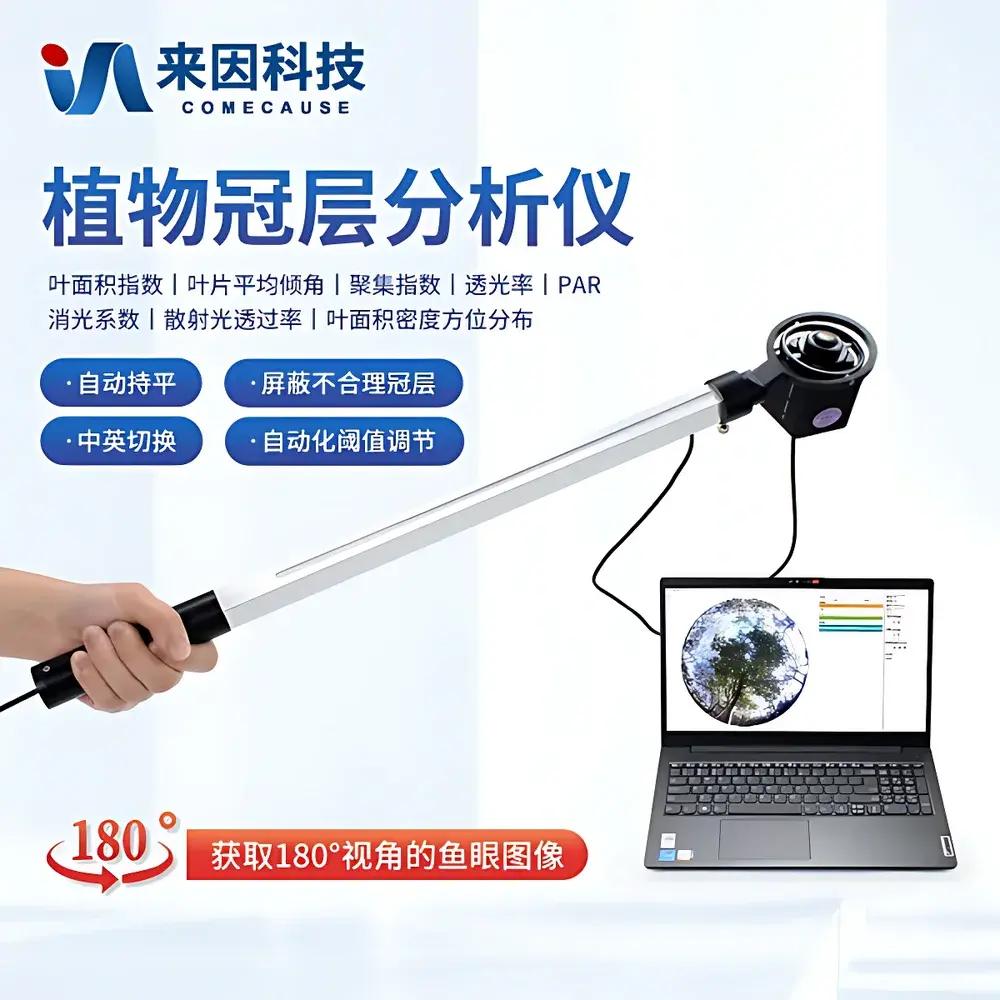
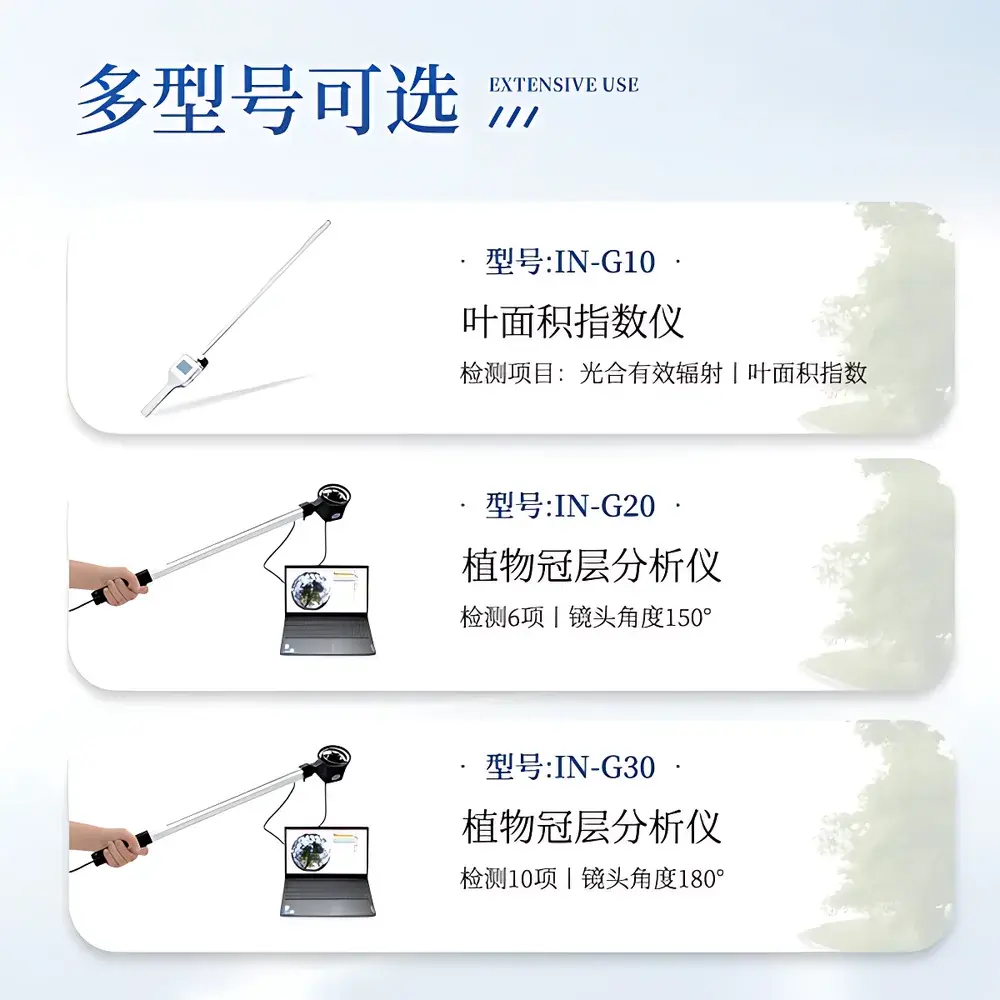
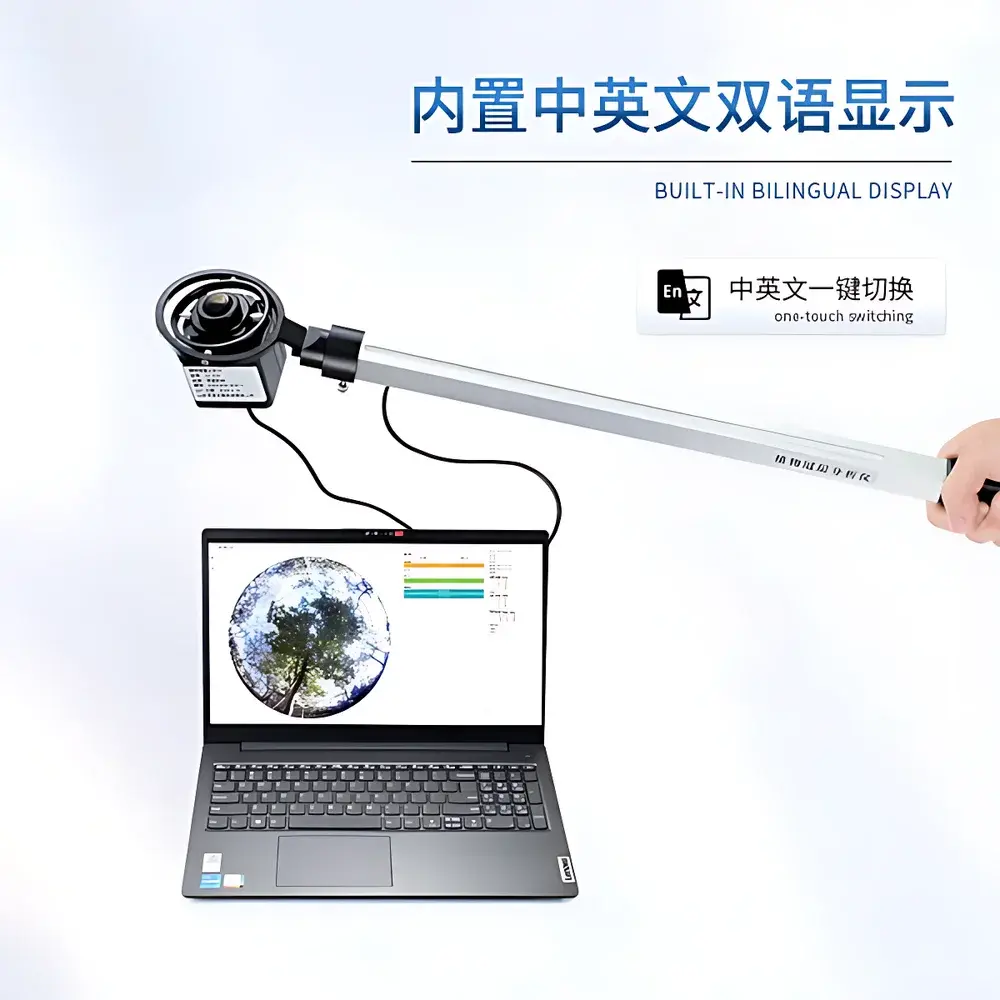
COMECAUSE IN-G30 Portable Canopy Analyzer System for Plant Physiology & Ecology Research
| Brand | COMECAUSE |
|---|---|
| Origin | Shandong, China |
| Manufacturer Type | OEM Manufacturer |
| Instrument Principle | Hemispherical Image Analysis (Fisheye Photography) |
| Instrument Type | Portable |
| Model | IN-G30 |
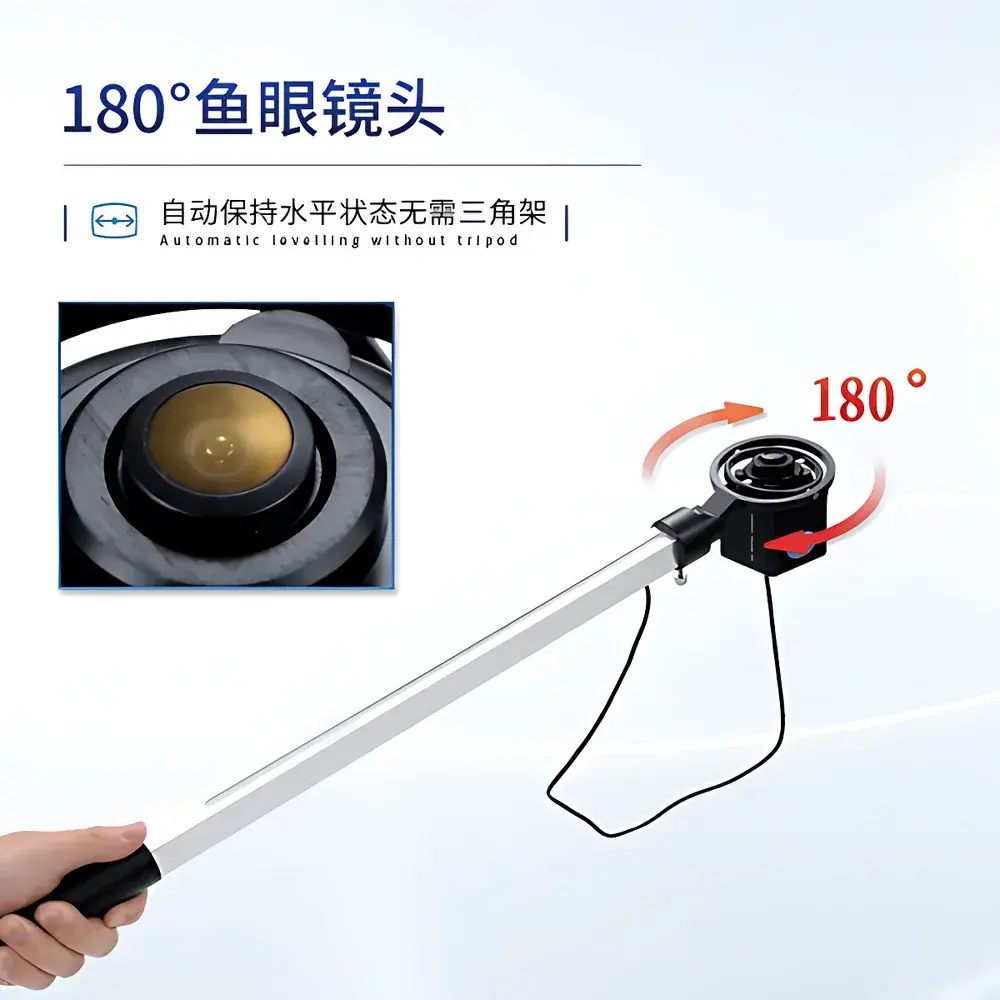
| Lens Field of View | 180° |
| Image Resolution | 2592 × 1944 |
| PAR Spectral Range | 400–700 nm |
| PAR Measurement Range | 0–3000 µmol·m⁻²·s⁻¹ |
| Operating Temperature | −10°C to +55°C |
| Relative Humidity Limit | ≤85% RH |
| Weight | 500 g |
| Interface | USB 2.0 |
| Software | COMECAUSE Canopy Analysis Suite v3.x |
| Compliance | Designed for ASTM E2912-13 (Standard Guide for Canopy Light Interception Measurements), ISO 11727:2022 (Plant Biophysics — Leaf Area Index Determination), and GLP-aligned data traceability |
Overview
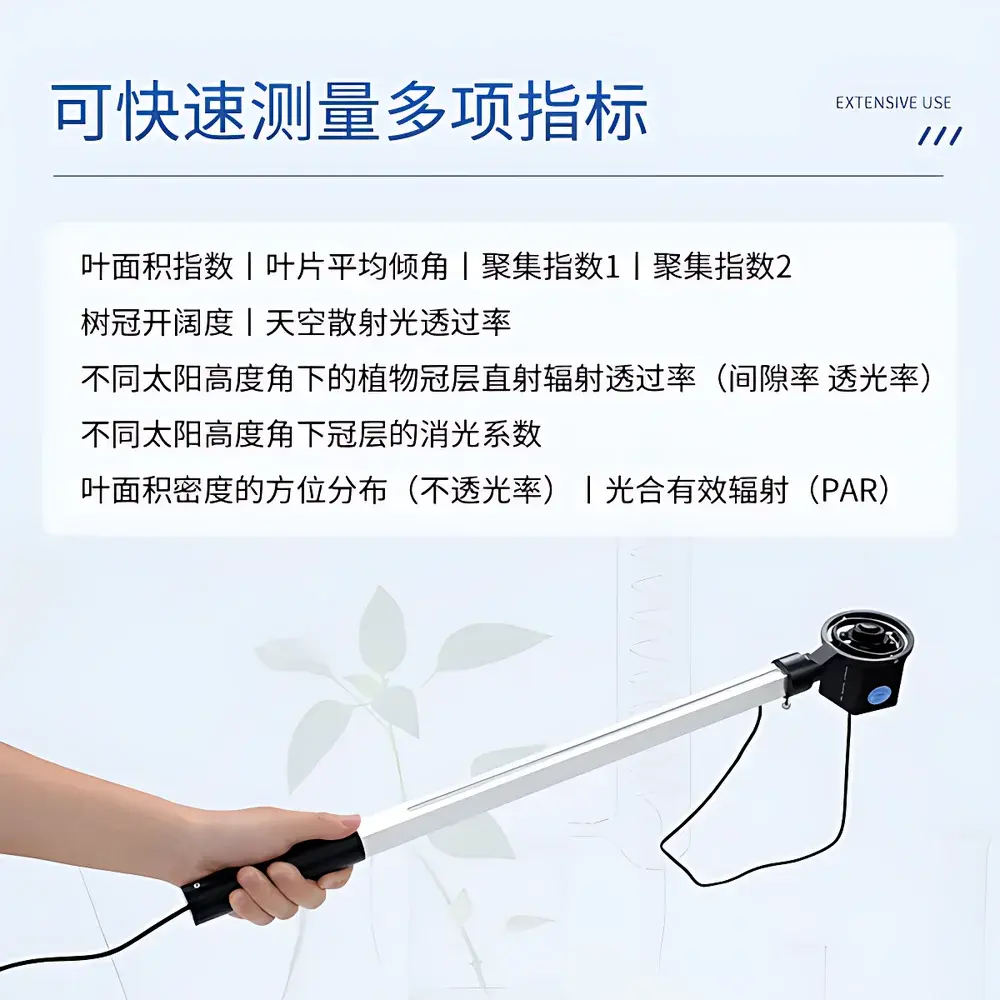
The COMECAUSE IN-G30 Portable Canopy Analyzer is an engineered field instrument for quantitative structural and radiative characterization of plant canopies using hemispherical photography and fisheye lens-based image analysis. It operates on the physical principle that light transmission through a vegetative canopy follows predictable attenuation patterns governed by the Beer–Lambert law and geometric optics assumptions—specifically, the relationship between gap fraction (sky visibility through canopy gaps) and leaf area index (LAI), clumping index, average leaf inclination angle, and radiation extinction coefficients. By capturing upward-facing 180° fisheye images beneath the canopy and applying validated semi-empirical algorithms—including the LAI-2200C-derived gap fraction inversion model—the IN-G30 delivers spatially resolved estimates of canopy architecture parameters without destructive sampling. Its design prioritizes field robustness, measurement repeatability, and compatibility with ecological monitoring protocols across agricultural, forestry, and climate change research applications.
Key Features
- Integrated 180° fisheye optical probe with auto-leveling gimbal mount—enables rapid, tripod-free acquisition of zenith-aligned hemispherical images under variable terrain conditions.
- Modular telescoping measurement rod (swing arm) with integrated 25-point PAR sensor array—supports vertical profiling of photosynthetically active radiation (400–700 nm) and simultaneous gap fraction mapping at multiple canopy heights.
- Real-time georeferencing: Built-in GPS module logs latitude/longitude coordinates for each image capture, ensuring spatial integrity in long-term plot-based studies.
- Adaptive threshold segmentation engine—automatically calibrates pixel intensity thresholds based on local histogram statistics, eliminating operator bias in sky/vegetation classification.
- Dual-language UI (English/Chinese) with one-touch language switching—designed for international collaborative fieldwork and multilingual research teams.
- Configurable angular partitioning: Tilt angle (0°–90° from zenith) and azimuth (0°–360°) are independently divisible into up to 10 sectors per dimension, enabling directional analysis of canopy heterogeneity and edge effects.
- Selective region masking capability—allows exclusion of non-canopy artifacts (e.g., soil exposure, equipment shadows, missing plants, or border rows) during image processing to improve parameter accuracy.
Sample Compatibility & Compliance
The IN-G30 is validated for use across herbaceous and woody vegetation types—including row crops (maize, soybean, wheat), orchards (apple, citrus), forest understories, and grassland ecosystems. It accommodates variable canopy densities (LAI range: 0.5–8.0), structural complexity (clumping indices 0.4–1.0), and solar elevation angles (10°–80°). Data output conforms to FAO CropWat and USDA-ARS canopy modeling conventions. Hardware and software workflows support audit-ready documentation per Good Laboratory Practice (GLP) requirements, including timestamped metadata, user ID logging, and immutable raw image archiving. While not FDA-certified, its analytical pipeline aligns with ISO 11727:2022 methodology validation criteria for LAI determination and ASTM E2912-13 guidance for field-based light interception quantification.
Software & Data Management
The COMECAUSE Canopy Analysis Suite (v3.x) provides a deterministic, scriptable environment for batch processing of fisheye images. It implements the Leblanc et al. (2005) correction for lens distortion, calculates gap fraction per angular bin, and derives LAI via the modified Beer’s law formulation: LAI = −ln(Pg)/k(θ), where Pg is gap fraction and k(θ) is the extinction coefficient dependent on solar zenith angle θ and leaf angle distribution. All outputs include uncertainty propagation estimates derived from image noise variance and sensor calibration tolerances. Processed datasets export to CSV, GeoJSON, and NetCDF formats; optional cloud synchronization routes data to secure, ISO/IEC 27001-compliant agricultural data repositories with role-based access control and versioned backups. Raw image files retain EXIF metadata (GPS, timestamp, exposure settings) for full traceability.
Applications
- Optimizing nitrogen use efficiency by correlating LAI dynamics with spectral reflectance and yield outcomes in precision agriculture trials.
- Validating satellite-derived LAI products (e.g., MODIS MCD15A3H) through ground-truthing campaigns in heterogeneous landscapes.
- Quantifying light competition in mixed-species agroforestry systems to inform intercropping density recommendations.
- Assessing canopy closure rates in reforestation projects to evaluate seedling establishment success.
- Supporting carbon flux modeling by parameterizing stomatal conductance and transpiration subroutines with measured PAR interception profiles.
- Long-term ecological monitoring under climate change scenarios—tracking phenological shifts in canopy development timing and structure.
FAQ
Does the IN-G30 require external power sources in the field?
No. The fisheye probe and measurement rod operate on internal rechargeable lithium-ion batteries (rated for ≥8 hours continuous operation); the connected laptop provides auxiliary power via USB bus.
Can the system be calibrated against reference standards?
Yes. The PAR sensor array is factory-calibrated traceable to NIST SRM 2252; users may perform field verification using certified neutral-density filters and cosine-corrected reference sensors.
Is the software compatible with macOS or Linux?
The primary analysis suite runs on Windows 10/11 (64-bit); command-line utilities for image preprocessing are available as Docker containers for cross-platform deployment.
How is data security ensured during cloud transfer?
All transmissions use TLS 1.3 encryption; stored data resides in AES-256 encrypted object storage with configurable retention policies and automated audit log generation.
What maintenance is required for long-term accuracy?
Annual recalibration of PAR sensors is recommended; fisheye lens cleaning with lens-grade solvents and routine firmware updates ensure continued compliance with ISO 11727 computational benchmarks.



