
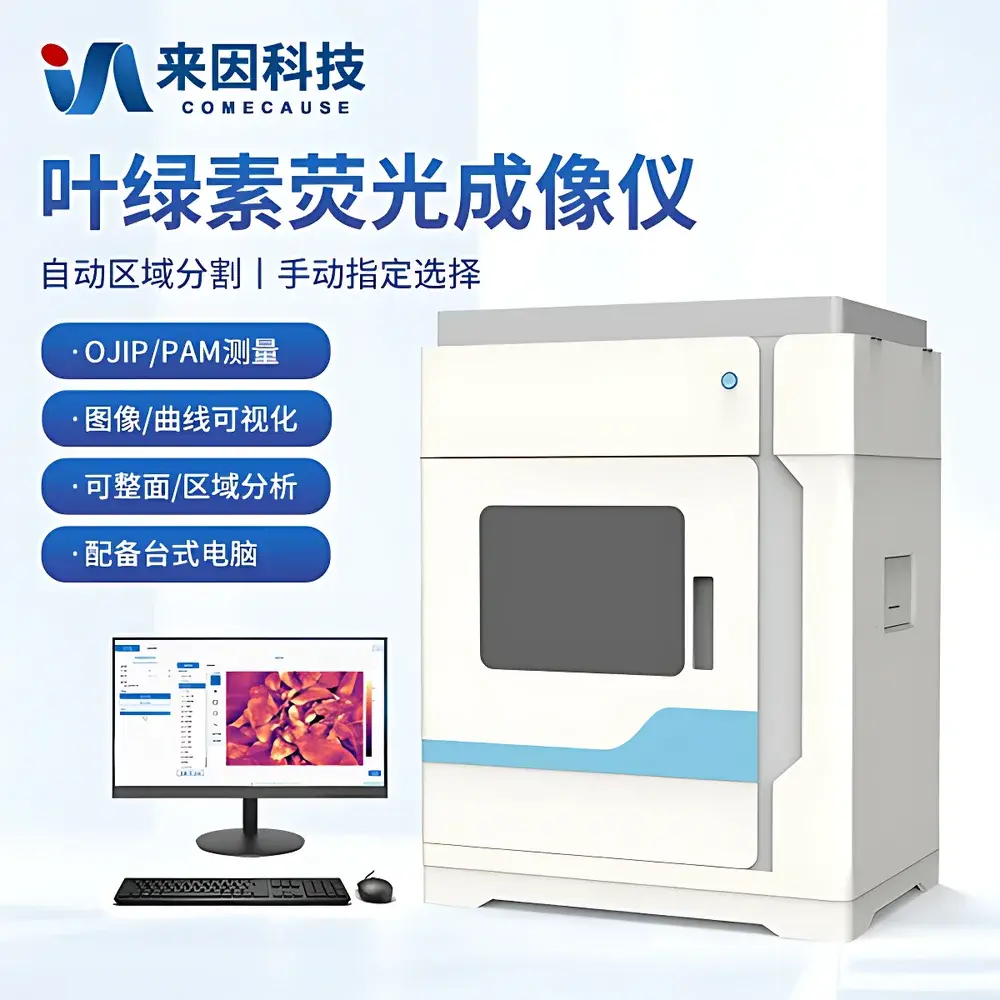
COMECAUSE IN+LeafClear Chlorophyll Fluorescence Imaging System
| Brand | COMECAUSE |
|---|---|
| Model | IN+LeafClear |
| Origin | Shandong, China |
| Manufacturer Type | OEM Manufacturer |
| Camera Resolution | 1608 × 1104 |
| Pixel Size | 9 µm × 9 µm |
| Frame Rate | 100 fps |
| Bit Depth | 12-bit |
| Interface | USB 3.0 |
| Lens Focal Length | 12 mm |
| Max Aperture | F/2.8 (adjustable) |
| HFOV | 62.11° |
| VFOV | 44.83° |
| Max Imaging Area | 50 cm × 35 cm |
| Excitation Wavelengths | 450 nm (blue), 630 nm (red), 730 nm (far-red) |
| LED Intensity Range | 1–100% (up to 1440 µmol·m⁻²·s⁻¹) |
| OJIP Duration | 0.1–1.0 s |
| PAM Dark Adaptation | 0–3600 s |
| Sampling Interval | 0.1–10.0 s |
| Temporal Resolution | 10 ms (OJIP), 100 ms (PAM) |
| Fluorescence Dynamic Range | 0–4095 (12-bit) |
| SNR | >100:1 |
| Repeatability (CV) | <3% |
| Linearity (R²) | >0.999 |
| Spatial Resolution | ~0.3 mm/pixel (at 50 cm × 35 cm FOV) |
Overview
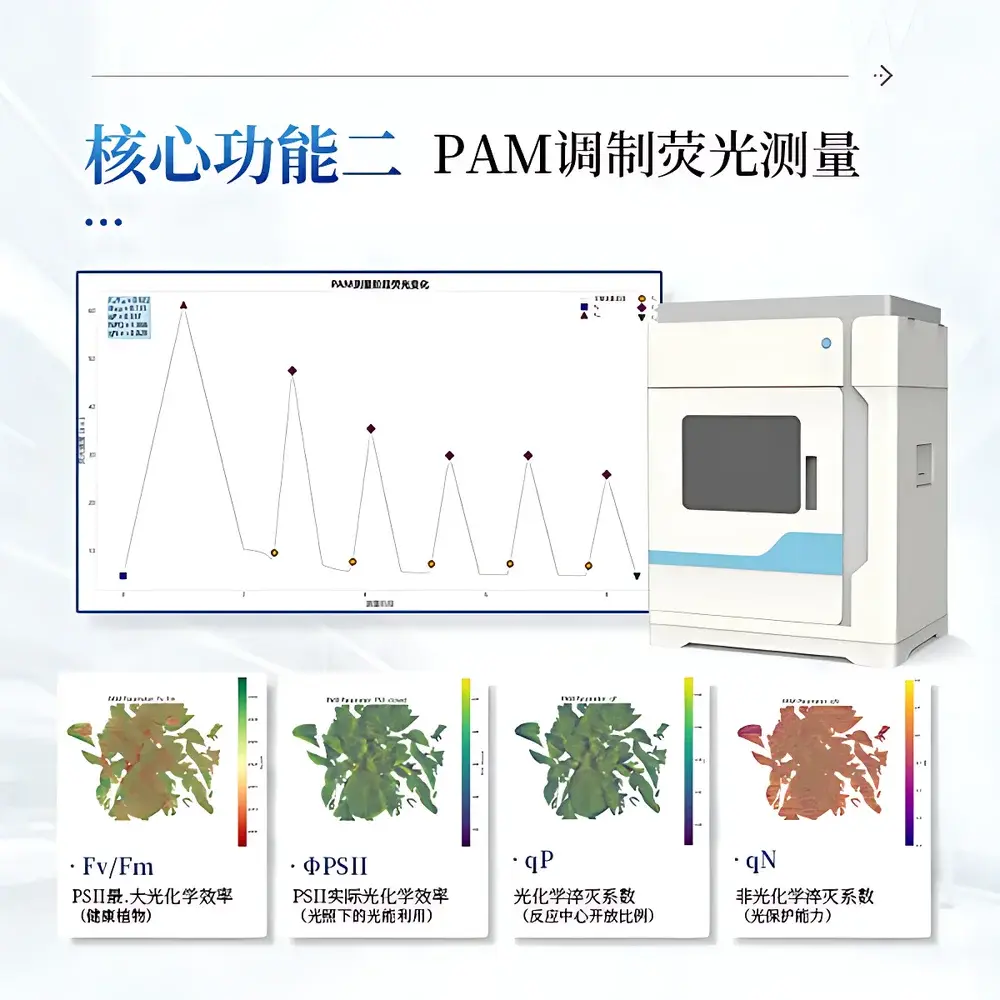
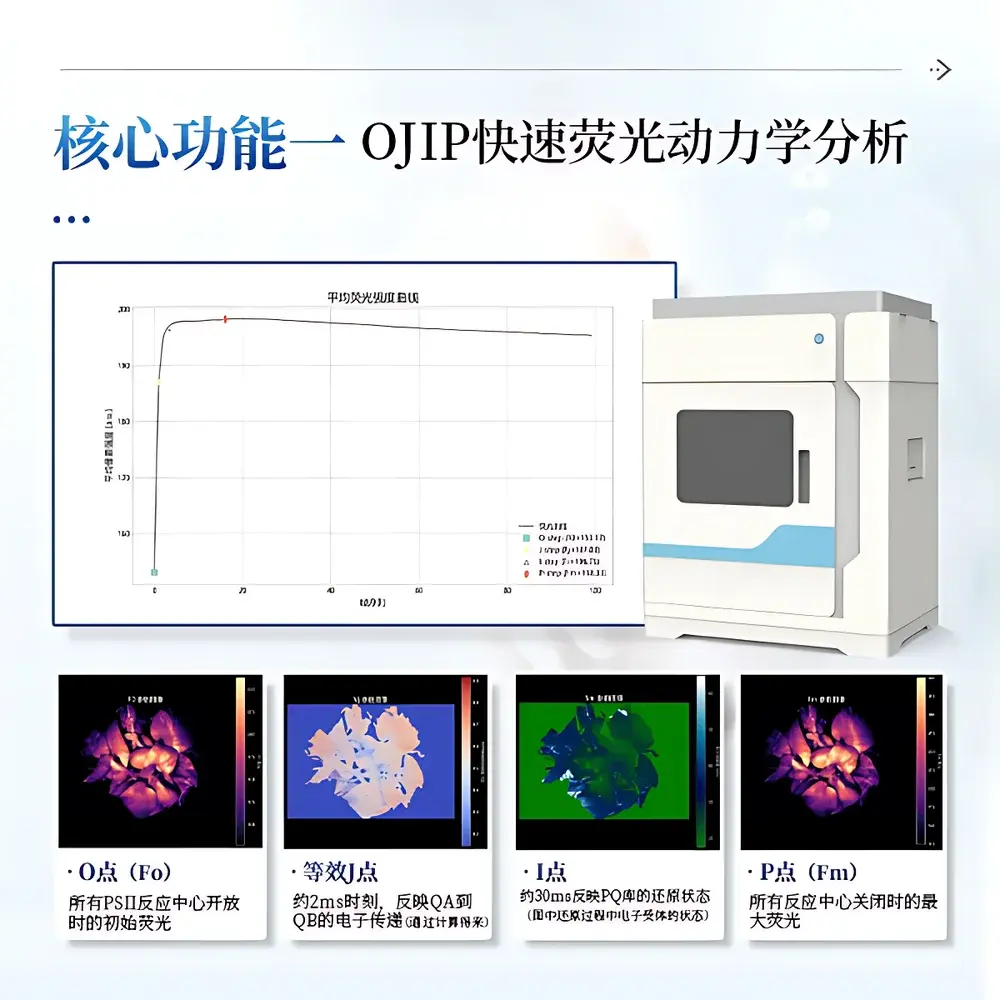
The COMECAUSE IN+LeafClear Chlorophyll Fluorescence Imaging System is a high-resolution, non-invasive optical phenotyping platform engineered for quantitative analysis of photosynthetic performance in intact plant tissues. It operates on the biophysical principle of chlorophyll a fluorescence induction kinetics—capturing transient fluorescence emissions from Photosystem II (PSII) reaction centers following controlled light excitation. By measuring the spatial and temporal dynamics of fluorescence yield under standardized photochemical protocols—including OJIP transient analysis and Pulse-Amplitude-Modulated (PAM) fluorometry—the system provides pixel-resolved quantification of PSII quantum efficiency, electron transport capacity, photoprotective dissipation (NPQ), and overall photosynthetic vitality. Designed for laboratory, greenhouse, and controlled-environment chamber applications, the IN+LeafClear integrates a scientific-grade 12-bit CMOS sensor with spectrally calibrated LED illumination modules (450 nm blue excitation, 630 nm red actinic light, and 730 nm far-red relaxation pulses), enabling reproducible, GLP-compliant acquisition of fluorescence parameters across diverse plant species and experimental conditions.
Key Features
- Simultaneous dual-mode operation: Full-spectrum OJIP transient acquisition (0.1–1.0 s, 10 ms resolution) and dynamic PAM fluorometry (variable dark adaptation, actinic irradiance, saturation pulse intensity, and far-red relaxation).
- High-fidelity optical imaging: 1608 × 1104 pixel CMOS sensor with 9 µm pixels, 100 fps frame rate, and >100:1 signal-to-noise ratio ensures robust detection of low-intensity fluorescence signals across heterogeneous leaf surfaces.
- Modular LED illumination system: Independently controllable 450 nm (excitation), 630 nm (actinic), and 730 nm (far-red) LEDs with intensity calibration traceable to photosynthetic photon flux density (PPFD) units (µmol·m⁻²·s⁻¹), supporting ASTM E2913-22 and ISO 17025-aligned protocols.
- Pixel-level parameter mapping: Generates spatially resolved false-color images for over 40 biophysically derived parameters—including Fv/Fm, ΦPSII, qP, NPQ, PIABS, Mo, Area, and REo/RC—enabling intra-leaf heterogeneity analysis.
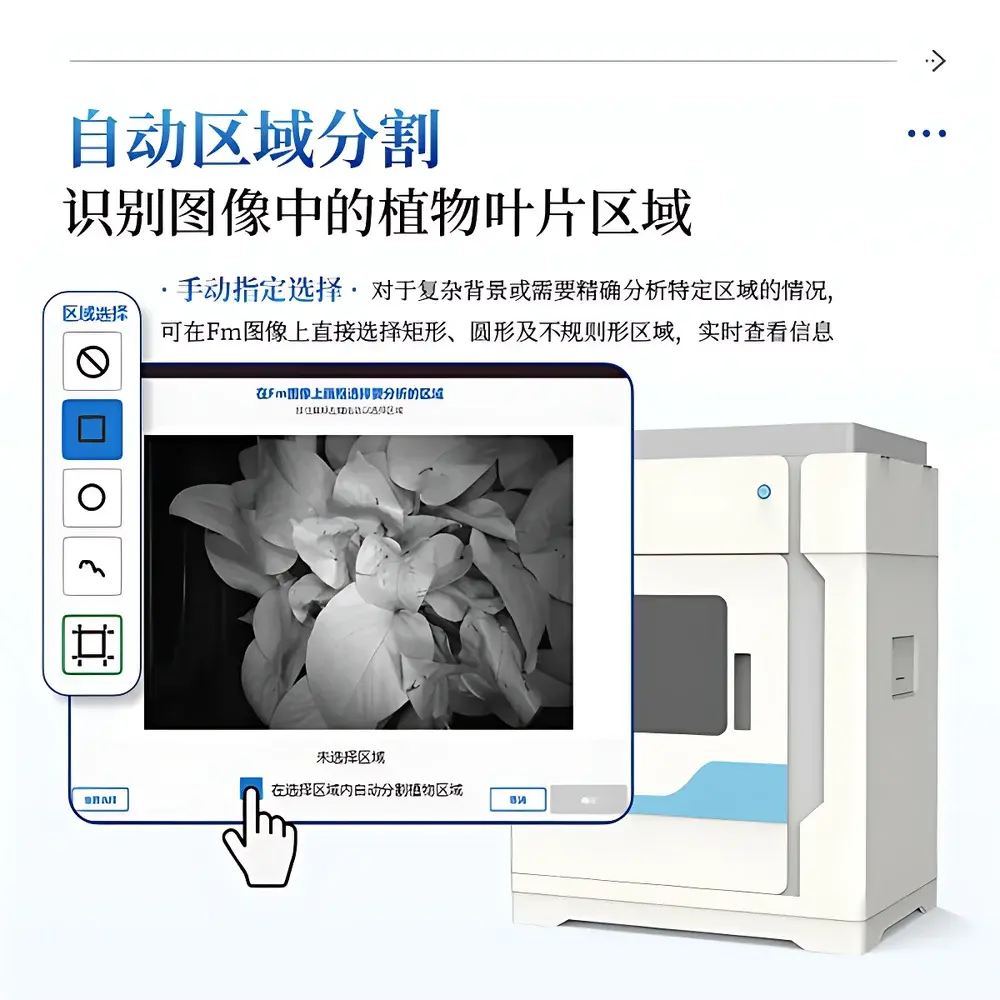
- Automated image segmentation and ROI analysis: Adaptive thresholding algorithms isolate leaf tissue from background; manual polygon, rectangular, or circular region-of-interest (ROI) selection supports targeted physiological profiling.
- FDA 21 CFR Part 11–ready software architecture: Audit trail logging, user authentication, electronic signatures, and configuration parameter versioning support regulatory compliance in GxP environments.
Sample Compatibility & Compliance
The IN+LeafClear accommodates whole leaves, detached leaf discs, seedlings, rosettes, and small potted plants up to 50 cm × 35 cm field of view. Its non-destructive nature permits longitudinal monitoring of individual specimens across developmental stages or stress time courses—including drought, heat, nutrient deficiency, heavy metal exposure, pathogen infection, and cold storage. The system conforms to internationally recognized plant physiology standards: measurement protocols align with the Minimal Information about a Fluorescence Experiment (MIFE) guidelines, and calculated parameters (e.g., Fv/Fm, ΦPSII) are referenced against consensus thresholds established by the International Society of Photosynthesis Research (ISPR) and USDA ARS validation studies. All hardware components meet CE and RoHS directives; firmware and software comply with IEC 62304 Class B medical device software safety requirements where applicable.
Software & Data Management
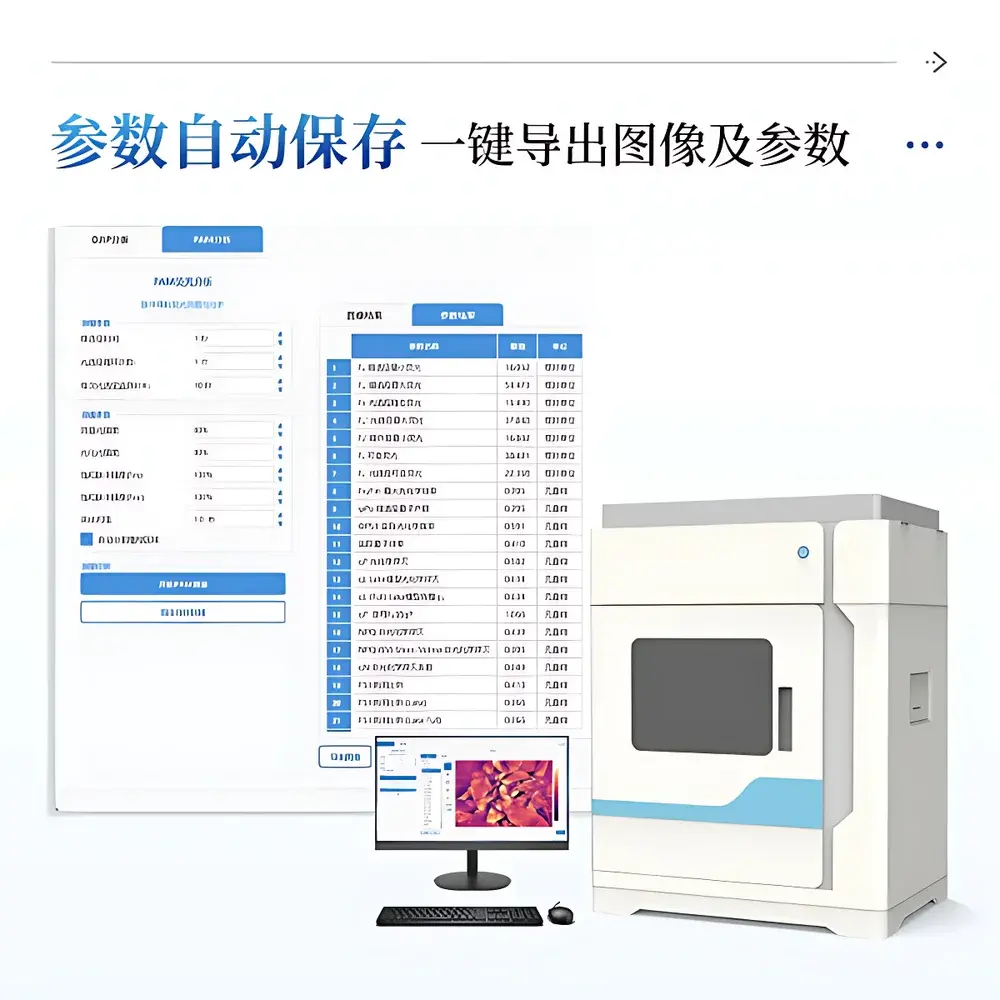
The proprietary IN+LeafClear Control Suite (v4.x) delivers a dual-language (English/Chinese), GUI-driven workflow for experiment design, real-time acquisition, and post-hoc analysis. It implements JIP-test algorithms per Strasser et al. (2004) and Schreiber’s PAM formalism (1986), with built-in calibration checks for LED output stability and camera linearity. Data management includes automatic metadata embedding (timestamp, operator ID, instrument serial, LED settings, ambient temperature/humidity if externally logged), CSV/Excel export of parameter tables, PNG export of full-resolution fluorescence maps, and batch processing of time-series datasets. All configuration files are digitally signed and version-stamped; raw image stacks (.tiff) and processed results are stored in FAIR-compliant directory structures. Exported data meets requirements for submission to Plant Phenomics Data Repositories (e.g., PhenoFrontier, CropStore) and journal-supplementary archives (Nature Plants, Journal of Experimental Botany).
Applications
- Plant physiology research: Quantification of PSII photochemical efficiency, QA⁻ reoxidation kinetics, plastoquinone pool reduction status, and energy partitioning (absorption, trapping, electron transport, dissipation).
- Abiotic stress phenotyping: Early detection of drought-induced photoinhibition (via Fv/Fm decline ≥3% pre-symptomatically), thermal damage (NPQ suppression at >38°C), and nutrient imbalance (Al³⁺-induced Fo elevation).
- Crop breeding & QTL mapping: High-throughput screening of germplasm for photosynthetic resilience—e.g., identifying rice lines maintaining ΦPSII > 0.5 under combined heat/drought stress.
- Postharvest physiology: Monitoring chilling injury in banana fruit (Fv/Fm hysteresis), greening and solanine accumulation in potato tubers (chlorophyll re-synthesis kinetics), and vase life prediction in cut flowers (decline in PIABS slope).
- Ecological & conservation science: Assessing lichen vitality on heritage stone substrates, canopy-level photosynthetic heterogeneity in mixed-species stands, and climate-change response gradients in alpine or mangrove ecosystems.
FAQ
What is the minimum detectable change in Fv/Fm that the IN+LeafClear can resolve?
The system achieves ±0.005 absolute precision for Fv/Fm under optimal dark-adaptation and signal-averaging conditions, corresponding to ~0.6% relative change at typical healthy values (0.82).
Can the system be integrated with environmental control chambers?
Yes—USB 3.0 isolation and external trigger I/O ports enable synchronization with climate chamber controllers, CO₂ analyzers, and PAR sensors via TTL or analog voltage signals.
Is remote operation supported for multi-user labs?
The software supports network-deployed license management and concurrent access via RDP/VNC; however, only one active acquisition session is permitted per instrument instance.
Does the system provide traceable calibration certificates?
Each unit ships with NIST-traceable LED spectral irradiance calibration reports and camera quantum efficiency characterization data, updated annually per ISO/IEC 17025-accredited service.
How does the IN+LeafClear handle leaf movement during long-term imaging?
Integrated motion compensation algorithms (optical flow-based registration) correct for sub-pixel drift in time-lapse sequences; users may also define fixed reference ROIs for longitudinal tracking.
Related Products



