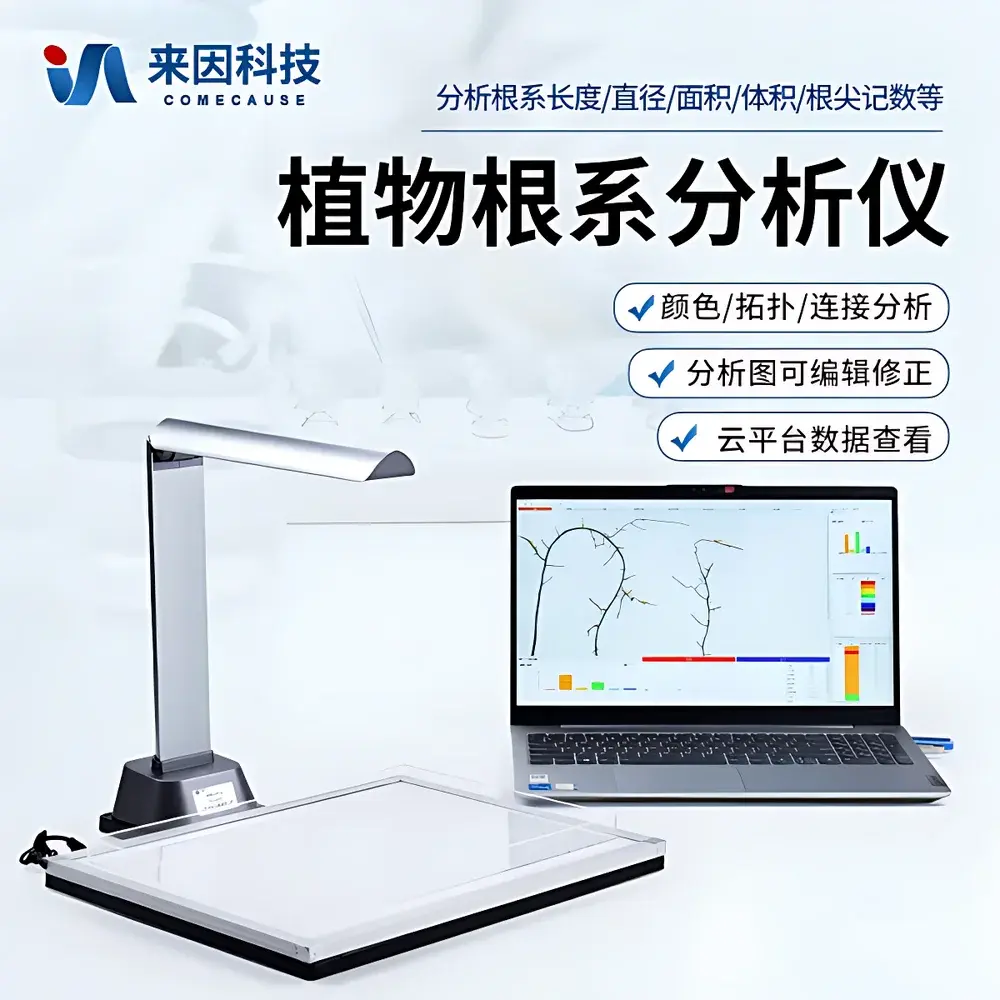
COMECAUSE IN/GX01 Root System Analyzer
| Brand | COMECAUSE |
|---|---|
| Origin | Shandong, China |
| Manufacturer Type | Direct Manufacturer |
| Model | IN/GX01 |
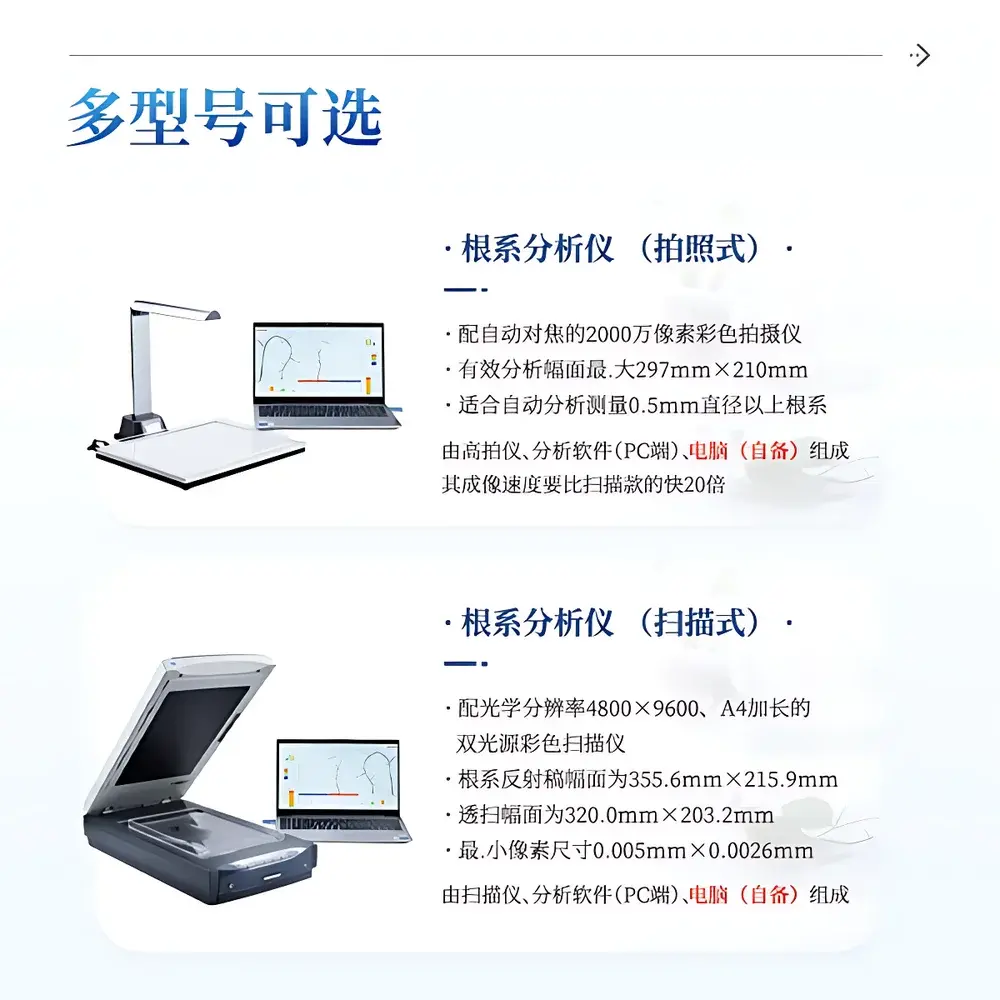
| Imaging Sensor | 20 MP color camera with auto-focus |
| Maximum Analysis Area | 297 mm × 210 mm |
| Minimum Detectable Root Diameter | ≥ 0.5 mm |
| Analysis Speed | Up to 20× faster than flatbed scanner-based systems |
| Software Platform | PC-based Windows application (Windows 10 Pro/Enterprise) with cloud synchronization |
| Supported Output Formats | CSV, Excel (.xlsx), annotated TIFF/PNG images, fractal dimension reports, topological graphs, angular distribution plots |
| Compliance | GLP-compliant data audit trail (software-enabled), ISO/IEC 17025-compatible metadata logging, USP <1058> aligned instrument qualification framework |
Overview
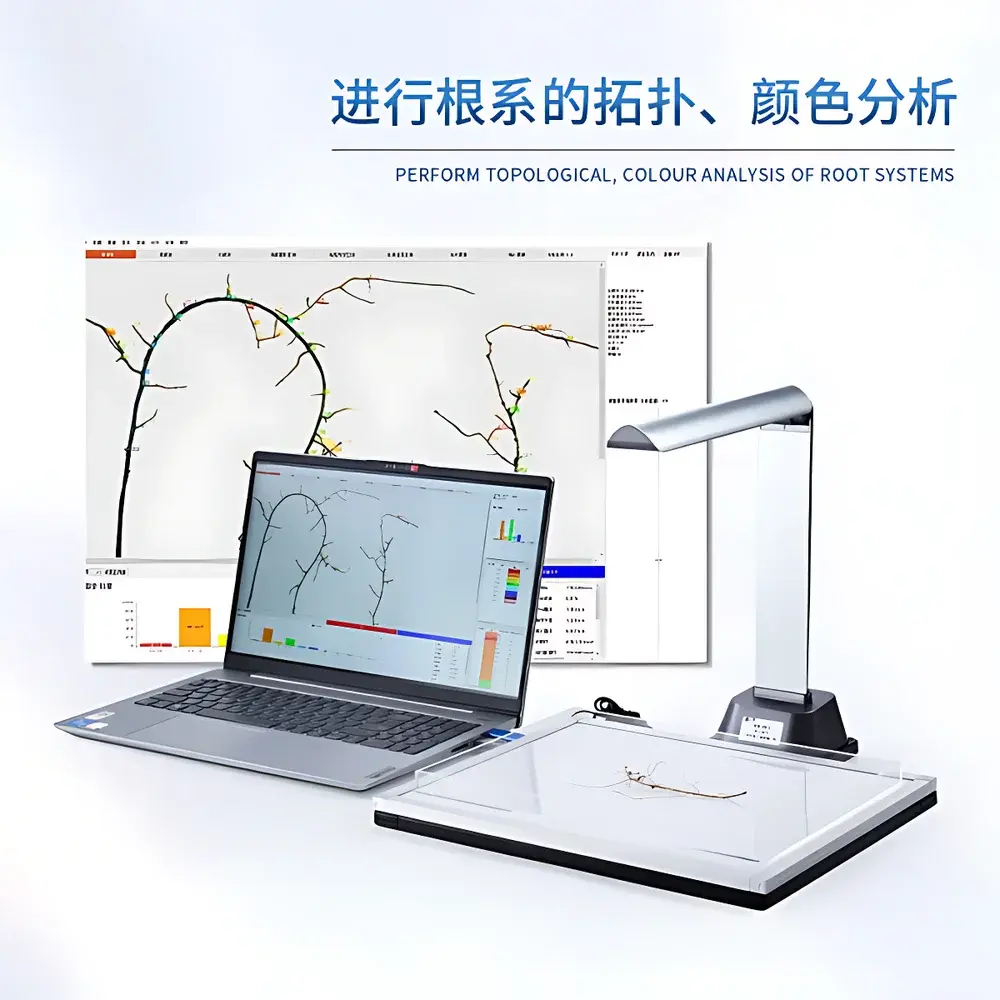
The COMECAUSE IN/GX01 Root System Analyzer is a high-throughput, image-based quantitative phenotyping platform engineered for precise morphometric and topological characterization of washed plant root systems. Unlike traditional flatbed scanner–based solutions, the IN/GX01 employs a vertically oriented, auto-focusing 20-megapixel color imaging module optimized for rapid capture of root specimens placed on standard A4-sized (210 × 297 mm) translucent backgrounds. Its optical architecture minimizes parallax and shadow artifacts while preserving sub-millimeter structural fidelity—critical for reliable detection and segmentation of roots ≥ 0.5 mm in diameter. The system operates on the principle of high-contrast digital image acquisition followed by deterministic pixel classification, skeletonization, and graph-theoretic reconstruction of root topology. Designed for integration into controlled-environment growth facilities, rhizotron labs, and field-root washing stations, the IN/GX01 delivers reproducible, operator-independent metrics essential for comparative root architecture studies, drought tolerance screening, nutrient uptake modeling, and symbiotic interaction quantification (e.g., rhizobia nodule enumeration).
Key Features
- 20 MP auto-focusing color camera with adjustable white balance and exposure control for consistent illumination across diverse root pigmentation (including brown, tan, and nitrogen-deficient chlorotic roots)
- Optimized field-of-view (297 × 210 mm) enabling single-shot capture of entire root systems from maize, wheat, soybean, or Arabidopsis without tiling or stitching
- Real-time image preprocessing pipeline including background subtraction, contrast enhancement, and noise suppression prior to binary thresholding
- Multi-algorithm segmentation engine supporting Otsu, adaptive local thresholding, and user-guided region-of-interest refinement
- Comprehensive morphometric suite: total root length, average & median diameter, surface area, volume (cylindrical approximation), projection area, tip count, branch point density, and crossover frequency
- Advanced topological analysis: root order assignment (Strahler/Horton), connection matrix generation, branching angle distribution, gravitropic angle (plagiogravitropism) quantification, and horizontal orientation profiling
- Fractal dimension calculation via box-counting method—validated against NIST-traceable synthetic root phantoms
- Color-based segmentation module enabling differential quantification of living vs. senesced root segments, nodules, or mycorrhizal colonization zones using HSV and LAB color space thresholds
- Interactive editing tools: non-destructive branch splitting, node merging, manual reconnection, and undo/redo stack supporting iterative validation workflows
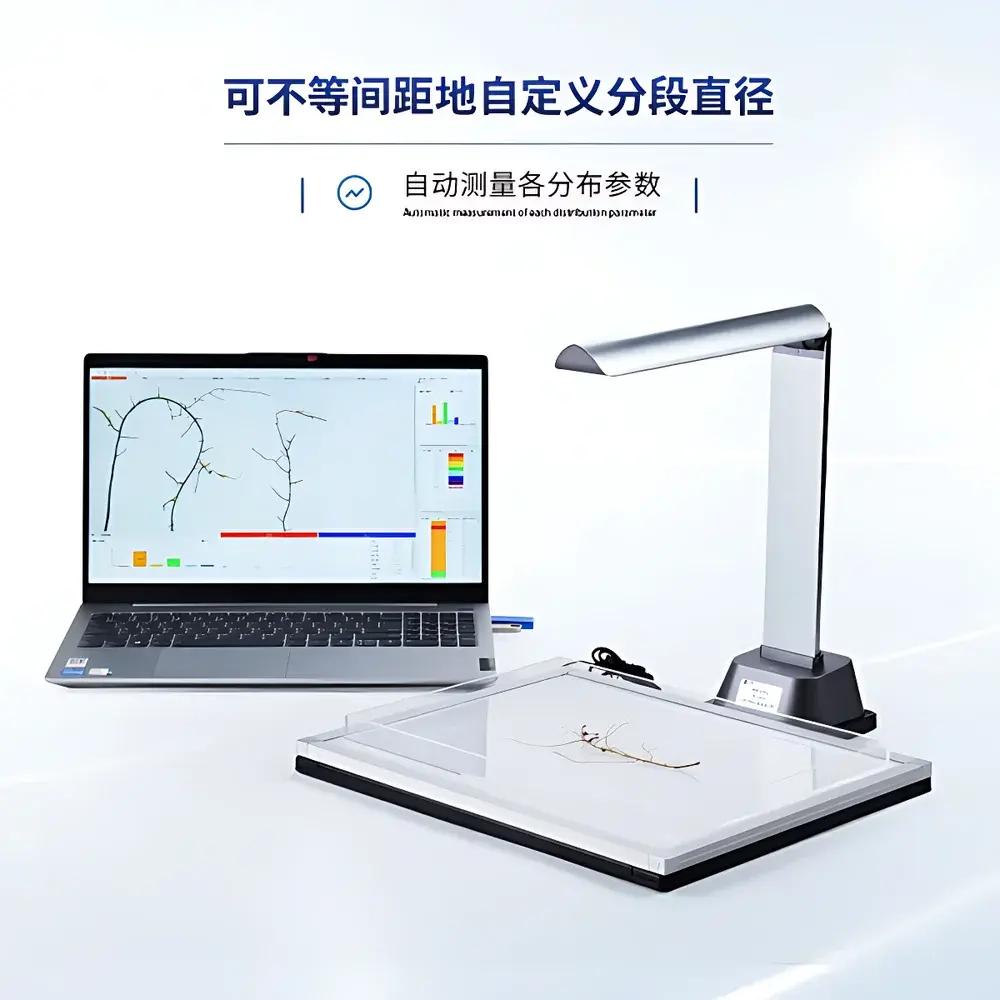
- Customizable diameter binning: user-defined, non-uniform diameter intervals with automated per-bin reporting of length, surface area, volume, and frequency distribution
Sample Compatibility & Compliance
The IN/GX01 accommodates excised root systems from herbaceous and woody species after standard washing protocols (e.g., hydroponic, gel-based, or soil-rinsing methods). It supports both intact primary root systems and fragmented lateral architectures, provided specimens lie flat within the imaging plane. Roots must be ≥ 0.5 mm in diameter for robust edge detection; finer root hairs are excluded from morphometric output but may be visualized for qualitative assessment. The system complies with analytical traceability requirements outlined in ISO/IEC 17025:2017 (clause 7.7) through embedded metadata stamping (timestamp, operator ID, calibration status, image hash). Software audit logs meet FDA 21 CFR Part 11 expectations for electronic records—including user authentication, action timestamps, and immutable change history. Instrument qualification documentation (IQ/OQ) templates are provided for GxP-aligned laboratories.
Software & Data Management
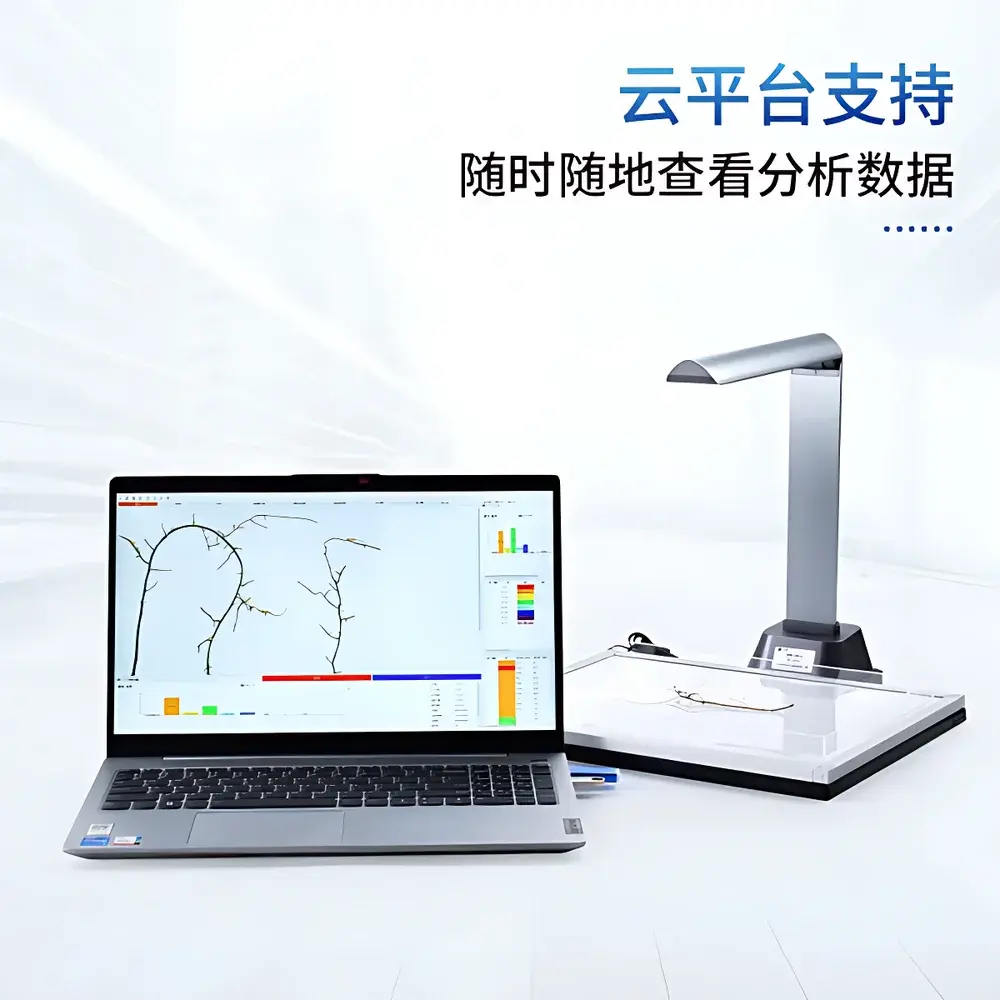
Analysis is performed via the standalone Windows-native COMECAUSE RootStudio™ software (v3.2+), requiring Windows 10 Professional or Enterprise (64-bit), Intel Core i5-9th gen or equivalent, 16 GB RAM, and ≥ 500 MB free disk space. All processing occurs locally; cloud sync is optional and encrypted (AES-256) for remote access to datasets via COMECAUSE Cloud Portal. Batch analysis supports folder-based queuing with auto-naming rules, parallel processing of up to 100 samples per session, and consolidated export to Excel (.xlsx) with worksheet tabs for raw metrics, statistical summaries, and annotated image thumbnails. Export formats include CSV (UTF-8 encoded), TIFF (with embedded ICC profile), and vector-based SVG overlays for publication-grade figures. Raw images and processed masks are retained with SHA-256 checksums for data integrity verification.
Applications
- Quantitative root architecture phenotyping in forward/reverse genetic screens (e.g., QTL mapping of root depth, branching density)
- Evaluation of abiotic stress responses—drought-induced root elongation inhibition, salinity-mediated lateral root suppression, aluminum toxicity effects on root tip integrity
- Symbiosis research: objective nodule counting, spatial distribution mapping, and size-classified biomass estimation in legume-rhizobia systems
- Fertilizer efficacy trials: root surface area expansion as proxy for phosphorus foraging efficiency
- Soil–root interface modeling: input of measured root diameter distributions and branching angles into R-SWMS or ROOTMAP simulations
- Ecophysiological studies: correlation of root fractal dimension with soil hydraulic conductivity or organic matter content
- Regulatory submissions: GLP-compliant root trait data packages for OECD TG 208 (terrestrial plant toxicity) or EPA OPPTS 850.4400 (seedling emergence)
FAQ
What computer specifications are required to run the IN/GX01 software?
A Windows 10 Professional or Enterprise (64-bit) system with Intel Core i5-9th generation (or AMD Ryzen 5 3600) CPU, 16 GB RAM, dedicated graphics (Intel UHD 630 or better), 24-inch display (1920×1080 minimum), and four USB 2.0+ ports is mandatory. SSD storage is strongly recommended.
Does the system support live root imaging in soil or growth media?
No. The IN/GX01 is designed exclusively for ex situ analysis of washed, air-dried or water-immersed root systems placed on uniform backgrounds. In situ imaging requires complementary modalities such as MRI, X-ray CT, or minirhizotron systems.
Can I export data directly to R or Python for custom statistical modeling?
Yes. All quantitative outputs are exported as UTF-8 CSV files with standardized column headers compliant with the Plant Phenomics Data Standard (PPDS v1.3), enabling seamless ingestion into R (tidyverse), Python (pandas), or MATLAB.
Is calibration verification included with the system?
Each unit ships with a NIST-traceable resolution test target and diameter reference scale bar. Software includes built-in calibration validation workflow with pass/fail criteria per ISO 10360-2.
How is data security handled in cloud synchronization?
Cloud uploads use TLS 1.3 encryption in transit and AES-256 encryption at rest. Users retain full ownership; COMECAUSE does not access or process uploaded datasets beyond synchronization and backup functions.