
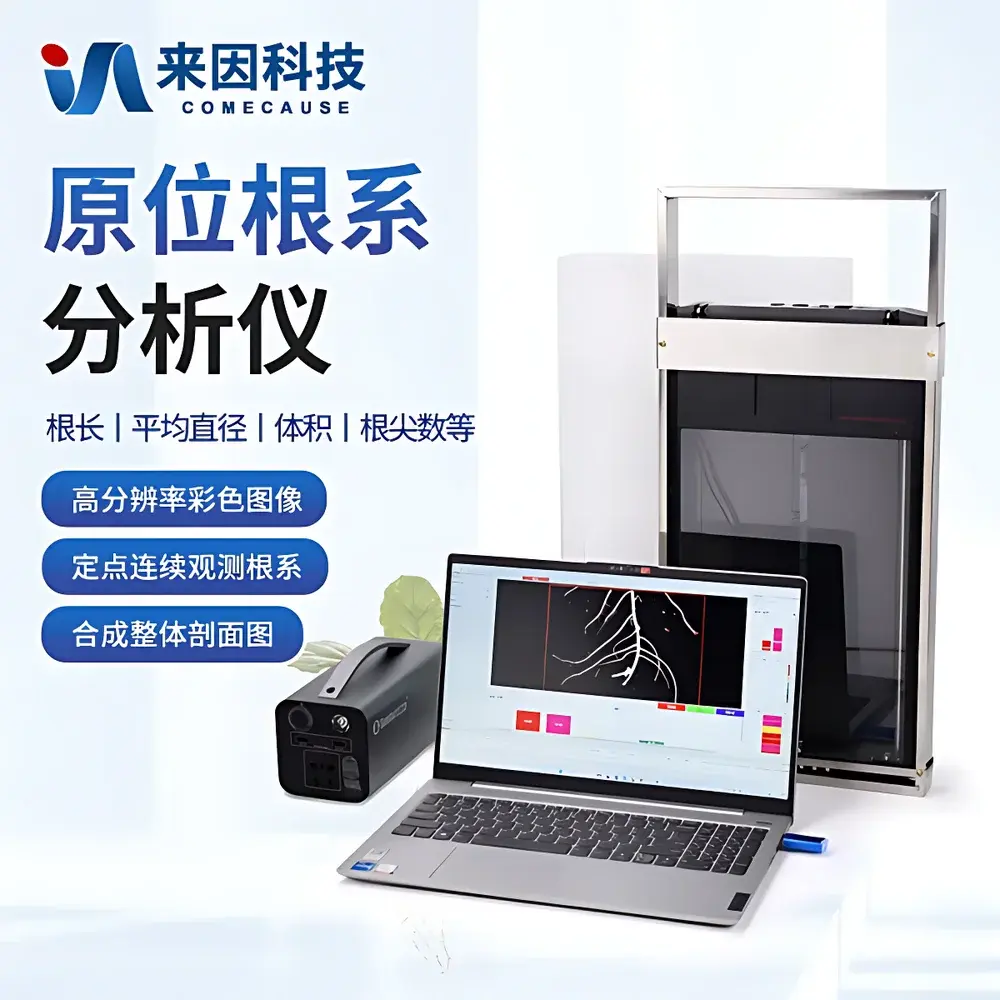
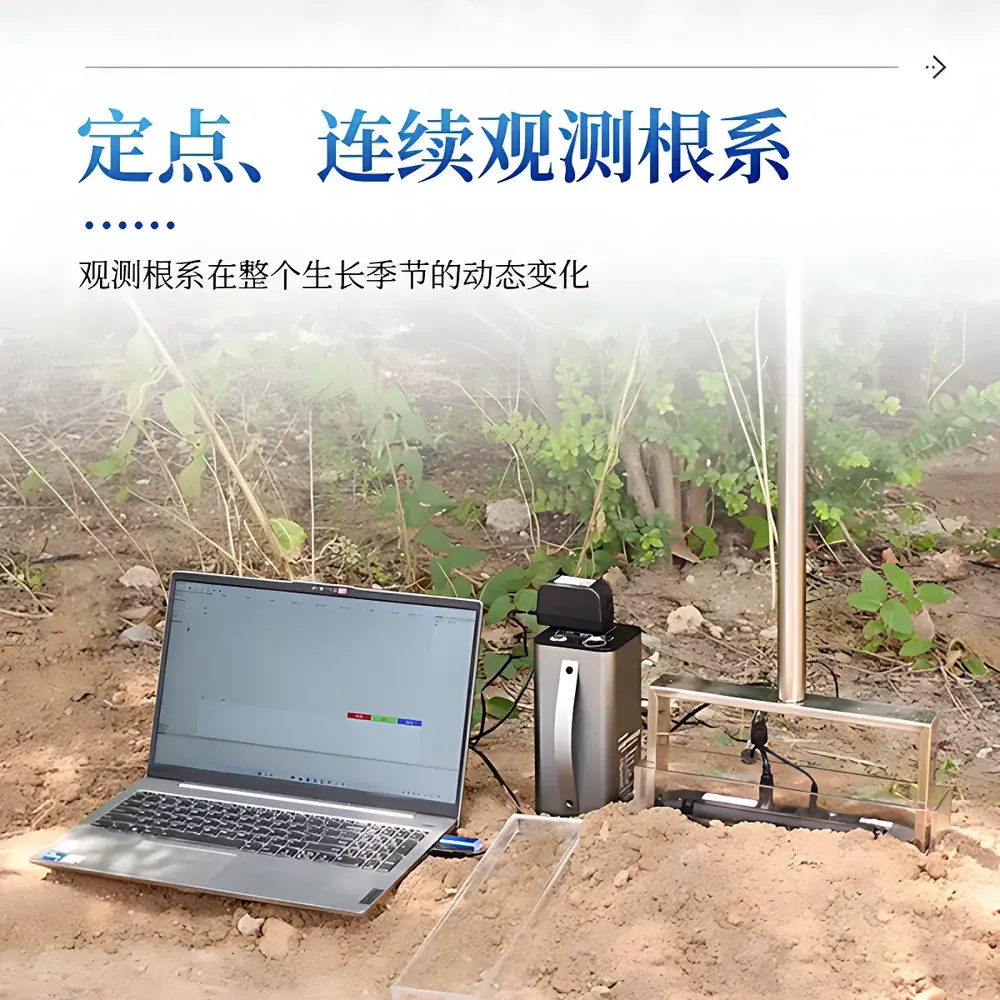
COMECAUSE IN*GXY In-Situ Planar Root Imaging System
| Brand | COMECAUSE |
|---|---|
| Origin | Shandong, China |
| Manufacturer Type | Direct Manufacturer |
| Regional Category | Domestic (China) |
| Model | IN*GXY |
| Price | USD 4,850 (FOB Qingdao) |
| Optical Resolution | 4800 × 9600 dpi |
| Scan Speed | 8 s per frame |
| Sensor | High-Sensitivity CCD |
| Illumination | Uniform LED Array |
| Single-Scan Width | 216 mm |
| Single-Scan Depth | 297 mm |
| Color Depth | 48-bit RGB |
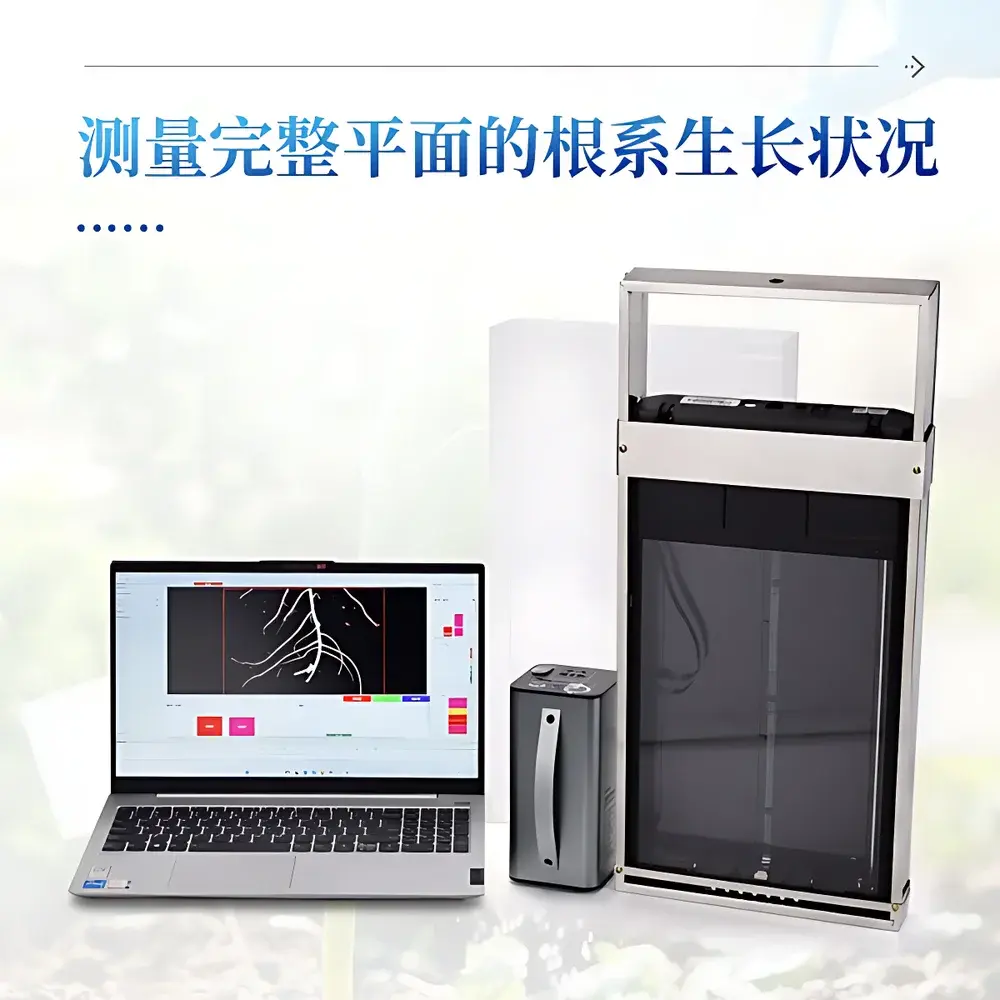
| Scanning Window Dimensions | Dual-sided, 280 × 58 × 1000 mm & 280 × 58 × 500 mm |
| External Power Supply | 68,000 mAh Li-ion Battery Pack |
| Integrated Laptop | Intel Core i5-13420H (13th Gen), 15.6" FHD Display, 16 GB DDR5 RAM, 512 GB PCIe NVMe SSD |
Overview
The COMECAUSE IN*GXY In-Situ Planar Root Imaging System is a non-destructive, high-resolution optical imaging platform engineered for continuous, two-dimensional in-soil root observation. Unlike destructive excavation or single-point micro-rhizotron methods, the IN*GXY employs a planar scanning architecture to capture full-section lateral soil-root cross-sections—enabling longitudinal monitoring of live root architecture across defined soil volumes without physical disturbance. Its core principle relies on controlled illumination and high-fidelity CCD-based optical acquisition, optimized for contrast enhancement between root tissue and surrounding soil matrix under field or greenhouse conditions. The system is designed for deployment in undisturbed soil profiles, including rhizoboxes, mesocosms, and field-installed observation trenches, supporting both short-term phenotyping and multi-seasonal root dynamics studies. By delivering spatially registered, time-series image stacks, it transforms root biology from static morphology into quantifiable temporal processes—providing foundational data for root growth kinetics, turnover estimation, and environmental response modeling.
Key Features
- True planar in-situ imaging: Captures contiguous 2D lateral sections (up to 297 mm depth × 216 mm width) without rotation or mechanical repositioning—eliminating parallax artifacts common in cylindrical micro-rhizotrons.
- High-fidelity optical performance: 4800 × 9600 dpi resolution with 48-bit color depth ensures discrimination of fine root orders (≤0.1 mm diameter), cortical cell layers, and root-hair zones under natural or supplemental lighting.
- Field-deployable architecture: Integrated dual-sided scanning window (280 × 58 × 1000 mm and 280 × 58 × 500 mm configurations) accommodates standard rhizobox dimensions and trench installations; sealed housing rated IP65 for outdoor use.
- Autonomous operation: Powered by a 68,000 mAh rechargeable battery pack enabling up to 72 hours of unattended scanning at 8-second intervals—ideal for diel-cycle or stress-response experiments.
- Bundled acquisition workstation: Pre-configured laptop with Intel Core i5-13420H processor, 16 GB RAM, and 512 GB SSD ensures real-time image buffering, metadata tagging (GPS, timestamp, temperature, humidity), and on-device preprocessing.
Sample Compatibility & Compliance
The IN*GXY is compatible with a broad range of soil types (sand, loam, clay), moisture regimes (10–45% v/v), and plant species—including monocots (e.g., maize, rice), dicots (e.g., tomato, Arabidopsis), and perennial systems (e.g., grapevine, poplar). It supports both containerized systems (rhizoboxes ≥30 cm depth) and in-field trench installations with standardized acrylic viewing panels. All hardware components comply with IEC 61000-6-3 (EMC emissions) and IEC 60529 (IP65 ingress protection). Software workflows adhere to ALCOA+ principles for data integrity, with optional audit trail logging enabled for GLP-compliant studies. While not certified for FDA 21 CFR Part 11 out-of-the-box, the system’s metadata structure and export protocols (TIFF, CSV, JSON) are fully compatible with validated LIMS and electronic lab notebook (ELN) integrations.
Software & Data Management
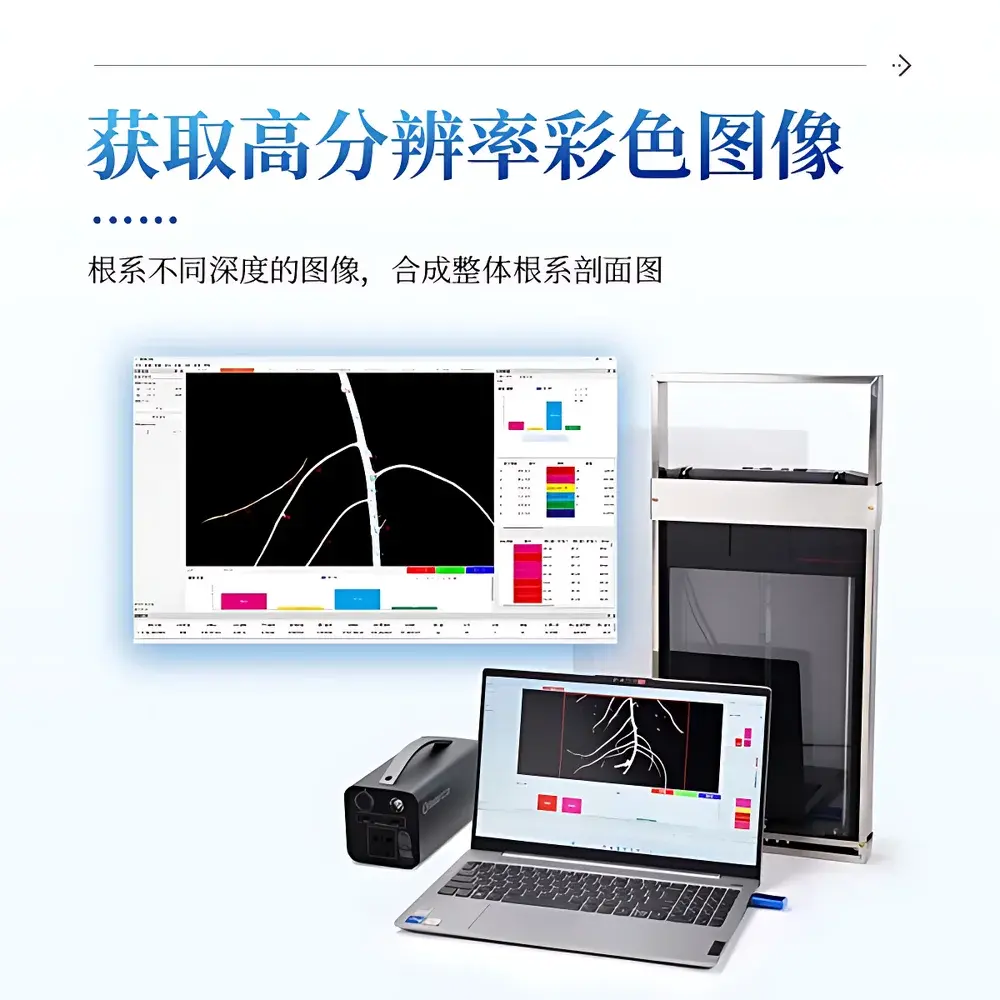
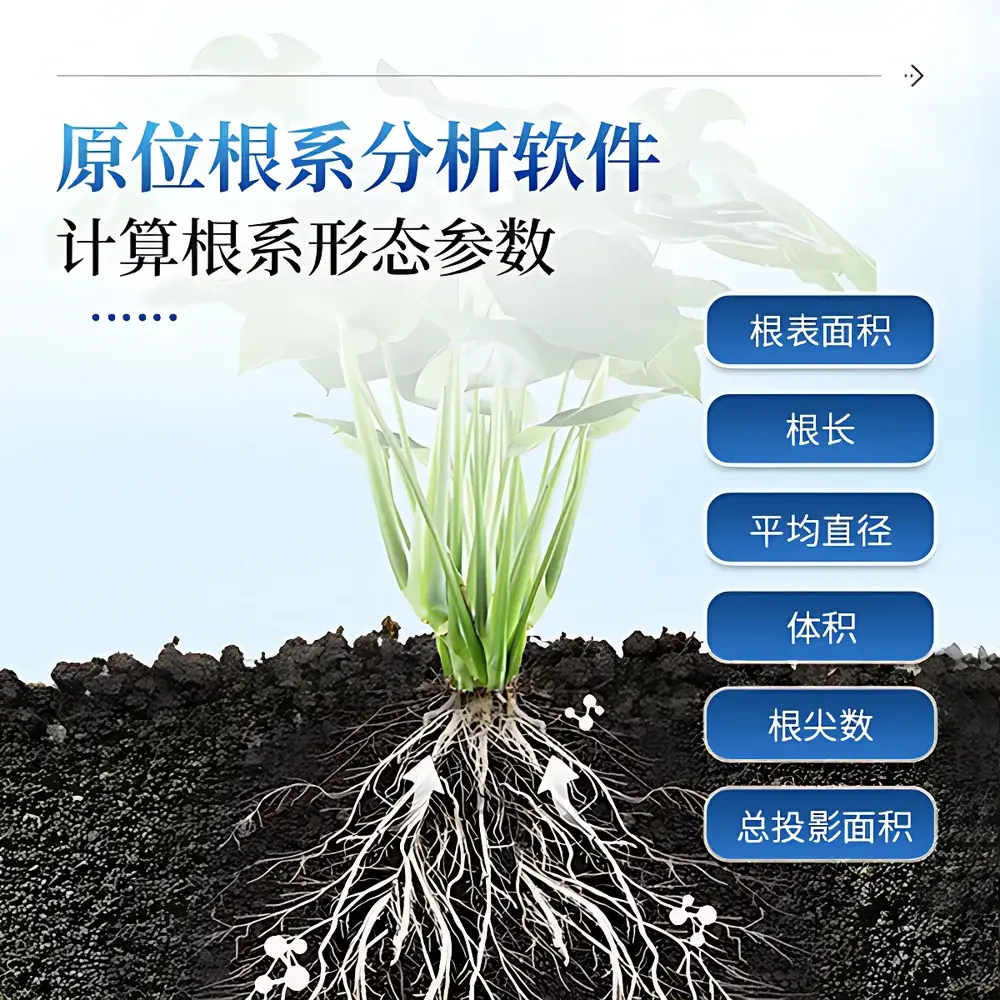
The proprietary RootVision™ analysis suite (v4.2) provides automated segmentation, skeletonization, and morphometric quantification using adaptive thresholding and machine learning–assisted root classification. Supported outputs include total root length, average diameter, surface area, projected area, volume estimate, tip count, branching frequency, and depth-wise distribution profiles. Time-series datasets are managed via hierarchical project folders with embedded EXIF-like metadata (scan ID, soil depth layer, ambient T/RH, operator ID). Batch processing supports parallel analysis of up to 200 images; results export to standardized formats (CSV, Excel, HDF5) for downstream statistical modeling (R, Python, SAS). Raw image archives are stored losslessly in TIFF format with embedded calibration markers—ensuring traceability and reproducibility across laboratories and longitudinal studies.
Applications
- Root phenotyping: High-throughput screening of genetic variants for drought resilience, nutrient foraging efficiency, or deep-rooting capacity under controlled or semi-field conditions.
- Eco-physiological modeling: Parameterizing root growth functions in crop models (e.g., APSIM, DSSAT) using empirically derived elongation rates, mortality curves, and depth-specific biomass allocation.
- Soil–plant–microbe interactions: Correlating root exudation patterns (via co-located pH/O2 sensors) with observed architectural shifts during mycorrhizal colonization or pathogen challenge.
- Sustainable agronomy: Validating root responses to conservation tillage, cover cropping, or precision irrigation—linking root system architecture to water-use efficiency and N uptake efficiency metrics.
- Ecological restoration: Monitoring native species root establishment in degraded soils, tracking pioneer root penetration through compacted horizons, and assessing competitive exclusion dynamics in mixed-species plantings.
FAQ
Can the IN*GXY be used in saturated or flooded soils?
Yes—its sealed optical path and LED illumination are unaffected by transient water films; however, prolonged submersion (>48 h) requires optional waterproof housing upgrade.
Does the system support 3D reconstruction?
No—the IN*GXY is strictly 2D planar. For volumetric analysis, we recommend pairing with complementary CT or MRI datasets using shared coordinate referencing (e.g., fiducial markers).
What is the minimum detectable root diameter?
Under optimal contrast conditions (loamy soil, moderate moisture), roots ≥80 µm in diameter are reliably segmented; accuracy declines below 50 µm due to diffraction limits of the optical train.
Is remote monitoring supported?
Yes—via optional LTE module (Cat-M1) and cloud-sync interface; users can trigger scans, receive notifications, and download thumbnails remotely through the RootVision™ Web Portal.
How is calibration maintained over long deployments?
Each scan includes embedded ceramic reference tiles with known pixel-to-mm mapping; software auto-corrects for thermal drift and lens focus shift using periodic dark-frame and flat-field corrections.



