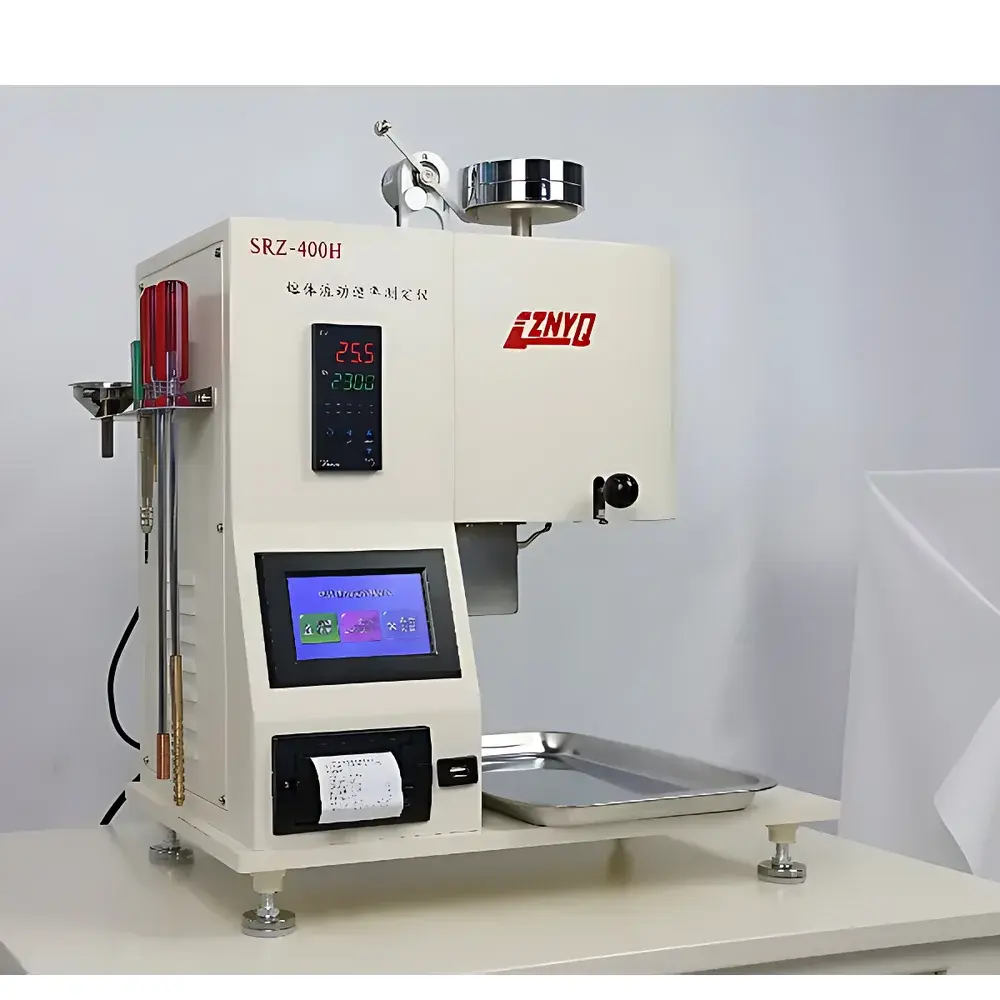
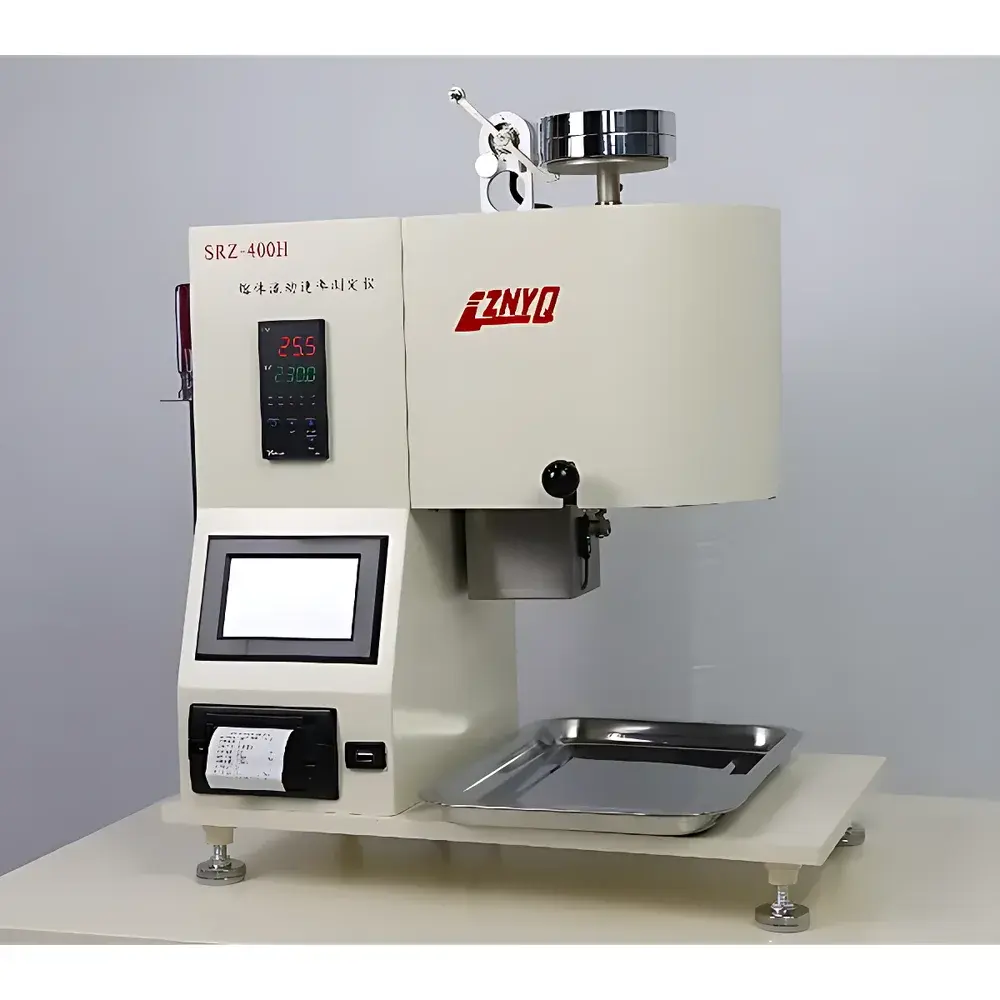
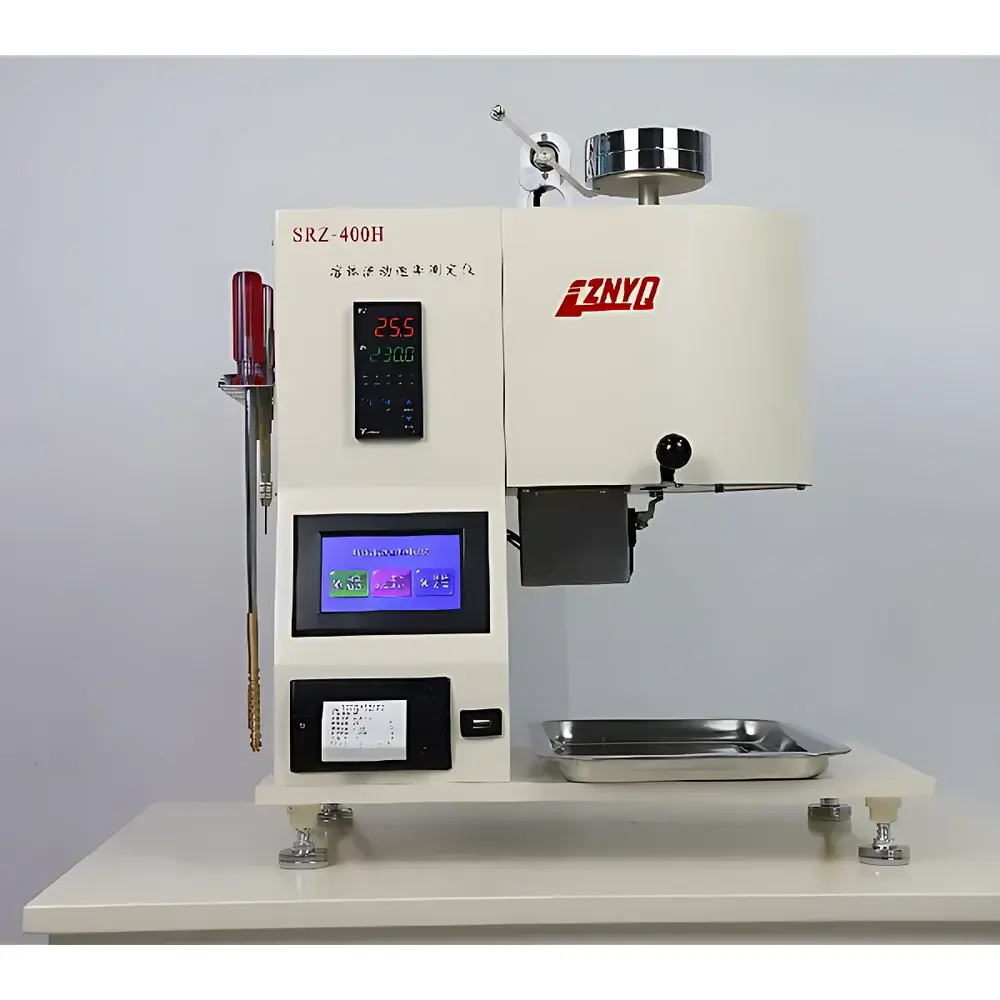
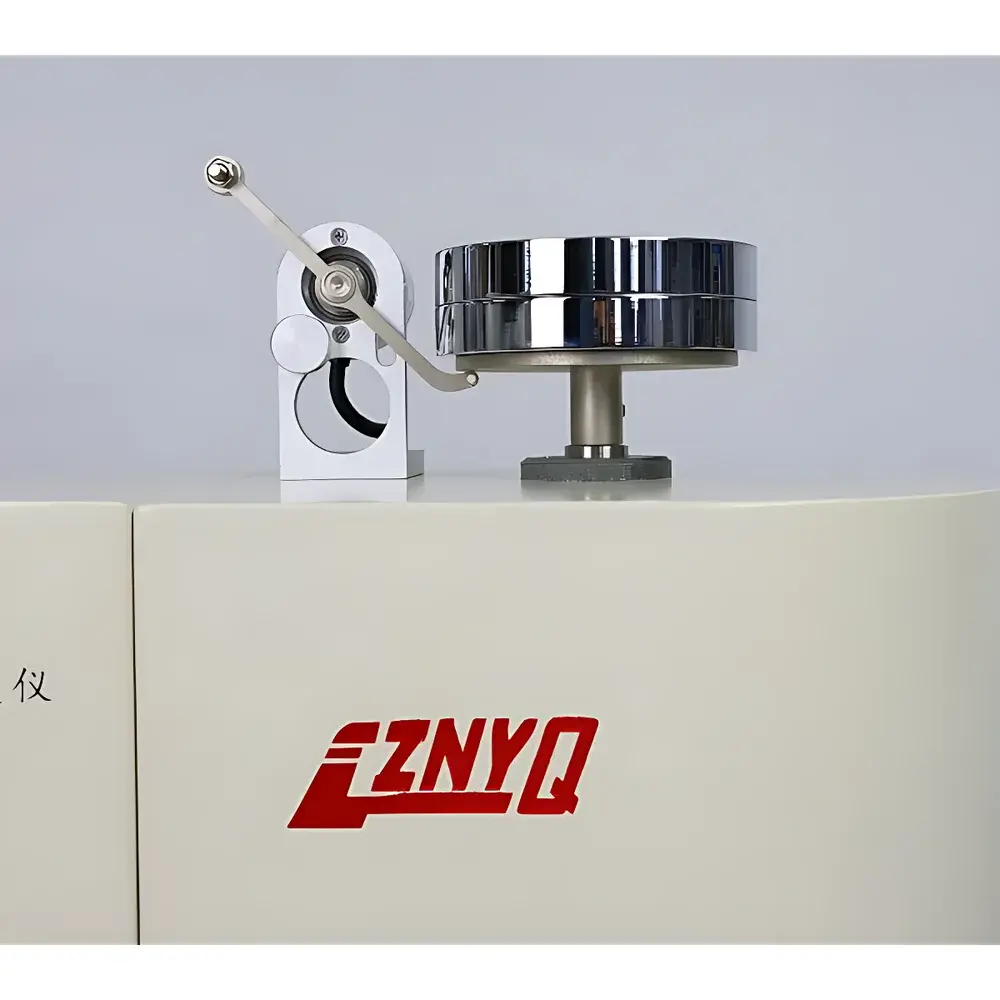
Changchun Intelligent SRZ-400H Melt Flow Indexer
| Brand | Changchun Intelligent |
|---|---|
| Origin | Jilin, China |
| Model | SRZ-400H |
| Temperature Range | 80–400 °C |
| Temperature Accuracy | ±0.2 °C |
| Temperature Resolution | 0.1 °C |
| Die Orifice Diameter | 2.095 mm ± 0.005 mm |
| Barrel Bore Diameter | 9.550 mm ± 0.025 mm |
| Piston Head Diameter | 9.475 mm ± 0.015 mm |
| Piston Head Length | 6.35 mm ± 0.1 mm |
| Standard Load Masses | 0.325 kg, 0.875 kg, 0.960 kg, 1.200 kg, 1.640 kg |
| Cut Distance Interval | 30 mm |
| Power Supply | AC 220 V, ≤0.5 kW |
| Weight | 50 kg |
| Dimensions (L×W×H) | 460 mm × 280 mm × 415 mm |
| Compliance | GB/T 3682–2000, ISO 1133:1997 |
Overview
The Changchun Intelligent SRZ-400H Melt Flow Indexer is a precision laboratory instrument engineered for the standardized determination of melt mass-flow rate (MFR) and melt volume-flow rate (MVR) of thermoplastic polymers under defined load and temperature conditions. It operates on the fundamental principle of extrusion plastometry: a pre-dried polymer sample is loaded into a heated barrel, melted under controlled thermal conditions, and extruded through a standardized die orifice under a specified dead weight. The mass or volume of extrudate collected over a fixed time interval—typically 10 minutes—is used to calculate flow index values in g/10 min (MFR) or cm³/10 min (MVR). Designed in strict accordance with GB/T 3682–2000 and ISO 1133:1997, the SRZ-400H supports routine quality control, material specification verification, and R&D process monitoring across polyolefins, engineering thermoplastics, and high-performance resins including polyethylene (PE), polypropylene (PP), polystyrene (PS), ABS, polyamide (PA), polyoxymethylene (POM), fluoropolymers (e.g., PTFE), and polycarbonate (PC).
Key Features
- High-stability temperature control system with dual-display Japanese PID controller, achieving ±0.2 °C accuracy across an operational range of 80–400 °C and <4-minute temperature recovery after load change.
- Precision-machined ASTM/ISO-compliant components: hardened steel barrel (bore Ø9.550 mm ±0.025 mm), calibrated piston (head Ø9.475 mm ±0.015 mm, length 6.35 mm ±0.1 mm), and interchangeable die (orifice Ø2.095 mm ±0.005 mm).
- Automated cutting mechanism capable of cleanly severing rigid and semi-crystalline extrudates—including filled PP, glass-reinforced nylon, and high-melt-strength polyolefins—without manual intervention.
- Integrated microprocessor-based control architecture with color LCD interface, voice-guided operation, and intuitive touch-screen navigation for parameter setup, test initiation, and real-time status feedback.
- Onboard data processing and thermal-print output via integrated mini-printer; all test parameters—including load selection, temperature setpoint, cut interval (30 mm), and elapsed time—are timestamped and stored locally.
- Comprehensive standard weight set (five certified masses: 0.325 kg, 0.875 kg, 0.960 kg, 1.200 kg, 1.640 kg) enabling full compliance with ISO 1133 Annex A (MFR) and Annex B (MVR) test configurations.
Sample Compatibility & Compliance
The SRZ-400H accommodates granular, pelletized, and flake-form thermoplastic specimens with nominal bulk densities ≥0.4 g/cm³. Its robust thermal design ensures stable melt homogenization for both low-viscosity resins (e.g., LDPE at 190 °C/2.16 kg) and high-melt-temperature engineering polymers (e.g., PEEK at 380 °C/5.0 kg). All mechanical and thermal specifications conform to the dimensional and metrological requirements of ISO 1133:1997 and GB/T 3682–2000. The instrument meets Class 1 accuracy per ISO 1133 Annex C, validated using NIST-traceable reference materials. While not inherently 21 CFR Part 11 compliant, its audit-ready data logs—generated via embedded microcontroller firmware—support GLP/GMP-aligned documentation workflows when paired with validated laboratory information management systems (LIMS).
Software & Data Management
The SRZ-400H includes proprietary Windows-compatible microcontrol software for remote configuration, firmware updates, and export of raw test records (CSV format). The software enables batch reporting, statistical summary (mean, SD, CV%), and traceable calibration history tracking. All printouts include instrument ID, operator code, date/time stamp, test conditions (T, load, die ID), and calculated MFR/MVR values. Internal memory retains up to 200 test cycles with full parameter metadata, accessible via USB interface. No cloud connectivity or third-party vendor dependencies are required for core functionality.
Applications
- Quality assurance of incoming polymer batches against supplier certificates of analysis (CoA) and internal specifications.
- Process optimization in extrusion and injection molding—correlating MFR shifts with thermal degradation, additive depletion, or moisture absorption.
- Material substitution studies during formulation development, particularly for blends involving recycled content or bio-based polymers.
- Stability assessment of polymer melts during long-duration residence time experiments (e.g., residence time distribution modeling).
- Educational use in polymer science laboratories for hands-on instruction in rheological behavior, thermal stability, and standardized test methodology.
FAQ
What standards does the SRZ-400H comply with?
It fully satisfies GB/T 3682–2000 and ISO 1133:1997 for MFR/MVR testing, including dimensional tolerances for barrel, piston, and die components.
Can the instrument measure both MFR and MVR?
Yes—MFR (g/10 min) is determined gravimetrically using the built-in balance-compatible collection tray; MVR (cm³/10 min) is derived from MFR and melt density, which may be entered manually or imported from material databases.
Is the temperature calibration traceable to national standards?
The dual-display Japanese controller accepts external PT100 probe inputs; users may perform periodic verification using NIST-certified reference thermometers per ISO 1133 Clause 6.2.
Does the system support automated data archiving to a network drive?
Native firmware supports local USB export only; integration with enterprise LIMS or shared network storage requires external middleware or custom scripting.
What maintenance is required for long-term accuracy?
Annual recalibration of temperature sensors and mechanical alignment checks (barrel concentricity, die perpendicularity) are recommended; cleaning of barrel and die with brass brushes and high-purity solvents after each test series is mandatory.