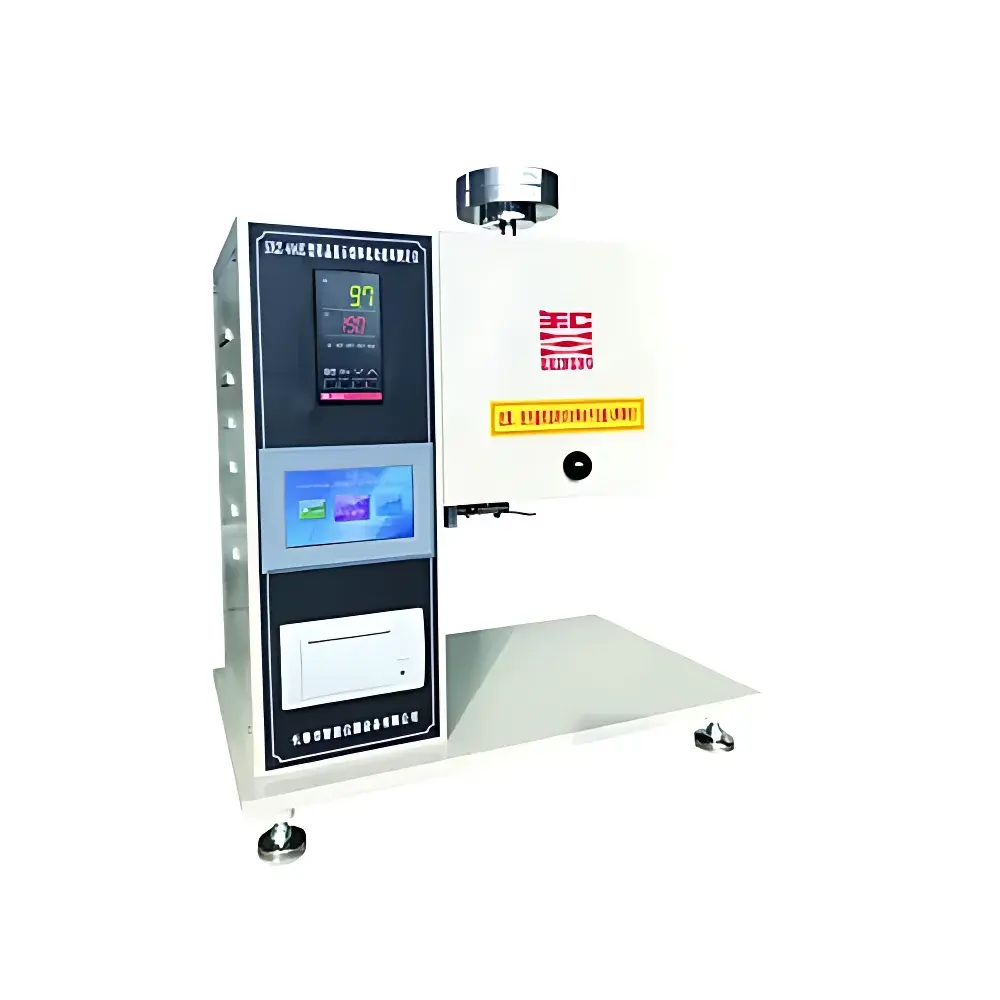
Changchun Intelligent SRZ-400F Melt Flow Indexer
| Brand | Changchun Intelligent |
|---|---|
| Origin | Jilin, China |
| Model | SRZ-400F |
| Temperature Range | 80–400 °C |
| Temperature Accuracy | ±0.2 °C |
| Temperature Resolution | 0.1 °C |
| Barrel ID | 9.550 mm ±0.025 mm |
| Piston Head OD | 9.475 mm ±0.015 mm |
| Piston Length | 6.35 mm ±0.1 mm |
| Die Capillary ID | 2.095 mm ±0.005 mm |
| Load Positions | 30 mm spacing |
| Power Supply | AC 220 V, ≤0.5 kW |
| Weight | 50 kg |
| Dimensions (L×W×H) | 460×280×415 mm |
| Accuracy Class | Class 1 |
| Standard Compliance | GB/T 3682–2000 (Method A), ISO 1133:1997 |
Overview
The Changchun Intelligent SRZ-400F Melt Flow Indexer is a precision-controlled thermal-mechanical instrument engineered for the quantitative determination of melt mass-flow rate (MFR) of thermoplastic polymers under standardized load and temperature conditions. It operates on the principle of extrusion rheometry—measuring the mass of polymer melt extruded through a standardized capillary die under a defined gravitational load over a fixed time interval (typically 10 minutes). This method conforms to the fundamental test protocol specified in ISO 1133:1997 and GB/T 3682–2000 (Method A), making it suitable for quality control, material specification verification, and process development in polyolefin, engineering plastic, and fluoropolymer manufacturing environments.
Key Features
- High-stability temperature control system with dual-display Japanese PID controller, achieving ±0.2 °C accuracy across an operational range of 80–400 °C and 0.1 °C digital resolution
- Class 1 metrological accuracy certified per national calibration standards, ensuring traceable repeatability in routine QC testing
- Precision-machined barrel (ID: 9.550 mm ±0.025 mm) and piston assembly (head OD: 9.475 mm ±0.015 mm; length: 6.35 mm ±0.1 mm) compliant with ISO 1133 geometry tolerances
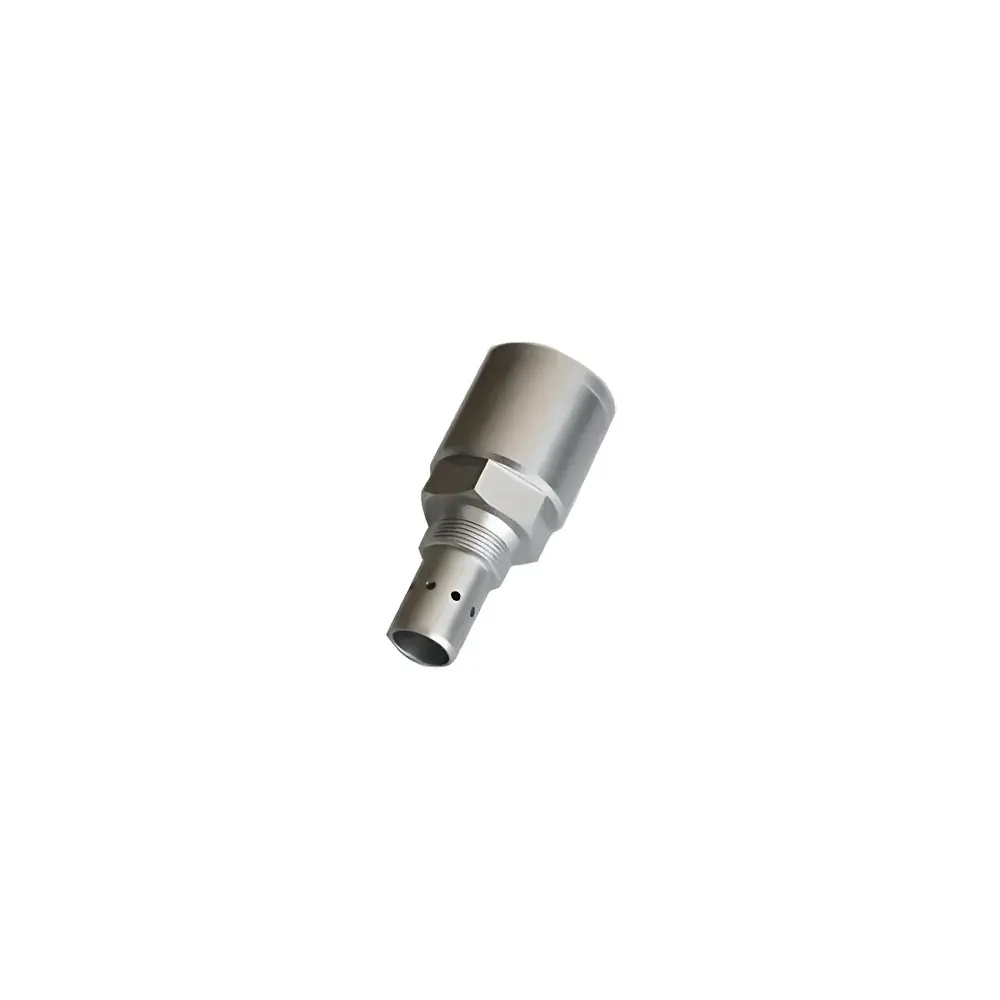
- Standardized die capillary with nominal inner diameter of 2.095 mm ±0.005 mm, manufactured from hardened stainless steel to resist thermal deformation and wear
- Automated cut-off mechanism capable of severing high-viscosity or rigid melts—including filled polypropylene, carbon-fiber-reinforced nylon, and high-MFI polyethylene—without operator intervention
- Integrated microprocessor-based control architecture with color LCD interface, voice-guided operation, and capacitive touch panel for intuitive workflow navigation
- Onboard thermal recovery performance: <4 minutes to re-stabilize setpoint after sample loading, minimizing cycle time variability
- Comprehensive standard weight set (0.325 kg to 1.640 kg) enabling full-range MFR testing per ASTM D1238 and ISO 1133 load configurations
Sample Compatibility & Compliance
The SRZ-400F supports MFR characterization of a broad spectrum of thermoplastics, including but not limited to polyethylene (LDPE, HDPE, LLDPE), polypropylene (homopolymer, copolymer), polystyrene, ABS, polyamide (PA6, PA66), polyacetal (POM), polycarbonate (PC), acrylics (PMMA), and fluoropolymers (e.g., PTFE derivatives requiring elevated temperature testing). All mechanical dimensions—including barrel bore, piston geometry, and die specifications—adhere strictly to ISO 1133:1997 Annex A dimensional requirements. The instrument meets the essential metrological criteria for Class 1 melt flow indexers as defined in ISO 1133–1:2011, and its thermal stability profile satisfies the temperature uniformity and recovery stipulations outlined in ASTM D1238 Annex A2. While not inherently 21 CFR Part 11-compliant, raw measurement data and timestamps generated via the included micro-control software are exportable in CSV format for integration into validated LIMS or electronic lab notebook (ELN) systems supporting GLP/GMP audit trails.
Software & Data Management
The SRZ-400F is supplied with dedicated micro-control software that enables real-time monitoring of temperature profiles, load application timing, and cut-off events. Data acquisition includes automatic timestamping of each extrusion interval, calculation of MFR (g/10 min) based on user-defined test duration and collected mass, and statistical aggregation across replicate runs. Measurement records—including ambient temperature, chamber temperature at start/end, applied load, and net extrudate mass—are stored locally and exportable to USB storage media. The embedded thermal printer provides immediate hard-copy output of test reports with instrument ID, date/time stamp, operator ID (if entered), and raw numerical results. For laboratories operating under regulated quality systems, the software architecture supports manual entry of batch numbers, sample IDs, and test protocols—facilitating alignment with internal SOP documentation and external audit requirements (e.g., ISO 9001 clause 8.5.2, IATF 16949 section 8.5.1.2).
Applications
- Raw material acceptance testing for incoming polymer resins against supplier datasheets and contractual MFR specifications
- In-process monitoring during compounding, extrusion, or injection molding to detect thermal degradation or molecular weight shifts
- Comparative evaluation of polymer batches following reactor modifications, catalyst changes, or recycling stream integration
- Correlation studies between MFR and mechanical properties (e.g., tensile strength, impact resistance) in R&D labs
- Validation of thermal stability for high-temperature engineering plastics such as PEEK, PEI, and PPS
- Supporting regulatory submissions where melt flow data is required per USP , Ph. Eur. 2.2.37, or ISO 1043–1:2019 material identification protocols
FAQ
What standards does the SRZ-400F comply with?
It fully conforms to ISO 1133:1997 (Method A, mass-flow rate), GB/T 3682–2000 (equivalent to ISO 1133), and supports test conditions referenced in ASTM D1238.
Can the instrument perform melt volume-rate (MVR) measurements?
No—the SRZ-400F is configured exclusively for melt mass-flow rate (MFR) per ISO 1133 Method A; MVR capability requires volumetric displacement sensing and is not implemented in this model.
Is the temperature controller field-calibratable?
Yes—calibration offsets for the dual-display Japanese PID controller can be adjusted using NIST-traceable reference thermometers and documented per laboratory metrology SOPs.
What maintenance is required for long-term accuracy?
Routine cleaning of the barrel, piston, and die with supplied stainless-steel tools is mandatory after each test series; annual verification of dimensional tolerances and thermal uniformity is recommended per ISO/IEC 17025 Clause 6.4.10.
Does the system support network connectivity or remote data transfer?
The base configuration includes USB export and local printing only; Ethernet or RS-232 interfaces are not integrated but may be added via third-party serial-to-IP converters compatible with the instrument’s ASCII command protocol.