
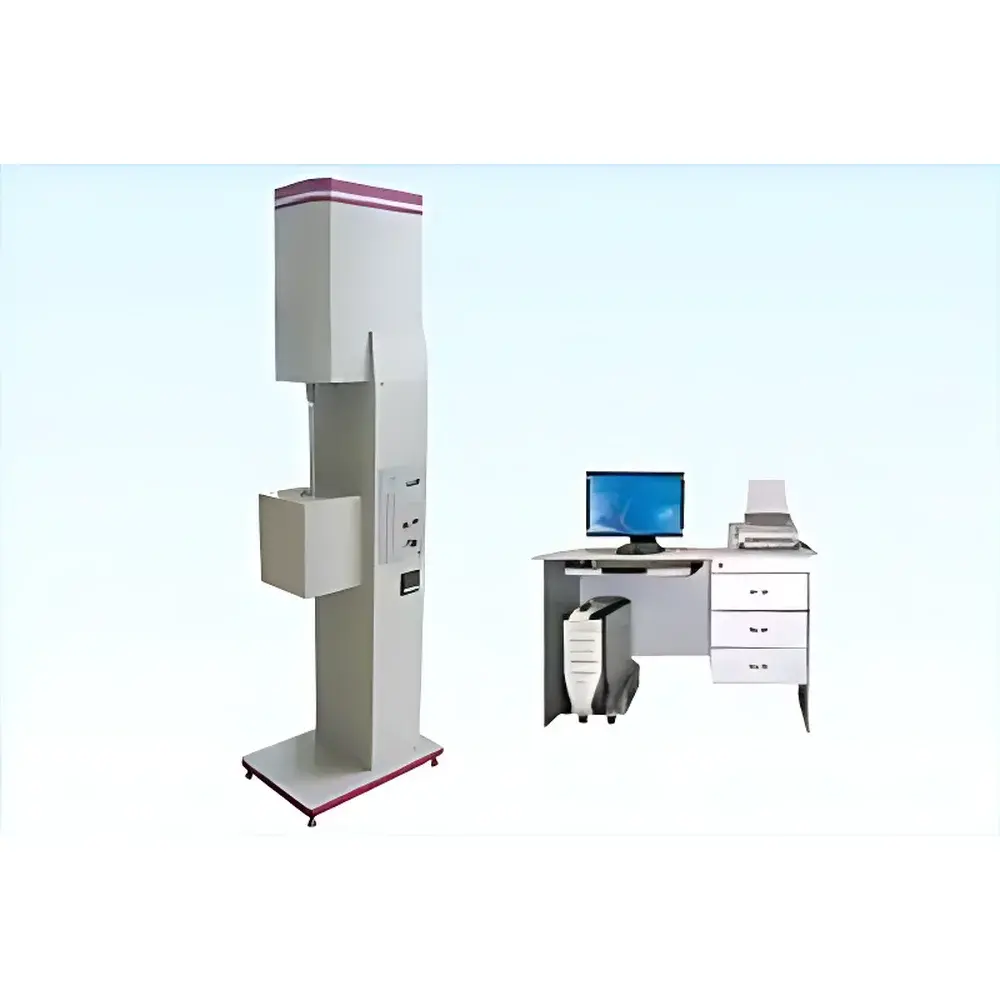
MLW-400 Capillary Rheometer
| Origin | Jilin, China |
|---|---|
| Manufacturer Type | Authorized Distributor |
| Origin Category | Domestic (PRC) |
| Model | MLW-400 |
| Quotation | Available upon Request |
| Temperature Range | Ambient to 400 °C ±1 °C |
| Heating Rate | 1–6 °C/min (adjustable in 0.1 °C/min increments) |
| Temperature Accuracy | <±0.5 °C (displayed by PC), Resolution: 0.1 °C |
| Piston Diameter | φ11.28 mm (tolerance: –0.012 mm to –0.05 mm) |
| Piston Cross-sectional Area | 1 cm² |
| Pressure Range | 1–50 MPa ±1% |
| Die Configurations | Φ1×5, Φ1×10, Φ1×20, Φ1×40 mm (diameter × length) |
| Die Material | Tungsten Carbide |
| Power Supply | 220 V AC, 50 Hz, <400 W |
Overview
The MLW-400 Capillary Rheometer is a computer-controlled, constant-pressure capillary rheological testing system engineered for precise characterization of polymer melts and thermosetting compounds under shear flow conditions. It operates on the principle of capillary rheometry—measuring volumetric extrusion rate through precision-machined dies under controlled pressure and temperature—to derive fundamental rheological properties including apparent viscosity, shear stress, shear rate, and flow activation energy. Designed for laboratory-based quality control, formulation development, and process simulation, the instrument supports standardized melt flow analysis in accordance with ASTM D3835, ISO 11443, and GB/T 3682 (for comparative melt index extrapolation). Its integrated thermal management enables stable ramp-and-hold temperature profiling across the full operating range (ambient to 400 °C), making it suitable for evaluating both conventional thermoplastics and high-performance engineering resins.
Key Features
- Constant-pressure extrusion architecture with closed-loop pressure regulation (1–50 MPa, ±1% accuracy), ensuring consistent shear stress application during dynamic tests.
- Programmable heating profile capability: linear ramp rates from 1 to 6 °C/min (0.1 °C/min resolution), plus rapid heating mode for accelerated thermal equilibration.
- High-precision temperature control: digital PID regulation with real-time monitoring (<±0.5 °C accuracy, 0.1 °C display resolution) via calibrated Pt100 sensors embedded in the barrel and die zones.
- Interchangeable tungsten carbide dies (Φ1×5, Φ1×10, Φ1×20, Φ1×40 mm) for systematic investigation of entrance effects, die swell, and shear-thinning behavior across multiple L/D ratios.
- Dedicated piston assembly featuring a nominal 11.28 mm diameter (with tight geometric tolerance of –0.012 to –0.05 mm) and precisely defined cross-sectional area of 1 cm²—enabling traceable conversion between applied load and shear stress.
- Integrated PC-based acquisition and analysis platform that automatically computes apparent viscosity (ηapp), shear rate (γ̇), and shear stress (σ) using Bagley and Rabinowitsch corrections; generates time-temperature superposition (TTS) ready datasets.
Sample Compatibility & Compliance
The MLW-400 accommodates granular, pelletized, or powdered thermoplastic polymers (e.g., PP, PE, PET, PC, PA6/66), thermosetting prepolymers (epoxy, phenolic, unsaturated polyester), and filled composites (glass-, carbon-, or mineral-reinforced systems). Sample loading is performed manually into a preheated barrel; nitrogen purge capability (optional accessory) minimizes oxidative degradation during high-temperature testing. The system meets mechanical and electrical safety requirements per IEC 61010-1 and complies with electromagnetic compatibility standards EN 61326-1. While not certified for GMP production environments, its data logging architecture supports GLP-aligned documentation when paired with validated software configuration and audit trail protocols.
Software & Data Management
The proprietary Windows-based control software provides synchronized acquisition of pressure, temperature, piston displacement, and time—capturing up to 100 data points per second. Raw measurements are processed in real time using industry-standard correction algorithms: Bagley correction for pressure drop at the die entrance, and Rabinowitsch correction for non-Newtonian shear rate estimation. Export formats include CSV, Excel (.xlsx), and PDF report templates compliant with internal QA documentation workflows. All test parameters, calibration logs, and user annotations are stored with timestamped metadata. The software supports multi-user access control (role-based login), electronic signature fields, and optional 21 CFR Part 11 compliance modules—including audit trail generation, data integrity validation, and secure archiving.
Applications
- Determination of flow activation energy (Ea) via Arrhenius modeling of viscosity vs. temperature data.
- Characterization of melt elasticity and extensional response through die swell ratio (B) and Trouton ratio analysis.
- Optimization of extrusion and injection molding processing windows by mapping viscosity–shear rate–temperature dependencies.
- Evaluation of curing kinetics in thermosets via real-time viscosity build-up during isothermal holds.
- Validation of rheological models (e.g., Cross, Carreau-Yasuda, modified Phan-Thien–Tanner) for CAE simulation input.
- Quality assurance of incoming polymer lots against historical baseline curves and specification limits.
FAQ
What types of materials can be tested on the MLW-400?
Thermoplastics (including filled grades), thermosetting prepolymers, elastomers, and reactive resins—provided they exhibit measurable melt flow within the 1–50 MPa pressure range and thermal stability up to 400 °C.
Is the system compatible with international rheological standards?
Yes—the instrument’s measurement methodology aligns with ASTM D3835 (standard test method for capillary rheometry of thermoplastics) and ISO 11443 (plastics—determination of the melt mass-flow rate and melt volume-flow rate). Data outputs support direct comparison with these reference methods.
Can the MLW-400 perform time-sweep or oscillatory tests?
No—this is a steady-state capillary rheometer optimized for shear viscosity profiling under constant pressure or constant piston speed modes. Oscillatory or transient measurements require a rotational rheometer platform.
What maintenance is required for long-term accuracy?
Annual recalibration of temperature and pressure transducers is recommended; routine cleaning of the barrel, piston, and die surfaces with appropriate solvents (e.g., xylene for hydrocarbon residues) is essential before each material change.
Does the system support automated sample loading or nitrogen purging?
Sample loading is manual; however, an optional nitrogen purge kit is available to maintain inert atmosphere during high-temperature testing of oxidation-sensitive polymers.



