
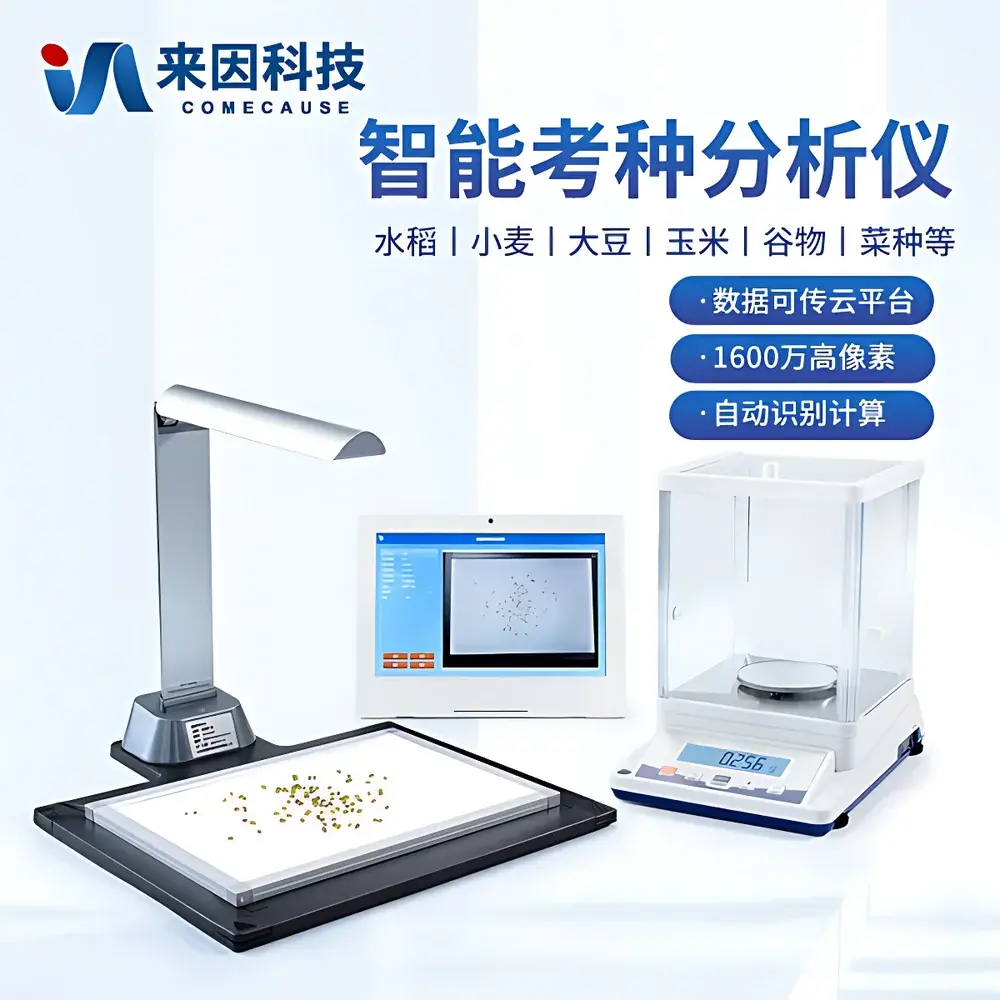
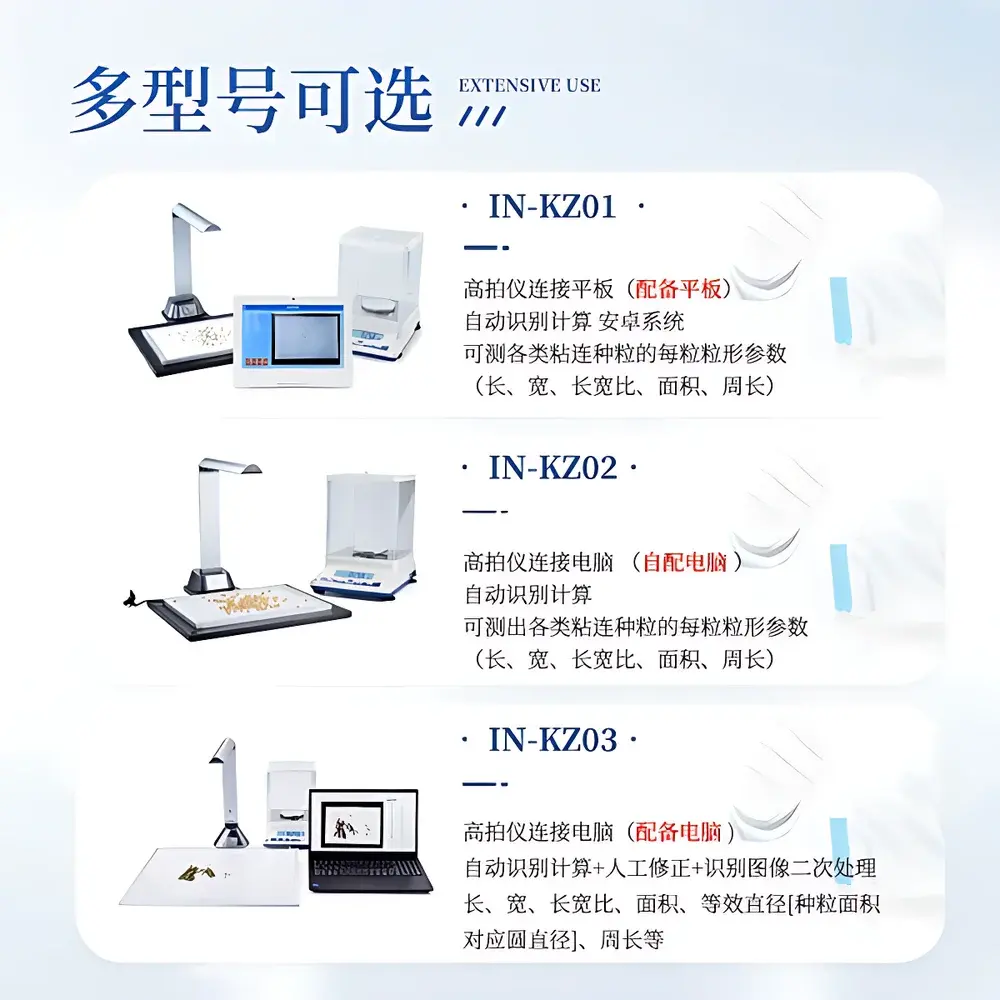

COMECAUSE IN~KZ01 High-Intelligence Seed Analysis System
| Brand | COMECAUSE |
|---|---|
| Origin | Shandong, China |
| Manufacturer Type | Direct Manufacturer |
| Country of Origin | China |
| Model | IN~KZ01 |
| Price | USD 2,380 (FOB) |
| Camera Resolution | 16 MP |
| Backlight Source | High-Brightness LED with Nano Light-Guide Plate |
| Sample Diameter Range | 0.5–20 mm |
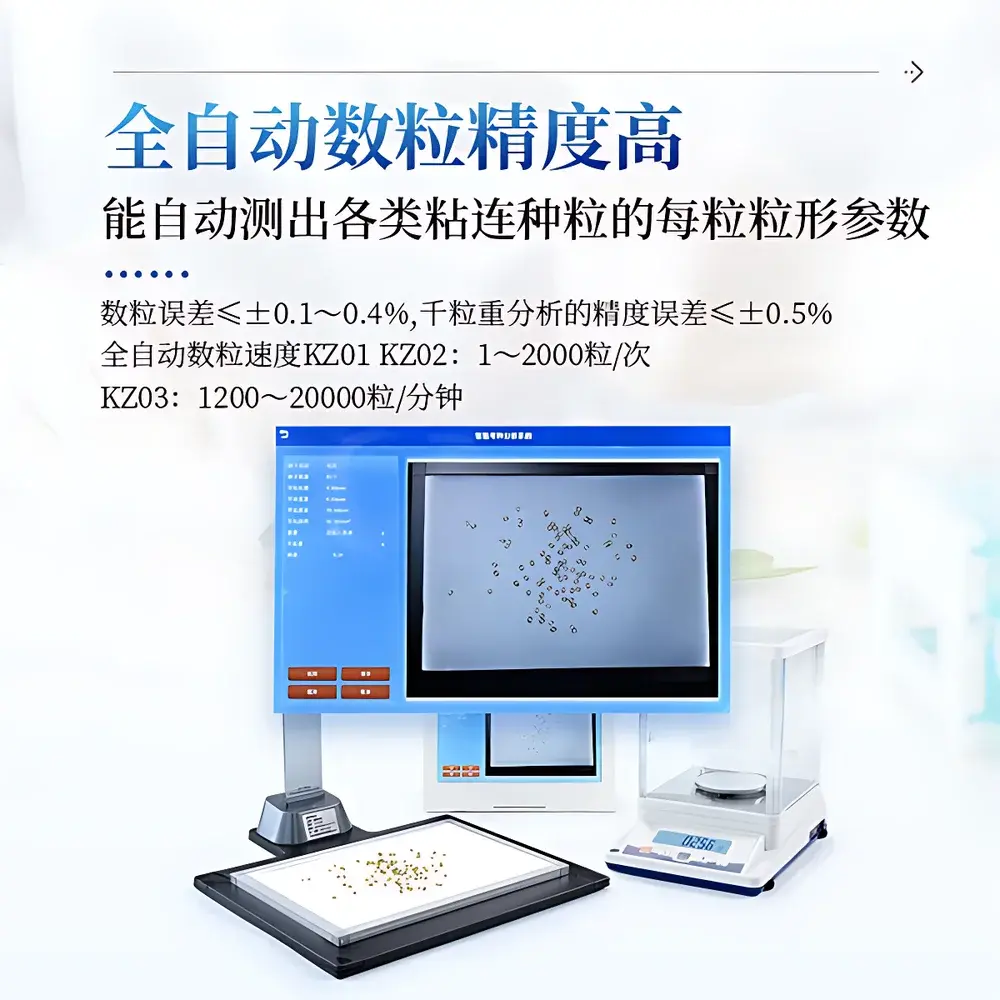
| Counting Accuracy | ≤ ±0.2% (1–2000 seeds per capture) |
| Thousand-Seed Weight (TSW) Accuracy | ≤ ±1 mg |
| Image Processing Platform | Embedded Android 5.1.1+ (10-inch tablet, 800×1280 resolution, 16 GB storage) |
| Connectivity | Wi-Fi / Optional 4G |
| Power Supply | DC 12 V / 1.5 A |
| Dimensions (Imaging Unit) | 350 × 285 × 320 mm |
| Net Weight | 1.495 kg |
| Backlight Module Dimensions | 310 × 220 × 15 mm |
| Weight (Backlight Module) | 2.2 kg |
| Supported Crops | Paddy rice, wheat, soybean, and other smooth-surfaced cereal and legume seeds |
| Language Interface | Dual-language (English & Chinese), one-touch switch |
Overview
The COMECAUSE IN~KZ01 High-Intelligence Seed Analysis System is an embedded vision-based instrumentation platform engineered for precise, high-throughput seed phenotyping in agricultural research, breeding programs, and quality control laboratories. It operates on the principle of top-down transmitted-light digital imaging combined with advanced morphometric algorithms—including perspective transformation, binary morphology, convex hull analysis, and sub-pixel edge detection—to extract quantitative physical traits from static seed samples placed on a uniform backlight stage. Unlike manual counting or low-resolution scanners, the IN~KZ01 integrates hardware calibration (automatic lens distortion correction, backlight uniformity compensation) with real-time image segmentation to deliver traceable, operator-independent measurements compliant with standard seed testing protocols. Its design targets GLP-aligned workflows where reproducibility, auditability, and data integrity are prerequisites—not optional features.
Key Features
- 16-megapixel auto-focus color imaging module with real-time geometric distortion correction and adaptive exposure control
- Nano-structured light-guide plate backed by high-CRI LED array ensures shadow-free, spectrally stable illumination—critical for consistent thresholding across seed batches
- Aluminum alloy chassis (350 × 285 × 320 mm) provides mechanical rigidity and thermal stability during extended operation cycles
- Embedded Android 5.1.1+ platform (10-inch display, 16 GB internal storage) hosts proprietary firmware with deterministic image processing pipelines—no external PC dependency
- Automated calculation of thousand-seed weight (TSW) via synchronized input of sample mass (from external balance) and counted seed quantity
- Comprehensive morphometric output: mean length, mean width, length-to-width ratio, projected area, perimeter, and coefficient of circularity—all derived from calibrated pixel-to-mm mapping
- One-click export to Excel (.xlsx) with timestamped metadata, including image thumbnails, raw counts, statistical summaries, and measurement uncertainty flags
Sample Compatibility & Compliance
The system is validated for use with morphologically homogeneous, surface-smooth seeds within the 0.5–20 mm diameter range—including Oryza sativa (paddy rice), Triticum aestivum (bread wheat), Glycine max (soybean), and Zea mays (maize kernels). For rice, pre-screening via air separation to isolate filled vs. unfilled grains is required prior to analysis to compute physiological seed set percentage—a parameter aligned with ISO 5647:2019 (Cereal seeds — Determination of germination capacity). All measurement outputs adhere to the repeatability thresholds specified in ISTA Rules (International Seed Testing Association) for seed count and size assessment. The embedded software architecture supports audit trail generation, user login authentication, and time-stamped action logging—enabling alignment with GLP (Good Laboratory Practice) documentation requirements.
Software & Data Management
The IN~KZ01’s firmware implements a tiered data governance model. Local analysis results are stored with SHA-256 hashed identifiers to prevent tampering. Synchronized cloud upload (via encrypted Wi-Fi or optional 4G) routes data to the COMECAUSE SeedCloud™ platform, where users can perform temporal cohort analysis (e.g., seasonal TSW trends), cross-variety comparisons (e.g., length distribution histograms), and batch-level QC flagging. Cloud reports include ISO/IEC 17025-compliant metadata fields: instrument ID, calibration date, operator ID, environmental temperature/humidity (if logged externally), and image acquisition parameters. Firmware updates are delivered over-the-air with cryptographic signature verification; version rollback capability ensures regulatory continuity during validation maintenance.
Applications
- Field trial yield estimation via representative panicle/kernel sampling
- Seed lot certification for purity, viability, and uniformity grading
- Phenotypic screening in marker-assisted selection (MAS) programs
- Post-harvest quality monitoring in grain elevators and seed processing facilities
- Educational use in agronomy and plant science curricula for quantitative morphology instruction
- Regulatory submission support for national seed certification authorities (e.g., USDA APHIS, China NAC, EU EC Reg. 2019/1474)
FAQ
What seed types are supported without preprocessing?
Smooth-surfaced, non-overlapping seeds ≥0.5 mm in minimum dimension—such as wheat, barley, lentils, and mustard—can be analyzed directly. Rice requires prior de-husking and air separation to distinguish viable from chaff-filled grains.
Is the system compliant with FDA 21 CFR Part 11 for electronic records?
While the local tablet interface does not implement full Part 11 controls (e.g., biometric login), the cloud-hosted SeedCloud™ platform provides electronic signature enforcement, audit trail retention (>10 years), and role-based access—meeting equivalent ALCOA+ principles for regulated environments.
Can the system measure irregularly shaped seeds like sunflower or sorghum?
Yes—provided samples are manually spaced to avoid contact and shadows. The convex hull algorithm accommodates concave contours, though accuracy for highly textured surfaces (e.g., rough-coated cottonseed) falls outside the ±1% morphometric tolerance specification.
How is calibration maintained over time?
The system includes a certified calibration target (NIST-traceable 1 mm grid) for periodic verification. Backlight uniformity and lens MTF are auto-validated during boot-up; deviation beyond ±3% triggers a service alert.
Does the software support custom trait definitions?
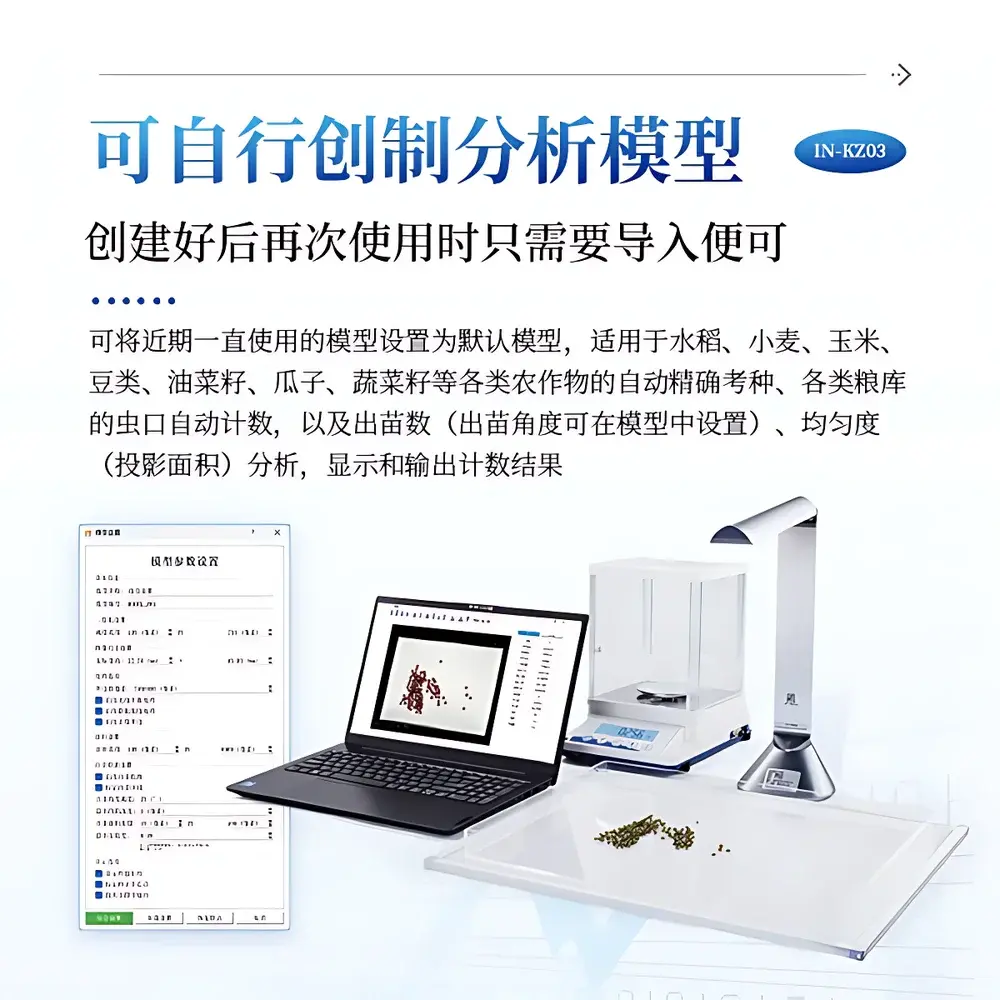
No—trait extraction follows fixed ISTA/ISO morphometric definitions. However, raw image stacks and coordinate data (CSV) are exportable for third-party statistical modeling in R or Python.




