
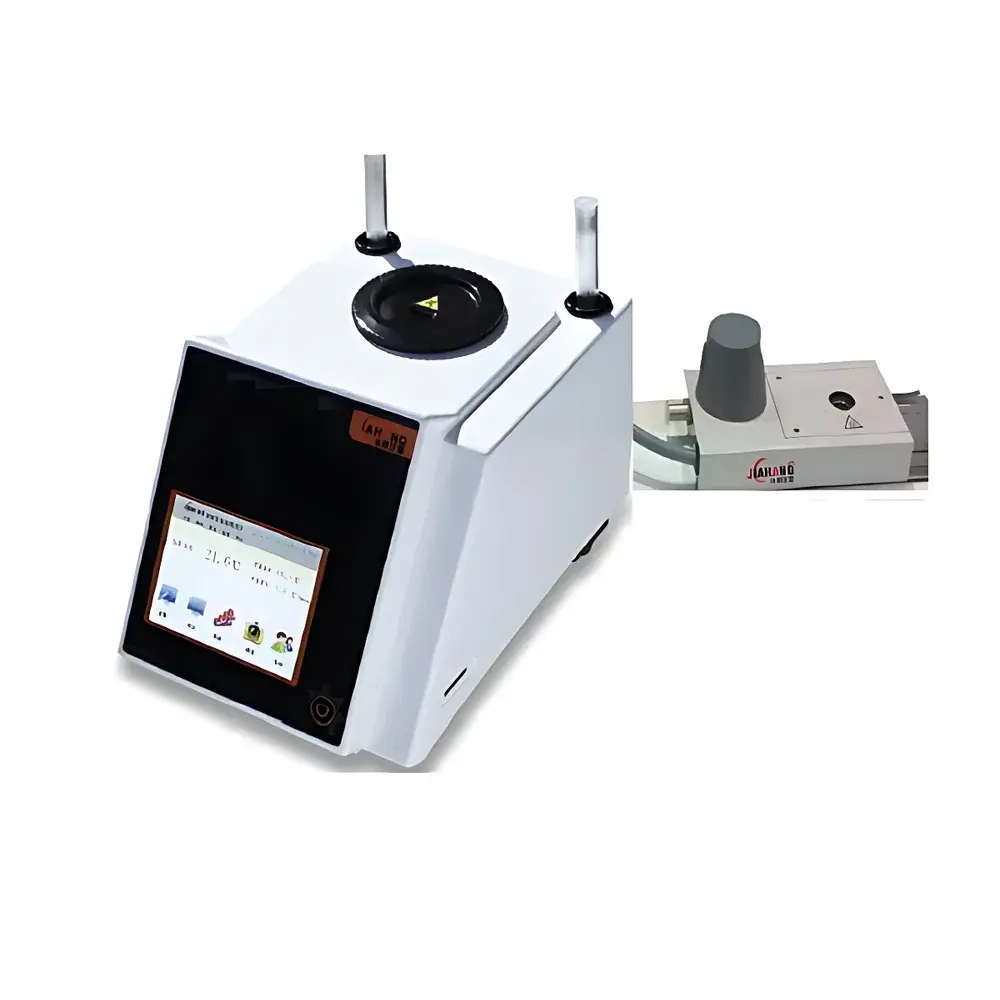
J350 Microscopic Hot Stage
| Origin | Shanghai, China |
|---|---|
| Manufacturer Type | Distributor |
| Origin Category | Domestic |
| Model | J350 |
| Price Range | USD 1,400–2,800 (FOB) |
| Temperature Range | Ambient to 300 °C |
| Heating Rate | 0.1–20.0 °C/min |
| Temperature Repeatability | ±0.2 °C (typical, per ASTM E928-21) |
| Temperature Accuracy | ±0.3 °C (calibrated against NIST-traceable reference standards) |
| Temperature Resolution | 0.1 °C |
| Slide Dimensions | 76 × 19 × 1 mm (standard microscope slide), Coverslip: 15 × 15 × 0.5 mm |
| Field of View | 2 mm diameter |
| Working Distance (objective lens) | ≥7 mm |
| X–Y Translation Range | ≤13 mm |
| Dimensions (L×W×H) | 185 × 85 × 28 mm |
| Weight | 1.0 kg |
| Display | 4.3″ TFT true-color touchscreen |
| Interfaces | USB 2.0, RS-232, SD card slot, Ethernet (optional) |
| Method Storage | 10 pre-programmed thermal protocols |
| Data Logging Capacity | 200 complete thermal event records |
| User Management | None (single-user operation) |
| Segment Control | Single-ramp profile only |
Overview
The J350 Microscopic Hot Stage is a precision temperature-controlled platform engineered for in-situ thermal observation of solid and semi-crystalline materials under optical microscopy. It operates on the principle of controlled conductive heating within a thermally shielded, closed-loop furnace chamber, enabling real-time visualization of phase transitions—including melting, crystallization, polymorphic transformation, and liquid crystal behavior—while maintaining high thermal stability and spatial integrity. Designed for integration with upright or inverted optical microscopes (including polarized light and differential interference contrast systems), the J350 supports both transmitted and reflected light modalities. Its compact form factor and low thermal mass facilitate rapid equilibration and fine-grained ramp control, making it suitable for applications requiring strict adherence to thermal protocol reproducibility—particularly in regulated environments where documentation of thermal history is essential.
Key Features
- Hermetically sealed heating chamber with dual-layer insulation, minimizing ambient thermal drift and ensuring stable baseline performance across extended dwell periods at target temperatures.
- Continuously adjustable heating rate from 0.1 to 20.0 °C/min, programmable via intuitive TFT touchscreen interface; rate linearity verified per ISO 11357-1 Annex B.
- High-resolution temperature control with 0.1 °C digital resolution and ±0.3 °C absolute accuracy (NIST-traceable calibration certificate available upon request).
- Dual-interface data acquisition: real-time temperature logging via USB/RS-232 to external PC or standalone storage on removable SD card; optional Ethernet module enables networked lab integration.
- Optimized mechanical stage with micrometer-driven X–Y translation (≤13 mm range) and ≥7 mm objective working distance, compatible with standard 76 × 19 mm microscope slides and 15 × 15 mm coverslips.
- Compact footprint (185 × 85 × 28 mm) and lightweight design (1.0 kg) allow seamless integration into existing microscopy workstations without structural modification.
Sample Compatibility & Compliance
The J350 accommodates a broad range of sample formats: bulk solids, thin sections, polymer films, pharmaceutical crystals, biological tissue slices, mineral grains, and forensic trace evidence. Its open-top configuration permits direct placement of samples between standard glass substrates, supporting both dry and immersion-based optical configurations. The device complies with general safety requirements outlined in IEC 61010-1:2010 for electrical equipment used in laboratory settings. While not certified for Class I Division 1 hazardous locations, its thermal enclosure meets UL 61010-1 thermal runaway mitigation guidelines. For regulated pharmaceutical or clinical research workflows, the J350’s data export functionality supports audit-ready reporting when paired with validated third-party software compliant with FDA 21 CFR Part 11 and EU Annex 11 requirements.
Software & Data Management
The J350 operates as a stand-alone instrument with embedded firmware managing all thermal execution logic. Ten user-defined thermal methods may be stored internally, each comprising a single linear ramp segment with configurable start temperature, end temperature, and ramp rate. Up to 200 complete thermal event logs—including timestamp, setpoint, actual temperature, and duration—are retained in non-volatile memory. Data export is supported via USB mass-storage mode (CSV format) or serial ASCII stream (RS-232). No proprietary software is required for basic operation; however, integration with third-party acquisition platforms—including MATLAB, LabVIEW, and custom Python scripts—is facilitated through documented ASCII command protocol and Modbus RTU support over RS-232.
Applications
- Pharmaceutical solid-state characterization: identification of eutectic points, hydrate/dehydrate transitions, and amorphous content assessment via hot-stage microscopy (per USP <721> and EP 2.2.15).
- Materials science: observation of polymer melt flow behavior, spherulite growth kinetics, and filler dispersion stability under thermal stress.
- Geosciences & mineralogy: in-situ analysis of dehydration reactions, phase coexistence boundaries, and recrystallization sequences in silicate and oxide systems.
- Forensic science: thermal profiling of synthetic fibers, paint chips, and illicit drug crystals to support comparative analysis and source attribution.
- Biomedical research: monitoring thermal denaturation of collagen matrices, lipid phase transitions in model membranes, and thermosensitive hydrogel collapse dynamics.
FAQ
Is the J350 compatible with polarized light microscopy?
Yes—the stage geometry and optical path clearance are designed to accommodate standard polarizer/analyzer assemblies without vignetting or mechanical interference.
Can the J350 be calibrated in-house?
Yes—users may perform verification using a NIST-traceable platinum resistance thermometer (PRT) inserted into the designated calibration port; full recalibration requires factory service.
Does the J350 support multi-segment thermal profiles?
No—it implements a single-ramp architecture; complex profiles (e.g., hold-and-ramp sequences) require external controller coordination via RS-232 trigger signals.
What microscope objectives are recommended for optimal resolution?
Objectives with working distances ≥7 mm and magnifications between 10× and 40× are optimal; long-working-distance (LWD) or ultra-long-working-distance (ULWD) objectives yield highest fidelity during dynamic thermal events.
Is GLP-compliant audit trail functionality built-in?
No—audit trail generation depends on external software; the J350 provides raw timestamped data streams suitable for ingestion into validated LIMS or ELN systems meeting GLP/GMP data integrity criteria.



