
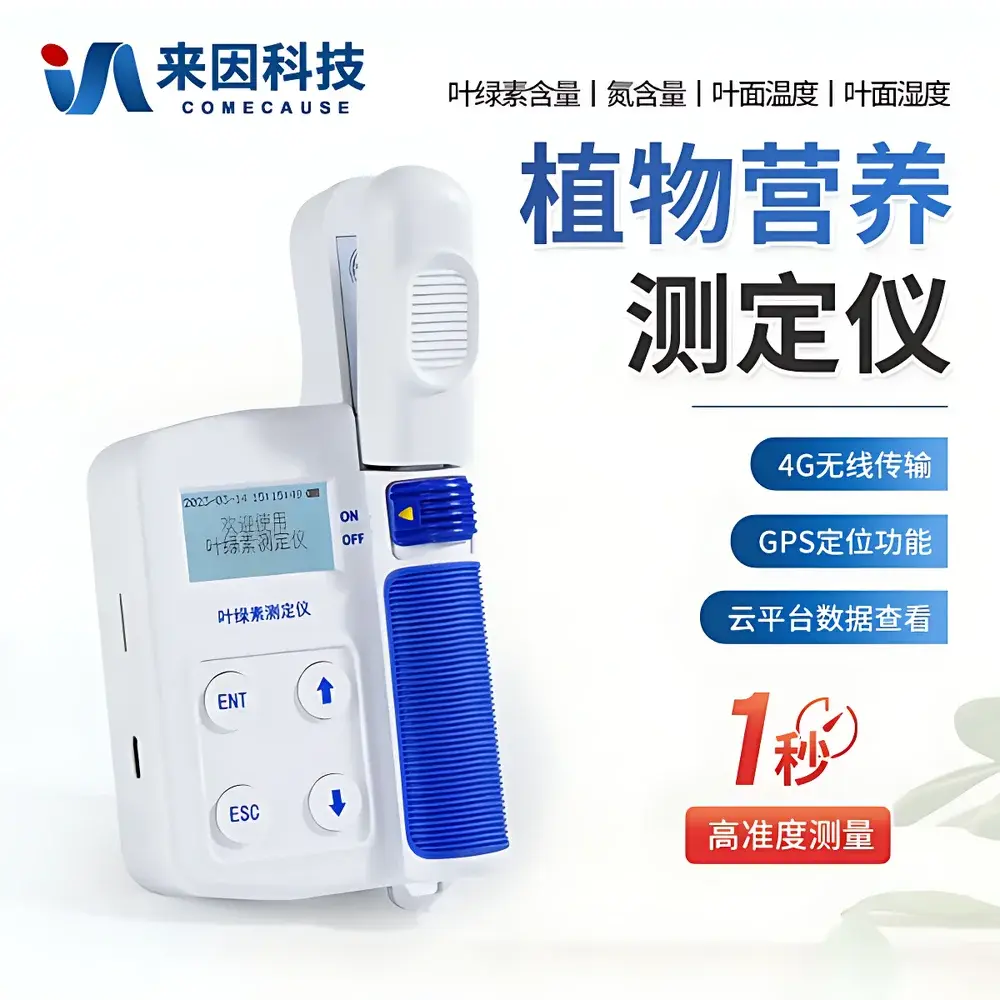
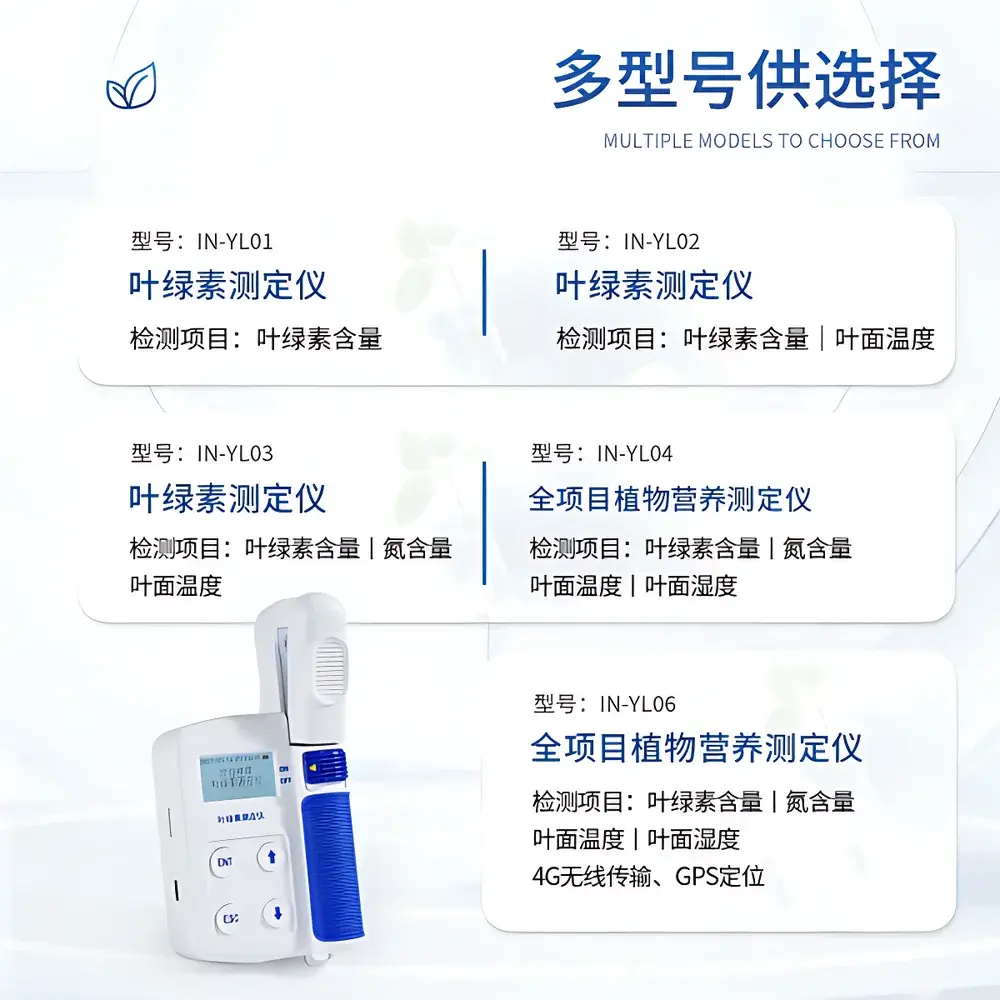
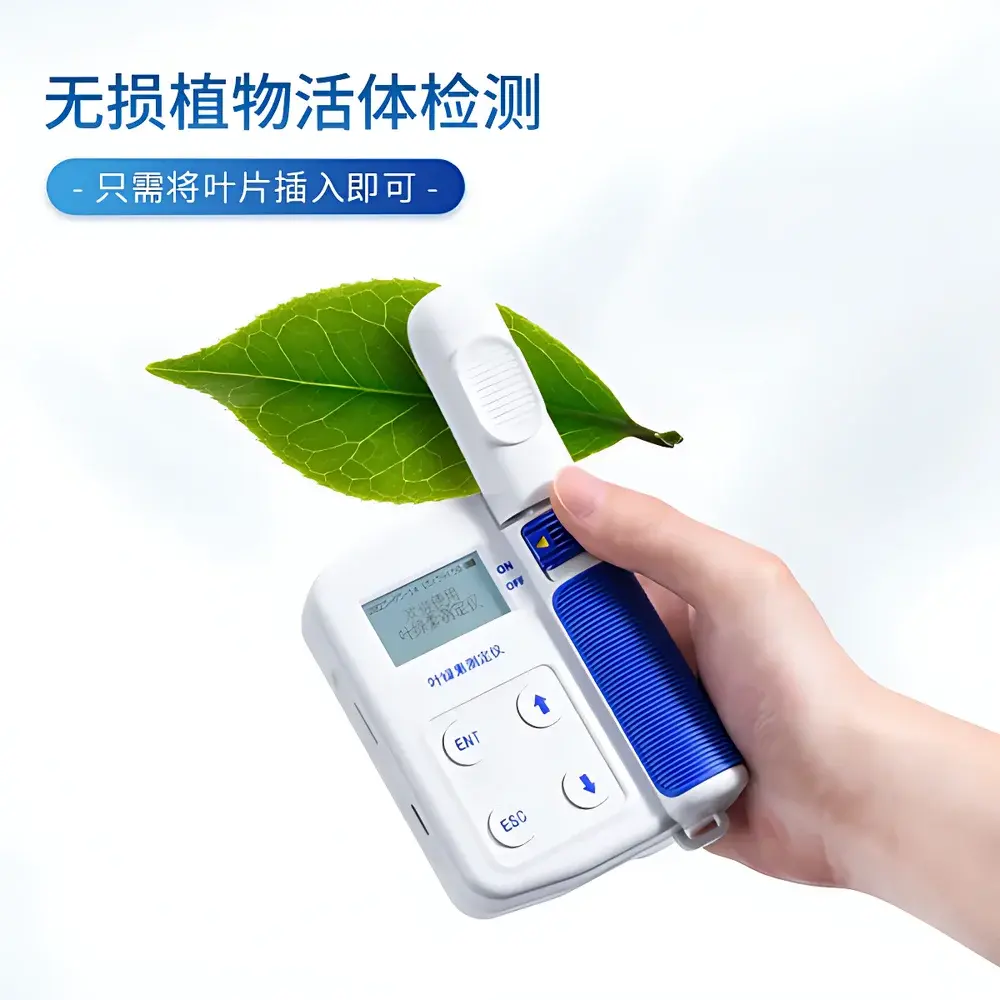
COMECAUSE IN-YL06 Portable SPAD Chlorophyll Meter
| Brand | COMECAUSE |
|---|---|
| Origin | Shandong, China |
| Manufacturer Type | Direct Manufacturer |
| Model | IN-YL06 |
| Measurement Range | 0.0–99.99 SPAD |
| Measurement Time | <0.8 s |
| Measurement Area | 2 mm × 3 mm |
| Accuracy | ±1.0 SPAD (at 0–50 SPAD, 25 °C) |
| Operating Temperature | −10 °C to +50 °C |
| Nitrogen Content Range | 0.0–99.99 mg/g |
| Leaf Moisture Range | 0.0–99.9 %RH |
| Leaf Temperature Range | −10 °C to +99.9 °C |
| Repeatability | ±0.3 SPAD (0–50 SPAD) |
| Data Storage | 16 GB internal flash memory |
| Power Supply | 4.2 V rechargeable Li-ion battery (3000 mAh) |
| Weight | 230 g |
| Display | High-contrast LCD with dual-language (EN/CN) support |
| Connectivity | USB-C interface, built-in 4G LTE module, GPS receiver |
Overview
The COMECAUSE IN-YL06 Portable SPAD Chlorophyll Meter is a field-deployable, non-destructive optical instrument engineered for rapid, in-situ quantification of chlorophyll content in intact plant leaves using dual-wavelength absorbance spectroscopy at 650 nm and 940 nm. It reports results in the standardized Soil-Plant Analysis Development (SPAD) unit—a dimensionless index empirically correlated with leaf chlorophyll concentration (µg/cm²) and nitrogen status. Unlike destructive chemical assays (e.g., acetone extraction followed by spectrophotometry per ASTM D7467 or ISO 10272), the IN-YL06 enables real-time physiological assessment without tissue removal, preserving plant integrity across longitudinal monitoring campaigns. Its optical architecture incorporates ambient light compensation circuitry to minimize spectral interference under variable solar irradiance—critical for field use across diverse agroecological zones. The device operates on the principle that chlorophyll-a exhibits strong absorption at 650 nm while showing minimal absorption at 940 nm (a reference wavelength where water and structural pigments exhibit low interference), enabling robust ratio-based calculation of SPAD values.
Key Features
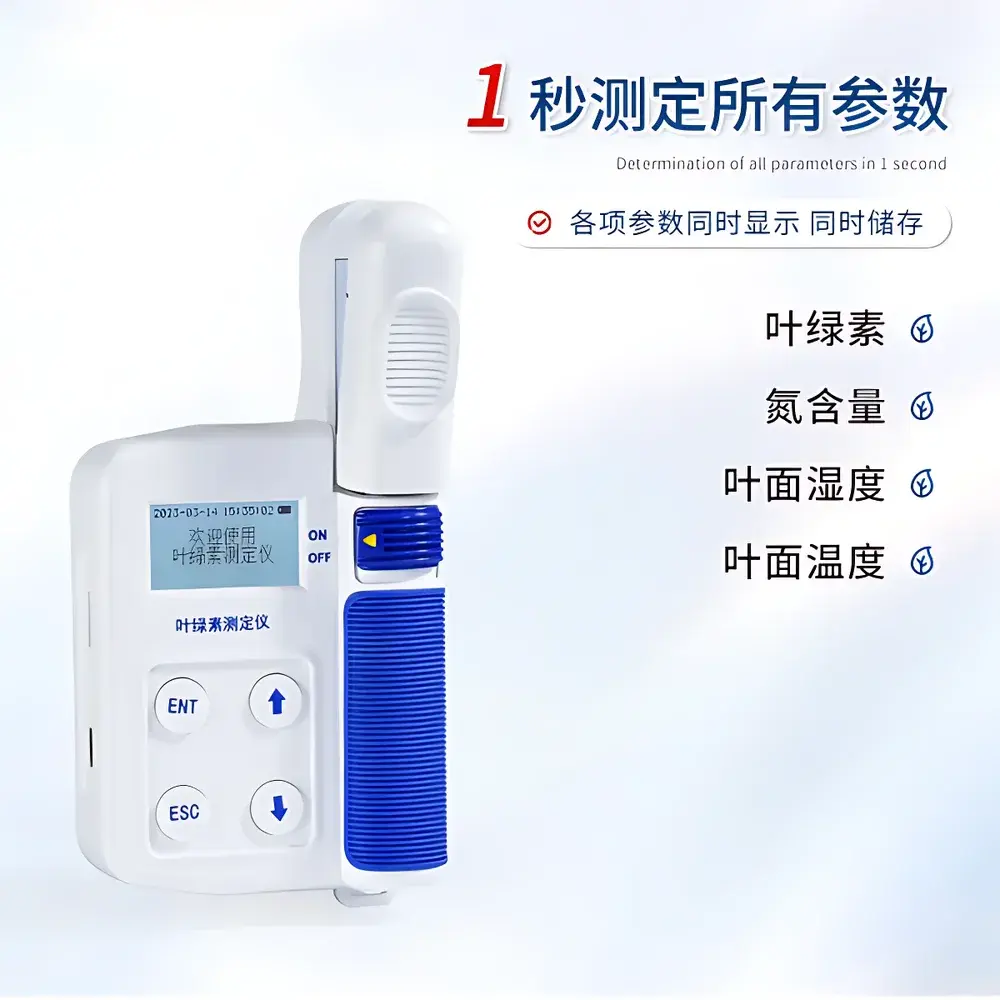
- Simultaneous four-parameter acquisition: SPAD chlorophyll index, leaf nitrogen concentration (mg/g dry weight), leaf surface temperature (°C), and relative humidity (%RH) — all displayed and stored synchronously per measurement event.
- High-precision optical sensor with ±1.0 SPAD accuracy (0–50 SPAD range, 25 °C reference) and repeatability of ±0.3 SPAD, validated against NIST-traceable leaf standards.
- Compact ergonomic design (230 g) with IP54-rated enclosure, enabling reliable operation in humid, dusty, or temperature-variable field environments (−10 °C to +50 °C).
- Integrated GPS receiver providing real-time georeferenced metadata (WGS84 latitude/longitude) for spatially explicit phenotyping and GIS-integrated agronomic mapping.
- Built-in 4G LTE modem supporting secure TLS 1.2 encrypted data transmission to cloud-hosted agricultural analytics platforms compliant with ISO/IEC 27001 information security standards.
- Dual-language UI (English/Chinese) with one-touch toggle; high-contrast transflective LCD ensures legibility under direct sunlight (≥1000 lux ambient illumination).
- Low-power architecture with 3000 mAh Li-ion battery supporting ≥8 hours of continuous operation; includes overcharge protection and smart power management.
Sample Compatibility & Compliance
The IN-YL06 is validated for use across broadleaf and monocot species—including but not limited to maize (Zea mays), wheat (Triticum aestivum), rice (Oryza sativa), soybean (Glycine max), tomato (Solanum lycopersicum), and Arabidopsis thaliana—with leaf thickness ≤0.5 mm and surface area ≥2 mm × 3 mm. It conforms to ISO 17025:2017 general requirements for competence of testing and calibration laboratories, and its firmware implements audit-trail functionality aligned with GLP (Good Laboratory Practice) documentation needs. Data export formats include CSV and XML, compatible with USDA-ARS CropScape classification systems and FAO’s WaPOR database schema. While not FDA 21 CFR Part 11 certified out-of-box, the cloud data platform supports electronic signature configuration and user-level access controls required for regulated trials.
Software & Data Management
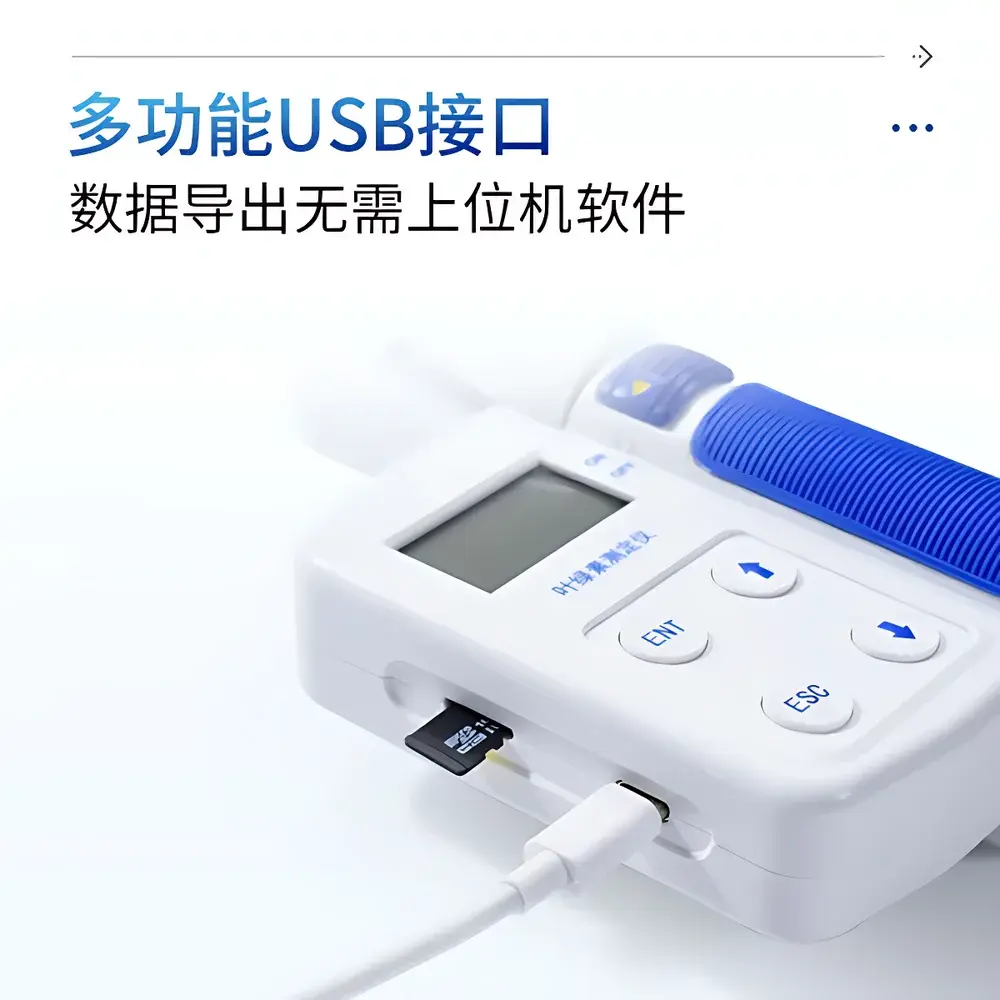
Data are stored locally in 16 GB onboard flash memory, organized into user-defined groups (e.g., by crop variety, treatment block, or sampling date). Export is supported via USB-C direct connection (no proprietary software required) or microSD card slot (UHS-I compatible). The companion cloud platform provides role-based dashboards with time-series visualization, statistical summaries (min/max/mean/std dev), trend curve overlays, and temporal filtering. All uploaded records retain full metadata: timestamp (UTC), GPS coordinates, operator ID, instrument serial number, and environmental context (ambient temperature/humidity if logged externally). Raw SPAD and derived nitrogen estimates are traceable to calibration logs maintained per ISO/IEC 17025 clause 7.7.
Applications
- Variable-rate nitrogen fertilization advisory in precision agriculture programs.
- Longitudinal stress physiology studies (drought, heat, nutrient deficiency) in controlled-environment growth chambers and open-field trials.
- Phenotypic screening of chlorophyll-deficient mutants or nitrogen-use-efficiency (NUE) QTLs in breeding pipelines.
- Validation of remote sensing indices (e.g., NDVI, CIred-edge) using ground-truth SPAD measurements.
- Extension service training for smallholder farmers on real-time crop health diagnostics.
- Academic teaching labs for plant physiology, ecophysiology, and sustainable agriculture curricula.
FAQ
What is the physical basis of SPAD measurement?
SPAD values derive from the ratio of transmittance at 650 nm (chlorophyll-absorbing) to that at 940 nm (near-infrared reference), normalized against a ceramic calibration standard. It is not a direct concentration but a highly reproducible proxy linearly related to chlorophyll a + b content.
Can the IN-YL06 measure chlorophyll in conifer needles or thick succulent leaves?
It is optimized for thin, planar dicot and monocot leaves. Needles or leaves >0.5 mm thick may yield attenuated signals due to scattering; validation against lab-extracted chlorophyll is recommended for such species.
Is firmware update supported over-the-air (OTA)?
Yes—via secure HTTPS-based OTA updates through the 4G connection or manual update via USB-C.
Does the device comply with electromagnetic compatibility (EMC) directives for export to EU markets?
CE marking is pending; current EMC testing per EN 61326-1:2013 Class B confirms compliance for laboratory and field use.
How is calibration maintained over time?
The instrument includes a factory-calibrated ceramic reference tile. Users may perform routine verification using this tile; full recalibration requires return to COMECAUSE service center accredited to ISO/IEC 17025.





