
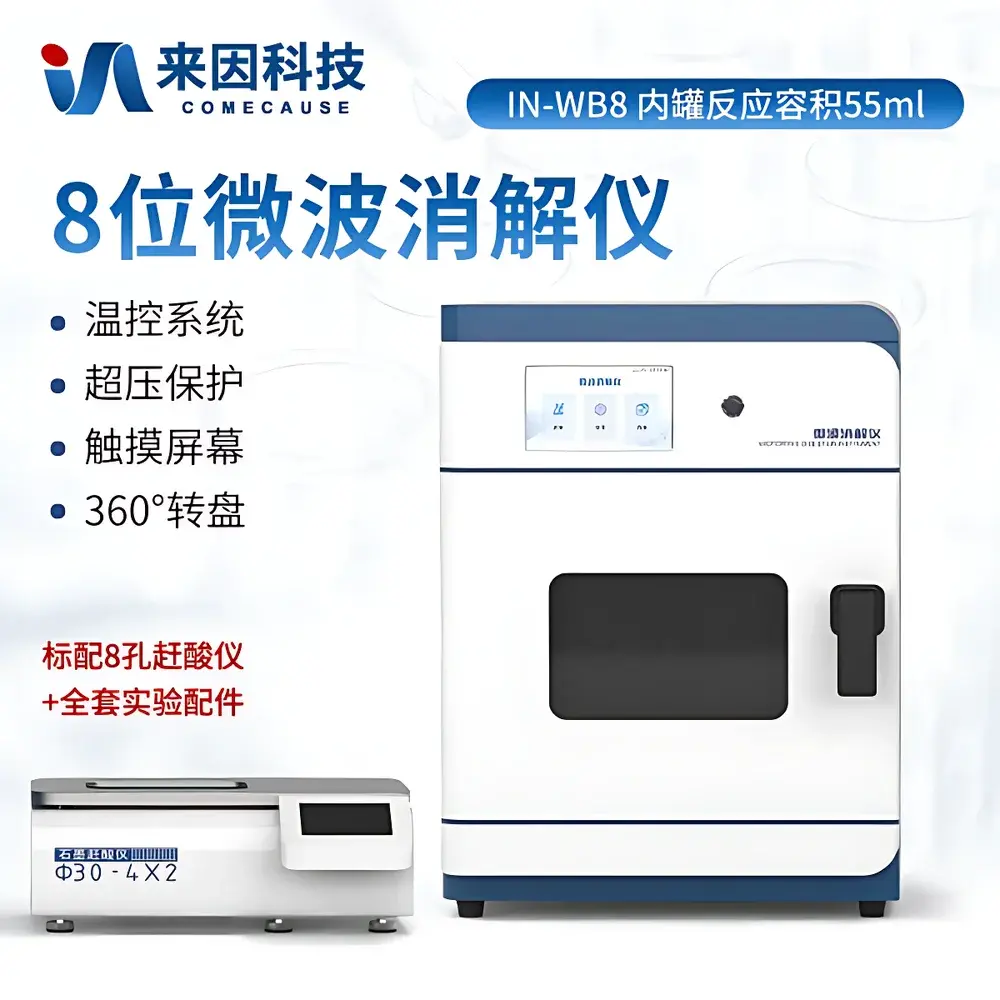
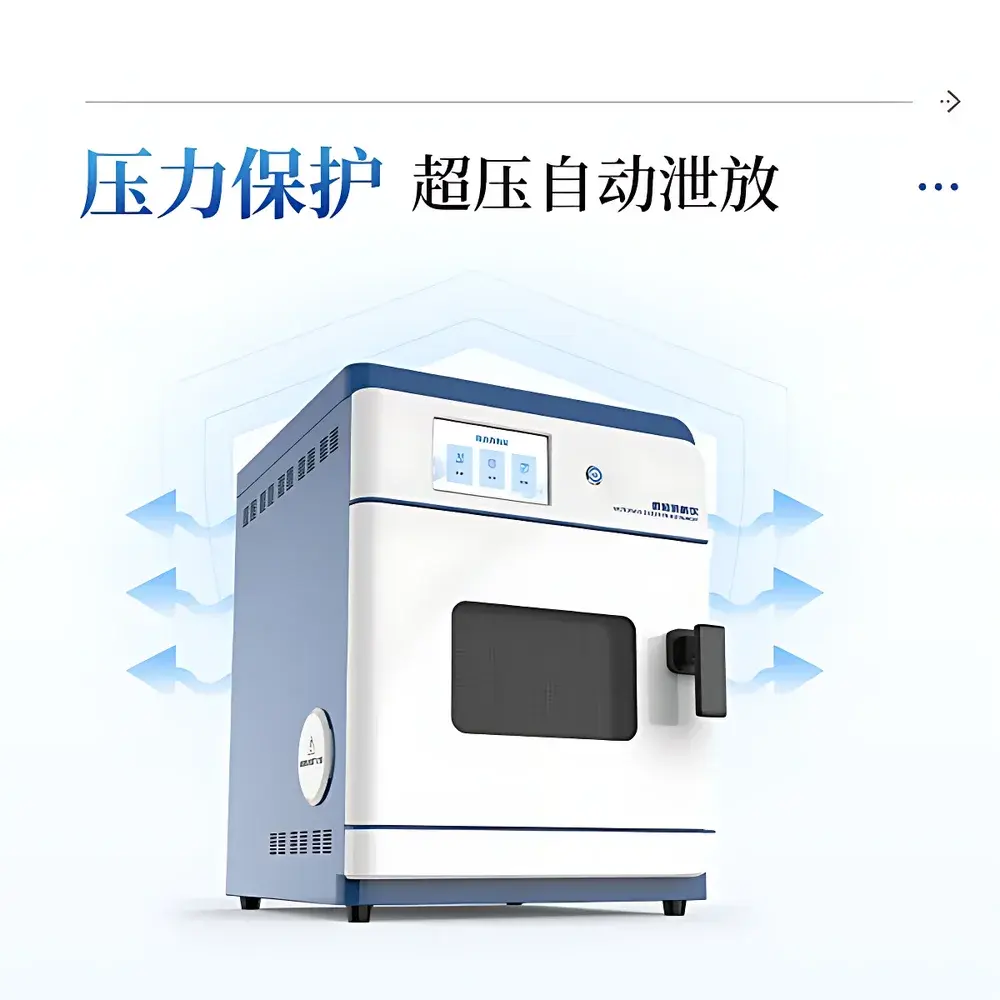
COMECAUSE IN-WB8 High-Throughput Intelligent Microwave Digestion System
| Brand | COMECAUSE |
|---|---|
| Origin | Shandong, China |
| Manufacturer Type | Direct Manufacturer |
| Model | IN-WB8 |
| Price | USD 5,000 (FOB) |
| Cavity Class | Industrial-Grade |
| Batch Capacity | ≥8 samples |
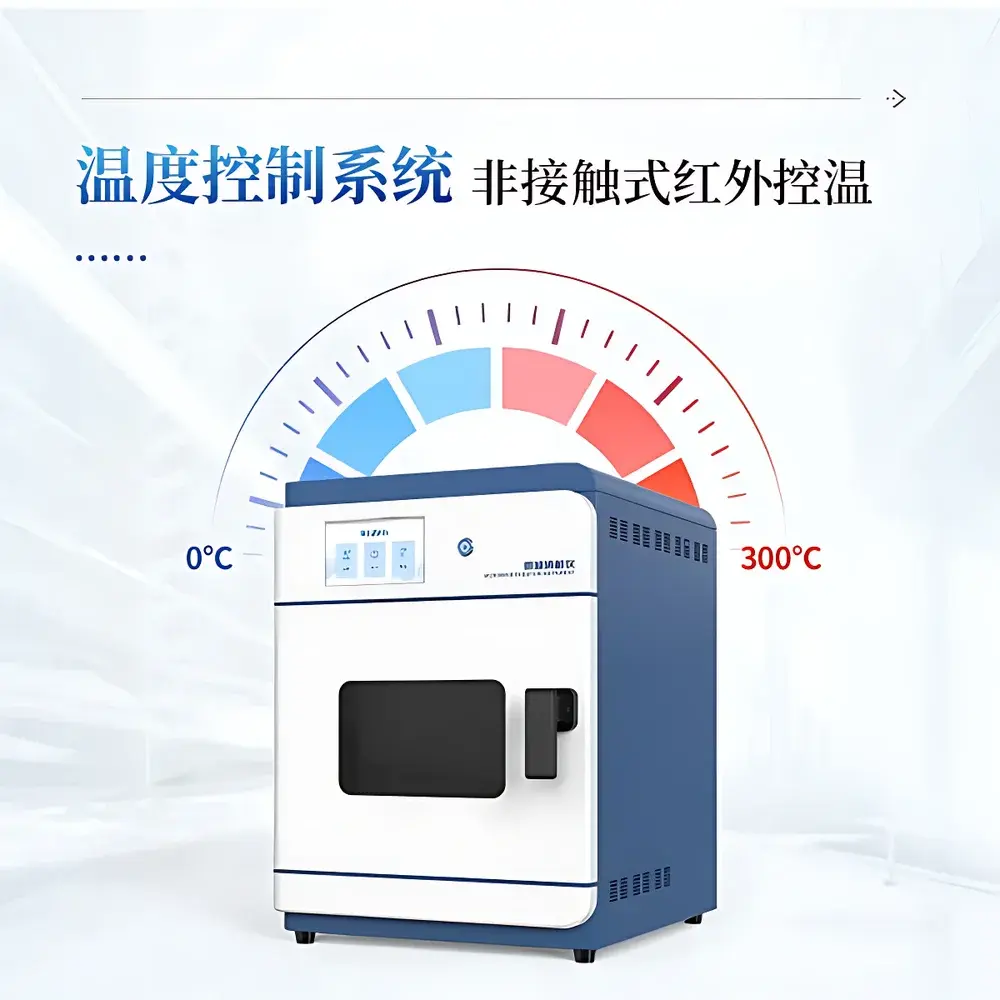
| Max Temperature | 300 °C |
| Max Pressure | 1500 psi |
| Temperature Control | Non-contact infrared, ±0.5 °C accuracy |
| Rotation | 360° continuous synchronous rotation |
| Vessel Material | PFA inner vessel, PEEK outer sleeve |
| Vessel Volume | 55 mL |
| Dimensions (L×W×H) | 507 × 619.5 × 666 mm |
| Net Weight | 50 kg |
Overview
The COMECAUSE IN-WB8 High-Throughput Intelligent Microwave Digestion System is an industrial-grade, closed-vessel sample preparation platform engineered for rapid, reproducible, and trace-element-preserving acid digestion of complex matrices. It operates on the principle of microwave-assisted thermal decomposition—leveraging 2.45 GHz electromagnetic energy to induce molecular friction and ionic conduction within acidic reagent–sample mixtures. This enables uniform volumetric heating under controlled high-pressure conditions (up to 1500 psi), achieving complete dissolution of refractory materials—including silicates, organometallic compounds, and biological tissues—in under 60 minutes. Unlike open-vessel hotplate digestion or conventional single-vessel microwave systems, the IN-WB8 integrates parallel processing, real-time reaction monitoring, and adaptive power modulation to serve as a central node in modern analytical workflows supporting ICP-OES, ICP-MS, AAS, and HG-AFS instrumentation. Its design complies with core principles of green chemistry: reduced acid consumption (typically 3–5 mL HNO₃/HF per sample), minimal volatile element loss (e.g., Hg, As, Se), and inherently low procedural blanks.
Key Features
- Industrial-grade magnetron-based microwave generation with dynamic power regulation (0–1600 W), ensuring field homogeneity across all rotor positions
- Modular 8-position rotor with synchronized 360° continuous rotation—eliminating positional bias and enhancing inter-sample reproducibility (RSD < 3% for certified reference materials)
- Non-contact infrared temperature sensing coupled with piezoresistive pressure transducers; real-time acquisition of T/P profiles at 1 Hz sampling rate
- Adaptive algorithm-driven control: microprocessor adjusts microwave output based on live feedback to maintain user-defined temperature–pressure trajectories
- Multi-layer safety architecture: redundant pressure relief valves, rupture disc–equipped PEEK outer sleeves (rated to 2000 psi), and automatic microwave cutoff upon overpressure or temperature excursion
- PFA-lined digestion vessels (55 mL capacity) with chemically inert sealing mechanisms; compatible with HNO₃, HF, HCl, H₂O₂, and aqua regia mixtures
Sample Compatibility & Compliance
The IN-WB8 accommodates solid, semi-solid, and liquid samples across diverse regulatory domains—including foodstuffs (grains, seafood, dairy), environmental solids (soil, sediment, sludge), pharmaceutical excipients, geological ores, and clinical tissues. It supports method development aligned with ASTM D5511, ISO 11466, USP , and EPA Methods 3050B, 3051A, and 3052. All digestion protocols are fully traceable and audit-ready, with time-stamped T/P logs exportable in CSV format. The system meets GLP/GMP documentation requirements when used with validated SOPs and calibrated reference standards. No external fume hood integration is required due to its sealed cavity and integrated catalytic charcoal filter for residual acid vapor abatement.
Software & Data Management
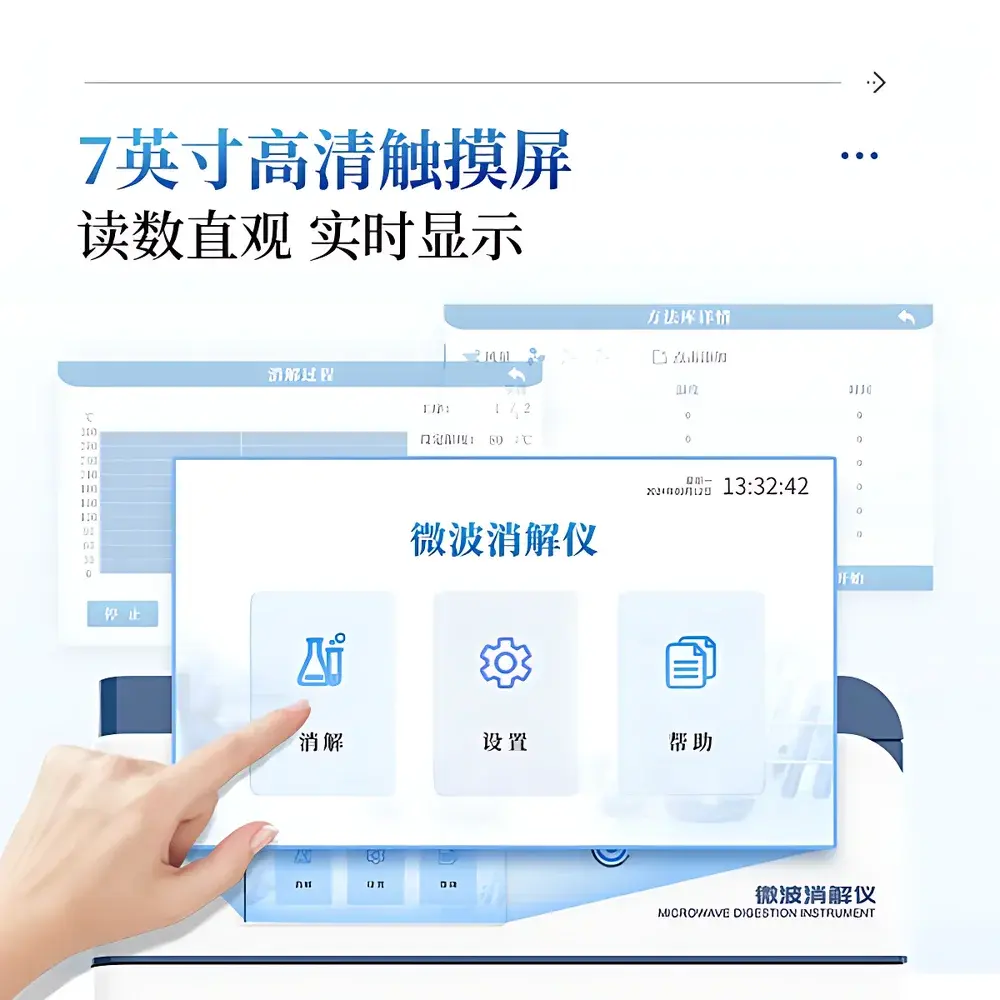
The embedded Windows-based control interface provides intuitive method programming, including multi-step ramp–hold–cool sequences, user-defined safety thresholds, and auto-recovery from minor process deviations. Each run generates a digital dossier containing full thermobaric history, power profile, rotor position metadata, and operator ID—compliant with FDA 21 CFR Part 11 when deployed with networked authentication and electronic signature modules. Data export supports direct import into LIMS platforms via ODBC or REST API. Firmware updates are delivered via secure HTTPS channel with SHA-256 integrity verification.
Applications
- Food safety laboratories performing routine heavy metal screening (Pb, Cd, As, Hg) in compliance with EU Regulation (EC) No 1881/2006 and China GB 2762–2022
- Environmental testing facilities analyzing contaminated soils per ISO 17294-2 and China HJ 491–2019
- Pharmaceutical QC labs conducting elemental impurity testing per ICH Q3D guidelines using ICP-MS
- Geochemical research groups digesting silicate-rich rock powders for rare earth element (REE) quantification
- Public health institutes preparing clinical biospecimens (hair, urine, blood) for toxicokinetic studies
FAQ
What safety certifications does the IN-WB8 hold?
The system conforms to IEC 61000-6-3 (EMC), IEC 61000-6-4 (emission), and carries CE marking for laboratory equipment. Pressure vessels comply with PED 2014/68/EU Annex I essential safety requirements.
Can the IN-WB8 be integrated with automated sample introduction systems?
Yes—via RS-232/USB serial interface and Modbus TCP protocol, enabling synchronization with autosamplers and post-digestion dilution stations.
Is method validation support available?
COMECAUSE provides application notes, CRM digestion protocols (NIST SRM 1573a, 2710a), and IQ/OQ documentation templates compliant with ISO/IEC 17025.
What maintenance intervals are recommended?
Magnetron output calibration every 12 months; IR sensor verification quarterly; PEEK sleeve replacement after 200 cycles or visible stress cracking.
Does the system support remote monitoring?
Optional Ethernet-enabled remote access allows real-time T/P visualization, alarm notification via email/SMS, and secure cloud backup of run data through COMECAUSE CloudLink™.



