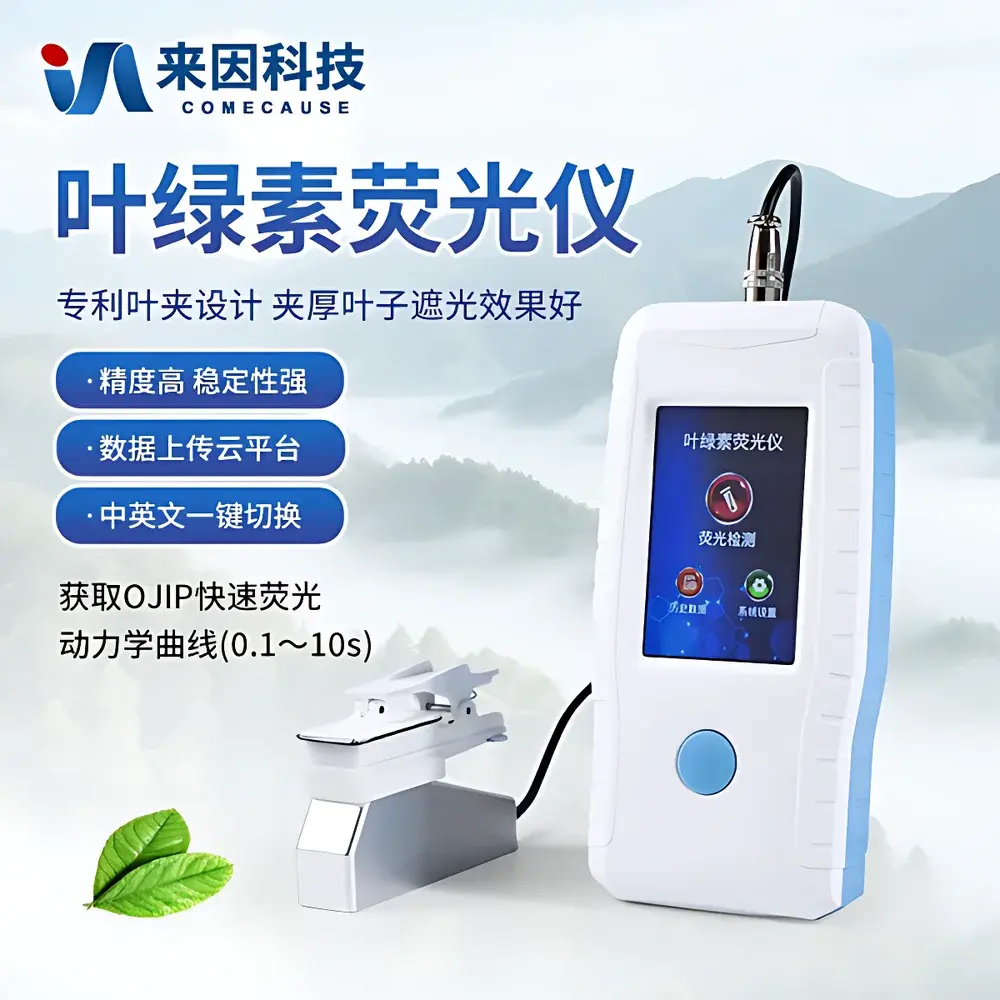
COMECAUSE IN-YS100 Chlorophyll Fluorometer
| Brand | COMECAUSE |
|---|---|
| Origin | Shandong, China |
| Manufacturer Type | Direct Manufacturer |
| Model | IN-YS100 |
| Measurement Range | Fo, Fj, Fi, Fm (Fp) |
| Measurement Duration | 3 min |
| ADC Resolution | 16-bit |
| Operating Temperature | -15–40 °C |
| Light Source | 455 nm LED |
| Maximum Actinic Irradiance | 23,000 μmol·m⁻²·s⁻¹ |
| Sampling Interval | Down to 10 μs |
| Sensor | PIN photodiode with fluorescence bandpass filter |
| Gain Settings | 6 adjustable levels (1×, 2.3×, 4.2×, 5.6×, 15.6×, 20×) |
| Storage Capacity | 99,999 datasets |
| Display | 3.5″ capacitive touchscreen (320 × 480 px) |
| Battery | 3.7 V / 10.5 Ah Li-ion, ~20 h standby |
| Weight | 500 g (host: 380 g |
| probe | 120 g) |
| Dimensions (H × W × D) | 18 × 8.5 × 4 cm |
| Humidity Range | 0–90% RH (non-condensing) |
| Storage Temperature | -20–50 °C |
Overview
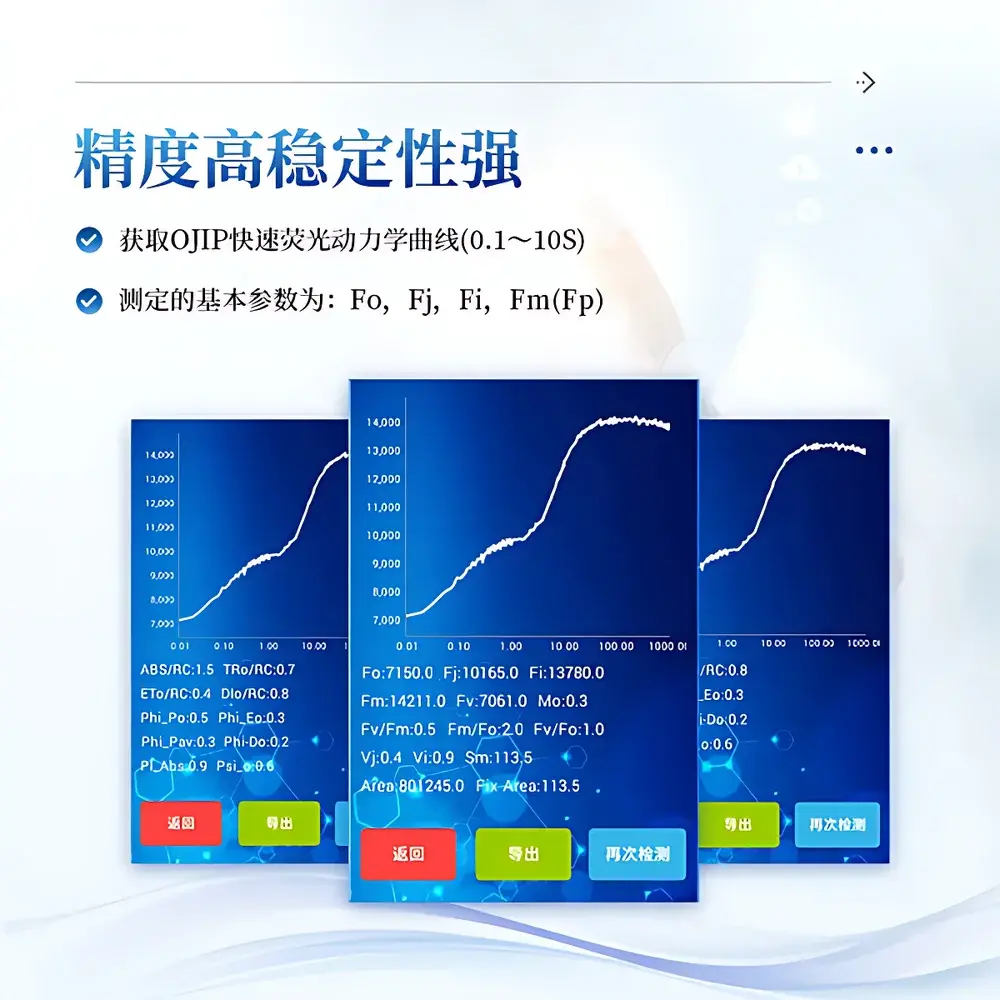
The COMECAUSE IN-YS100 Chlorophyll Fluorometer is a portable, high-resolution instrument engineered for quantitative analysis of photosynthetic efficiency in higher plants, algae, and cyanobacteria via OJIP transient fluorescence kinetics. It operates on the principle of pulse-amplitude modulated (PAM) chlorophyll a fluorescence detection, applying a saturating blue LED pulse (455 nm) to induce maximal photochemical yield while capturing the nanosecond-to-second fluorescence rise from basal (Fo) to peak (Fm) emission. The device records the characteristic OJIP curve—spanning 0.1 to 10 seconds—with microsecond-level temporal resolution (down to 10 μs), enabling derivation of biophysically meaningful parameters linked to Photosystem II (PSII) integrity, electron transport chain functionality, and stress-induced photoinhibition.
Key Features
- High-fidelity 16-bit analog-to-digital conversion ensures precise quantification of low-intensity fluorescence signals across dynamic physiological states.
- Adjustable LED actinic irradiance (0–23,000 μmol·m⁻²·s⁻¹) supports controlled photoactivation and enables comparative studies under ecologically relevant light regimes.
- Six-step programmable sensor gain (1× to 20×) allows optimal signal-to-noise ratio adaptation for diverse sample types—from dark-adapted leaves to sun-exposed canopies.
- Integrated thermal management prevents LED output drift during extended measurements, maintaining spectral stability and repeatability over field deployments.
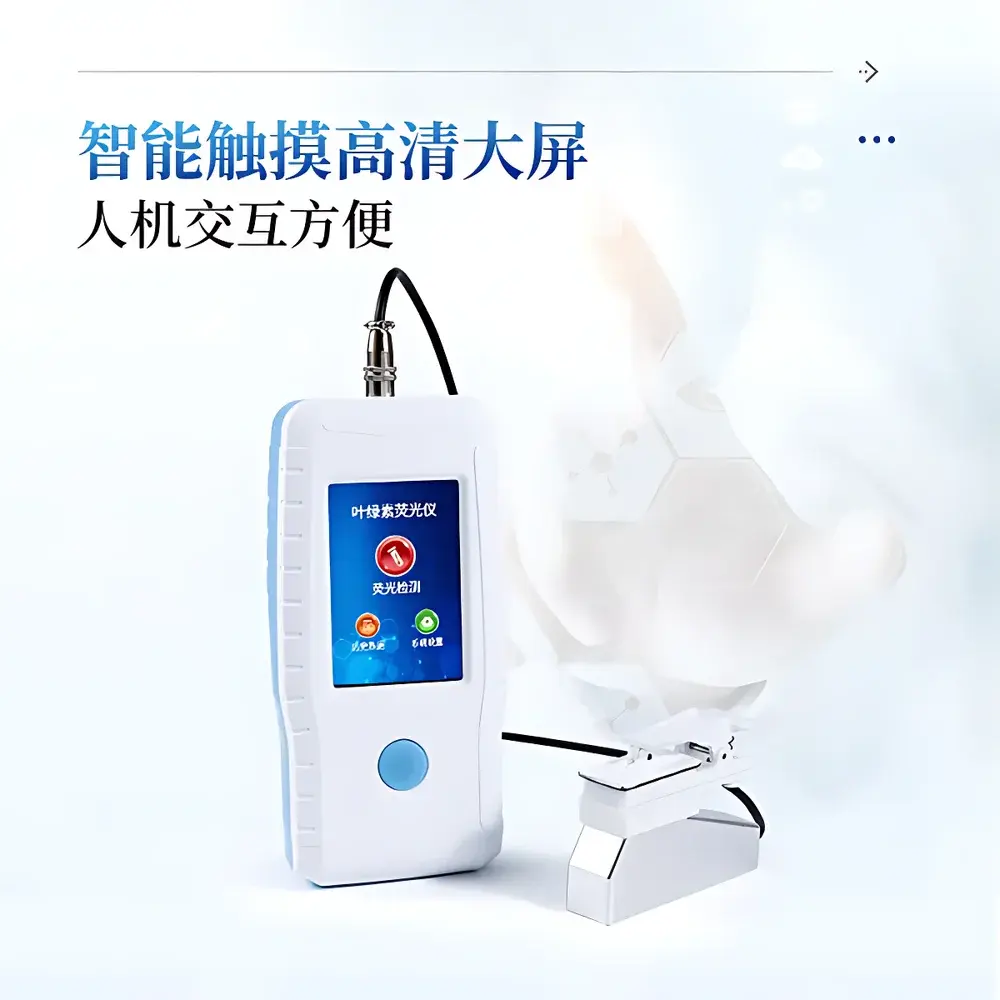
- Capacitive 3.5-inch touchscreen interface with 320 × 480 resolution supports intuitive navigation, real-time curve visualization, and on-device parameter configuration—including measurement duration, excitation intensity, and detector gain.
- Onboard storage capacity of 99,999 datasets facilitates multi-site longitudinal monitoring without immediate data offloading.
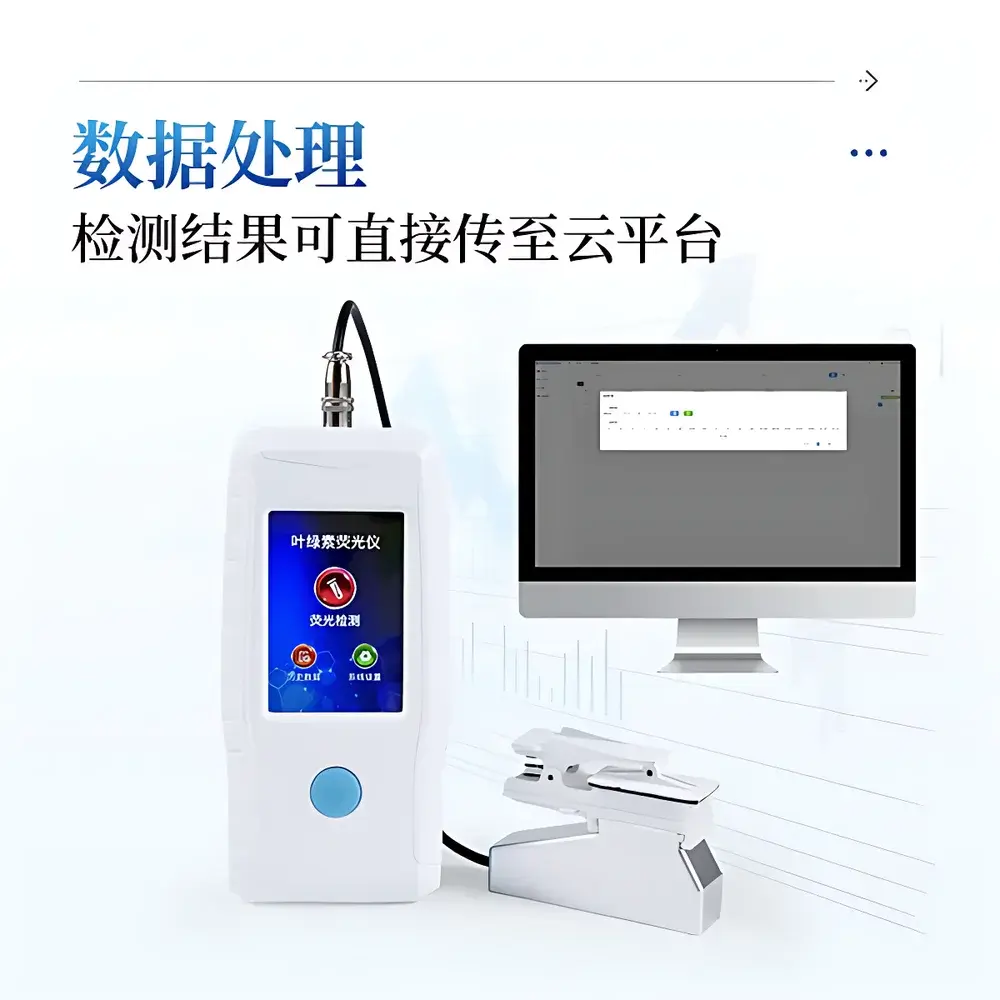
- Built-in Wi-Fi module enables secure, encrypted transmission of raw OJIP transients and derived metrics to cloud-based analytical platforms compliant with ISO/IEC 27001 data handling protocols.
Sample Compatibility & Compliance
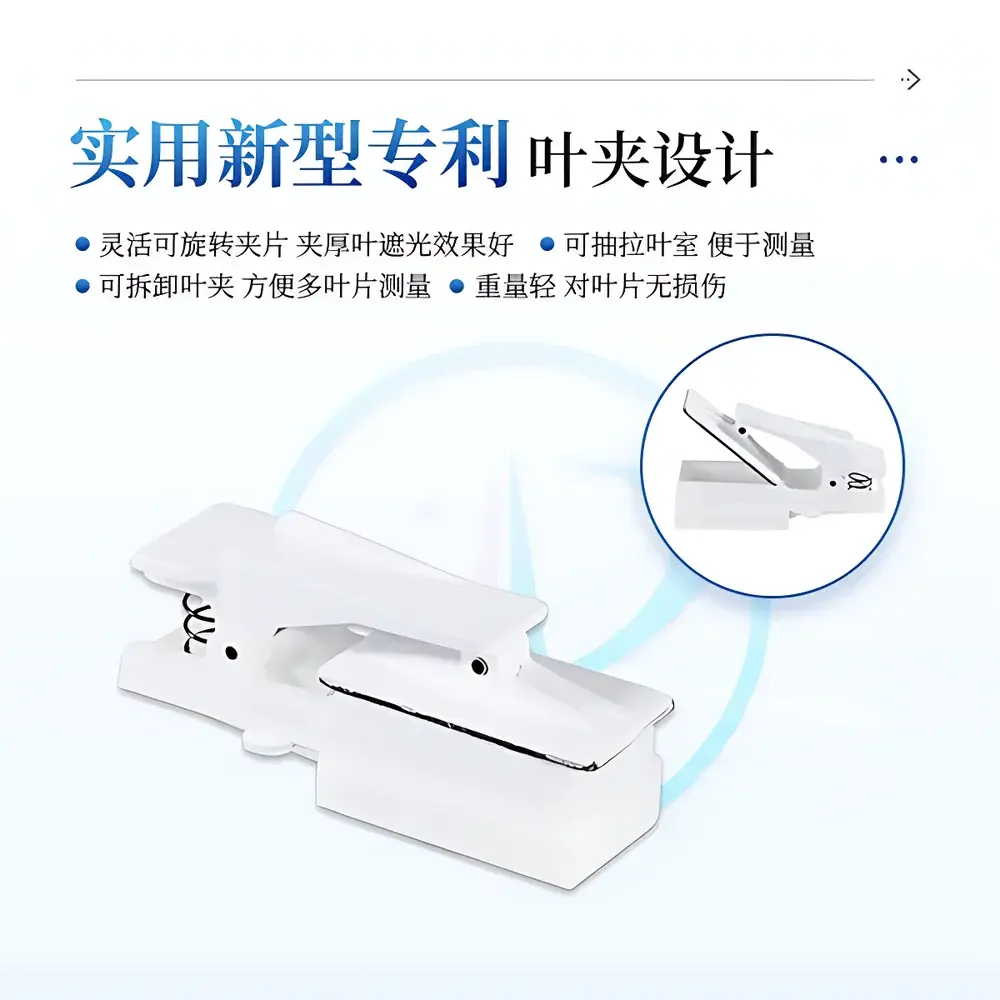
The IN-YS100 is validated for use with intact leaves (dicots and monocots), detached leaf discs, mosses, lichens, algal suspensions, and microbial biofilms. Its non-destructive, contact-based probe design minimizes mechanical perturbation and preserves native stomatal and metabolic status during acquisition. All firmware and data export workflows adhere to GLP-aligned traceability standards: each dataset is time-stamped, uniquely indexed, and includes instrument ID, firmware version, calibration metadata, and environmental context (ambient temperature/humidity). While not certified for regulated clinical or pharmaceutical environments, the system supports audit-ready documentation practices aligned with ISO 17025 principles for environmental and agricultural research laboratories.
Software & Data Management
Data acquisition, visualization, and post-processing are supported through the proprietary COMECAUSE FluoroSuite desktop application (Windows/macOS) and web-accessible cloud dashboard. Raw .csv exports contain time-series fluorescence values at user-defined intervals, alongside calculated parameters such as Fv/Fm, ΦPo, PIAbs, ABS/RC, and Area-under-curve (Sm). The platform implements automated QA/QC flagging for motion artifacts, saturation events, and signal clipping. USB-C and legacy USB-A connectivity ensure compatibility with legacy lab infrastructure. Cloud synchronization includes role-based access control, versioned dataset archiving, and API endpoints for integration with LIMS or R-based statistical pipelines. All exported Excel files conform to FAIR (Findable, Accessible, Interoperable, Reusable) data principles, embedding structured metadata per MIAME/MINSEQE guidelines.
Applications
- Early detection of abiotic stress responses—including drought, salinity, heavy metal exposure, and temperature extremes—via shifts in J-step amplitude (Vj) and I-step kinetics (Vi).
- Evaluation of herbicide mode-of-action targeting PSII (e.g., triazines, ureas) through inhibition of electron transfer beyond QA.
- Phenotyping breeding populations for photosynthetic robustness under controlled environment or field conditions.
- Calibration of remote sensing indices (e.g., PRI, NDVI) using ground-truthed fluorescence parameters.
- Teaching laboratory implementation for undergraduate plant physiology courses, supporting inquiry-based learning of energy partitioning models (Kautsky effect, JIP-test theory).
- Long-term ecological monitoring of forest understory species or wetland macrophytes exposed to eutrophication or UV-B radiation.
FAQ
What does the “OJIP” acronym represent in chlorophyll fluorescence analysis?
OJIP denotes the characteristic inflection points in the rapid chlorophyll a fluorescence induction curve: O (origin, Fo), J (intermediate step at ~2 ms), I (intermediate at ~30 ms), and P (peak, Fm). These reflect sequential reduction states of the PSII electron acceptor side.
Can the IN-YS100 be used for dark-adapted and light-adapted measurements?
Yes—the instrument supports both protocols. Dark adaptation (typically 20–30 min) yields Fo and Fm for calculation of maximum quantum yield (Fv/Fm); light-adapted protocols enable determination of ΦPSII and NPQ under steady-state illumination.
Is firmware update capability available over-the-air?
Firmware updates are delivered via secure HTTPS download through the FluoroSuite desktop application; Wi-Fi-enabled devices support automatic notification and staged installation with rollback safeguards.
Does the device meet IP rating requirements for outdoor field use?
The IN-YS100 is rated IP54—dust-protected and resistant to water splashes from any direction—making it suitable for routine field deployment in temperate and subtropical climates, though prolonged rain exposure requires protective housing.
How is data integrity ensured during wireless transmission?
All Wi-Fi transfers employ TLS 1.2 encryption, session authentication tokens, and SHA-256 checksum validation; failed uploads trigger local retention and retry queues with exponential backoff.