
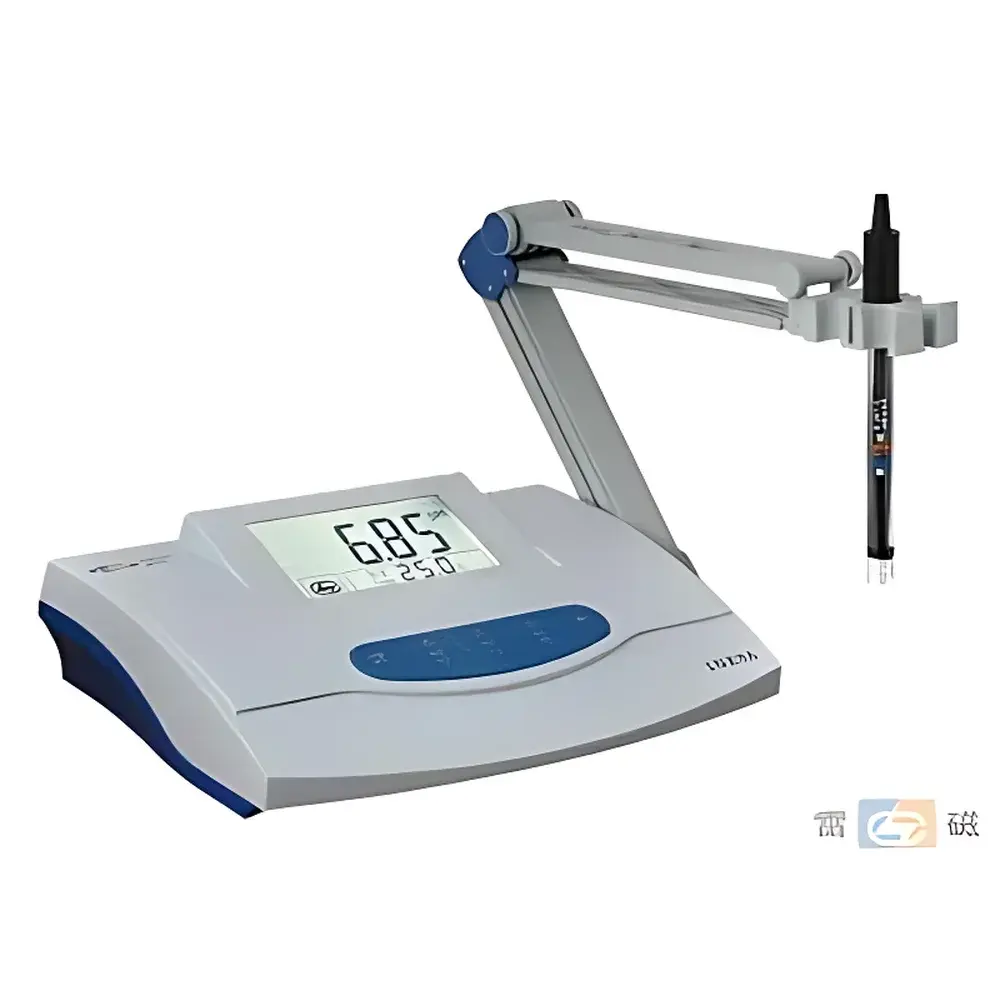
Leici PHS-3C Benchtop pH Meter
| Brand | Leici |
|---|---|
| Origin | Shanghai, China |
| Model | PHS-3C |
| Accuracy Class | 0.01 |
| pH Range | 0.00–14.00 pH |
| mV Range | −1999 to +1999 mV |
| pH Resolution | 0.01 pH |
| mV Resolution | 1 mV |
| pH Accuracy | ±0.01 pH ±1 digit |
| mV Accuracy | ±0.1% FS |
| Stability | ±0.01 pH ±1 digit / 3 h |
| Temperature Compensation | Manual, 0.0–60.0 °C |
| Power Supply | AC 220 V ±10%, 50 Hz |
| Dimensions (W×D×H) | 300 × 220 × 90 mm |
| Weight | 1 kg |
Overview
The Leici PHS-3C is a precision benchtop pH meter engineered for routine pH and redox potential (mV) measurements in academic teaching laboratories, quality control environments, and industrial process support settings. It operates on the fundamental principle of potentiometric measurement: the instrument detects the electromotive force (EMF) generated across a glass pH electrode and reference electrode pair immersed in an aqueous sample, converting this voltage into a calibrated pH value using the Nernst equation. Designed to meet the performance requirements of ISO 8655-4 (volumetric apparatus calibration) and aligned with general laboratory practices referenced in ASTM E70 and USP , the PHS-3C delivers traceable, reproducible readings at 0.01-pH resolution—suitable for applications where moderate accuracy suffices without requiring automated temperature compensation or GLP-compliant data handling.
Key Features
- Large-segment LCD display with high-contrast numeric readout for clear visibility under varied ambient lighting conditions
- Automatic recognition of standard pH buffer solutions (pH 4.01, 6.86, and 9.18) during calibration, reducing operator error and streamlining two-point calibration workflows
- Manual temperature compensation (MTC) via front-panel input (0.0–60.0 °C), enabling correction of pH readings for thermal effects when used with temperature-sensitive samples or non-thermistor-equipped electrodes
- Rugged, compact benchtop housing (300 × 220 × 90 mm; 1 kg) constructed from chemical-resistant ABS plastic, optimized for space-constrained lab benches and mobile QC stations
- Dual-mode measurement capability: direct pH mode for acidity/alkalinity assessment and mV mode for oxidation-reduction potential (ORP) evaluation or electrode diagnostics
- Stable analog signal conditioning circuitry ensuring ≤±0.01 pH ±1 digit drift over 3 hours—validated per manufacturer’s internal stability protocol under controlled 25 °C ambient conditions
Sample Compatibility & Compliance
The PHS-3C is compatible with all standard single-junction or double-junction refillable glass combination pH electrodes featuring BNC connectors (e.g., Leici E-201-C, or equivalents meeting IEC 60068-2-60 mechanical shock specifications). It supports aqueous solutions only—not designed for non-aqueous, highly viscous, or strongly oxidizing media. While not certified to IEC 61010-1 for hazardous area use, its electrical safety design conforms to GB/T 12113 (Chinese national implementation of IEC 61010-1). The instrument satisfies basic metrological requirements outlined in JJG 119–2018 (Chinese verification regulation for laboratory pH meters) and is suitable for internal calibration records under ISO/IEC 17025-accredited laboratories when paired with traceable buffer standards and documented electrode maintenance logs.
Software & Data Management
The PHS-3C is a standalone hardware device with no embedded memory, USB interface, or software connectivity. All measurements are displayed in real time and must be manually recorded. This architecture intentionally omits digital data export to reduce complexity, cost, and validation burden—making it appropriate for labs operating under simplified documentation regimes (e.g., teaching labs, small-scale manufacturing QA where electronic audit trails are not mandated). For users requiring electronic data capture, external logging can be achieved via third-party RS-232-to-USB adapters (not included) and generic terminal emulation software, though such configurations fall outside the scope of factory calibration and do not support FDA 21 CFR Part 11 compliance features such as electronic signatures or immutable audit trails.
Applications
- Academic instruction in general chemistry and environmental science laboratories for student-level pH titration and buffer characterization
- In-process monitoring of rinse water, cleaning solutions, and plating baths in electroplating and metal finishing facilities
- Raw material screening in food ingredient suppliers (e.g., vinegar, citric acid solutions, dairy pre-rinses)
- Calibration verification of field-deployed pH sensors using portable buffer standards
- Baseline ORP checks in wastewater treatment pilot studies where redox trends—not absolute values—are the primary metric
- Electrode performance evaluation via mV mode, including asymmetry potential and slope assessment during routine maintenance
FAQ
Does the PHS-3C support automatic temperature compensation (ATC)?
No. It provides manual temperature entry only. ATC requires a built-in thermistor or external temperature probe, which this model does not accommodate.
Can I use non-Leici pH electrodes with this meter?
Yes—any BNC-output pH electrode compliant with standard mV output ranges (−1999 to +1999 mV) and impedance ≤10¹² Ω will function correctly.
Is the PHS-3C suitable for GMP-regulated pharmaceutical testing?
Not as a primary release-testing instrument. Its lack of data storage, user access controls, and audit trail functionality precludes full compliance with Annex 11 or 21 CFR Part 11 requirements.
What buffer standards are recognized during auto-recognition?
pH 4.01 (potassium hydrogen phthalate), pH 6.86 (phosphate buffer), and pH 9.18 (borax buffer) at 25 °C.
How often should the instrument be verified between calibrations?
Per standard lab practice, verify daily with a mid-range check standard (e.g., pH 7.00) before sample analysis—especially after electrode cleaning or storage.



