
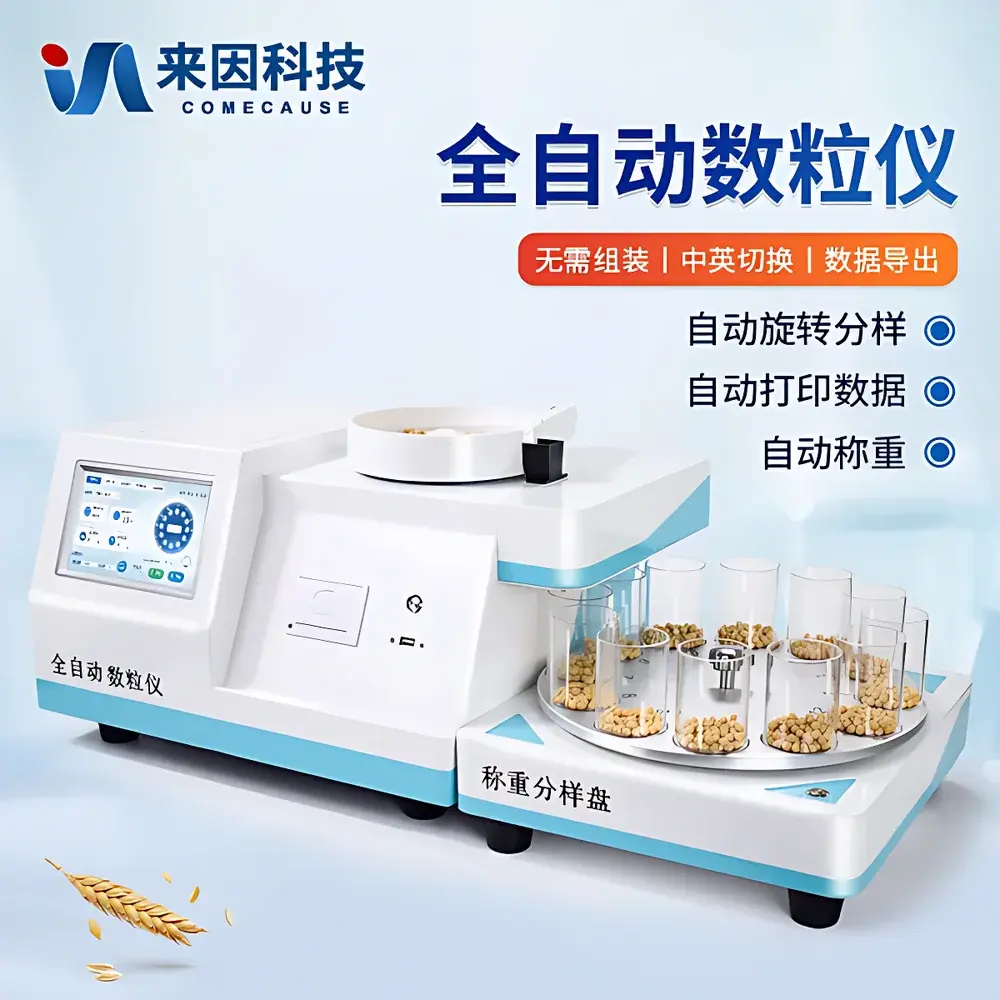
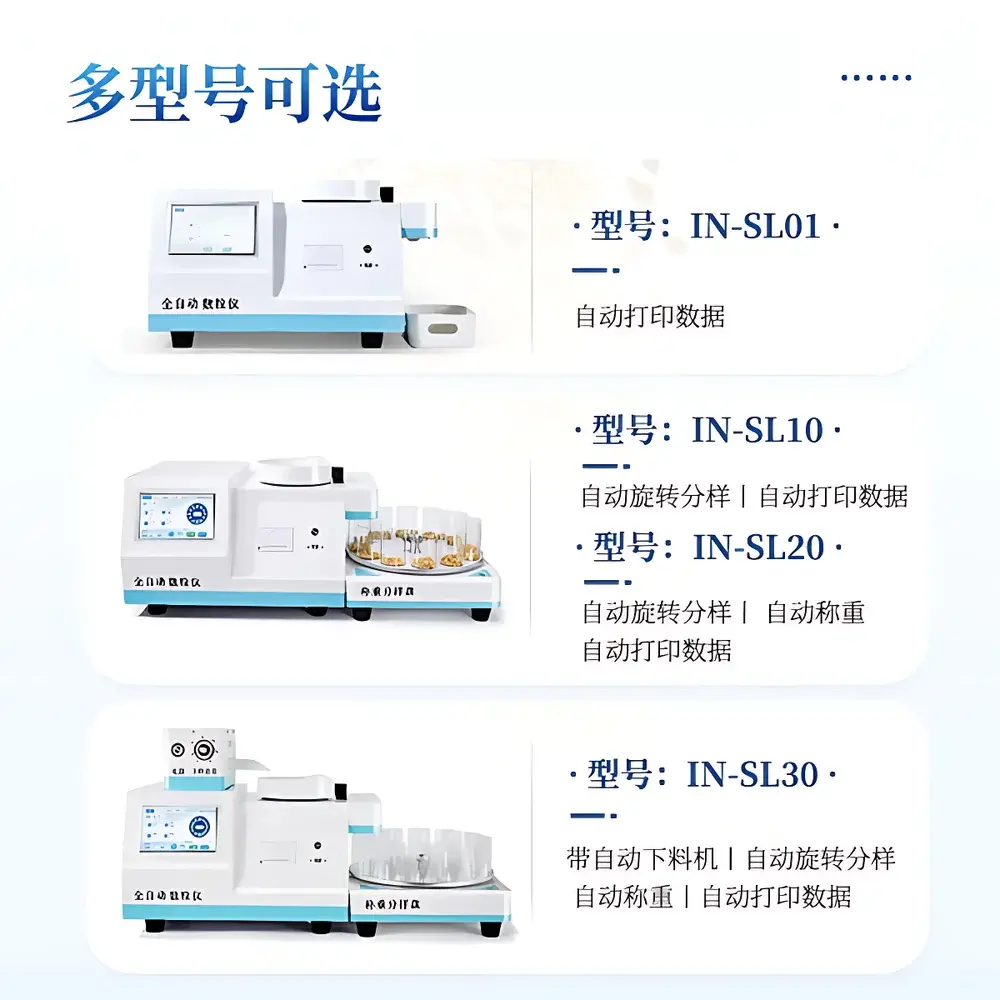

COMECAUSE IN-SL20 Automated Seed Counter with Rotary Sampling & Integrated Weighing
| Brand | COMECAUSE |
|---|---|
| Origin | Shandong, China |
| Manufacturer Type | OEM/ODM Manufacturer |
| Country of Origin | China |
| Model | IN-SL20 |
| Counting Speed | 1,000–2,000 seeds/min (dependent on seed geometry and size) |
| Counting Range | 1–9,999 seeds per cup |
| Accuracy | ±0.2% (±2‰) |
| Seed Length Compatibility | 0.5–23 mm |
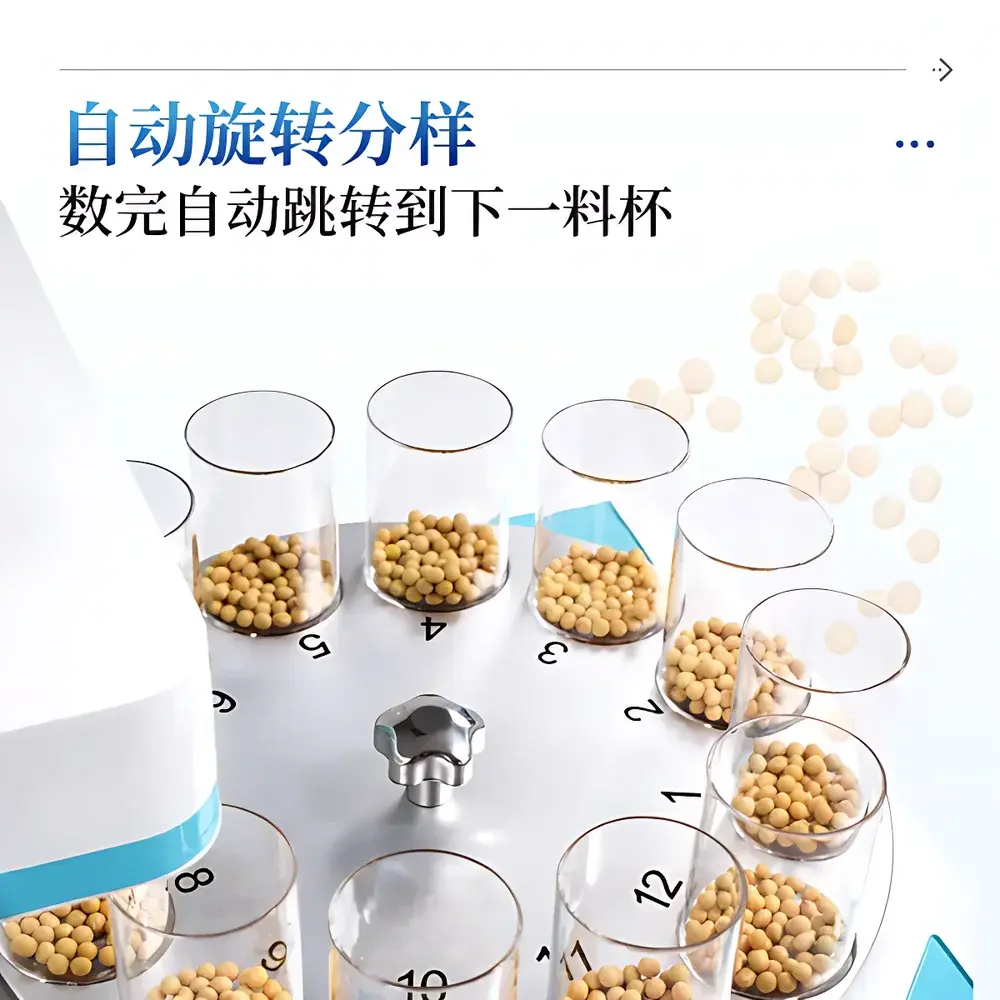
| Rotary Sampling Stations | 12 cups (60 × 80 mm H) |
| Adjustable Vibration Speed | 0–99 scale |
| Sensitivity Adjustment | 0–10 scale |
| Built-in Precision Weighing Module | Yes (enables automatic 1,000-seed weight calculation) |
| Display | 7-inch color TFT touchscreen (optional 10.1-inch upgrade) |
| Data Output | Thermal label printer (adhesive-backed), USB export, local storage with pagination and search |
| Operating Environment | −10°C to 50°C |
| Power Supply | AC 220 V, 50 Hz (export variants: 100/110/200/240 V, 50/60 Hz) |
| Continuous Operation Time | ≥ 8 hours |
| Dimensions (Main Unit) | 580 × 390 × 336 mm (W×D×H) |
| Weight | 24 kg |
| Dimensions (Rotary Feeder Unit) | 360 × 390 × 197 mm (W×D×H) |
| Weight | 12 kg |
Overview
The COMECAUSE IN-SL20 Automated Seed Counter with Rotary Sampling & Integrated Weighing is an industrial-grade optical counting system engineered for high-throughput, non-destructive seed enumeration and phenotypic pre-screening in agricultural research, seed certification laboratories, breeding programs, and commercial seed processing facilities. It operates on the principle of machine vision–based particle recognition: seeds are mechanically dispersed onto a uniformly illuminated imaging stage via controlled vibratory feed, captured by a high-resolution monochrome industrial camera under consistent backlighting, and analyzed using deterministic image segmentation algorithms. These algorithms apply morphological filtering, binary thresholding, and contour-based feature extraction to distinguish individual seeds—even those in partial contact—based on projected area, aspect ratio, circularity, and grayscale contrast. Unlike manual or mechanical counters, the IN-SL20 eliminates human visual fatigue and inter-operator variability, delivering traceable, auditable, and statistically robust count data aligned with ISO 5600-2 (seed quality testing) and OECD Seed Sowing Value guidelines.
Key Features
- 12-position rotary sampling carousel with programmable cup assignment, enabling parallel multi-sample distribution without operator intervention
- Integrated precision weighing module (0.01 g resolution) synchronized with counting events to compute 1,000-seed weight (TSW) automatically—no external balance required
- Intelligent deceleration logic: transitions from high-speed feed to fine-count mode within ±5 seeds of the preset target, minimizing inertia-induced overcount
- Adjustable vibration amplitude and frequency (0–99 scale) and optical sensitivity (0–10 scale) to accommodate diverse seed morphologies—from sesame (0.5 mm) to maize kernels (23 mm)
- 7-inch capacitive touchscreen interface with dual-language support (English/Chinese), real-time status indicators (Idle, Counting, Paused, Complete), and intuitive workflow navigation
- Thermal label printer embedded for on-demand generation of adhesive-backed compliance labels containing variety name, count, weight, TSW, timestamp, and operator ID
- Full audit trail: all sessions logged locally with metadata including user ID, calibration date, seed type, cup ID, count value, mass reading, duration, and system error codes
- USB mass-storage export for CSV-formatted datasets compatible with LIMS, Excel, R, or Python-based statistical analysis pipelines
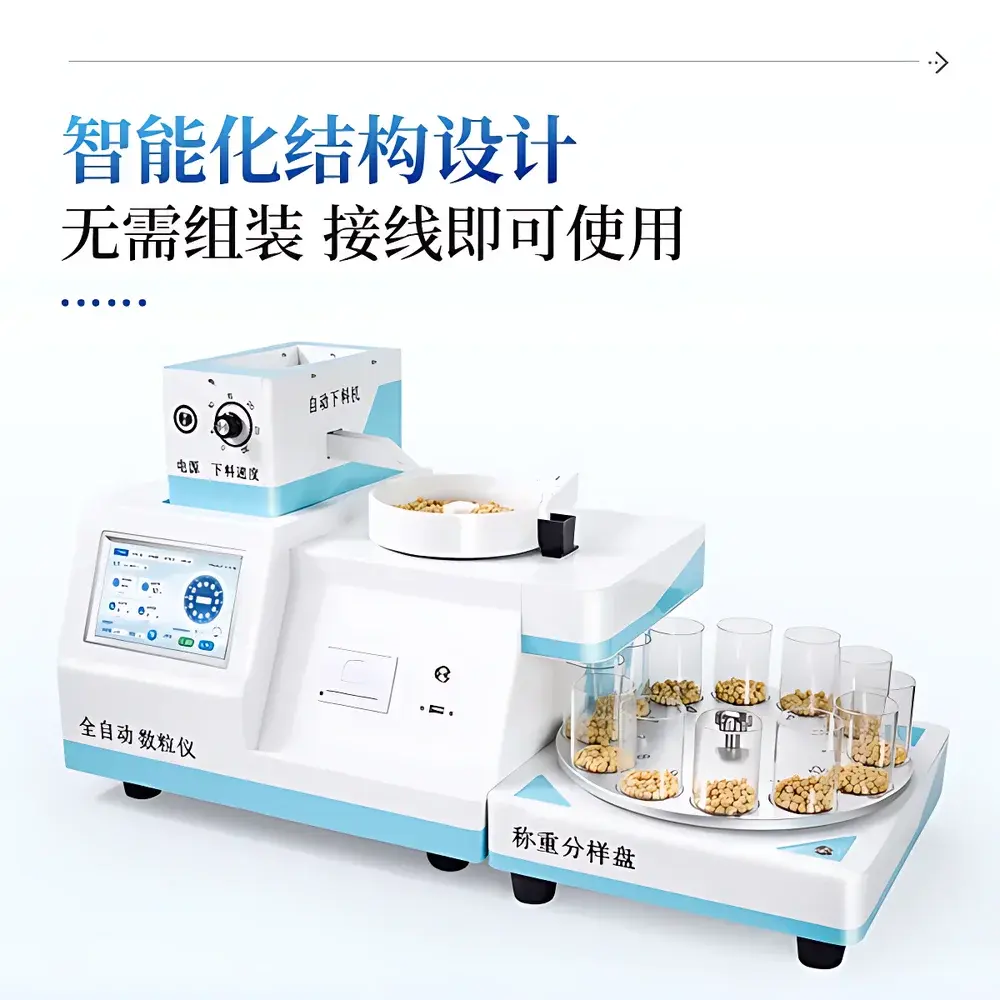
- No-tool assembly: factory-aligned optical path and calibrated feed mechanism ensure out-of-box operational readiness
Sample Compatibility & Compliance
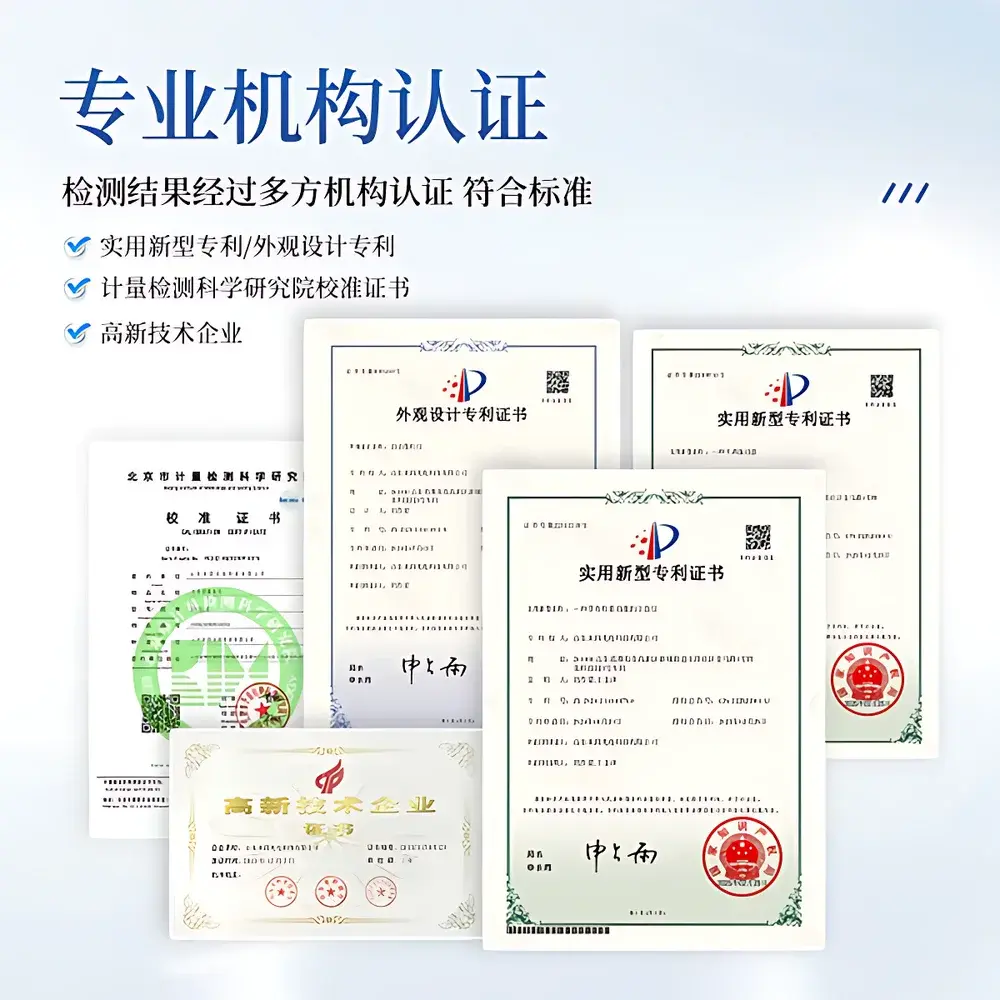
The IN-SL20 supports monocot and dicot seeds across major agronomic species—including but not limited to Zea mays (corn), Oryza sativa (rice), Triticum aestivum (wheat), Glycine max (soybean), Sesamum indicum (sesame), and Brassica oleracea (vegetable brassicas)—as well as non-biological granular materials such as pharmaceutical tablets, microbeads, and precision-engineered components. Its counting accuracy (±0.2%) meets the repeatability requirements of ISO 11528 (determination of germination percentage) and ASTM D7429 (standard test method for seed purity analysis). The device complies with IEC 61000-6-3 (EMC emissions) and IEC 61000-6-2 (immunity), and its firmware architecture supports GLP-compliant operation through time-stamped, immutable session logs and role-based access control (admin/operator modes). While not FDA 21 CFR Part 11 certified out-of-the-box, its data export and audit trail design facilitates validation under GxP frameworks when deployed in regulated environments.
Software & Data Management
Firmware v3.2+ includes a deterministic image-processing engine optimized for low-latency edge inference, eliminating cloud dependency or latency-sensitive network transmission. Each counting event generates a timestamped record containing: cultivar identifier, cup number, total count, gross mass, calculated TSW, elapsed time, operator ID, and confidence score derived from seed separation index (SSI). Historical records are stored in encrypted SQLite databases on internal eMMC flash memory, accessible via on-device pagination or exported via USB drive in UTF-8 CSV format. No proprietary software installation is required for data retrieval; exported files integrate natively with common laboratory informatics systems. Optional API integration (HTTP RESTful endpoints) enables automated ingestion into enterprise LIMS or breeding management platforms (e.g., AgriWebb, BreedBase).
Applications
- Seed quality assurance: Rapid determination of thousand-seed weight (TSW) and purity assessment prior to germination testing per ISTA Rules
- Breeding program throughput: High-volume phenotyping of segregating populations for quantitative trait loci (QTL) mapping based on seed count, size distribution, and color classification
- Seed processing QA/QC: Real-time monitoring of cleaning, grading, and coating line outputs to verify fill consistency and detect foreign material outliers
- Precision sowing calibration: Deriving optimal seeding rates by combining TSW data with soil-specific emergence models
- Academic plant science: Non-invasive longitudinal studies of seed development, dormancy breaking efficacy, or abiotic stress responses quantified via morphometric metrics
FAQ
What seed size ranges does the IN-SL20 support?
It accommodates seeds from 0.5 mm (e.g., lettuce, carrot) up to 23 mm (e.g., large maize or pumpkin seeds), with adjustable dispersion parameters to prevent clumping or bounce artifacts.
Is external calibration required before first use?
No. The system ships with factory-calibrated optics, vibration actuator, and load cell. A user-performed verification step using NIST-traceable reference seeds is recommended for ISO/IEC 17025-accredited labs.
Can the instrument differentiate between full, shriveled, or damaged seeds?
Standard firmware performs geometric enumeration only. Optional AI-enabled modules (sold separately) add binary classification (viable vs. non-viable) using trained CNN models on annotated seed image libraries.
How is data integrity ensured during power interruption?
All active sessions write to non-volatile memory at 2-second intervals. Upon restart, the system resumes counting from the last confirmed cup position and updates cumulative totals without duplication.
Does the device meet international electrical safety standards for export?
Yes. It carries CE marking (EN 61010-1:2010), RoHS 2011/65/EU compliance, and optional UL/cUL listing for North American markets upon request.






