
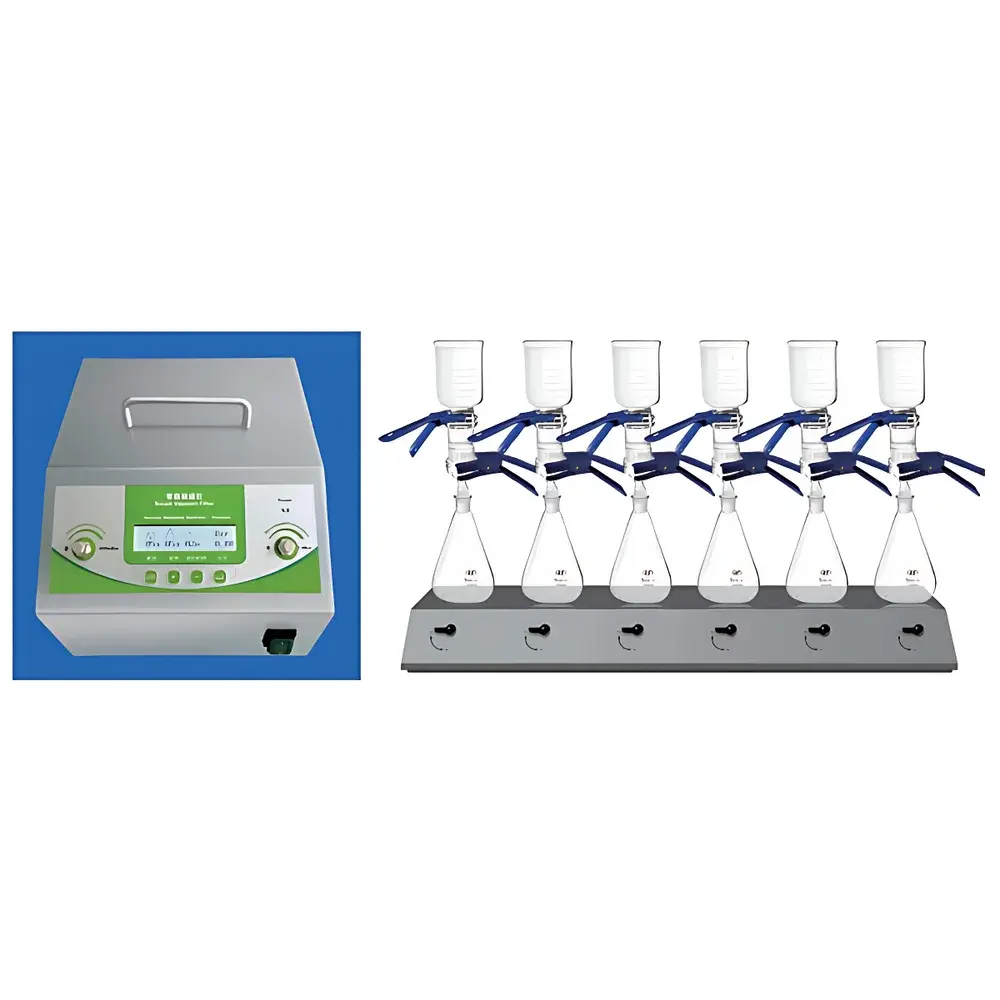
Truelab SmartFiber-E 6-Position Dietary Fiber Analyzer
| Brand | Truelab |
|---|---|
| Origin | Shanghai, China |
| Manufacturer Type | Authorized Distributor |
| Country of Origin | China |
| Model | SmartFiber-E |
| Price | USD 5,600 (FOB Shanghai) |
| Compliance | GB/T 5009.88–2008, GB/T 5413.6–2010, GB/T 9822–2008, GB/T 22494–2008, NY/T 1594–2008, AOAC 991.43, AACC 32–07, NMKL 157, ASP Method |
| Sample Throughput | 6 samples per run |
| Filtration Technology | Dual-mode SmartVacuumFilter™ with alternating positive/negative pressure |
| Crucible Type | Patented ground-glass fritted crucibles (G2, 40–100 µm pore size) |
| Filtration Speed | ≤3 min per 100 mL digestate |
| Precision | RSD <0.5% (n=6, certified reference material) |
| Software | Standalone control interface with audit trail logging |
| Accessories | G1–G5 fritted crucibles, 80–2800 mesh sieves, optional thermostatic shaker bath, standardized clamp kits |
Overview
The Truelab SmartFiber-E 6-Position Dietary Fiber Analyzer is an automated, enzymatic-gravimetric system engineered for precise, high-throughput quantification of total dietary fiber (TDF), soluble dietary fiber (SDF), and insoluble dietary fiber (IDF) in food, feed, botanicals, and infant formula matrices. It implements the internationally harmonized enzymatic digestion protocol defined by AOAC Official Method 991.43 and AACC Method 32–07—complemented by full alignment with Chinese national standards GB/T 5009.88–2008, GB/T 5413.6–2010, and NY/T 1594–2008. The system integrates controlled enzymatic hydrolysis (using α-amylase, protease, and amyloglucosidase), ethanol precipitation, and sequential filtration to isolate non-digestible carbohydrate fractions. Unlike manual or semi-automated systems, the SmartFiber-E eliminates operator-dependent variability through programmable digestion timing, temperature-stabilized water bath integration (optional), and pressure-regulated dual-phase vacuum filtration—ensuring reproducible separation of SDF and IDF fractions under physiologically relevant conditions.
Key Features
- Simultaneous processing of six independent samples using a modular 6-position filtration platform with individually sealed ground-glass fritted crucibles (G2 specification, 40–100 µm pore size)
- SmartVacuumFilter™ technology: Automated alternating positive- and negative-pressure cycles prevent frit clogging during viscous digestate filtration; average filtration time ≤3 minutes per 100 mL
- Integrated gravimetric workflow support: Pre- and post-drying weight tracking compatible with analytical balances (0.0001 g resolution)
- Compliance-ready architecture: Built-in parameter logging, user-access-level controls, and timestamped operation records aligned with GLP and ISO/IEC 17025 documentation requirements
- Expandable crucible compatibility: Interchangeable G1–G5 fritted crucibles and 80–2800 mesh stainless-steel sieves accommodate method-specific particle retention needs
- Reproducibility validated: Relative standard deviation (RSD) <0.5% across six replicate analyses of NIST-traceable dietary fiber reference materials
Sample Compatibility & Compliance
The SmartFiber-E supports diverse sample types including cereal grains, legumes, fruits, vegetables, functional foods, pet feed, and soy-based nutritional powders. Its enzymatic digestion module accommodates both low-viscosity (e.g., fruit purees) and high-viscosity matrices (e.g., oat β-glucan extracts) without manual dilution or pre-filtration. All operational parameters—including digestion temperature (60 ± 0.5 °C), pH control (4.5–5.0), enzyme addition sequences, and ethanol precipitation volumes—are configurable to match AOAC, AACC, or GB/T protocols. The system meets traceability and data integrity expectations for regulatory submissions under FDA 21 CFR Part 11 (when paired with validated LIMS integration) and supports full audit trail generation for internal QA/QC review or third-party accreditation audits.
Software & Data Management
The SmartFiber-E operates via a dedicated embedded control interface—not cloud-dependent—ensuring data sovereignty and uninterrupted operation in regulated laboratory environments. Each run generates a structured metadata file containing operator ID, date/time stamp, method version, crucible IDs, raw mass values (pre- and post-drying), calculated TDF/SDF/IDF concentrations, and instrument status logs. Export formats include CSV and PDF reports compliant with ISO/IEC 17025 Clause 7.8. Optional USB export enables direct transfer to validated laboratory information management systems (LIMS) or statistical analysis platforms (e.g., JMP, Minitab). No proprietary software licenses or annual subscriptions are required.
Applications
- Quality control laboratories verifying label claims for fiber-enriched breakfast cereals and nutrition bars
- R&D departments developing novel prebiotic ingredients (e.g., resistant starches, inulin analogues)
- Contract testing labs performing AOAC-certified fiber analysis for global food exporters
- Academic research groups studying fiber–microbiome interactions using standardized IDF/SDF fractionation
- Feed formulation centers assessing fiber digestibility in monogastric animal diets
- Regulatory compliance units validating dietary fiber content in infant formula against GB/T 5413.6–2010
FAQ
Does the SmartFiber-E comply with AOAC Official Method 991.43?
Yes—the system implements all critical procedural steps, including thermostated enzymatic digestion, controlled ethanol precipitation, and gravimetric isolation of residue fractions, as specified in AOAC 991.43.
Can it be used for crude fiber or detergent fiber analysis?
Yes—the platform serves as a flexible front-end for Weende crude fiber and Van Soest detergent fiber (NDF, ADF) workflows when configured with appropriate reagents and filtration parameters.
Is method validation support provided?
Truelab supplies a complete validation package including IQ/OQ documentation templates, reference material test data (NIST SRM 1849a), and protocol crosswalks between GB/T and AOAC methods.
What maintenance is required for the SmartVacuumFilter™ system?
Routine maintenance consists of weekly inspection of silicone tubing integrity, monthly cleaning of fritted crucibles with nitric acid rinse, and biannual calibration of vacuum pressure sensors using NIST-traceable manometers.
Are GMP-compliant accessories available?
Yes—sterile-packaged G2 crucibles, ISO Class 5 cleanroom-certified silicone tubing, and 21 CFR Part 11–enabled electronic signature modules are available upon request.





