
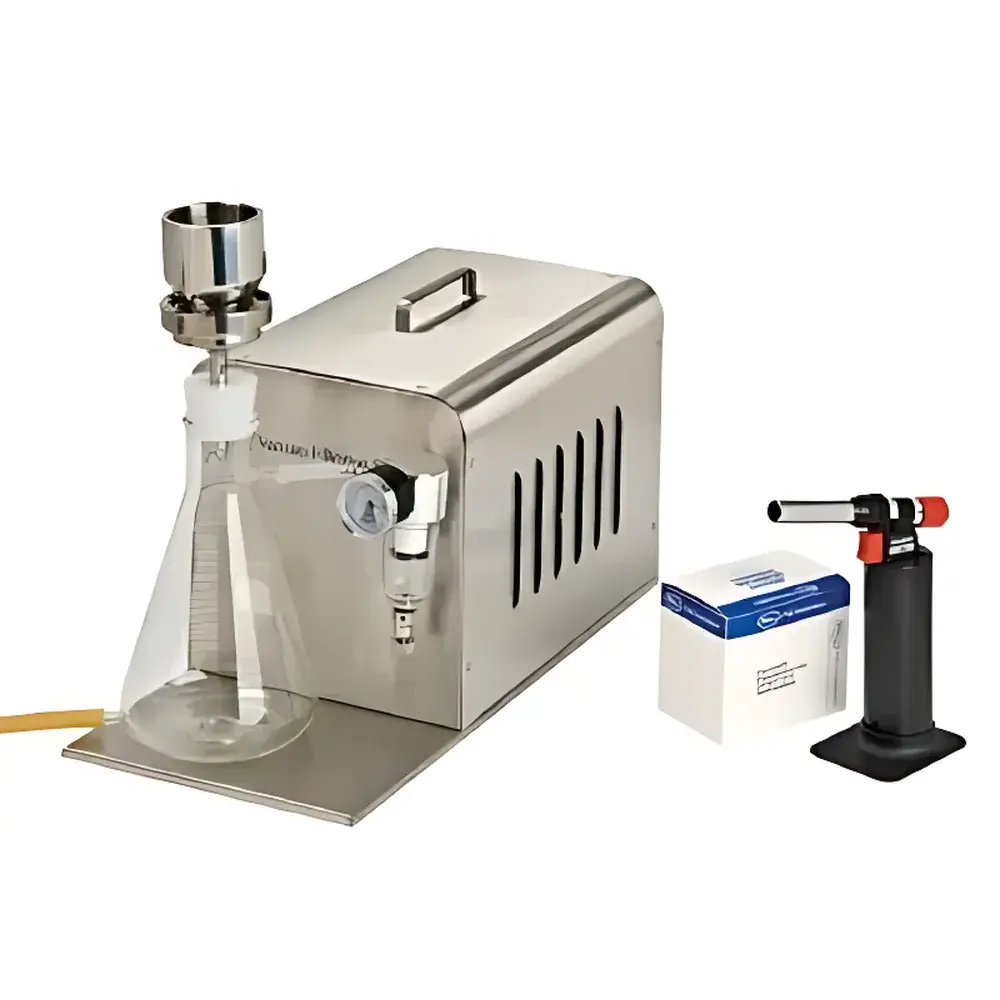
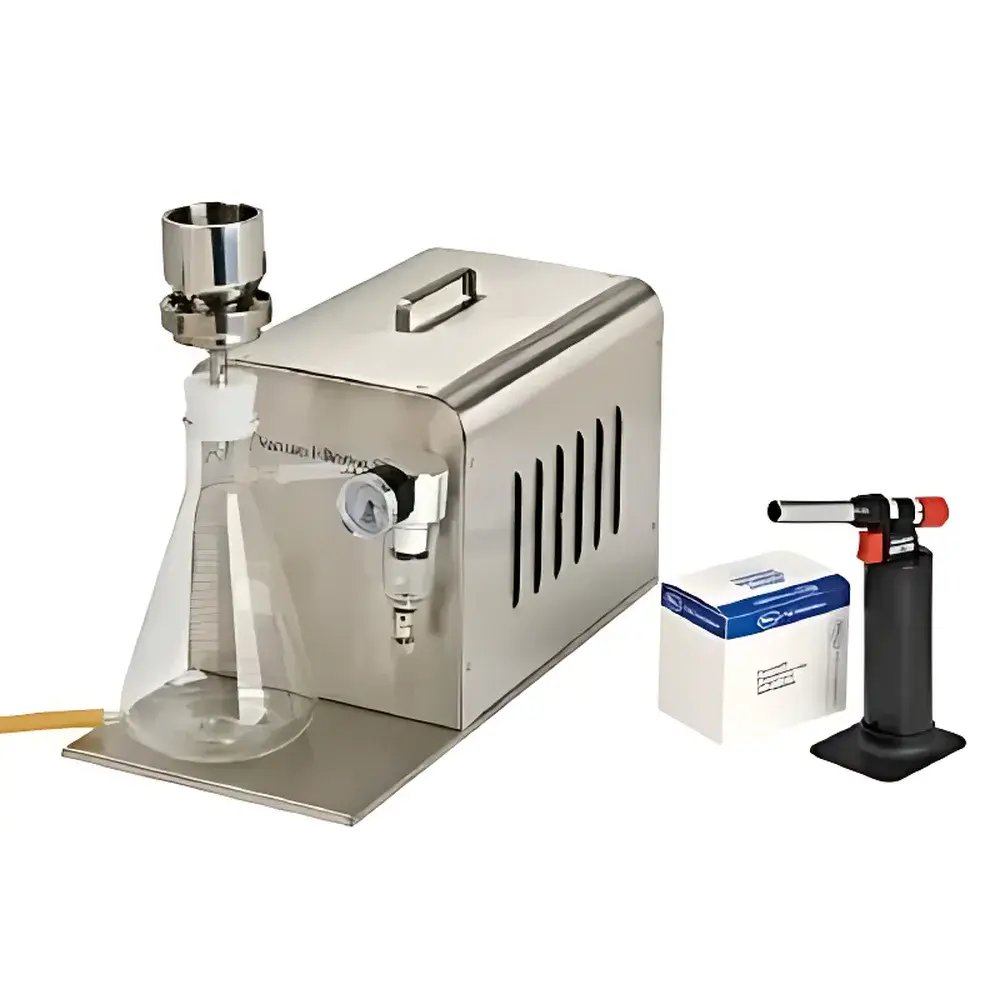
ChemVak VF203/VF204/VF205/VF214 Corrosion-Resistant Vacuum Filtration System
| Brand | ChemVak |
|---|---|
| Origin | Germany |
| Model | VF203/VF204/VF205/VF214 |
| Pump Type | Oil-Free Diaphragm Vacuum Pump |
| Ultimate Vacuum | 150 mbar (VF203/VF204/VF205), 13 mbar (VF214) |
| Pumping Speed | 17 L/min (VF203/VF204), 34 L/min (VF205), 23 L/min (VF214) |
| Motor Power | 60 W (VF203/VF204), 80 W (VF205/VF214) |
| Weight | 7.1–8.3 kg |
| Noise Level | 54–60 dB(A) |
| Construction | PTFE-coated gas-path components |
| Compliance | CE, RoHS, ISO 9001-manufactured |
Overview
The ChemVak VF203, VF204, VF205, and VF214 are compact, integrated corrosion-resistant vacuum filtration systems engineered for laboratories handling aggressive chemical media—including strong acids, alkalis, halogenated solvents, and reactive organic vapors. Unlike conventional water-jet or oil-lubricated vacuum pumps, these units employ a maintenance-free, oil-free diaphragm pump with fully PTFE-coated wetted parts—ensuring long-term integrity of the gas path under sustained exposure to corrosive volatiles. The system operates on the principle of controlled negative pressure generation via a sealed diaphragm mechanism, delivering stable vacuum levels across variable load conditions. Each model integrates the vacuum source, pressure regulation, liquid trap, and 1 L borosilicate glass filtration assembly into a single footprint—minimizing bench space while eliminating external hose routing, manifold complexity, and risk of vacuum leaks. Designed for compliance-driven environments, the VF-series supports reproducible, operator-independent filtration workflows in regulated R&D, QC, and pilot-scale synthesis labs.
Key Features
- PTFE-coated diaphragm pump head, valves, and internal tubing—resistant to HCl, HNO₃, HF (dilute), NaOH (up to 50%), acetone, chloroform, THF, and other common laboratory solvents
- Integrated front-stage corrosion-resistant vacuum regulator and particulate trap—prevents solids and aerosols from entering the pump chamber and enables fine-tuned vacuum control (adjustable down to 10 mbar on VF214)
- Self-contained design with pre-assembled 1 L PTFE-coated collection flask, borosilicate glass filter funnel (standard 90 mm diameter), and matching filtration cup—all secured via stainless-steel clamps
- Ultra-low noise operation (54–60 dB[A]) and zero oil vapor emission—suitable for shared lab spaces, fume hood integration, and continuous unattended operation
- No routine lubrication, oil changes, or membrane replacement required under normal use—diaphragm lifetime exceeds 10,000 hours per ISO 8573-1 Class 0 air purity certification
- CE-marked, RoHS-compliant, and manufactured under ISO 9001-certified quality management system
Sample Compatibility & Compliance
The VF-series is validated for use with chemically aggressive filtrates encountered in pharmaceutical process development (e.g., API crystallization slurries), catalyst recovery in fine chemical synthesis, acid digestion residue filtration, and electroplating bath analysis. All gas-contact surfaces meet USP material compatibility requirements for Class VI plastics where applicable. The PTFE coating conforms to ASTM D1711 and DIN EN ISO 10993-5 for cytotoxicity screening. Systems support GLP/GMP documentation protocols: vacuum setpoints and runtime can be logged externally via analog 0–10 V output (VF214 only); full audit trails are achievable when paired with compliant LIMS or ELN platforms. Not intended for explosive atmospheres (ATEX) or high-humidity condensate loads exceeding 5 mL/min average.
Software & Data Management
While the base VF models operate as standalone instruments without embedded firmware or touchscreen interfaces, the VF214 variant includes an analog vacuum monitoring port (0–10 V DC proportional to absolute pressure) compatible with third-party data acquisition systems (e.g., LabVIEW, MATLAB, or Delta Tau PMAC). This allows time-stamped vacuum profiling, pass/fail threshold alerts, and integration into automated filtration SOPs. No proprietary software is required; all calibration and performance verification follow traceable NIST-traceable pressure standards (e.g., Druck DPI 610). Maintenance logs, calibration certificates, and material declarations (DoC, RoHS, REACH SVHC) are supplied with each unit and archived per ISO/IEC 17025 clause 7.6.
Applications
- Routine filtration of acidic digestates (EPA Method 3050B, ASTM D5172) in environmental testing labs
- Removal of heterogeneous catalysts (e.g., Pd/C, Raney Ni) from hydrogenation reaction mixtures
- Sterile filtration of pH-adjusted biobuffers containing citric or phosphoric acid
- Recovery of metal-organic framework (MOF) crystals from DMF or NMP suspensions
- Parallel sample preparation for ICP-MS analysis where hydrocarbon contamination must be avoided
- Small-scale solvent exchange in polymer synthesis under inert atmosphere (when used with optional nitrogen purge adapter)
FAQ
What vacuum level is achievable with the VF214 model, and how is it measured?
The VF214 achieves an ultimate vacuum of ≤13 mbar (absolute) at 23 °C, verified using a calibrated capacitance manometer traceable to PTB standards.
Can the system handle hot filtrates above 60 °C?
Glass components are rated to 120 °C short-term, but sustained operation above 60 °C requires active cooling of the collection flask and is not recommended without thermal shielding per DIN 12878 guidelines.
Is the PTFE coating applied to all internal surfaces, including valves and pump chambers?
Yes—every surface exposed to process gas (including diaphragm, check valves, inlet/outlet manifolds, and trap internals) receives a uniform 25–35 µm electrostatically bonded PTFE layer per DIN EN ISO 20811.
Does the system comply with FDA 21 CFR Part 11 for electronic records?
The standalone VF units do not generate or store electronic records; however, when interfaced with validated external DAQ systems meeting Part 11 requirements, full audit trail and e-signature functionality can be implemented.
What is the expected service life of the diaphragm under continuous chemical duty?
Based on accelerated aging tests per ASTM D573, mean time between failures (MTBF) exceeds 12,000 hours at 70% duty cycle with typical lab-grade corrosives.



