
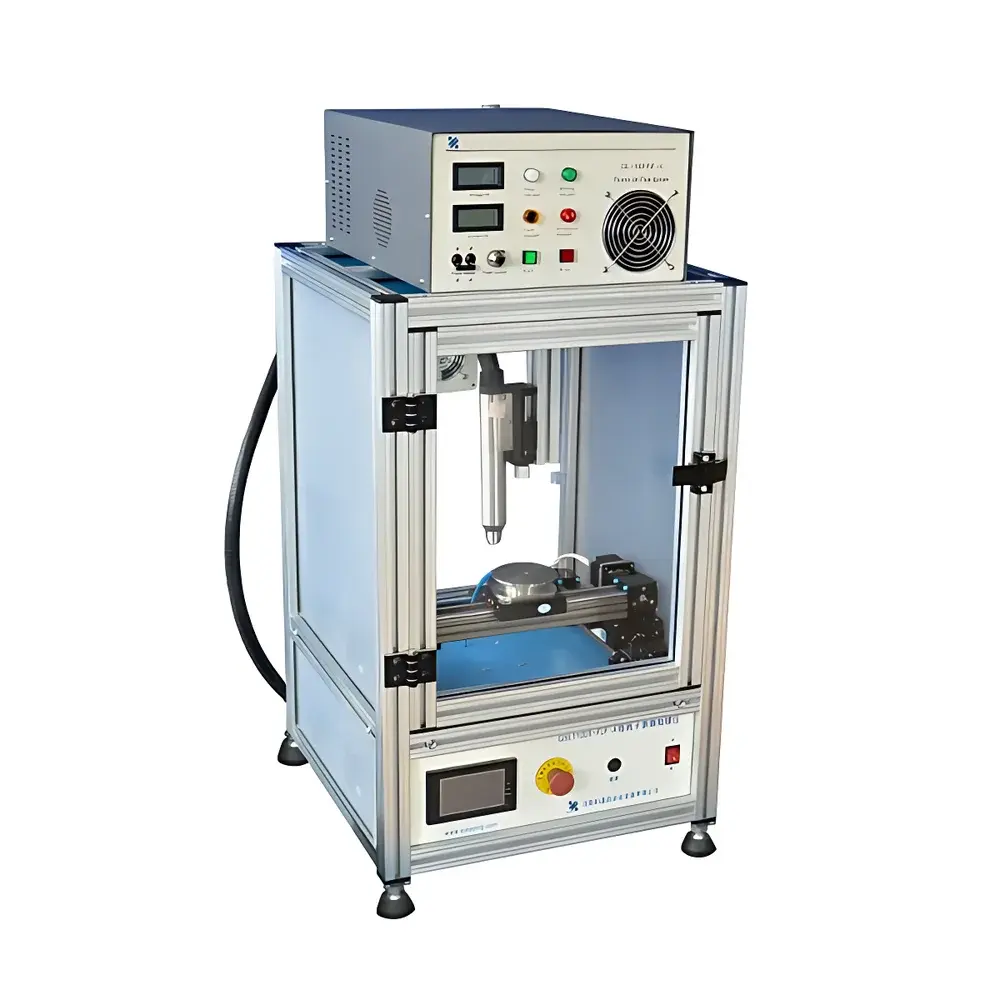
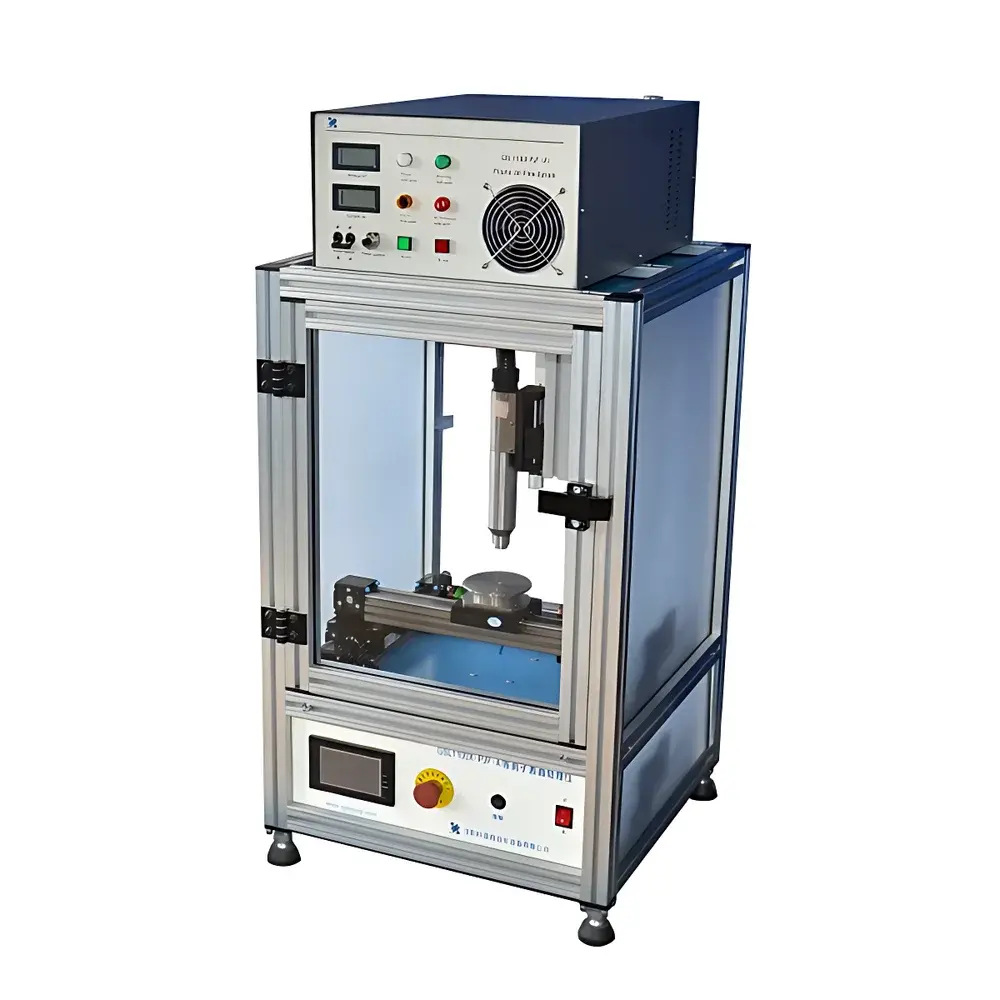
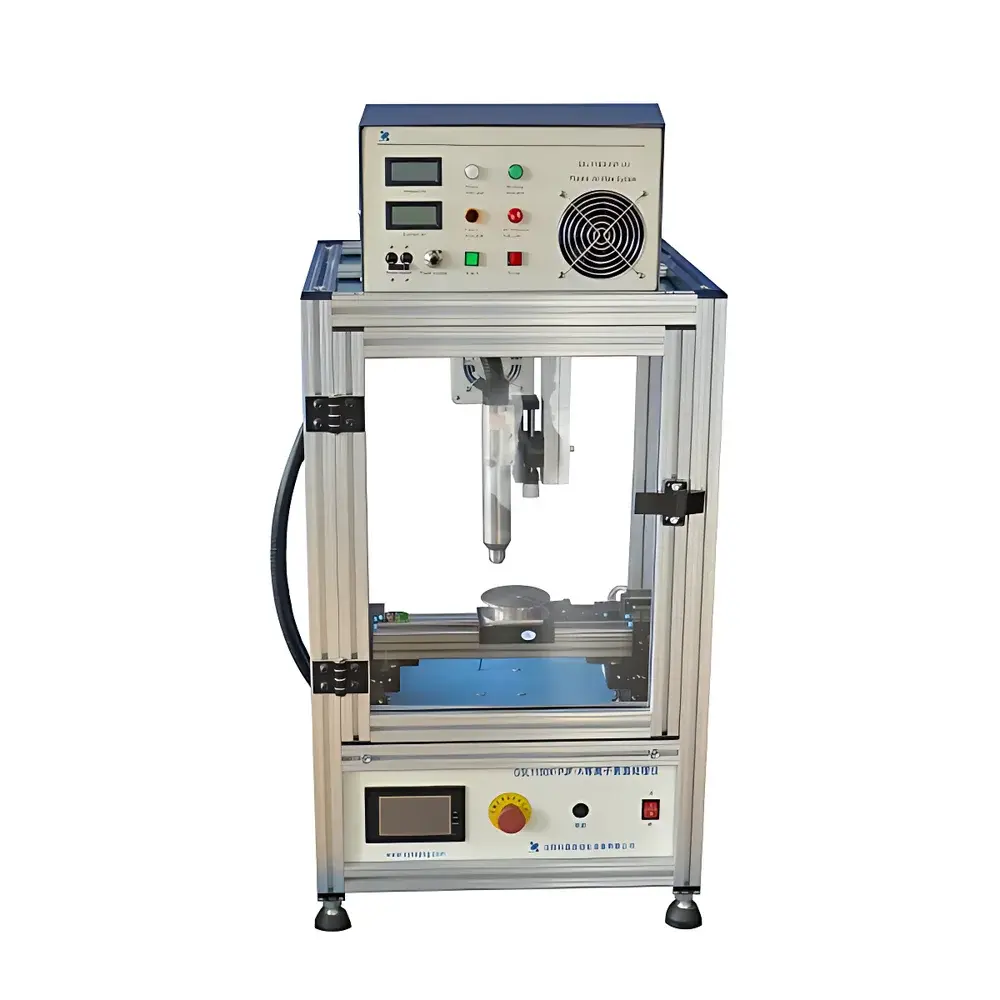
KJ GROUP GSL-1100X-PJF-A Atmospheric Pressure Plasma Jet Surface Treater
| Brand | KJ GROUP |
|---|---|
| Origin | Liaoning, China |
| Model | GSL-1100X-PJF-A |
| RF Frequency | 20–23 kHz |
| Maximum Power | 1000 VA |
| Overall Dimensions | 550 mm (W) × 650 mm (D) × 920 mm (H) |
| Chamber Internal Volume | 380 mm (W) × 210 mm (H) × 500 mm (D) |
| Chamber Material | Stainless Steel |
| Operating Gases | 2 (configurable) |
| Control Method | Manual (X/Y panel control |
| Input Voltage | AC 220 V, 50 Hz |
| Gas Supply Pressure | 0.5–0.7 bar (adjustable) |
| Pressure Protection Range | 0.4–0.8 bar |
| Nozzle Width | Round nozzle: 10–12 mm |
| Flat nozzle | 15–18 mm |
| Weight | 17 kg |
Overview
The KJ GROUP GSL-1100X-PJF-A Atmospheric Pressure Plasma Jet Surface Treater is an engineered solution for non-thermal, vacuum-free surface activation and cleaning of solid substrates in research and pilot-scale fabrication environments. Unlike low-pressure plasma systems requiring evacuated chambers and complex pumping infrastructure, this system operates at ambient pressure using a directed radio-frequency (RF) plasma jet generated via a 20–23 kHz resonant oscillator. The plasma plume—comprising reactive oxygen and nitrogen species (e.g., atomic O, NO, OH radicals), metastable molecules, and low-energy electrons—is delivered through interchangeable nozzles to induce controlled surface oxidation, removal of organic contaminants (hydrocarbons, photoresist residues), and enhancement of surface energy without thermal damage. Its design targets pre-deposition conditioning of substrates prior to thin-film growth (e.g., epitaxial oxides, optical coatings, or ALD precursors), as well as surface functionalization for adhesion promotion in microelectronics packaging, biomedical device bonding, and polymer metallization.
Key Features
- Atmospheric-pressure operation eliminates need for vacuum pumps, chambers, and associated maintenance—reducing footprint, operational complexity, and total cost of ownership.
- Adjustable RF power output (up to 1000 VA) enables fine-tuned plasma intensity for sensitive substrates including silicon wafers, fused silica optics, PET films, and PDMS elastomers.
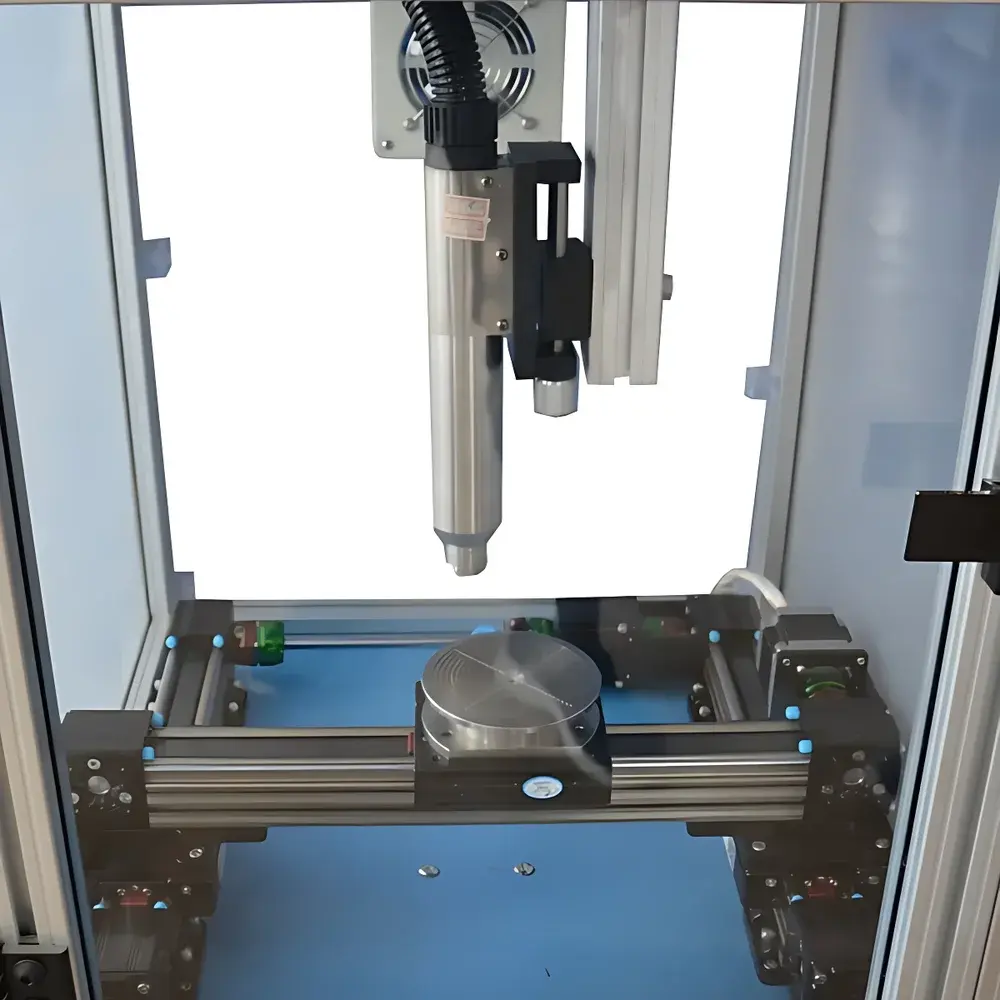
- Motorized X–Y translation stage (1–150 mm travel, 1–500 mm/s speed) with manual Z-axis fine positioning (1–50 mm) ensures repeatable, uniform scanning across irregular or large-area samples (up to 380 × 500 mm).
- Stainless-steel sample chamber with integrated gas distribution manifold supports dual-gas operation (e.g., O₂ + Ar, N₂ + H₂) for tailored surface chemistry—enabling both oxidative cleaning and reductive passivation protocols.
- Robust RF generator with active pressure monitoring (0.4–0.8 bar protection range) and voltage stabilization (190–250 V input tolerance) ensures stable plasma ignition and arc suppression under variable line conditions.
- CE-certified architecture complies with EN 61000-6-3 (EMC emission) and EN 61000-6-2 (immunity), meeting baseline safety requirements for integration into ISO 17025-accredited laboratories.
Sample Compatibility & Compliance
The GSL-1100X-PJF-A accommodates rigid and flexible substrates up to 380 mm wide and 500 mm deep, including single-crystal wafers (Si, GaAs, sapphire), optical lenses and mirrors, ceramic substrates, PCBs, and polymer sheets. Its low-temperature plasma (<60 °C surface rise under standard operating conditions) prevents thermal warping or degradation of temperature-sensitive materials. The system supports process documentation per GLP/GMP principles when paired with external logging tools; while the unit itself lacks built-in audit trail capability, its manual control interface allows full procedural traceability via lab notebook entries or SOP-driven operator logs. It is compatible with ASTM D7491 (standard practice for plasma treatment of plastics prior to adhesive bonding) and aligns with surface preparation steps referenced in ISO 10993-2 (biocompatibility evaluation of medical devices).
Software & Data Management
This model operates via front-panel analog controls—no embedded firmware or proprietary software is included. All operational parameters (gas flow rates, RF power level, nozzle standoff distance, scan speed, and dwell time) are manually set and recorded externally. For laboratories requiring digital workflow integration, the system can be interfaced with third-party data acquisition hardware (e.g., USB-based pressure transducers, thermocouple readers, or motion controller APIs) using standard RS-232 or analog 0–10 V outputs (available on optional expansion ports). While not FDA 21 CFR Part 11 compliant out-of-the-box, validated paper-based or electronic batch records may be implemented to satisfy regulatory audit requirements for R&D and preclinical manufacturing.
Applications
- Pretreatment of semiconductor wafers and optical components to remove monolayer hydrocarbon contamination prior to sputtering, evaporation, or sol-gel coating.
- Surface activation of polymeric substrates (e.g., PP, PE, PET) to increase dyne level from 70 mN/m, enabling reliable inkjet printing, lamination, or metallization.
- Cleaning of microfluidic device molds and bonded chips to eliminate mold release agents and improve bonding yield in glass–PDMS or silicon–glass assemblies.
- Functionalization of biomaterial surfaces (e.g., Ti-6Al-4V implants, PEEK orthopedic fixtures) with amine or carboxyl groups to support covalent immobilization of peptides or extracellular matrix proteins.
- Removal of photoresist residuals and native oxide layers from MEMS structures without undercutting or profile distortion.
FAQ
Does the GSL-1100X-PJF-A require vacuum pumping or chamber evacuation?
No. It operates exclusively at atmospheric pressure using a directed plasma jet—eliminating vacuum pumps, seals, and chamber loading procedures.
What gases are supported, and how are they regulated?
Two independent gas lines support configurable mixtures (e.g., O₂, Ar, N₂, air, forming gas). Pressure is regulated externally via precision needle valves and monitored by an integrated pressure switch with automatic shutdown below 0.4 bar or above 0.8 bar.
Is the plasma jet stable during extended operation?
Yes. The RF generator employs impedance-matching circuitry and thermal management to maintain consistent plasma ignition and plume geometry over multi-hour sessions, provided ambient temperature remains below 42 °C and relative humidity stays ≤40% RH.
Can the system be integrated into automated production lines?
While the base model features manual controls, its mechanical interface (M6 mounting holes, standardized nozzle flanges) and electrical I/O options (available upon request) support integration with PLC-controlled motion stages and SCADA systems.
What safety certifications does the instrument carry?
It bears the CE mark, confirming compliance with the EU Machinery Directive 2006/42/EC and Electromagnetic Compatibility Directive 2014/30/EU. Full test reports are available upon request for technical due diligence.



