
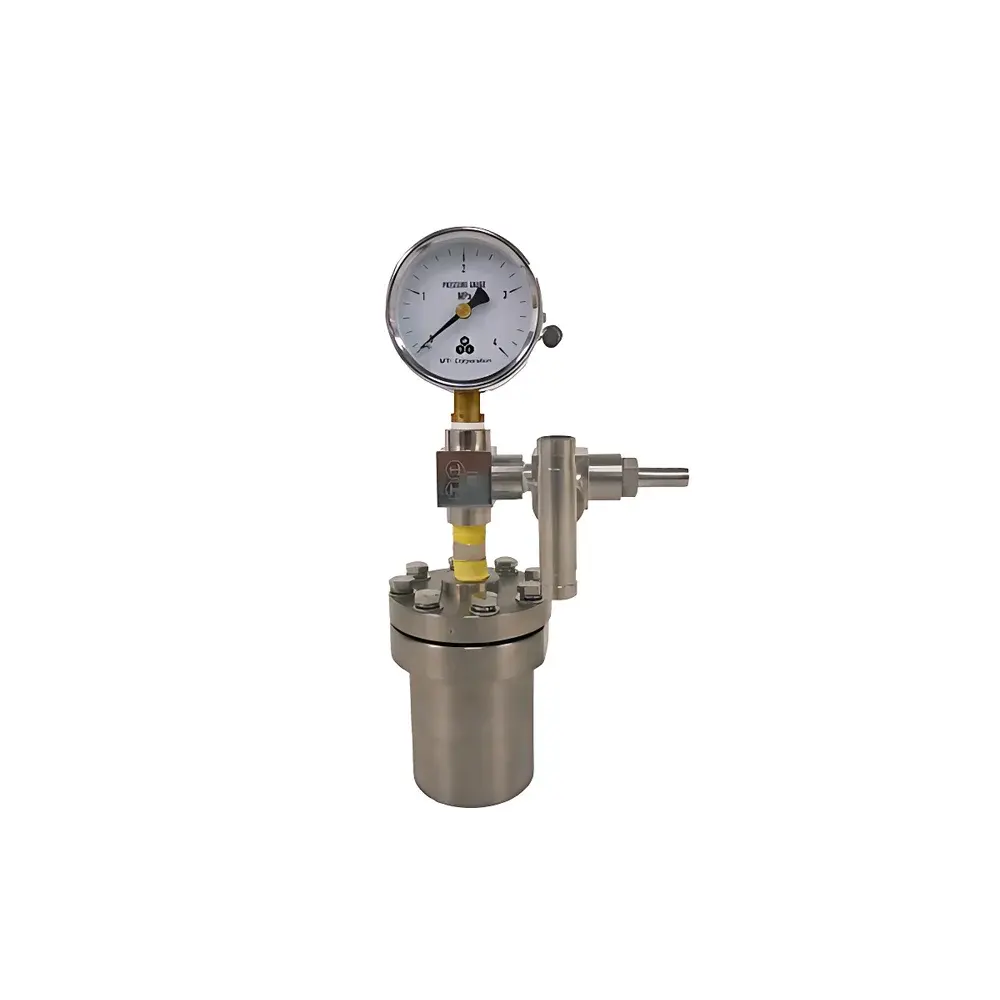
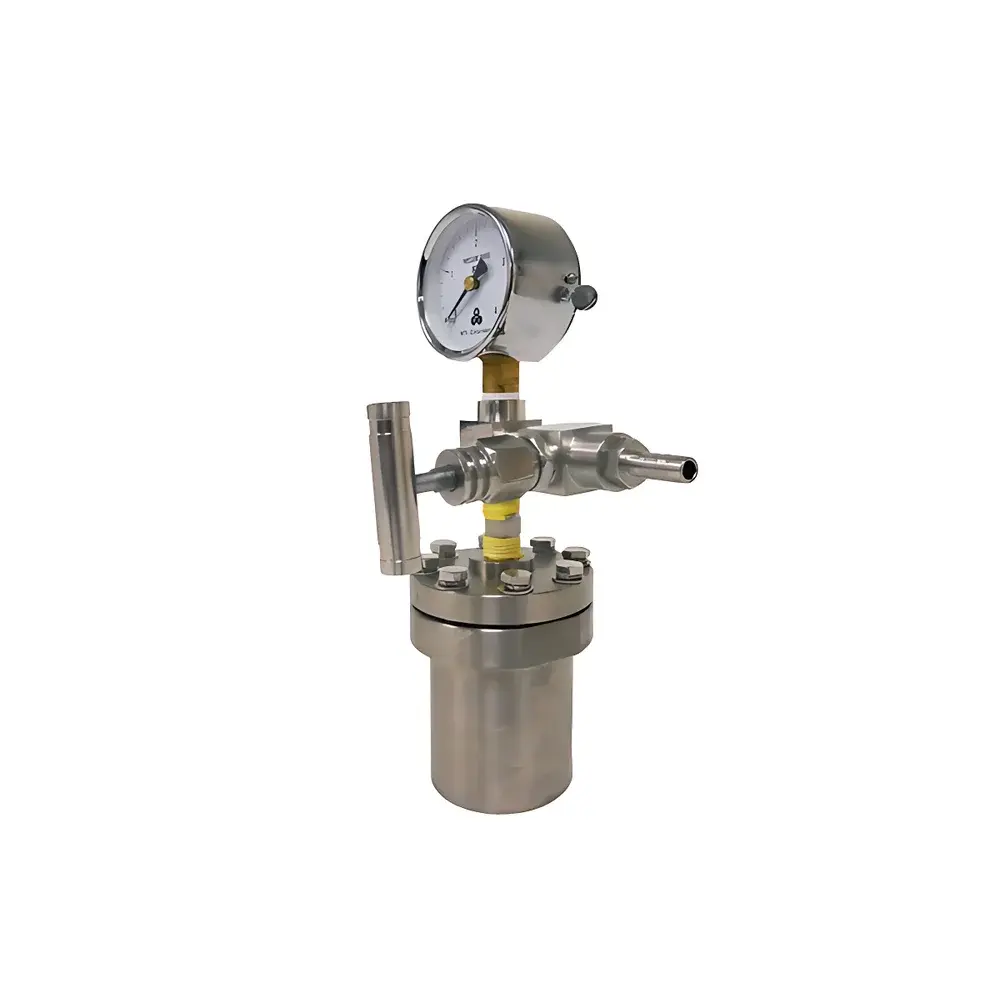
KJ GROUP RC-Ti-100 Small-Scale Titanium Autoclave
| Brand | KJ GROUP |
|---|---|
| Origin | Anhui, China |
| Manufacturer Type | Authorized Distributor |
| Origin Category | Domestic (China) |
| Model | RC-Ti-100 |
| Pricing | Upon Request |
| Material | 99.95% Pure Titanium (Grade 2) |
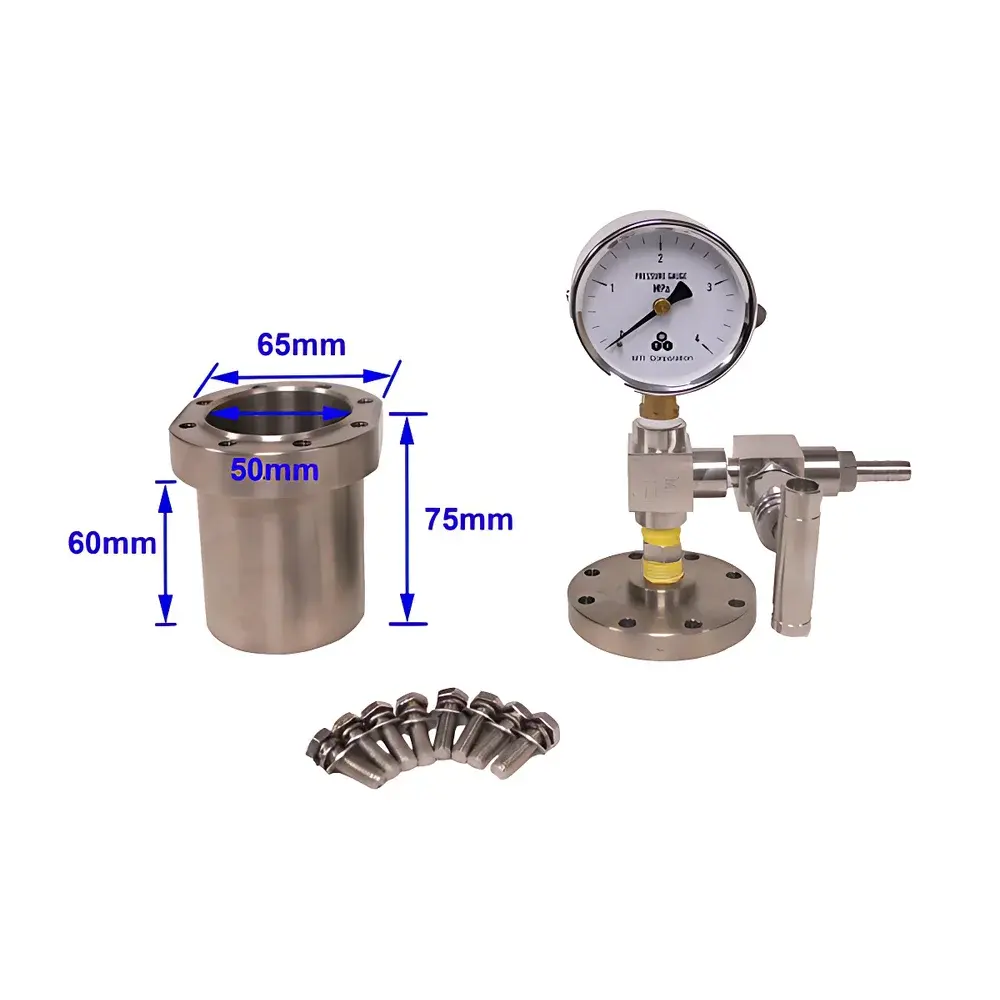
| Outer Diameter | 55 mm |
| Inner Diameter | 45 mm |
| Height | 75 mm |
| Internal Volume | 100 mL |
| Operating Temperature Range | Ambient to 400 °C |
| Maximum Working Pressure | 4 MPa |
| Valve | 1/4″ Stainless Steel Needle Valve |
| Optional Accessories | 1/4″ Dual-Ferrule External Thread Fitting |
Overview
The KJ GROUP RC-Ti-100 Small-Scale Titanium Autoclave is a precision-engineered, laboratory-grade hydrothermal reaction vessel designed for controlled high-pressure, high-temperature synthesis under inert or reactive atmospheres. Constructed entirely from ASTM B348 Grade 2 titanium (minimum 99.95% purity), the reactor leverages titanium’s exceptional corrosion resistance—particularly against halides, chlorides, and acidic aqueous media—and its favorable strength-to-density ratio at elevated temperatures. The device operates on the principle of sealed-vessel hydrothermal synthesis, where reactants in solution are subjected to thermally induced pressure buildup within a rigid, hermetically sealed chamber. This enables crystallization, phase transformation, and nanomaterial nucleation under conditions unattainable in open-system reactors. Its 100 mL internal volume, compact geometry (55 mm OD × 75 mm H), and validated 4 MPa maximum working pressure make it suitable for small-batch process development, catalyst screening, and reproducible synthesis of metal–organic frameworks (MOFs), perovskites, hydroxyapatite, and other bioactive ceramics.
Key Features
- Monolithic construction from ASTM B348 Grade 2 titanium—no welds or linings—to ensure long-term structural integrity and chemical inertness in aggressive media.
- Pressure-rated design certified for continuous operation up to 4 MPa at 400 °C, with safety margin compliant with ASME BPVC Section VIII Division 1 guidelines for laboratory pressure vessels.
- Precision-machined sealing interface with dual-cone or conical thread geometry (dependent on configuration) to maintain leak-tight integrity across thermal cycling.
- Integrated 1/4″ stainless steel needle valve (SS316 body, PTFE-seated) enabling controlled venting, gas purging, or in-situ sampling without full disassembly.
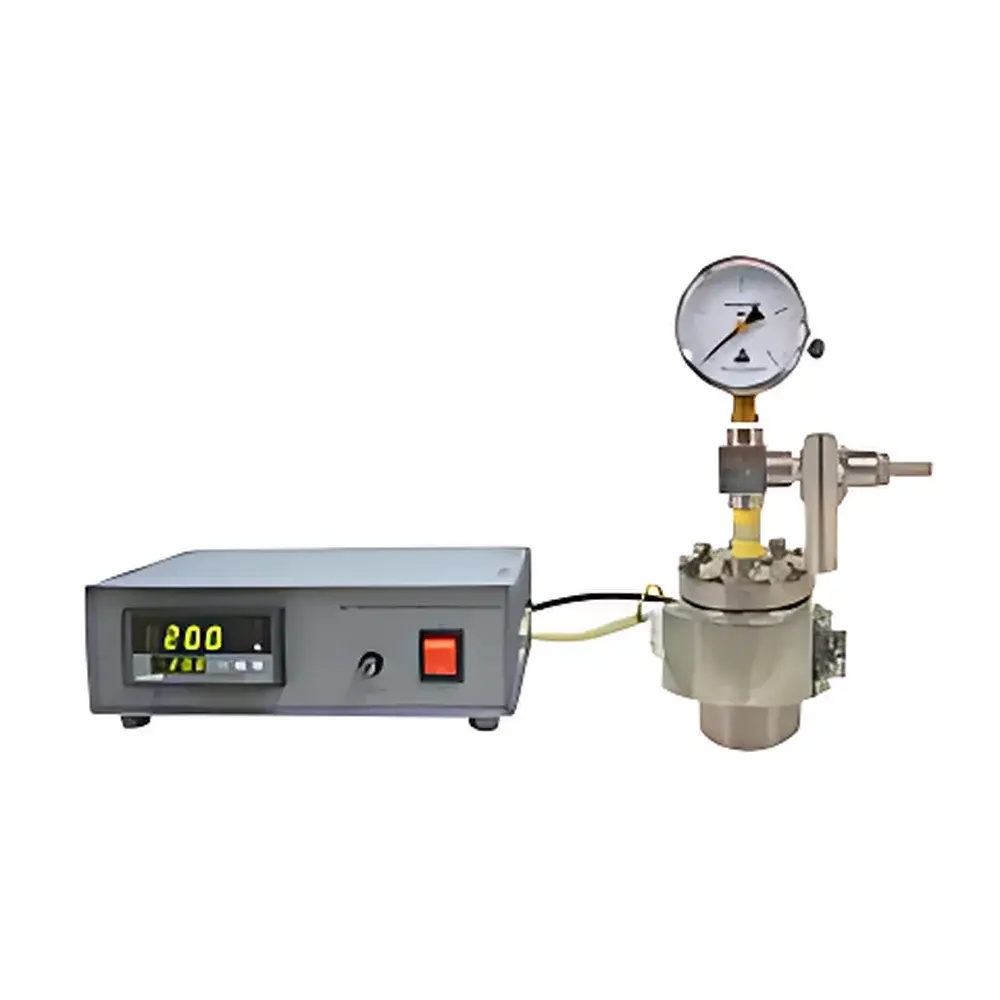
- Thermal compatibility with external heating systems—including fluidized sand baths, molten salt baths, and programmable drying ovens—supporting ramp-hold-cool profiles per ASTM E2070.
Sample Compatibility & Compliance
The RC-Ti-100 accommodates solid precursors, aqueous and non-aqueous solutions, gaseous reagents (e.g., NH₃, H₂, CO₂), and heterogeneous slurries. Its titanium body resists pitting and stress corrosion cracking in chloride-rich environments (per ASTM G48), making it appropriate for biomimetic mineralization studies and pharmaceutical intermediate synthesis. While not intrinsically certified for GMP manufacturing, the reactor supports GLP-compliant documentation when paired with traceable temperature controllers and calibrated pressure transducers. It meets material traceability requirements per ISO 10474 and conforms to general laboratory equipment safety expectations outlined in IEC 61010-1.
Software & Data Management
The optional 30-stage programmable temperature controller provides RS485 Modbus RTU output and accepts external Pt100 sensor input for closed-loop regulation. Logging interval, setpoint ramps, dwell times, and over-temperature cutoff thresholds are configurable via front-panel interface or PC-based utility (Windows-compatible). All temperature and time-stamped events are exportable as CSV for audit trails. When used in regulated environments, the system supports basic 21 CFR Part 11 compliance through user-access controls and electronic signature capability (requires administrator-enabled firmware mode).
Applications
- Hydrothermal and solvothermal synthesis of TiO₂, ZnO, BaTiO₃, and layered double hydroxides (LDHs).
- In situ crystallization kinetics studies using synchrotron XRD or Raman spectroscopy (compatible with beamline sample stages via custom flange adaptation).
- High-temperature/pressure catalytic testing with supported metal nanoparticles under reducing or oxidizing atmospheres.
- Accelerated aging protocols for biomedical coatings and biodegradable polymer composites.
- Low-volume solvent-free reactions involving supercritical water or subcritical ethanol.
FAQ
Can the RC-Ti-100 be used with fluorinated solvents such as HF or TFAC?
No. Although titanium exhibits excellent resistance to many acids, it is susceptible to rapid corrosion in anhydrous hydrofluoric acid and strong fluorinating agents. Use is strictly prohibited under such conditions.
Is the pressure gauge included with the base unit?
No. A compatible high-temperature, high-pressure gauge (e.g., Bourdon-type with Inconel 718 sensing element) must be selected separately and mounted externally per ASME PTC 19.3TW guidelines.
What is the recommended torque for sealing the lid?
Final assembly requires calibrated torque application—typically 25–30 N·m for the main closure nut—using a beam-type torque wrench. Over-torquing may deform the titanium sealing surface and compromise pressure integrity.
Can the reactor be cleaned using piranha solution?
No. Piranha solution (H₂SO₄:H₂O₂) reacts exothermically with titanium and poses explosion and embrittlement risks. Alkaline peroxide or dilute nitric acid (≤10% v/v) is recommended for oxide layer removal.
Does KJ GROUP provide validation documentation (IQ/OQ) for this model?
Factory-installed units include a Certificate of Conformance and material test report (MTR) per ASTM B348. Full IQ/OQ protocol execution requires site-specific commissioning by qualified personnel and is available as a paid service upon request.



