
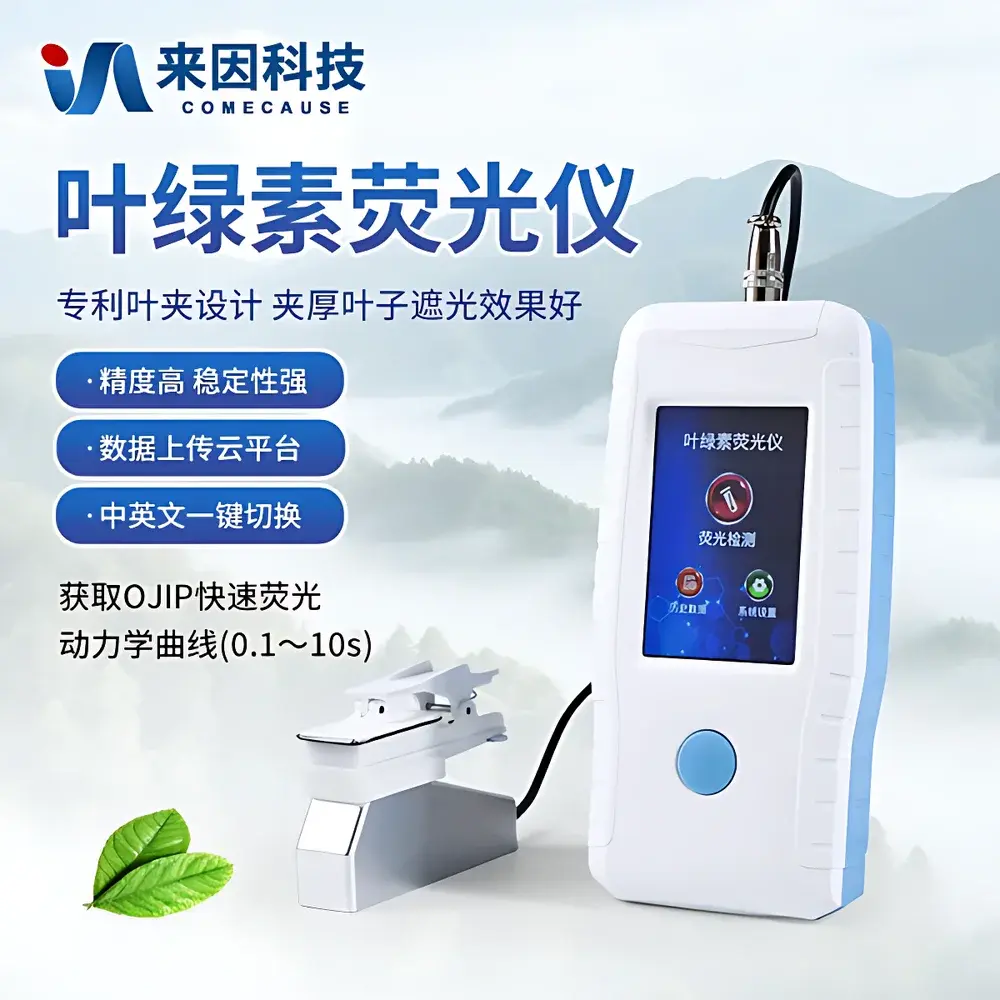
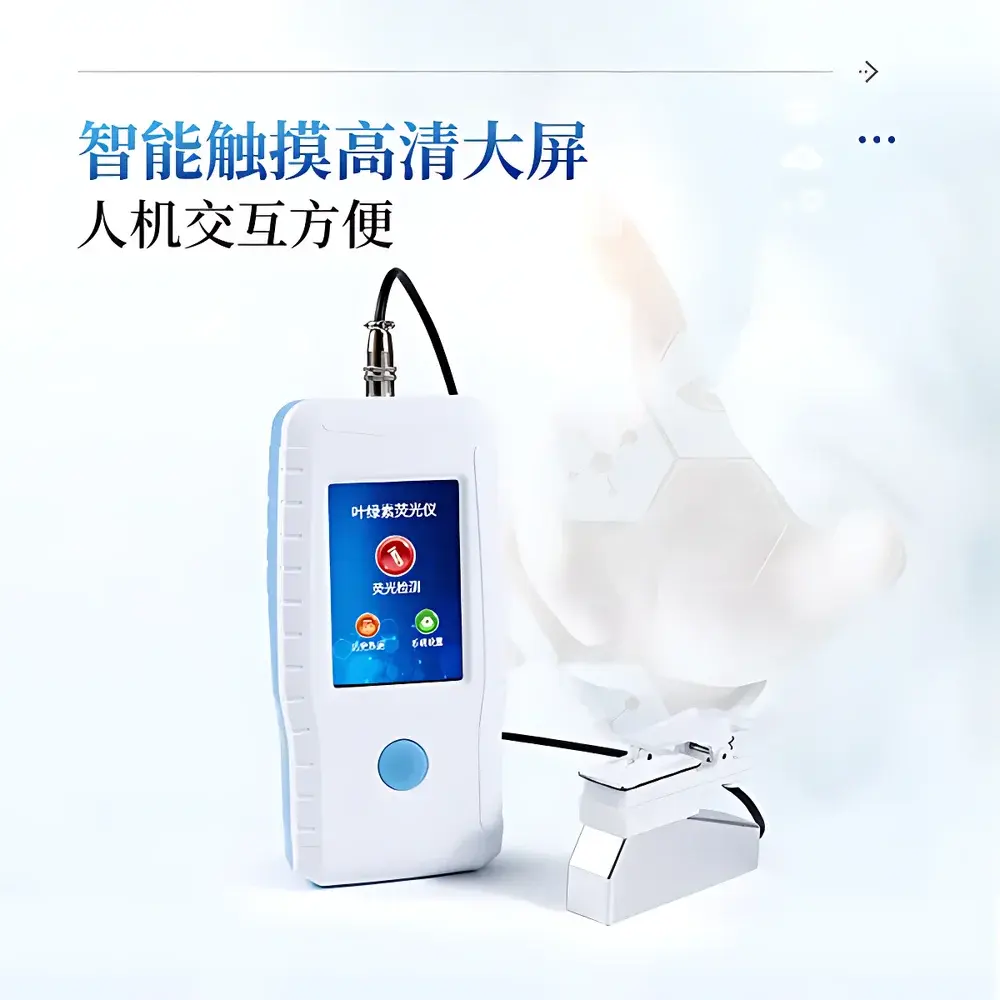
COMECAUSE IN*YS100 Portable Chlorophyll Fluorescence Analyzer
| Brand | COMECAUSE |
|---|---|
| Origin | Shandong, China |
| Manufacturer | Yes |
| Country of Origin | China |
| Model | IN*YS100 |
| Price | USD 4,500 (approx.) |
| Measurement Range | Fo, Fj, Fi, Fm (Fp) |
| Measurement Duration | ≤3 min per sample |
| ADC Resolution | 16-bit |
| Operating Temperature | −15 °C to 40 °C |
| Light Source | 455 nm LED |
| Maximum Actinic Irradiance | 23,000 µmol·m⁻²·s⁻¹ |
| Sampling Interval | Down to 10 µs |
| Storage Capacity | 99,999 records |
| Display | 3.5″ TFT touch screen (320 × 480 px) |
| Battery | 3.7 V / 10.5 Ah Li-ion, >20 h standby |
| Weight | 500 g (host: 380 g, probe: 120 g) |
| Dimensions (H×W×D) | 18 × 8.5 × 4 cm |
| Humidity Range | 0–90% RH (non-condensing) |
| Storage Temp | −20 °C to 50 °C |
Overview
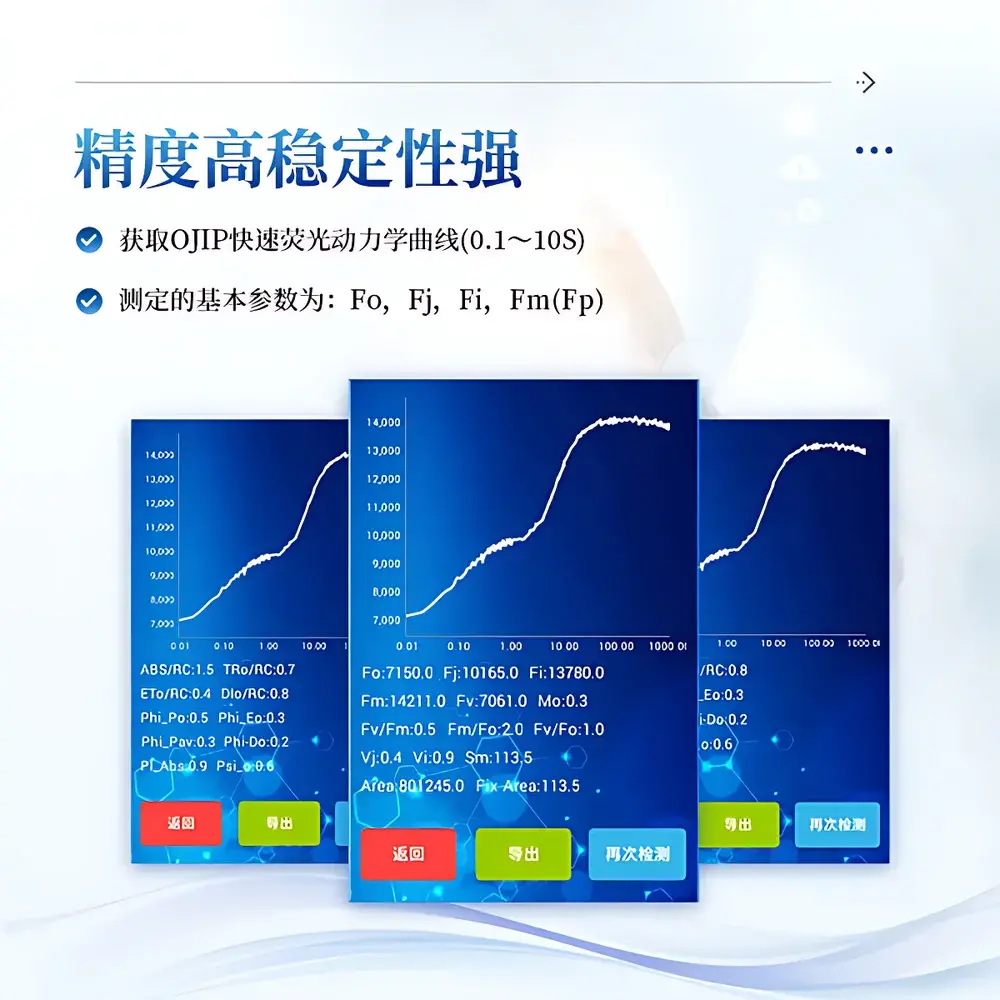
The COMECAUSE IN*YS100 Portable Chlorophyll Fluorescence Analyzer is a field-deployable, high-temporal-resolution instrument engineered for non-invasive assessment of photosynthetic performance in vivo. It operates on the principle of pulse-amplitude modulated (PAM) fluorescence kinetics, capturing the OJIP transient — a 0.1–10 s chlorophyll a fluorescence induction curve reflective of electron transport chain integrity from Photosystem II (PSII) reaction centers through the plastoquinone pool and beyond. By quantifying key biophysical parameters including Fo (minimal fluorescence), Fj (fluorescence at ~2 ms), Fi (fluorescence at ~30 ms), and Fm (maximal fluorescence), the IN*YS100 enables robust diagnosis of photoinhibition, stress-induced damage, photochemical efficiency, and energy partitioning across plant species and ecological contexts. Its design prioritizes reproducibility under variable ambient conditions, with integrated thermal management to stabilize LED output and minimize spectral drift during repeated measurements.
Key Features
- Ultra-fast acquisition: 10 µs minimum sampling interval supports accurate resolution of the OJIP rise phase, critical for detecting early-stage PSII impairment.
- High-fidelity signal conditioning: 16-bit analog-to-digital conversion ensures linear dynamic range and low-noise quantification across Fo–Fm amplitudes.
- Adjustable actinic illumination: Programmable blue LED (455 nm) delivers up to 23,000 µmol·m⁻²·s⁻¹, enabling saturation pulse application and light-response curve generation.
- Multi-gain photodetection: Six selectable PIN photodiode gain settings (1× to 20×) accommodate diverse leaf optical properties and chlorophyll densities without manual recalibration.
- Integrated thermal protection: Real-time LED temperature monitoring prevents thermal quenching artifacts and extends diode service life in prolonged field use.
- Onboard data management: 99,999-record internal memory with timestamped storage; automatic backup upon measurement completion.
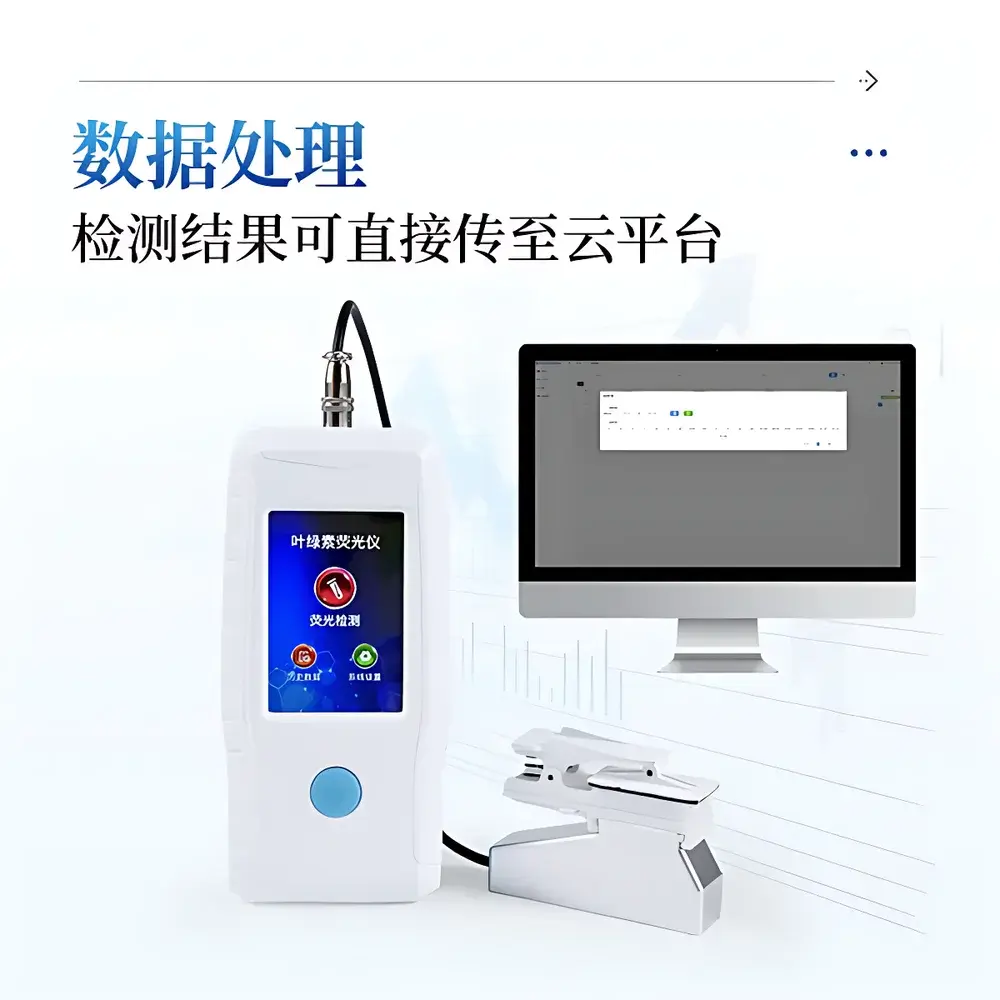
- Dual connectivity: USB-C and Type-C physical interfaces complement Wi-Fi 802.11 b/g/n for secure cloud upload to COMECAUSE Cloud Platform (TLS 1.2 encrypted).
- Field-optimized ergonomics: 500 g total mass, IP54-rated enclosure, and −15 °C to 40 °C operational envelope support extended deployment in temperate, arid, and alpine environments.
Sample Compatibility & Compliance
The IN*YS100 is validated for use with intact leaves of angiosperms, gymnosperms, ferns, and mosses. Its contactless probe geometry (standard 10 mm aperture) accommodates leaf thicknesses from 0.1 to 5.0 mm without compression artifacts. The device complies with IEC 61000-4-2 (ESD immunity) and IEC 61000-4-3 (radiated RF immunity) standards. While not certified for clinical or pharmaceutical GMP environments, its data logging architecture supports GLP-aligned workflows: all measurements include immutable metadata (device ID, firmware version, operator tag, GPS coordinates if enabled via paired smartphone), and audit trails are exportable in CSV/Excel format with ISO 8601 timestamps. Firmware updates follow secure signed-package protocols compliant with NIST SP 800-193 guidelines for embedded system integrity.
Software & Data Management
Embedded firmware v3.2+ provides real-time OJIP curve visualization, parameter calculation, and interactive threshold adjustment. All 26 derived parameters — including Fv/Fm, ΦPo, PIAbs, ABS/RC, and Area — are computed using standardized JIP-test algorithms (Strasser et al., 2004) with no user-modifiable coefficients. Exported Excel files contain raw intensity time-series (µV vs. time), calibrated fluorescence values (arbitrary units normalized to Fo), and calculated parameters in separate worksheets. The COMECAUSE Cloud Platform (accessible via web browser or iOS/Android app) offers role-based access control, batch statistical analysis (ANOVA, PCA), and automated report generation compliant with ISO/IEC 17025 documentation requirements. Data exports meet FDA 21 CFR Part 11 readiness criteria when used with platform-enforced electronic signatures and session lockout policies.
Applications
- Field phenotyping of drought, heat, cold, or salinity stress responses in crop breeding programs.
- Ecophysiological monitoring of forest understory species under canopy light gradients.
- Validation of herbicide mode-of-action studies targeting PSII inhibitors (e.g., triazines, ureas).
- Long-term ecosystem monitoring in LTER (Long-Term Ecological Research) sites.
- Teaching laboratory implementation for undergraduate plant physiology courses requiring quantitative fluorescence kinetics.
- Pre-harvest quality assessment in horticultural systems (e.g., vineyard vigor mapping, post-harvest senescence tracking).
FAQ
What calibration procedures are required before field use?
Zero-point calibration is performed automatically at power-on using dark-adapted sensor baseline. No user-performed optical or electrical calibration is needed; factory calibration certificates (traceable to NIST SRM 2241) are provided with each unit.
Can the IN*YS100 measure dark-adapted Fv/Fm in low-light field conditions?
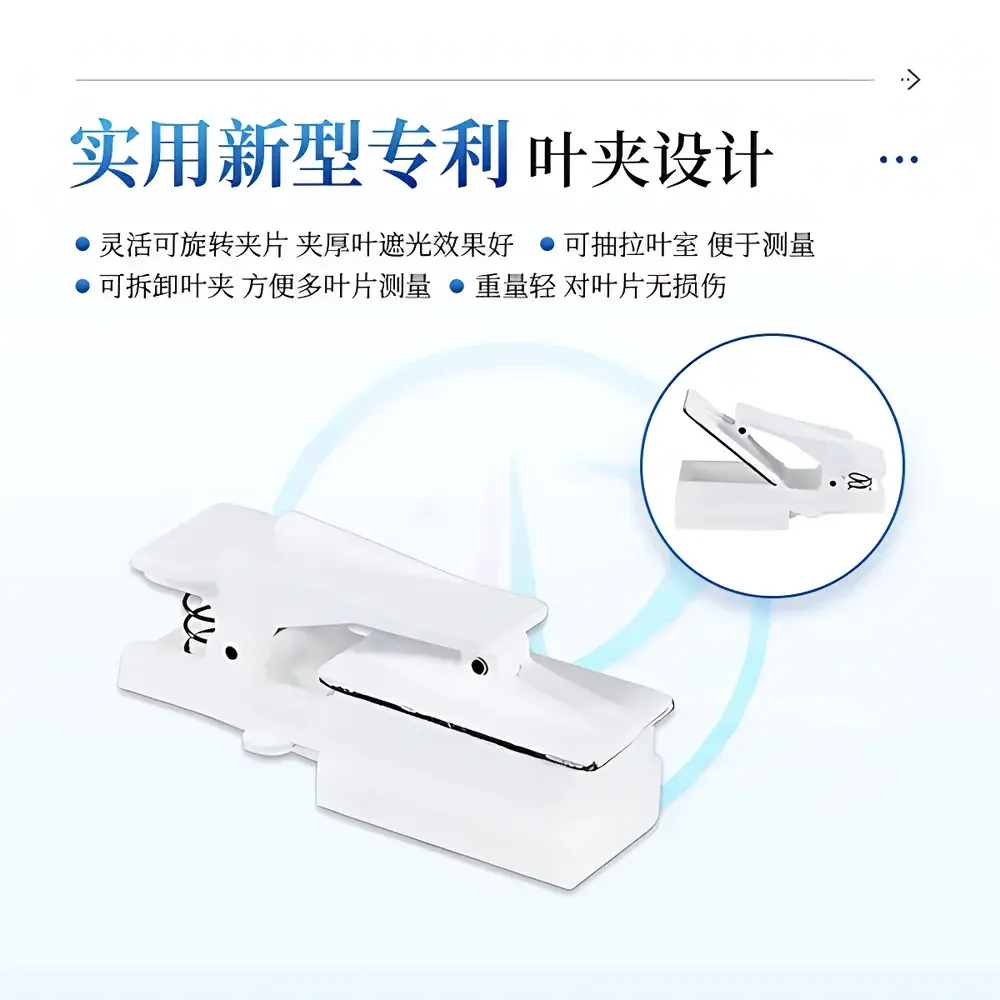
Yes — the instrument includes a built-in leaf clip with opaque shutter and 20-min auto-timer for standardized dark adaptation. Ambient light leakage is mitigated by dual-wavelength ambient correction algorithms.
Is firmware update functionality available offline?
Firmware updates may be installed via USB-C using signed .bin files downloaded from the COMECAUSE Support Portal; Wi-Fi is optional but recommended for automatic notification of critical patches.
Does the device support third-party data integration (e.g., with R or Python)?
Raw CSV exports include header metadata compatible with pandas.read_csv() and R readr::read_csv(); Python reference scripts for JIP-test reprocessing are available in the COMECAUSE Developer GitHub repository under MIT license.
How is battery life affected during continuous high-irradiance measurement?
At maximum LED output (23,000 µmol·m⁻²·s⁻¹) and 10 µs sampling, average current draw is 1.2 A; battery endurance remains ≥8 hours under sustained operation, verified per IEC 61960 cycle testing.




