
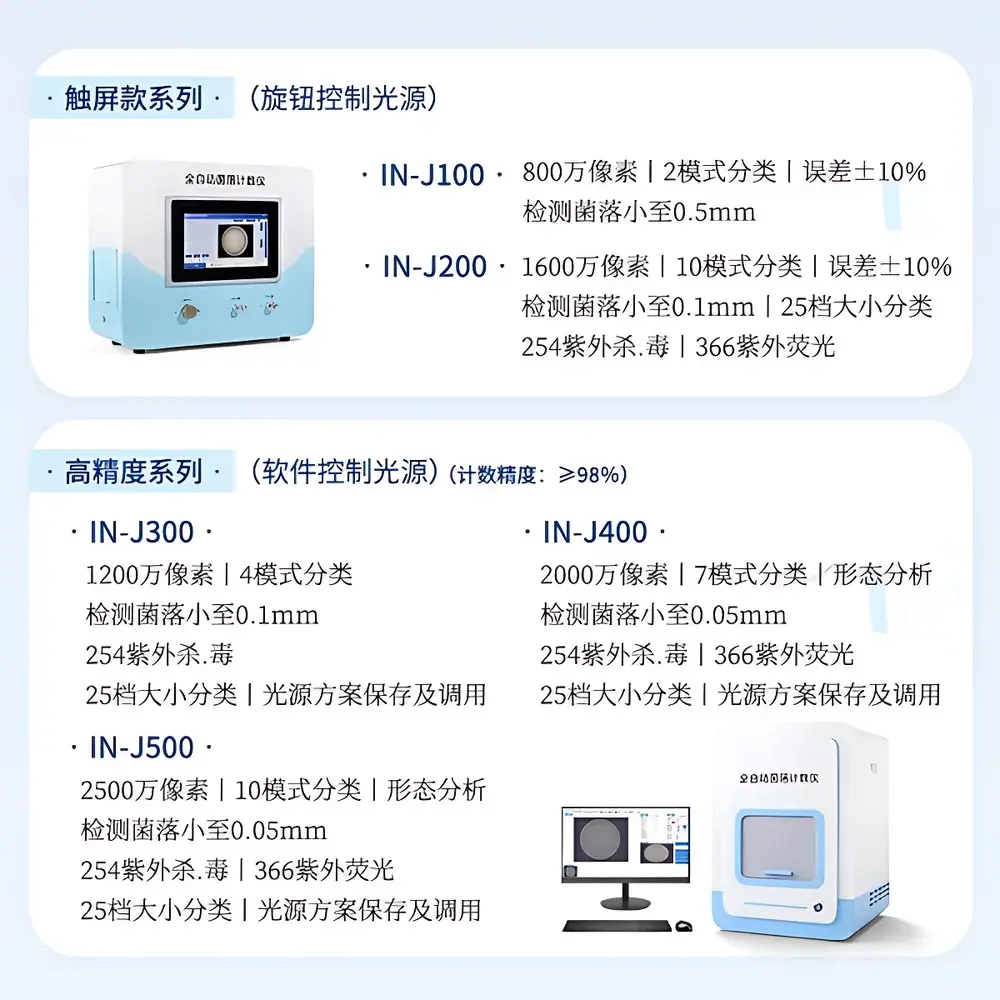
COMECAUSE IN-J300 Fully Automated Colony Counter
| Brand | COMECAUSE |
|---|---|
| Origin | Shandong, China |
| Manufacturer Type | OEM Manufacturer |
| Product Category | Domestic |
| Model | IN-J300 |
| Instrument Type | Fully Automated Colony Counter |
| Sample Type | Petri Dish |
| Sample Diameter Range | 90–110 mm |
| Counting Accuracy | ≤ ±10% |
| Imaging Resolution | 1920 × 1080 pixels |
| Correction Function | Manual & AI-assisted Refinement |
Overview
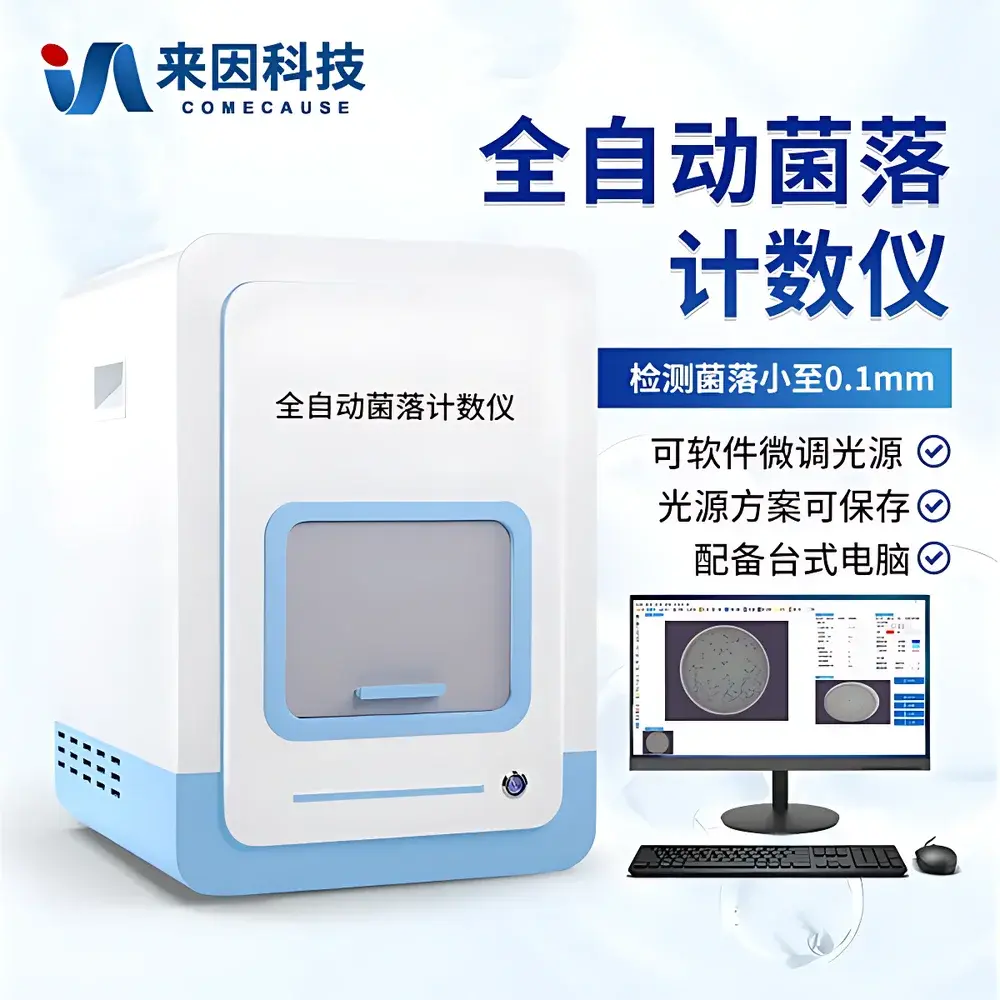
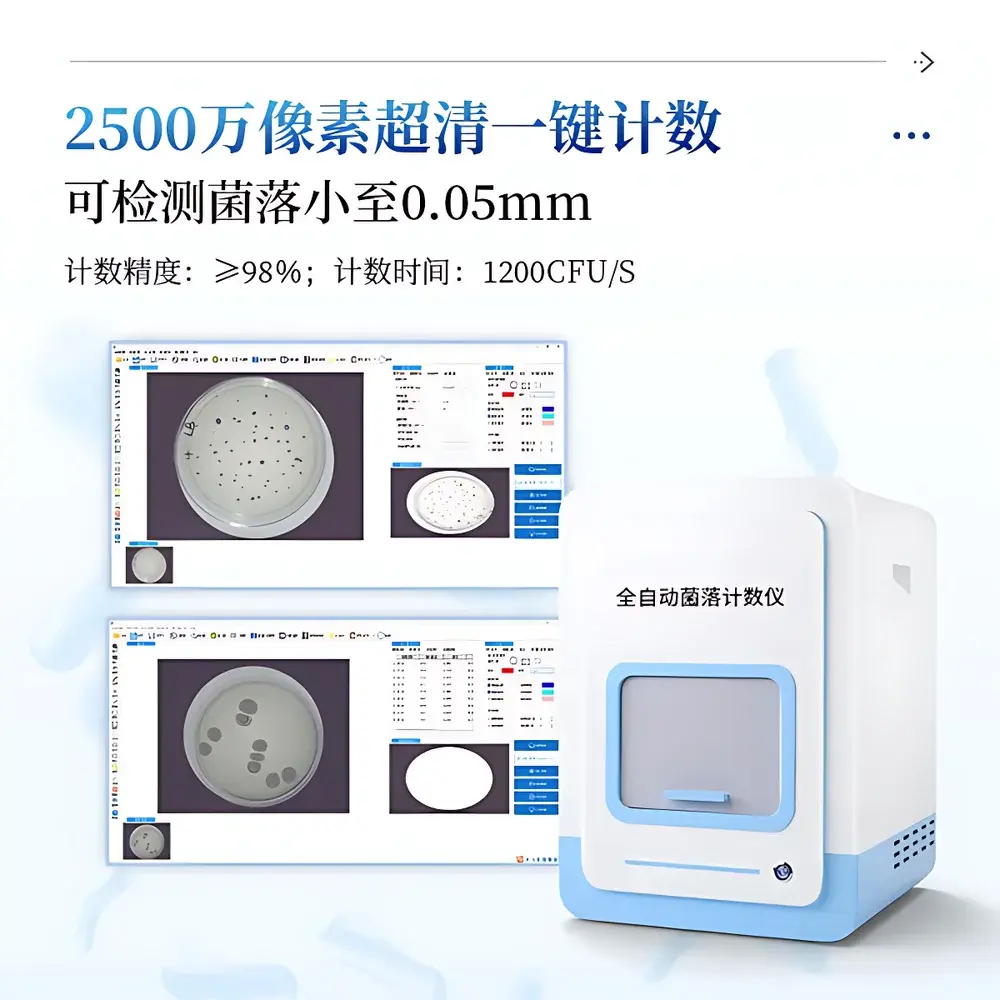
The COMECAUSE IN-J300 Fully Automated Colony Counter is an image-based microbiological enumeration system engineered for precision, reproducibility, and regulatory compliance in routine and research-grade microbial testing. It operates on the principle of high-fidelity digital imaging coupled with adaptive computer vision algorithms—specifically optimized for colony segmentation, feature extraction, and morphological classification on solid agar media. Unlike manual or semi-automated systems, the IN-J300 employs a closed dark-box optical chamber with programmable dual illumination (top and bottom), eliminating ambient light interference and enabling consistent contrast optimization across diverse colony types—including translucent, pigmented, confluent, or low-contrast colonies. The system integrates a 12-megapixel color CMOS sensor with a 12-mm macro lens, supporting detection of colonies as small as 0.1 mm in diameter. Its core measurement traceability is anchored by on-board calibration routines that convert pixel dimensions into metric units (mm), ensuring quantitative validity for downstream reporting and statistical analysis.
Key Features
- Fully enclosed optical chamber with 360° quad-color LED illumination (white, red, green, blue) for shadow-free, uniform lighting
- Integrated 254 nm UV-C lamp for internal chamber sterilization between runs, minimizing cross-contamination risk
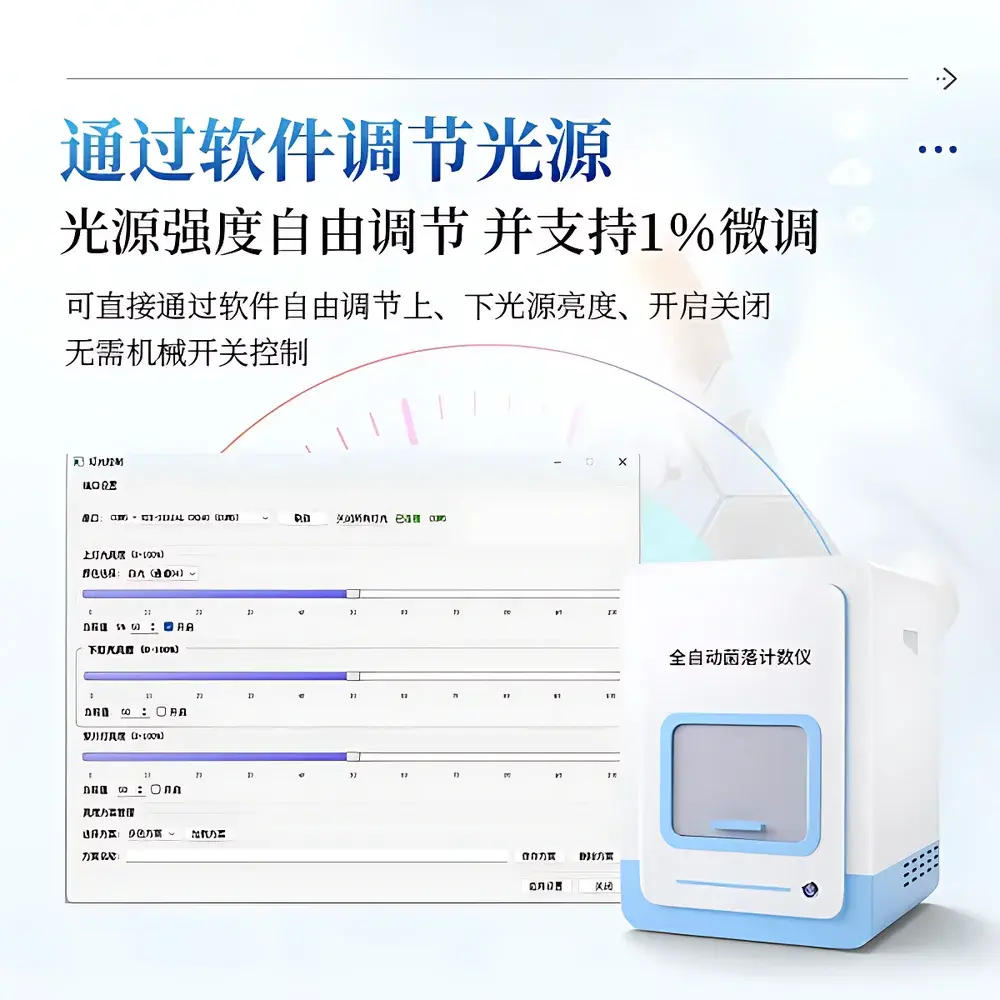
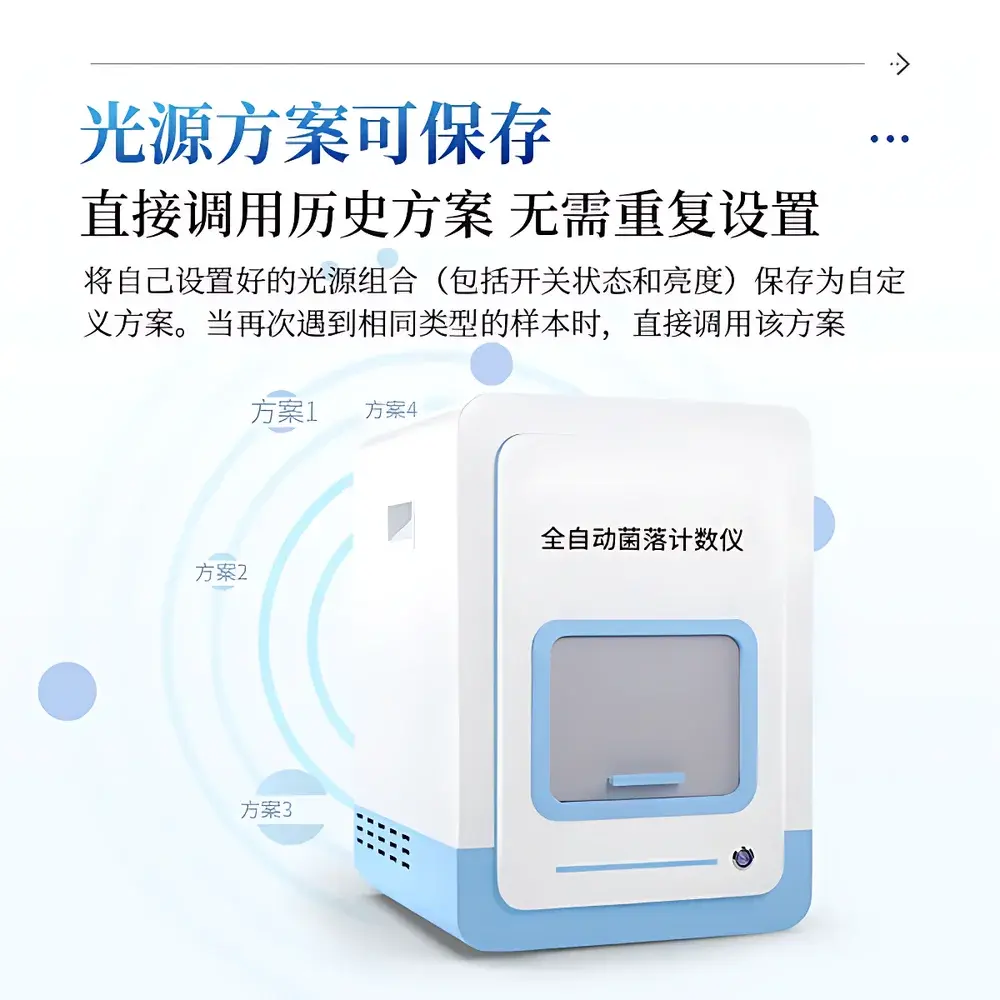
- Software-controlled illumination management: independent on/off switching, 1% granularity brightness adjustment, and user-defined lighting profile storage and recall
- Multi-mode counting engine: one-click processing for dispersed, clustered, micro-colonies, and large colonies—with real-time visual feedback and overlay annotation
- Hybrid correction framework: combines AI-driven re-segmentation with intuitive manual tools (e.g., double-click addition/deletion, lasso-based region editing)
- Comprehensive morphometric analysis: per-colony metrics including diameter, area, perimeter, circularity, and grayscale intensity; aggregated statistics across all colonies in histogram and tabular formats
- Dilution-aware enumeration: automatic CFU/mL or CFU/g conversion based on user-input plate diameter and sample dilution factor
Sample Compatibility & Compliance
The IN-J300 accommodates standard Petri dishes (90–110 mm diameter) and supports common microbiological media—including nutrient agar, TSA, VRBA, MAC, CHROMagar™, and other chromogenic or selective formulations. Its multi-spectral illumination capability enhances differentiation of colonies on differential media without requiring physical filter changes. From a regulatory standpoint, the system aligns with internationally recognized standards for microbiological enumeration: ISO 4833-1:2013 (microbiology of food and animal feeding stuffs), ISO 7218:2017 (general requirements and guidance for microbiological examinations), and FDA Bacteriological Analytical Manual (BAM) Chapter 3 protocols. Audit trail functionality—recording operator ID, timestamp, parameter settings, and all image modifications—is implemented to satisfy GLP and GMP documentation requirements under 21 CFR Part 11 for electronic records and signatures.
Software & Data Management
The proprietary IN-J300 Control Suite provides a role-based, multi-user interface with localized English and Chinese language support. All raw images, processed datasets, and metadata are stored in a secure local database with immutable archiving—exportable in PDF (report-ready), CSV (for statistical software), and TIFF (lossless image preservation) formats. Each user session generates a time-stamped audit log detailing every action—from plate loading and illumination selection to manual corrections and final report generation. Cloud synchronization is optional via encrypted HTTPS API endpoints, enabling remote data review and centralized laboratory information system (LIS) integration. Software updates are delivered through signed firmware packages, maintaining version control and cybersecurity integrity per IEC 62304 medical device software lifecycle standards.
Applications
The IN-J300 serves as a validated enumeration platform across regulated and non-regulated environments. In food safety laboratories, it performs total viable count (TVC), coliform, and pathogen-specific colony enumeration per ISO 6579 and ISO 16649. Clinical microbiology labs apply it to urine culture quantification (≥10⁵ CFU/mL threshold assessment), wound swab analysis, and environmental surface monitoring in hospital settings. Environmental testing facilities use the instrument for heterotrophic plate count (HPC) in drinking water (EPA Method 1603), recreational water quality assessment (ASTM D5392), and wastewater effluent validation. In pharmaceutical QC, it supports USP <61> and <62> microbial limits testing, sterility test membrane filtration enumeration, and antimicrobial efficacy studies (ISO 11137). Academic researchers leverage its morphometric output for colony phenotyping, biofilm dispersion assays, and antibiotic resistance screening workflows.
FAQ
Does the IN-J300 support ASTM or ISO-compliant reporting templates?
Yes—the software includes preconfigured report layouts aligned with ISO 4833-1, ISO 7218, and FDA BAM requirements, including mandatory fields for analyst ID, instrument calibration status, and uncertainty statements.
Can the system distinguish between colonies and debris on turbid or uneven agar surfaces?
Yes—through adaptive thresholding, multi-channel color-space analysis (RGB + HSV), and morphology filtering (circularity, solidity, convexity), the algorithm suppresses false positives from scratches, condensation droplets, or particulate contamination.
Is external calibration required before each use?
No—built-in auto-calibration using a certified reference disk ensures dimensional accuracy across imaging sessions; however, periodic verification against NIST-traceable standards is recommended per laboratory SOP.
How is data integrity maintained during software updates or system migration?
All historical datasets remain fully accessible post-update; database schema changes are backward-compatible, and migration utilities preserve audit logs, user permissions, and custom lighting profiles.
What training and technical support options are available for new users?
COMECAUSE provides on-site installation qualification (IQ), operational qualification (OQ), and comprehensive operator training—including method validation guidance, troubleshooting modules, and annual refresher webinars conducted by application scientists.





