


COMECAUSE IN-ZS300 Portable Heavy Metal Analyzer for Soil, Fertilizer, and Food Samples
| Brand | COMECAUSE |
|---|---|
| Origin | Shandong, China |
| Manufacturer Type | Direct Manufacturer |
| Instrument Class | Portable |
| Detection Principle | Colorimetric Chemistry (Reagent-Based Spectrophotometric Assay) |
| Number of Detection Channels | 4 |
| Test Matrices | Soil, Fertilizer, Food, Vegetables, Fruits |
| Target Elements | Pb, As, Cr, Cd, Hg, Ni, Al, F, Ti, Se, Fe, Zn, Mn, Cu |
| Measurement Range | 0.001–9999 (unitless absorbance-derived concentration index) |
| Repeatability | ≤0.03% (measured with K₂Cr₂O₇ solution) |
Overview
The COMECAUSE IN-ZS300 Portable Heavy Metal Analyzer is an engineered field-deployable instrument designed for rapid, on-site semi-quantitative screening of heavy metals in environmental and agricultural matrices. It operates on the principle of colorimetric chemistry—specific reagents react with target metal ions under controlled conditions to form chromogenic complexes; absorbance is measured at precisely defined wavelengths (680 nm, 420 nm, 510 nm, and 590 nm) using solid-state LED light sources and integrated fixed-path cuvettes. Unlike laboratory-grade elemental analyzers (e.g., ICP-OES, AAS, or ICP-MS), the IN-ZS300 does not perform atomic spectroscopy or mass spectrometry. Instead, it delivers reproducible, field-validated relative quantitation aligned with standardized wet-chemistry protocols referenced in ISO 11047:1998 (soil extractable metals), EPA Method 9071B (for organometallics in soils), and GB/T 22105.1–2008 (Chinese national standard for soil heavy metal determination by colorimetry). Its primary operational domain is preliminary risk mapping, routine farm-level monitoring, emergency response triage, and extension service support—not regulatory compliance testing or forensic certification.
Key Features
- Four-channel fixed optical path architecture with embedded solid-state cuvette modules—eliminates mechanical alignment drift and ensures long-term photometric stability.
- Dedicated multi-wavelength LED sources (red: 680±2 nm, blue: 420±2 nm, green: 510±2 nm, orange: 590±4 nm) calibrated to NIST-traceable spectral profiles; lifetime >100,000 hours.
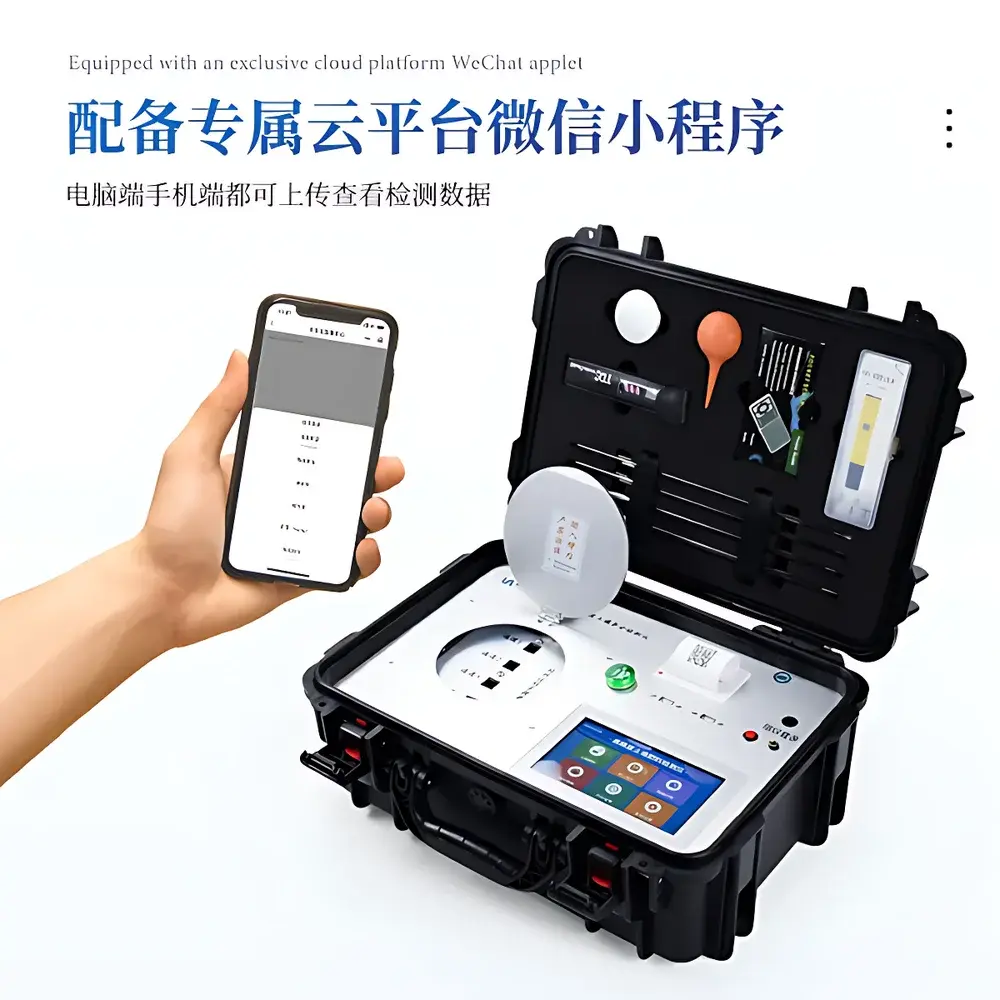
- Integrated light-tight sample chamber with 15.7 cm diameter opaque shutter—prevents ambient light interference during measurement, critical for outdoor use.
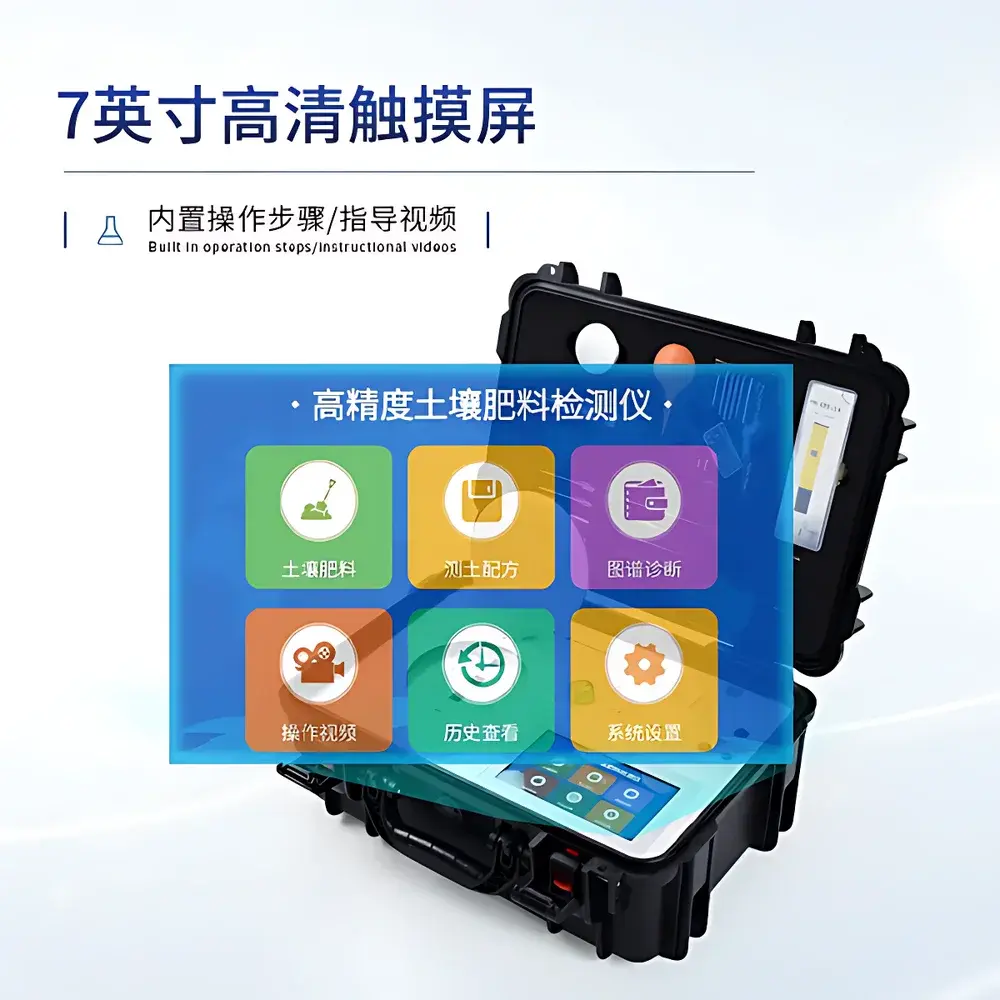
- Android 5.1-based embedded OS with quad-core ≥1.8 GHz processor, 16 GB internal storage, and 7.0-inch high-resolution LCD (1024×600); fully operable under direct sunlight.
- Dual authentication: password + fingerprint login; role-based user accounts with audit trail capability for GLP-aligned data governance.
- Real-time GPS geotagging (WGS84 coordinate system) synchronized with timestamp from onboard RTC chip—enables spatially referenced data traceability per ISO/IEC 17025:2017 Clause 7.8.2.
- On-device thermal printer (ribbon-free) outputs full metadata: sample ID, operator, location, channel-specific absorbance, derived index value, QR code for cloud linkage.
- IP65-rated enclosure with reinforced PVC carry case—certified for dust ingress protection and low-pressure water jet resistance per IEC 60529.
- DC/AC dual-power system: internal 4800 mAh Li-ion battery (≥10 h continuous operation) + external 12 V/5 V input; includes voltage monitor and auto-save on power interruption.
Sample Compatibility & Compliance
The IN-ZS300 supports standardized extraction protocols for soil (CaCl₂ or DTPA leachates), fertilizer suspensions, and homogenized food tissue digests. It accommodates up to 14 analytes—including regulated priority pollutants (Pb, As, Cd, Cr, Hg) and nutritionally relevant elements (Fe, Zn, Cu, Mn)—via validated reagent kits compliant with AOAC Official Method 999.10 (for As in food) and GB/T 23349–2020 (for Cd in fertilizers). While not intended for legal enforcement, its repeatability (≤0.03% RSD, K₂Cr₂O₇ reference) and linearity (≤0.1% error, CuSO₄ standard) meet the performance criteria outlined in ISO 13843:2018 for field screening devices used in environmental monitoring programs. Data integrity is maintained through built-in calibration verification steps, automatic blank subtraction, and firmware-locked method sequences—supporting basic 21 CFR Part 11 readiness when deployed in GxP-aligned agricultural QA workflows.
Software & Data Management
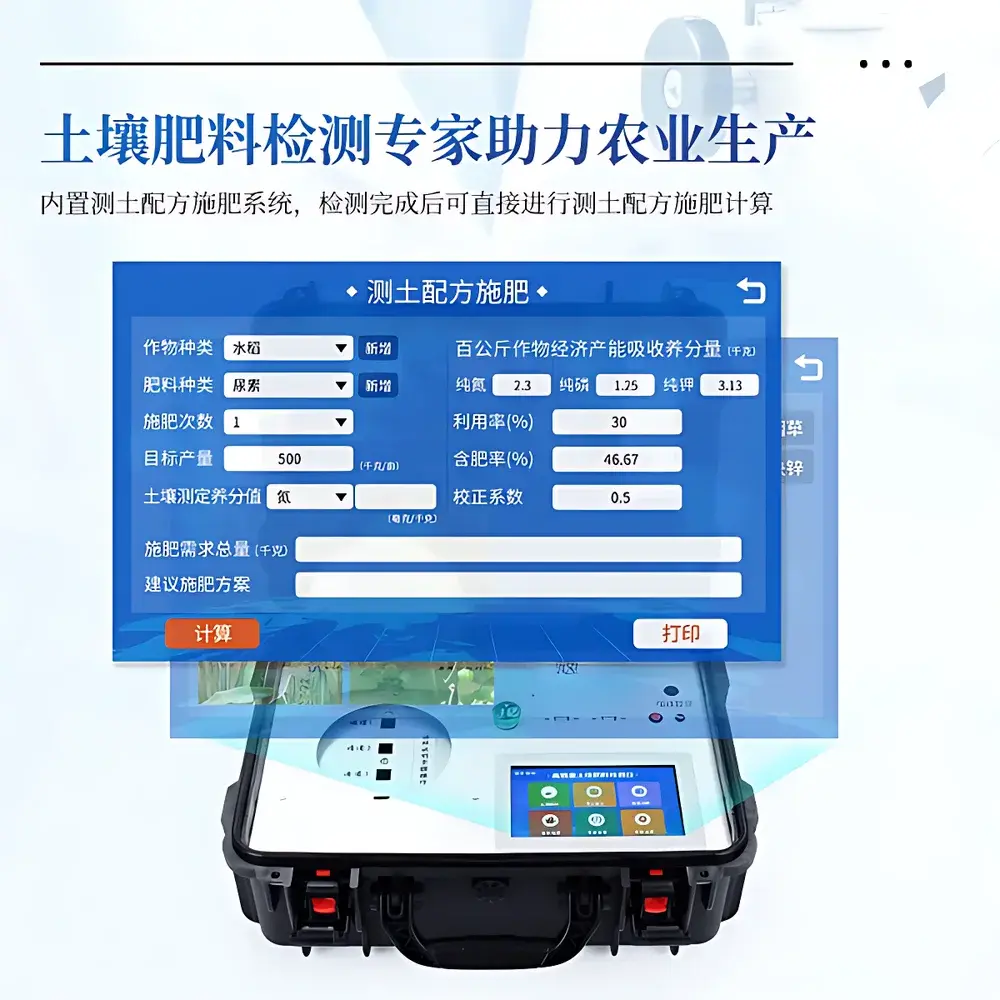
All operations are guided by context-aware UI prompts and embedded procedural videos—no external manual required. Historical records (including raw absorbance, calculated indices, GPS coordinates, timestamps, and operator IDs) are stored locally and synchronizable via Wi-Fi to a dedicated COMECAUSE Cloud Agriculture Data Center. The platform provides role-based dashboards, automated report generation (CSV/Excel export), spatial heatmaps, and integration with third-party soil fertility decision-support tools (e.g., nutrient balance calculators, variable-rate application planners). Mobile access is enabled via WeChat Mini Program, supporting offline data caching and batch upload upon reconnection. Firmware updates and method library expansions are delivered over-the-air without hardware intervention.
Applications
- Pre-harvest field screening of arable land for Pb, Cd, and As hotspots prior to crop planting.
- Routine quality control of organic fertilizers and biochar amendments across supply chains.
- Emergency assessment following industrial spill incidents or illegal waste dumping near farmland.
- Extension agent-led participatory monitoring in rural cooperatives and agri-tech service centers.
- Baseline mapping for regional soil health initiatives under national ecological restoration frameworks.
- Educational use in university environmental science labs for teaching analytical method validation principles.
FAQ
Does the IN-ZS300 replace laboratory ICP-MS or AAS analysis?
No. It serves as a field-tier screening tool to prioritize samples for confirmatory lab analysis—not a substitute for regulatory-grade instrumentation.
What sample preparation is required before analysis?
Soil samples require air-drying, grinding, sieving (<2 mm), and extraction using provided reagents; full step-by-step video guidance is embedded in the device.
Is the instrument suitable for regulatory reporting?
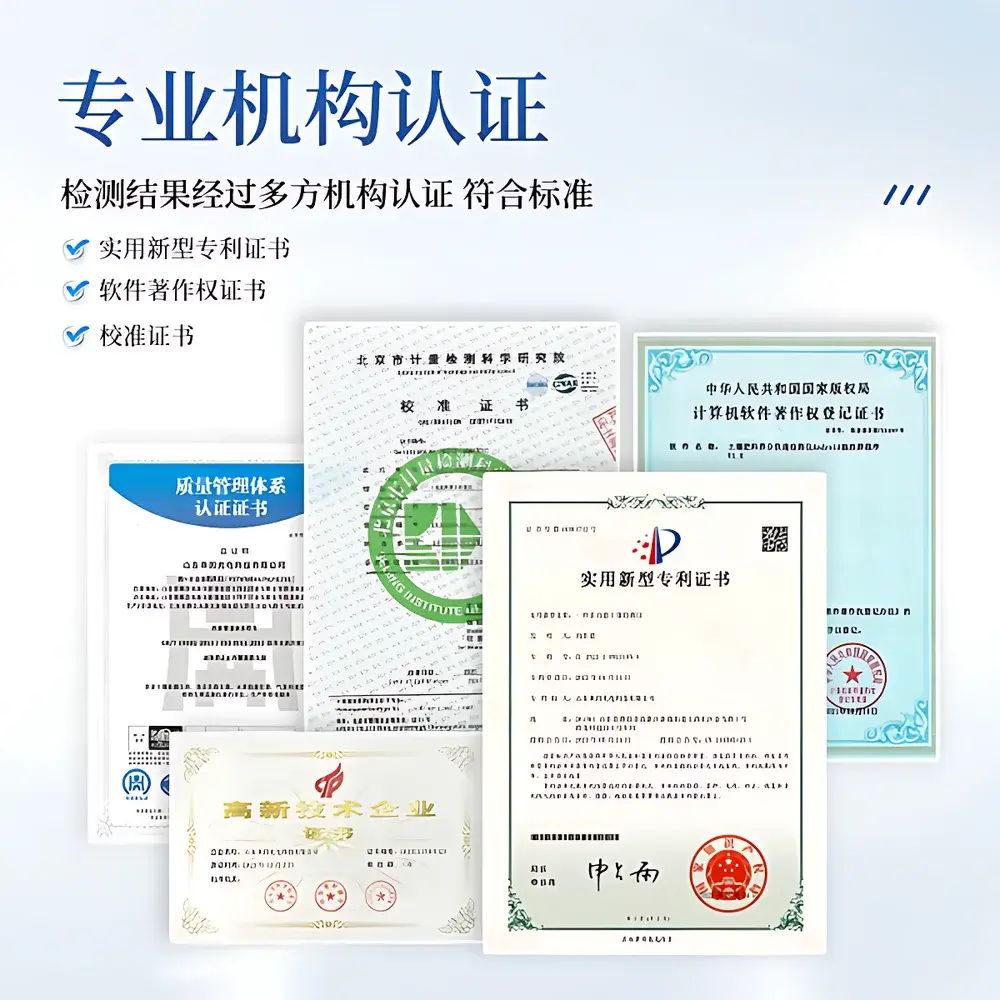
It complies with field-screening performance benchmarks (ISO 13843), but definitive compliance reporting requires accredited lab analysis per ISO/IEC 17025.
How is data security ensured during cloud transmission?
All data transfers use TLS 1.2 encryption; user accounts enforce two-factor authentication; audit logs record all access and modification events.
What is the warranty and technical support coverage?
Three-year comprehensive warranty; lifetime repair service (parts cost only); remote diagnostics and on-site training included.
Related Products







