
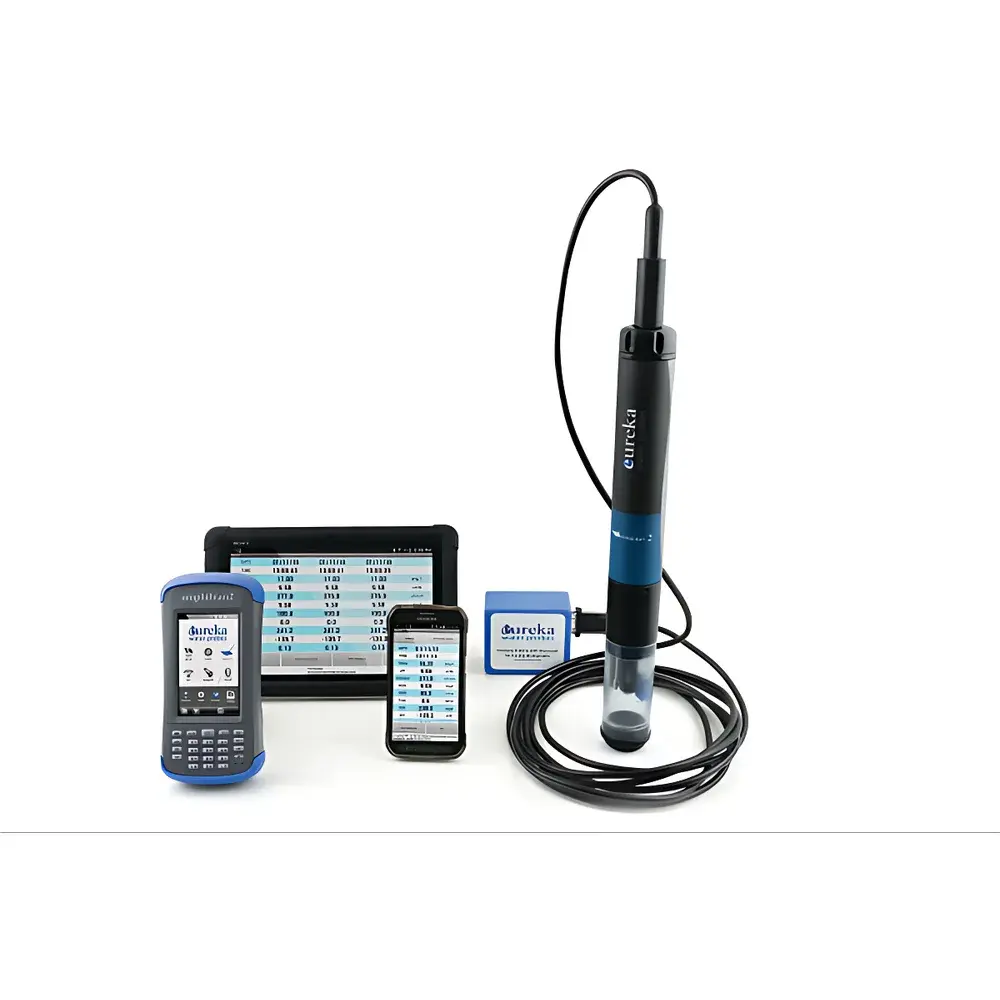
Eureka Manta+ Multiparameter Water Quality Monitor
| Brand | Eureka |
|---|---|
| Origin | USA |
| Manufacturer Type | Authorized Distributor |
| Origin Category | Imported |
| Model | Manta+ |
| Instrument Type | Portable/Handheld Water Quality Analyzer |
| Measurable Parameters | Temperature, pH, Dissolved Oxygen (DO), Electrical Conductivity, Turbidity, Oil-in-Water, Chlorophyll-a, Phycocyanin (Cyanobacteria) |
| IP Rating | IP67 |
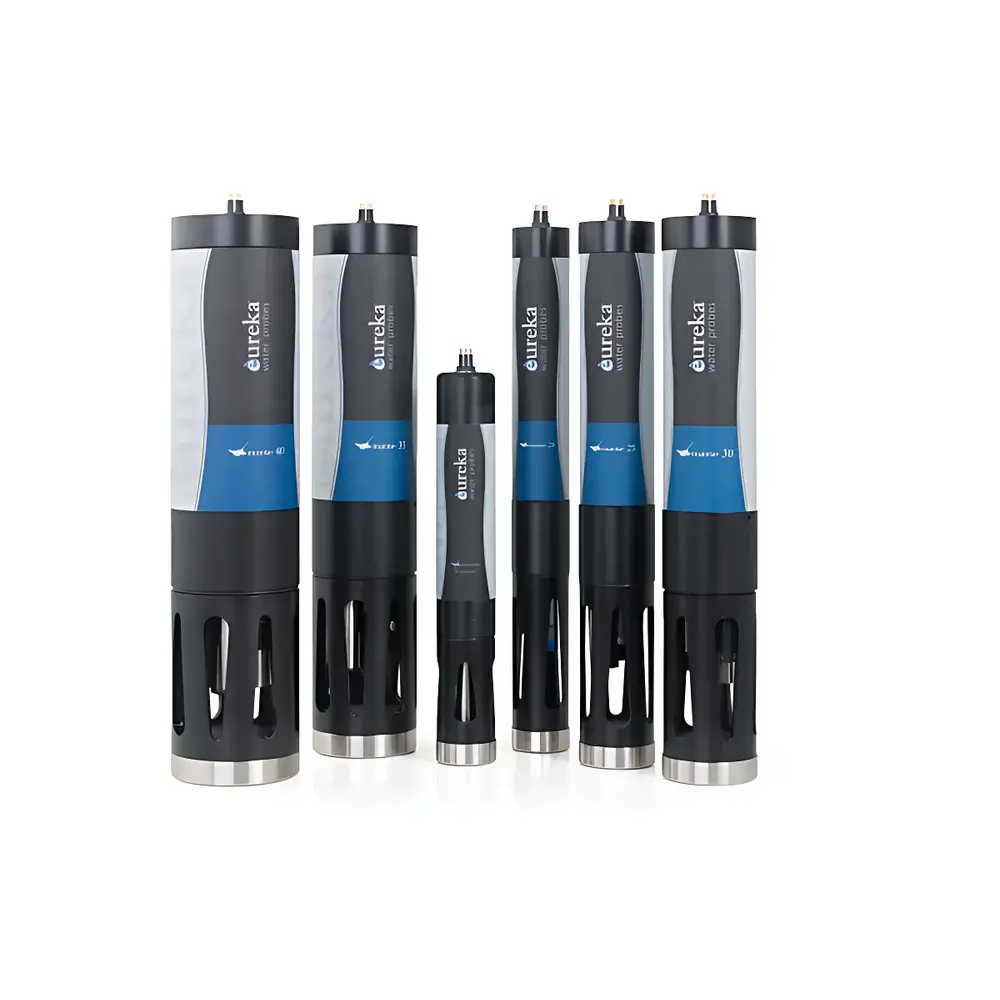
| Host Diameter Options | 50 mm (Manta+20), 64 mm (Manta+25), 76 mm (Manta+30), 89 mm (Manta+35), 100 mm (Manta+40) |
| Maximum Simultaneous Parameters | 5 to 14 |
| Data Logging | Internal memory + optional battery pack for autonomous deployment |
| Communication Interfaces | SDI-12, GPRS-enabled telemetry modules available |
| Sensor Architecture | Smart, plug-and-play, field-replaceable digital sensors with embedded calibration and identification EEPROMs |
| Compliance | Adheres to Standard Methods for the Examination of Water and Wastewater, 20th Edition (APHA/AWWA/WEF) |
Overview
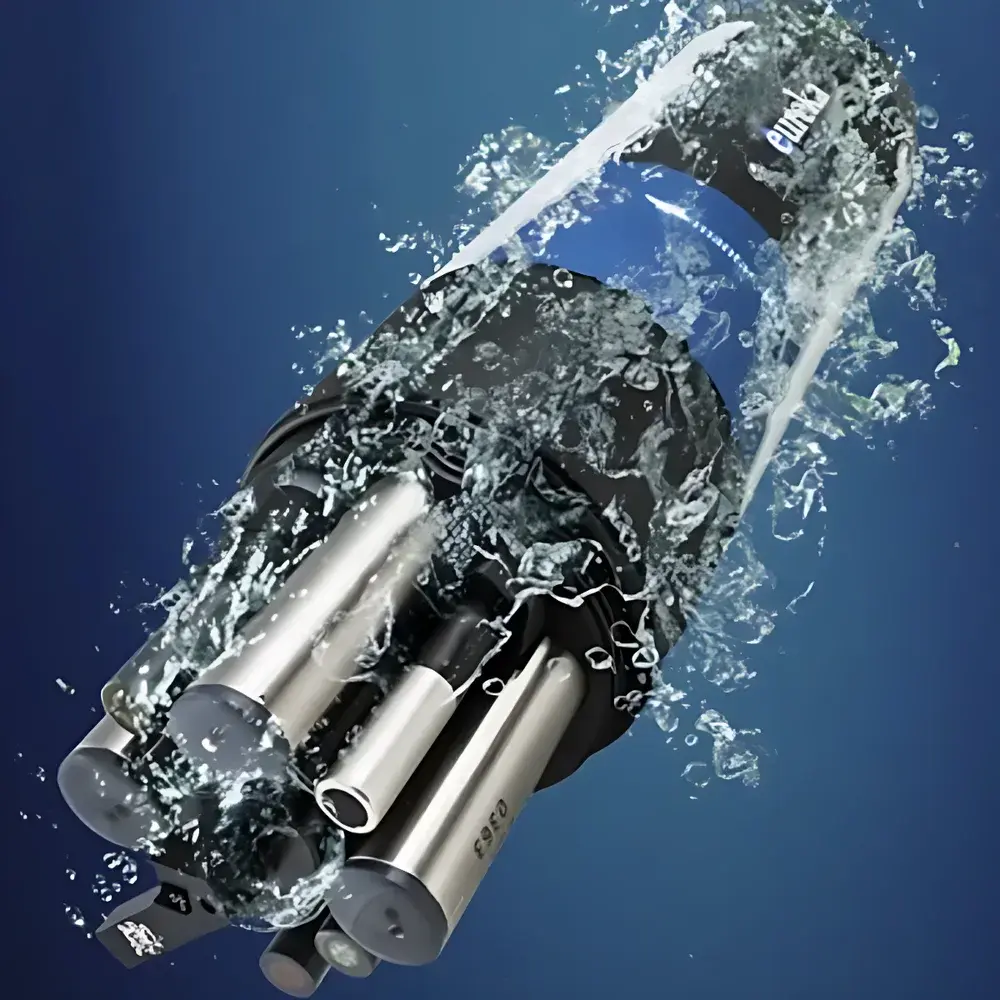
The Eureka Manta+ Multiparameter Water Quality Monitor is an engineered field-deployable instrument designed for high-reliability, long-term environmental monitoring in freshwater, seawater, brackish water, and groundwater systems. Built upon a modular architecture grounded in electrochemical, optical, and physical sensing principles, the Manta+ platform integrates calibrated analog and digital signal pathways—separately conditioned—to minimize cross-talk and maximize measurement fidelity. Its core operational paradigm centers on in-situ, real-time acquisition of physicochemical and biological water quality indicators—including temperature, pH, dissolved oxygen (optical or electrochemical), electrical conductivity, turbidity (nephelometric), hydrocarbon fluorescence (oil-in-water), chlorophyll-a (via excitation/emission spectroscopy), and phycocyanin (as a proxy for cyanobacterial biomass). The system’s IP67-rated enclosure enables full submersion during measurement, supporting both spot sampling and vertical profiling without external housings or protective sleeves.
Key Features
- Modular smart sensor architecture: Each sensor contains embedded EEPROM storing calibration coefficients, serial number, manufacturing date, and sensor-specific metadata—enabling automatic recognition, traceable calibration history, and zero-config integration upon insertion.
- Field-serviceable design: Sensors are hot-swappable without tools; no firmware updates or host reconfiguration required. Fault isolation is facilitated by dual-status LED indicators on the main PCB—distinct illumination patterns differentiate between board-level anomalies and sensor-specific failures.
- Robust mechanical interface: A keyed, waterproof, detachable cable connector prevents pin bending or misalignment during repeated mating cycles; high-durometer silicone-jacketed cables resist abrasion, UV degradation, and biofouling in submerged deployments.
- Transparent polycarbonate housing: Allows visual inspection of dual O-ring integrity and internal condensation without disassembly—critical for maintaining pressure-rated seals across thermal cycling and depth gradients.
- Scalable platform family: Five host diameters (50–100 mm) accommodate varying parameter counts (5–14) and power budgets, enabling optimized configuration for handheld surveys, moored buoys, or fixed-station telemetry nodes.
- Expanded ion detection capability: Integrated sodium-selective electrode option extends analytical scope for salinity-driven ecosystem studies and industrial effluent tracking, compliant with ASTM D3370 and ISO 10523 methodologies.
Sample Compatibility & Compliance
The Manta+ is validated for direct immersion in natural and engineered aqueous matrices ranging from ultrapure source waters (conductivity 70 mS/cm). All electrochemical and optical sensors undergo factory calibration against NIST-traceable standards and are verified per Standard Methods 20th Edition protocols—including Method 4500-pH B (glass electrode), 4500-DO F (luminescent dissolved oxygen), 2510 B (conductivity), 2130 B (turbidity), and 10200 H (chlorophyll-a extraction and fluorometry). The system supports GLP-compliant data acquisition through audit-trail-enabled software logging, and its SDI-12 and GPRS telemetry options facilitate integration into EPA-approved ambient monitoring networks and ISO/IEC 17025-accredited laboratory workflows.
Software & Data Management
Eureka provides free Windows-based MantaLink™ software for instrument configuration, multi-point calibration, real-time data visualization, and batch download. The application implements time-synchronized graphical overlays for up to 14 parameters, supports user-defined alarm thresholds with timestamped event logging, and exports ASCII CSV or Excel-compatible files with embedded metadata (sensor IDs, calibration dates, operator notes). Calibration logs retain full traceability—including slope, offset, R² values, and reference standard lot numbers—satisfying FDA 21 CFR Part 11 requirements when paired with organizational electronic signature policies. Firmware updates are delivered via signed .hex packages with SHA-256 verification to ensure integrity.
Applications
- Regulatory compliance monitoring under Clean Water Act Section 304(h) and EU Water Framework Directive (WFD) reporting tiers.
- Algal bloom early-warning systems leveraging concurrent chlorophyll-a and phycocyanin quantification for cyanobacterial dominance assessment.
- Wastewater treatment plant influent/effluent QA/QC with simultaneous DO, pH, conductivity, and turbidity trending.
- Groundwater contamination plume delineation using sodium, conductivity, and redox potential correlations.
- Academic limnology and oceanography field campaigns requiring ruggedized, low-power, GPS-tagged profiling platforms.
- Industrial cooling tower management where oil-in-water detection and conductivity-driven corrosion risk modeling are critical.
FAQ
Can the Manta+ operate autonomously for unattended deployments?
Yes—internal flash memory stores >1 million data points; adding an external battery pack enables continuous logging at user-defined intervals (1 second to 24 hours) for up to 12 months depending on sensor count and sampling frequency.
Is sensor recalibration required after field replacement?
No—each smart sensor retains its full calibration profile in onboard memory; the host reads and applies it automatically upon connection.
Does the system support third-party SDI-12 sensors?
Yes—the Manta+ host complies with SDI-12 v1.4 specification and can poll compatible external sensors (e.g., level, nitrate, PAR) while maintaining synchronized timestamps with native measurements.
How is data security ensured during wireless transmission?
GPRS telemetry modules support TLS 1.2 encryption, configurable APN authentication, and payload signing to prevent man-in-the-middle interception or unauthorized device enrollment.
What maintenance is recommended for extended submersion?
Biannual visual inspection of O-rings and cable boots is advised; cleaning with isopropyl alcohol and silicone grease reapplication maintains seal longevity—no scheduled electronics servicing is required within the 5-year warranty period.
Related Products







