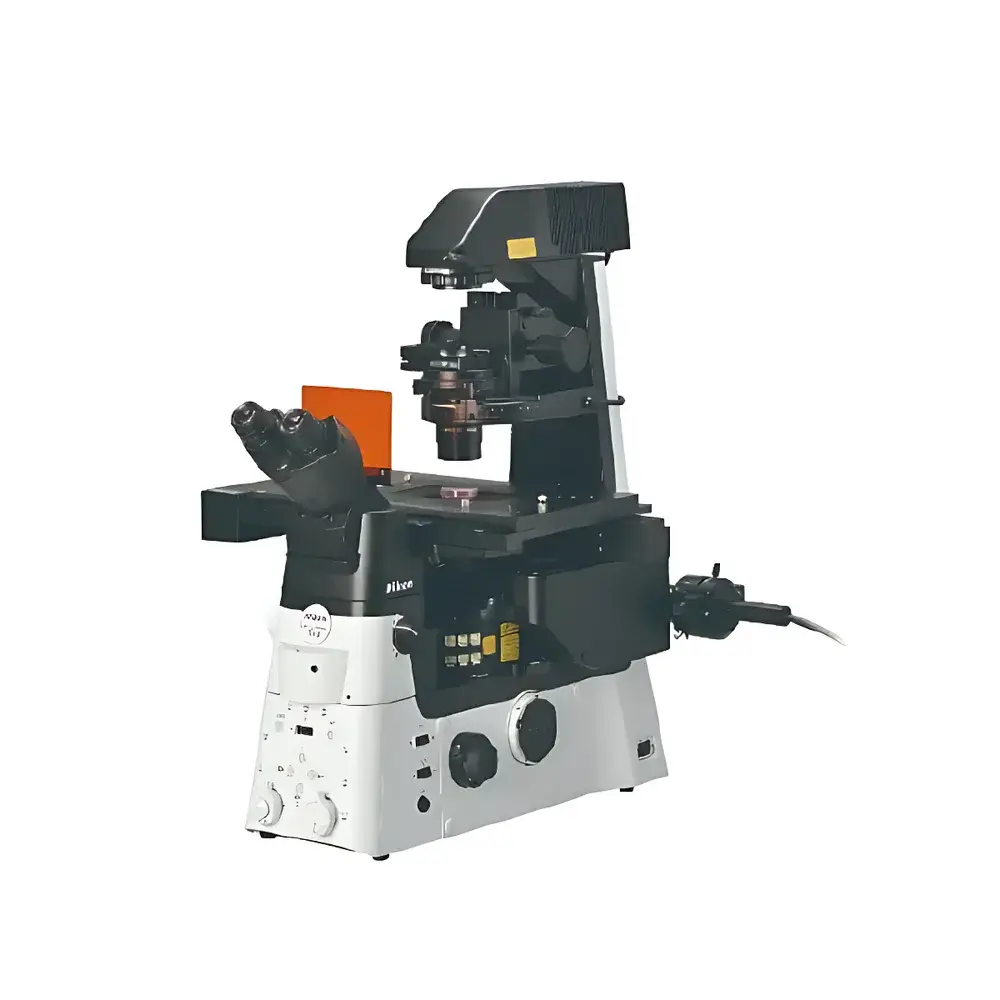
Nikon ECLIPSE Ts2-FL Inverted Fluorescence Microscope
| Brand | Nikon |
|---|---|
| Origin | Japan |
| Model | ECLIPSE Ts2-FL |
| Optical System | CFI60 Infinity-Corrected |
| Observation Modes | Brightfield, Phase Contrast (T-PH), Differential Interference Contrast (DIC)-like Relief Contrast, Epifluorescence |
| Illumination | High-Brightness White LED Transmitted Light + Modular LED Epifluorescence (385, 455, 470, 505, 525, 560, 590, 625 nm) |
| Eyepiece Field Number | 22 (10×), 16 (15×), 12.5 (20×) |
| Tube Angle | 45°, Interpupillary Distance: 50–75 mm (Siedentopf), Trinocular Port (100/0 or 0/100 beam splitter) |
| Focus Travel | 8.5 mm total (7 mm upward, 1.5 mm downward) |
| Coarse Focus | 37.7 mm/rev, Fine Focus: 0.2 mm/rev, Adjustable Coarse Focus Torque |
| Objective Turret | 5-Position |
| Condenser | ELWD (NA 0.3, WD 75 mm) with Pre-centered and Centerable Phase Contrast Sliders (for 10×, 20×, 40×) and Relief Contrast Sliders (dual-side configuration required) |
| Stage | Fixed Plate Stage (170 × 247 mm) with Acrylic Circular Cover Slip |
| Compatible with Multiple Sample Holders | CS-HP35 (35 mm dish), CS-HLP100 (100 mm dish), CS-HT (Terasaki plate & Ø65 mm dish), CS-HS (slide, Ø54 mm dish, hemocytometer), C-S-HU (universal holder for Terasaki, slides, Ø35–65 mm dishes, hemocytometer), C-S-HG (circular glass slide holder), C-S-HLS (circular cover slip kit) |
| Fluorescence Attachment | Motorized Filter Cube Turret (3 positions + brightfield slot), Integrated Noise-Reduction Mechanism, Optional Light Shield |
| Dimensions (W×D×H) | 236 × 548 × 471 mm (Ts2), 236 × 564 × 471 mm (Ts2-FL) |
| Weight | ~13 kg (Ts2), ~14.5 kg (Ts2-FL) |
| Power Supply | 100–240 VAC ±10%, 50/60 Hz, 0.35 A |
| Power Consumption | 15 W |
Overview
The Nikon ECLIPSE Ts2-FL is a high-performance inverted fluorescence microscope engineered for routine cell culture monitoring, live-cell imaging, and multi-modal observation in academic, clinical, and industrial life science laboratories. Built upon Nikon’s CFI60 infinity-corrected optical platform, the Ts2-FL delivers exceptional image fidelity, chromatic correction, and long working distance compatibility—critical for observing cells in standard culture vessels without physical interference. Its modular epifluorescence architecture supports up to three independently controllable LED excitation sources (385–625 nm), enabling precise spectral selection for common fluorophores including DAPI, FITC, TRITC, Cy3, and mCherry. Unlike conventional halogen-based systems, the integrated white LED transmitted illumination provides stable, flicker-free brightfield contrast with uniform intensity across the field of view—eliminating thermal drift and extending LED lifetime beyond 20,000 hours. The system’s mechanical design prioritizes ergonomic operation and long-term stability: a 45° inclined trinocular head with Siedentopf interpupillary adjustment (50–75 mm), dual-beam splitting (100/0 or 0/100), and vibration-damped base ensure consistent user posture and minimal image shift during extended acquisition sessions.
Key Features
- CFI60 infinity-corrected optics optimized for high numerical aperture (NA) and flat-field performance across visible wavelengths
- Multi-contrast capability: simultaneous support for brightfield, T-PH (tilted-phase) contrast, standard phase contrast, and relief contrast—enabling label-free visualization of unstained live cells, organelles, and subcellular dynamics
- Dedicated ELWD condenser (NA 0.3, WD 75 mm) with pre-centered and adjustable phase sliders compatible with 10×, 20×, and 40× objectives
- Motorized 3-position fluorescence filter cube turret with integrated noise-reduction mechanism to minimize stray light and maximize signal-to-noise ratio
- Adjustable coarse focus torque and dual-range fine focus (0.2 mm/rev) for precise Z-axis control during time-lapse or z-stack acquisition
- Expandable stage ecosystem supporting standardized cultureware: 35 mm and 100 mm Petri dishes, Terasaki plates, hemocytometers, and microscope slides—with optional mechanical XY stage (126 × 78 mm travel)
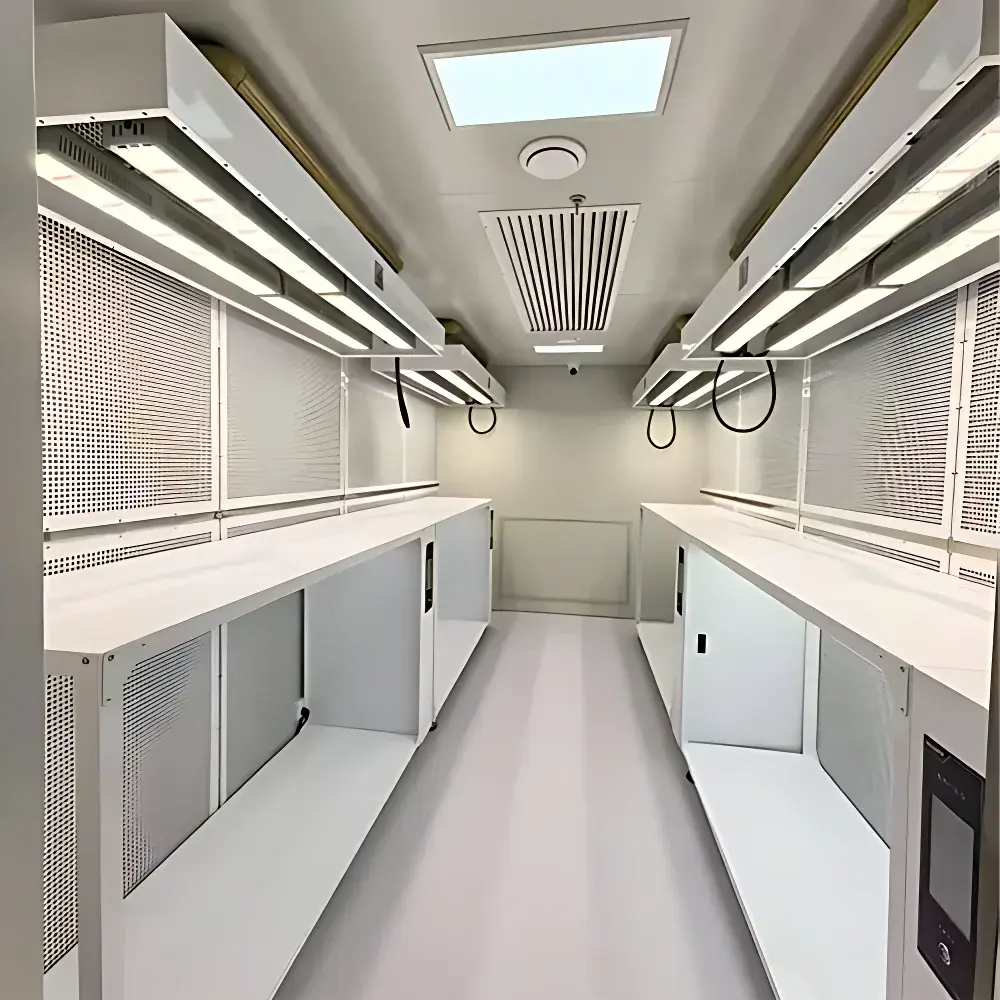
- Compact footprint (236 × 564 × 471 mm) and low power consumption (15 W) suitable for biosafety cabinets, incubator-integrated setups, and shared core facilities
Sample Compatibility & Compliance
The Ts2-FL accommodates a broad range of biological specimens housed in commercially available consumables—including plastic-bottom dishes, glass-bottom dishes, multi-well plates (6–96-well), and custom microfluidic chambers—without requiring objective immersion or stage modification. Its 75 mm working distance ELWD condenser and long-focus objectives allow unobstructed access to samples under standard CO2 incubators or environmental chambers. All optical components comply with ISO 10934-1 (microscope nomenclature) and JIS B 7151 (Japanese Industrial Standard for microscope performance testing). While the instrument itself does not carry FDA 510(k) or CE-IVD certification as a standalone diagnostic device, its optical output meets ASTM E2912-21 requirements for quantitative brightfield and fluorescence image acquisition in GLP-compliant research environments. Data generated using attached digital cameras may be archived in accordance with 21 CFR Part 11 when paired with validated third-party acquisition software featuring audit trail, electronic signature, and role-based access controls.
Software & Data Management
The Ts2-FL operates as a hardware platform compatible with Nikon NIS-Elements (v5.0+), Hamamatsu HCImage Live, or open-source alternatives such as Micro-Manager 2.0. When integrated with NIS-Elements, users gain access to automated multi-channel fluorescence acquisition, Z-stack reconstruction, time-lapse scheduling, and region-of-interest (ROI) intensity profiling—all traceable via timestamped metadata embedded in TIFF or ND2 file formats. The microscope’s LED drivers support TTL triggering and analog intensity modulation, enabling synchronization with external devices (e.g., shutters, environmental controllers, or electrophysiology rigs). Raw image data retains EXIF-compatible headers containing objective magnification, filter cube identity, exposure duration, LED wavelength, and stage coordinates—facilitating downstream analysis in ImageJ/Fiji, Python (scikit-image, napari), or MATLAB-based pipelines.
Applications
- Routine quality control of adherent and suspension cell cultures in biomanufacturing and stem cell banking
- Long-term live-cell imaging of mitotic progression, migration, and morphological responses to pharmacological agents
- Fluorescent protein expression validation (e.g., GFP-tagged constructs) and subcellular localization studies
- Label-free phenotypic screening using relief contrast for primary neurons, organoids, or co-cultures
- Educational instruction in cell biology, microbiology, and histotechnology due to intuitive interface and robust mechanical design
- Pre-screening prior to high-resolution confocal or super-resolution imaging—reducing instrument queue time and phototoxicity exposure
FAQ
Is the Ts2-FL compatible with third-party fluorescence cameras?
Yes—the trinocular port supports C-mount and F-mount adapters, and the LED illumination system provides TTL trigger outputs for synchronized exposure control.
Can I perform quantitative fluorescence intensity measurements on this system?
Absolute quantification requires calibration with NIST-traceable fluorescent standards and correction for LED intensity drift; however, relative intensity comparisons across conditions are reproducible when acquisition parameters (exposure, gain, LED power) are rigorously controlled.
Does the Ts2-FL support DIC (Differential Interference Contrast)?
No—it implements Nikon’s proprietary Relief Contrast, which mimics DIC-like pseudo-3D topography rendering without requiring expensive Wollaston prisms or polarizers.
What maintenance is required for the LED illumination system?
No routine lamp replacement is needed; periodic verification of LED output stability using a calibrated photodiode sensor is recommended every 12 months per ISO/IEC 17025 guidelines.
Can the Ts2-FL be integrated into an automated incubator environment?
Yes—its compact dimensions, low heat dissipation (<15 W), and absence of moving parts in the illumination path make it suitable for integration with commercial stage-top incubators (e.g., Tokai Hit INU series) or custom-built climate-controlled enclosures.