
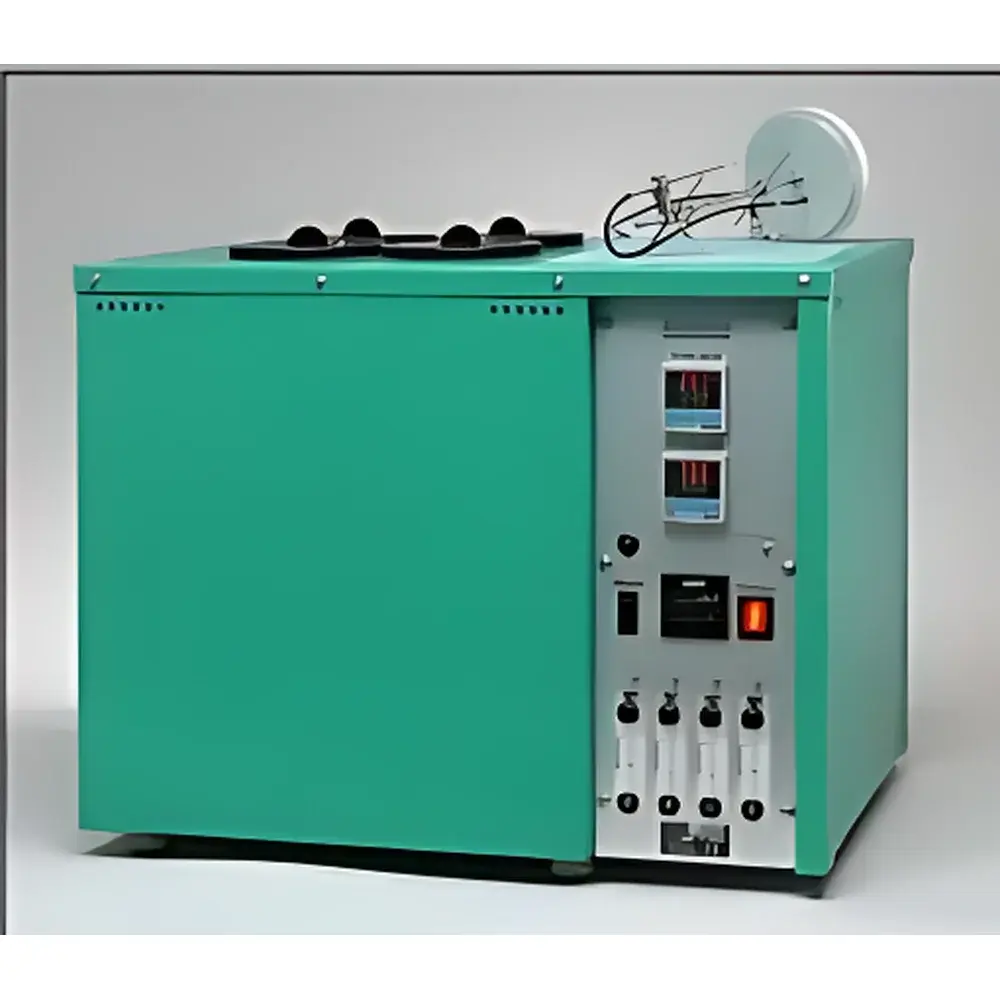
Elastocon EB01 Series Polymer Aging Oven
| Brand | Elastocon |
|---|---|
| Origin | Sweden |
| Model | EB01 |
| Temperature Range (Standard) | +40 to +200 °C |
| Temperature Range (HT Variant) | +40 to +300 °C |
| Chamber Configuration | 4-unit or 6-unit modular design |
| Control Architecture | PLC-based with individual unit PID temperature control (EB19/EB20) or shared temperature control (EB01-II/EB01-IIHT) |
| User Interface | Full-color capacitive touchscreen HMI |
| Safety & Monitoring | Low-surface-temperature enclosure, integrated alarm history log, user-definable test name labeling per chamber, adjustable countdown timers per unit |
| Thermal Efficiency | Enhanced insulation reducing standby power consumption by ≥25% vs. prior generation |
Overview
The Elastocon EB01 Series Polymer Aging Oven is an engineered thermal stability testing system designed for accelerated aging of rubber, thermoplastic elastomers, vulcanized compounds, and other polymeric materials under controlled, reproducible environmental conditions. Based on the principle of thermo-oxidative degradation kinetics, the oven subjects specimens to elevated temperatures within tightly regulated isothermal chambers—enabling standardized evaluation of material property changes (e.g., hardness, tensile strength, elongation at break, compression set) over defined time intervals. Compliant with core international test standards—including ASTM D573, ISO 188, ISO 1431-1, and DIN 53508—the EB01 Series supports both single-point aging (e.g., 70 °C × 72 h) and multi-condition comparative studies across up to six independent thermal zones. Its modular architecture allows laboratories to scale capacity without compromising thermal uniformity (±0.5 °C at setpoint, per IEC 60068-3-5), making it suitable for R&D validation, QC release testing, and long-term material qualification programs in Tier-1 automotive, medical device, and industrial hose manufacturing environments.
Key Features
- Modular chamber configurations: 4-unit (EB01-II, EB19, EB19HT) or 6-unit (EB20, EB20HT) layouts, enabling parallel aging of multiple formulations or lot batches
- Dual temperature capability: Standard models operate from +40 °C to +200 °C; high-temperature variants extend range to +300 °C for specialty elastomers (e.g., fluoroelastomers, silicone rubbers)
- Independent PID control per chamber (EB19/EB20 series): Each unit maintains its own setpoint, ramp rate, dwell time, and alarm thresholds—eliminating cross-chamber thermal interference
- Industrial-grade PLC controller with real-time data logging: Records temperature profiles, alarm events, and operator actions with timestamped audit trail compliant with GLP/GMP documentation requirements
- Low-surface-temperature stainless steel enclosure: External cabinet surface remains ≤45 °C at maximum operating temperature, meeting EN 61000-3-2 and OSHA ergonomic safety guidelines
- Capacitive color touchscreen HMI: Intuitive navigation for test setup, parameter validation, timer configuration, and historical event review—no external PC required for basic operation
- Configurable countdown timers per chamber: Programmable duration (0–999 h 59 min), auto-shutdown, and visual/audible end-of-test alerts
- User-defined test identification: Assign unique alphanumeric labels (“Test_2024-07-A”, “EPDM_Batch#882”) to each chamber for unambiguous sample traceability
Sample Compatibility & Compliance
The EB01 Series accommodates standard dumbbell specimens (ASTM D412), ring samples (ISO 1431-1), compression set plugs (ASTM D395), and custom fixtures up to 150 mm × 150 mm × 50 mm per chamber. All internal chamber linings are constructed from electropolished 316L stainless steel to resist oxidative corrosion and prevent catalytic surface reactions during prolonged high-temperature exposure. The system conforms to electromagnetic compatibility (EMC) requirements per EN 61326-1 and carries CE marking under the EU Machinery Directive 2006/42/EC. Optional IQ/OQ documentation packages support installation and operational qualification in regulated pharmaceutical and medical device facilities adhering to FDA 21 CFR Part 11 and Annex 11 requirements.
Software & Data Management
While standalone operation is fully functional via the onboard HMI, optional Elastocon LabLink™ software (Windows-based) enables remote monitoring, centralized data export (CSV, PDF, XML), and integration with LIMS platforms via OPC UA or Modbus TCP protocols. All temperature logs include metadata: chamber ID, setpoint, actual reading (sampled every 10 s), deviation limits, and operator login credentials. Audit trails are immutable and time-stamped to ISO/IEC 17025:2017 clause 7.9.2 requirements. Data retention is configurable (default: 12 months), with automatic archiving to network drives or encrypted USB storage.
Applications
- Accelerated aging of EPDM, NBR, SBR, CR, and TPE compounds for automotive sealing systems
- Validation of shelf-life predictions for polymer-based drug delivery components (e.g., stoppers, tubing, gaskets)
- Comparative thermal stability screening of halogen-free flame-retardant cable jackets (IEC 60811-501)
- Compression set resistance evaluation of molded rubber parts per ASTM D395 Method B
- Pre-qualification of recycled polymer blends prior to extrusion or injection molding trials
- Supporting ISO 11343 (erosion resistance) and ISO 2231 (heat resistance) test sequences
FAQ
What temperature uniformity can be expected across a single chamber?
Typical spatial uniformity is ±0.5 °C at steady state, measured at nine points per chamber per IEC 60068-3-5. Calibration certificates (optional) include as-found/as-left data.
Is external ventilation or exhaust ducting required?
No forced exhaust is mandated for standard operation; however, a passive vent path (≥50 cm² cross-section) is recommended when running >250 °C continuously for >48 h to mitigate ambient heat buildup.
Can the EB01 be integrated into an existing laboratory automation framework?
Yes—via optional Ethernet interface supporting Modbus TCP (register mapping provided) or OPC UA (compliant with companion specification UA 1.04). Custom API wrappers available upon request.
Does the system support dual-temperature profiling (ramp-and-hold cycles)?
The EB19 and EB20 models support multi-step profiles (up to 5 segments per chamber), including linear ramps, dwell periods, and step changes—programmable directly via HMI or LabLink™.
What maintenance intervals are recommended?
Quarterly verification of door seal integrity and annual calibration of RTD sensors using NIST-traceable reference standards. Preventive maintenance kits and certified service contracts are available through Elastocon’s global partner network.




