
Karg Fiber Length Distribution Analyzer FilDAS 4E-MC
| Origin | Germany |
|---|---|
| Manufacturer Type | Authorized Distributor |
| Origin Category | Imported |
| Model | 4E-MC |
| Pricing | Upon Request |
Overview
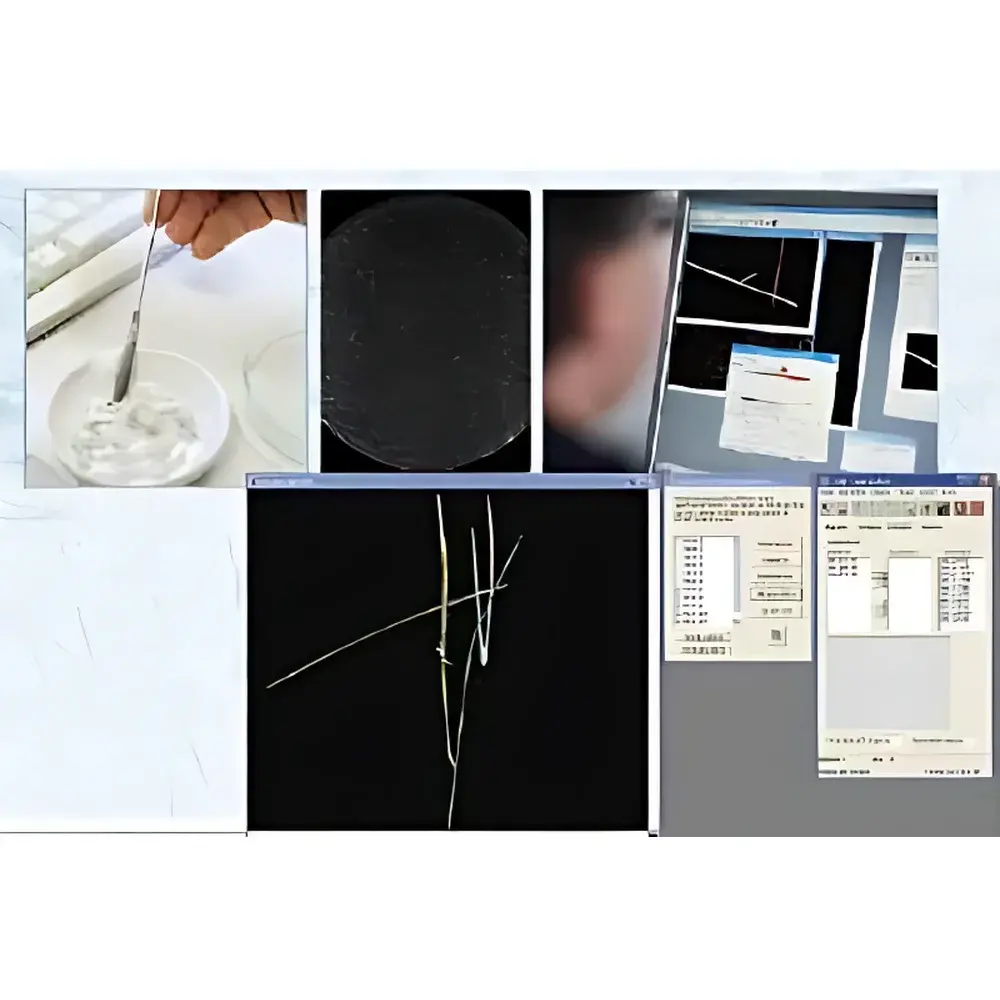
The Karg FilDAS 4E-MC Fiber Length Distribution Analyzer is a high-precision, automated imaging-based system engineered for the quantitative characterization of fiber length and distribution in thermoplastic composites and other fiber-reinforced polymer matrices. It operates on the principle of wide-field digital microscopy combined with dual-illumination optical imaging—specifically synchronized dark-field and transmitted-light scanning—to capture high-contrast, low-artifact images of dispersed fibers across full Petri dish substrates (typically 90 mm diameter). Unlike conventional sieve-based or manual microscopic methods, FilDAS implements the proprietary FASEP (Fiber Ashing Separation and Extraction Protocol) workflow: a controlled thermal ashing process that selectively removes organic polymer matrix without compromising glass, carbon, or mineral fiber integrity. This enables non-destructive liberation of intact fibers prior to aqueous dispersion and monolayer deposition—ensuring representative sampling and eliminating mechanical breakage bias. The system then acquires gigapixel-scale image mosaics, followed by algorithmic cluster segmentation and single-fiber extraction using adaptive morphological processing. Measurement range spans 20 µm to 20,000 µm (20 mm), covering short, medium, and long fibers critical to predicting composite stiffness, impact resistance, and interfacial load transfer efficiency.
Key Features
- FASEP-certified thermal ashing module integrated into sample preparation workflow—validated for glass, basalt, and carbon fibers in PP, PA6, PBT, and other thermoplastics per ISO 3452-1 and ASTM D3171 Annex A3.
- Dual-illumination optical engine: simultaneous dark-field illumination for edge enhancement and transmitted white light for core contrast—optimized for refractive index matching in aqueous suspension media.
- Automated stage-scanning with sub-micron positional repeatability; captures ≥10,000 individual fibers per full-dish scan at native 0.35 µm/pixel resolution.
- Proprietary cluster separation algorithm (FASEP ClusterSplit™) distinguishes overlapping or entangled fibers based on curvature continuity, width variance, and topological adjacency—reducing false negatives in dense dispersions.
- Calibration traceable to NIST-traceable micrometer standards; system validation includes ISO/IEC 17025-compliant uncertainty budgeting for length measurement (k=2, U ≤ ±1.2% for L > 100 µm).
- Rugged industrial-grade enclosure with ESD-safe optics housing and IP54-rated environmental protection for QC lab deployment.
Sample Compatibility & Compliance
FilDAS 4E-MC accommodates fiber-reinforced thermoplastics containing glass (E-, S-, ECRC-type), carbon (PAN- and pitch-based), aramid, and natural fibers (flax, hemp) embedded in polyolefins, polyamides, polyesters, and engineering thermoplastics. Sample throughput supports up to 12 prepared dishes per 8-hour shift. The FASEP protocol complies with ISO 1172:2020 (reinforced plastics—determination of fiber content), and ashing parameters align with DIN EN 13472-2 for thermal decomposition analysis. All image acquisition and measurement metadata are timestamped and stored with audit trail functionality compliant with FDA 21 CFR Part 11 requirements when paired with optional secure software licensing.
Software & Data Management
The FilDAS Control Suite v4.2 (Windows 10/11 64-bit) provides full instrument control, real-time preview, batch image stitching, and automated fiber detection. Measurement outputs include cumulative length distribution curves (LDL), number-weighted and weight-weighted mean lengths (Ln, Lw), aspect ratio histograms, and fiber orientation tensors. Data export supports CSV, XML (ASTM E1392-compliant format), and HDF5 for integration with statistical process control (SPC) platforms. Optional GLP/GMP modules enable electronic signatures, user access levels (admin/operator/auditor), and full audit log retention (≥18 months) per ISO/IEC 17025:2017 clause 7.10.
Applications
- Quality control of injection-molded short-fiber composites in automotive under-hood components and structural brackets.
- Process optimization of twin-screw compounding—correlating screw configuration, melt temperature, and residence time with final fiber length retention.
- R&D validation of novel coupling agents and surface treatments for improved fiber-matrix adhesion.
- Regulatory documentation for ISO/TS 16949 and IATF 16949-compliant production lines requiring fiber length stability evidence.
- Failure analysis of brittle fracture zones where localized fiber attrition precedes macroscopic crack propagation.
FAQ
What fiber types are compatible with the FASEP ashing protocol?
Glass (E-, S-, ECRC), carbon, basalt, aramid, and selected natural fibers (e.g., flax, hemp) in thermoplastic matrices—excluding halogenated polymers due to corrosive residue formation.
Can FilDAS distinguish between fiber breakage and original short fibers?
Yes—via combined analysis of end morphology (fracture vs. cut ends), aspect ratio distribution skewness, and correlation with upstream processing history.
Is calibration required before each measurement session?
A daily verification using certified reference slide (NIST SRM 2822) is recommended; full recalibration is performed annually or after optical alignment service.
Does the system support GMP-compliant data archiving?
With the optional FilDAS SecureLog™ license, all raw images, processed results, operator actions, and system events are cryptographically hashed and archived in immutable WORM storage.
What is the typical turnaround time from sample submission to final report?
Standard workflow (ash → disperse → image → analyze) requires 3–4 hours per sample batch of three dishes; automated overnight runs support unattended multi-batch operation.



