
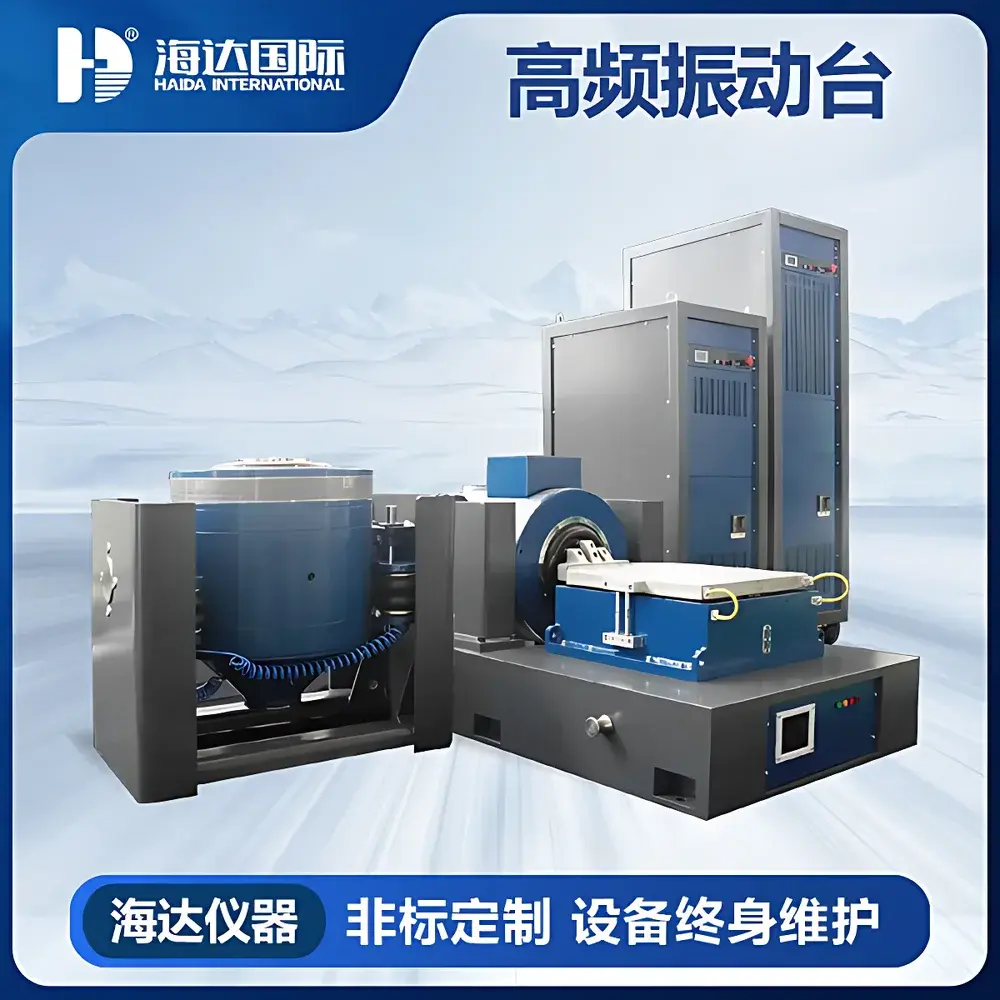
HAIDA HD-G826 High-Frequency Electromagnetic Vibration Shaker
| Brand | HAIDA INTERNATIONAL |
|---|---|
| Origin | Guangdong, China |
| Manufacturer Type | OEM/ODM Manufacturer |
| Country of Origin | China |
| Model | HAIDA HD-G826 High-Frequency Electromagnetic Vibration Shaker |
| Instrument Type | Electromagnetic Vibration Shaker |
| Rated Force | 120 kgf (peak) |
| Frequency Range | 2–3000 Hz |
| Maximum Test Load | 120 kg |
| Table Dimensions | 1200 mm × 790 mm × 840 mm (without extension platform) |
| Maximum Acceleration | 100 G (980 m/s²) |
| Max. Sine Force | 300 kgf (peak) |
| Max. Random Force | 300 kgf (rms) |
| Max. Shock Force | 600 kgf (peak) |
| Max. Displacement | 25.4 mm p-p |
| Max. Velocity | 1.8 m/s |
| Power Amplifier Output | 3 kVA |
| Input Voltage | AC 3-phase 380 V / 50 Hz |
| Total System Weight | ~1200 kg (excluding horizontal slip table) |
Overview
The HAIDA HD-G826 High-Frequency Electromagnetic Vibration Shaker is an engineered test system designed for precise mechanical excitation across a broad spectral bandwidth—from low-frequency resonance characterization to high-frequency structural response analysis. Based on electromagnetic (Lorentz-force) actuation principles, the shaker delivers controlled sinusoidal, random, and transient shock waveforms to replicate real-world dynamic environments encountered by aerospace components, automotive electronics, avionics modules, PCB assemblies, and industrial appliances. Its dual-magnetic-circuit exciter architecture ensures high magnetic flux density uniformity and minimal stray field emission—critical for maintaining measurement integrity in multi-sensor test configurations. The system operates within a certified 2–3000 Hz frequency envelope, supporting compliance-driven qualification per MIL-STD-810H Method 514.8 (vibration), ISO 10816 (machinery vibration evaluation), and IEC 60068-2-6 (sinusoidal vibration testing). Structural rigidity, thermal stability, and electromagnetic compatibility (EMC) are maintained through integrated phosphated steel framing, automotive-grade powder coating, and optimized airflow management.
Key Features
- Electromagnetic exciter with dual magnetic circuit design: reduces magnetic leakage by >40% versus conventional single-circuit topologies and improves field linearity across full stroke range.
- Advanced forced-air cooling architecture: includes low-noise axial fans, honeycomb-patterned exciter coil ducts, and dual-channel分流 (bifurcated) cooling paths for the center magnet assembly—enabling sustained operation at maximum acceleration (100 G) without thermal derating.
- Modular platform interface: standard 1200 mm × 790 mm aluminum alloy table with hard-anodized surface; optional 500 mm × 500 mm horizontal oil-film slip table (rated to 2000 Hz) for multi-axis testing configurations.
- Digital switching power amplifier: 3 kVA output capacity, 116 kHz switching frequency, ≥90% efficiency, and ≤70 dB acoustic noise—designed for high-fidelity signal fidelity and minimal harmonic distortion (<0.5% THD at rated load).
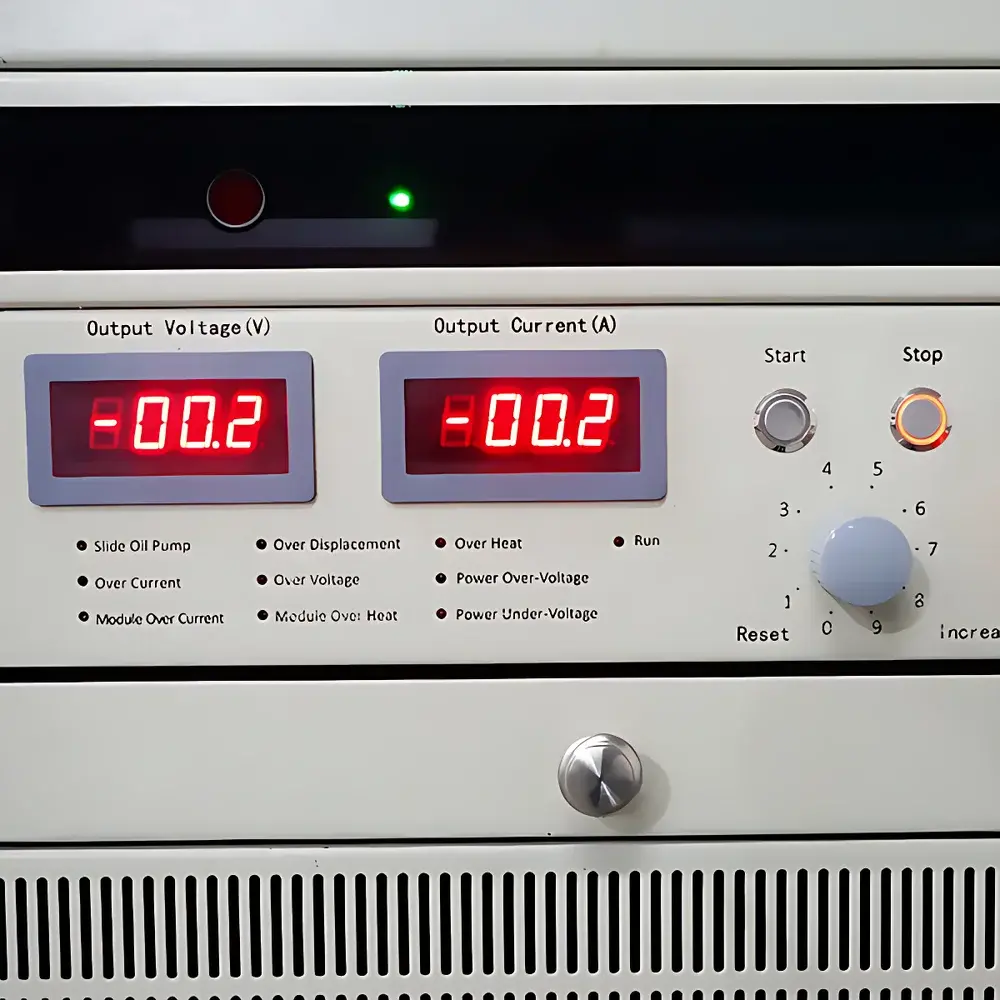
- Comprehensive hardware safety interlock system: monitors grid voltage (over/under/phase loss), exciter temperature, output current/voltage, table displacement limits, external emergency stop inputs, and logic integrity in real time; triggers immediate shutdown upon fault detection.
- Windows-based digital vibration controller software: supports automated test sequencing, real-time FFT analysis, SRS synthesis, PSD shaping, and fully traceable report generation compliant with GLP/GMP documentation requirements.
Sample Compatibility & Compliance
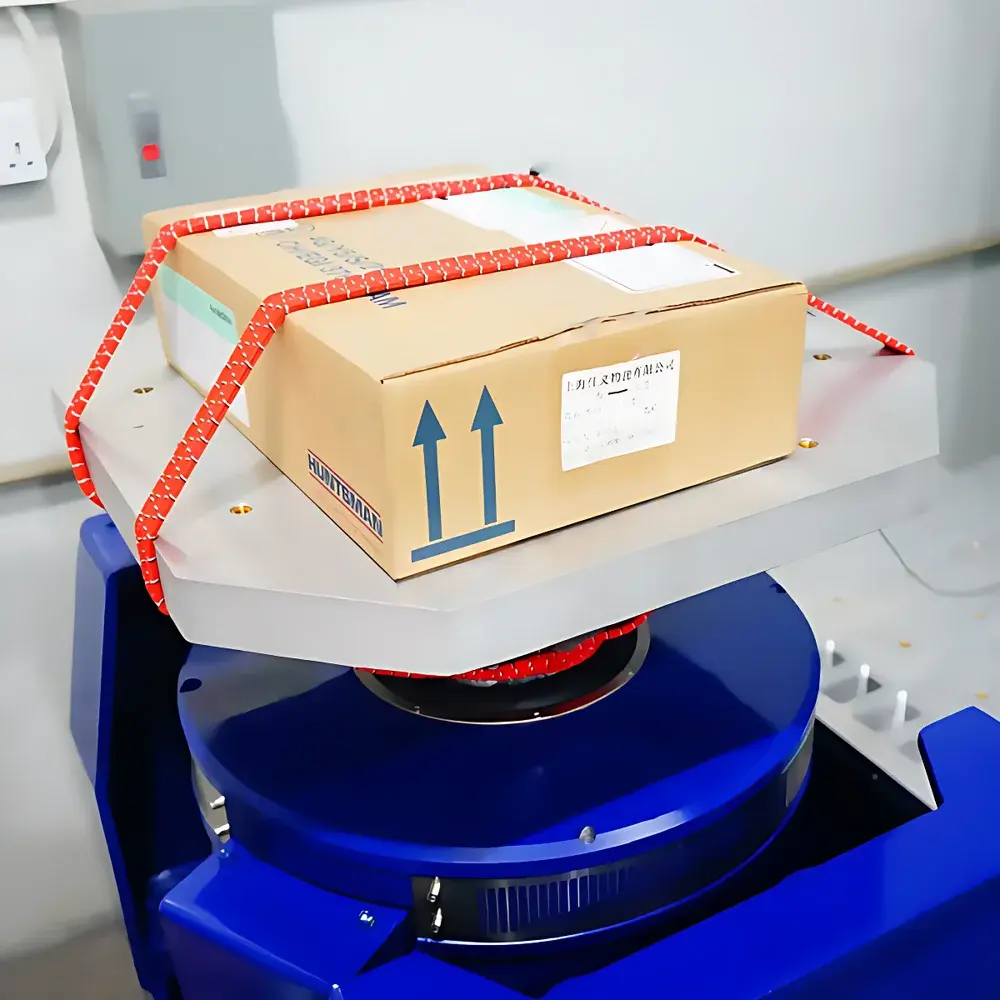
The HAIDA HD-G826 accommodates rigid and semi-rigid specimens up to 120 kg mass, including printed circuit board assemblies (PCBAs), electronic enclosures, sensor housings, miniature actuators, and small-scale mechanical subassemblies. Fixture mounting is facilitated via M6–M10 threaded inserts distributed across the table surface. For extended modal testing or large-footprint devices, the optional magnesium-alloy extension platform (damped with viscoelastic layers) maintains structural damping characteristics while extending usable surface area. The system conforms to key international standards including MIL-STD-810H (Vibration, Method 514.8), ISO 10816-1 (vibration severity assessment), ISO 2041 (vibration and shock—vocabulary), and IEC 60068-2-64 (random vibration testing). All firmware and controller software support audit trails, user access levels, and electronic signature capabilities aligned with FDA 21 CFR Part 11 requirements for regulated industries.
Software & Data Management
The embedded Windows-based control suite provides intuitive wizard-driven setup for sine sweep, resonant dwell, random PSD, and classical shock pulse profiles. Real-time data acquisition supports up to 8 analog input channels (IEPE or charge mode) synchronized with shaker command signals. All test parameters—including drive spectra, control error margins, coherence functions, and transmissibility plots—are logged in HDF5 format for long-term archival and third-party post-processing (e.g., MATLAB, Python SciPy, or LMS Test.Lab). Automated report generation includes customizable templates with embedded pass/fail thresholds, statistical summaries (mean, std dev, kurtosis), and timestamped metadata. USB 2.0 and Ethernet interfaces enable seamless integration into enterprise lab networks, supporting remote monitoring and centralized calibration tracking via HAIDA’s cloud-enabled device management portal.
Applications
The HAIDA HD-G826 serves as a primary qualification tool for reliability engineering teams validating product robustness under mechanical stress. Typical use cases include: fatigue life estimation of solder joints on high-density PCBs; modal parameter identification (natural frequencies, damping ratios, mode shapes) of composite satellite brackets; shock survivability testing of MEMS inertial sensors per DO-160 Section 8; vibration-induced failure analysis of automotive infotainment displays; and environmental stress screening (ESS) of medical device circuitry prior to ISO 13485 certification. It is also deployed in academic research labs for experimental modal analysis (EMA), active vibration control algorithm development, and piezoelectric transducer characterization.
FAQ
What is the maximum continuous operating time at 100 G acceleration?
The system is rated for 15-minute duty cycles at peak acceleration (100 G) under forced-air cooling; extended duration requires optional water-cooled amplifier and exciter package.
Does the controller support closed-loop acceleration control using external accelerometers?
Yes—the system features four independent IEPE input channels with programmable gain, anti-alias filtering, and real-time feedback compensation algorithms for precision acceleration control.
Can the HD-G826 be integrated with existing LabVIEW or Python-based test automation frameworks?
Native TCP/IP and DLL-based API libraries are provided for seamless integration with LabVIEW, MATLAB, and Python (via PyVISA or custom socket protocols).
Is calibration traceable to NIST or equivalent national metrology institutes?
All factory calibrations are performed using reference accelerometers traceable to NIM (China National Institute of Metrology), with optional UKAS or DAkkS-certified calibration certificates available upon request.
What maintenance intervals are recommended for the exciter and power amplifier?
Routine inspection every 500 operational hours; coil resistance and insulation resistance checks every 2000 hours; full preventive maintenance (bearing lubrication, fan filter replacement, thermal paste renewal) every 5000 hours or annually—whichever occurs first.
Related Products



