
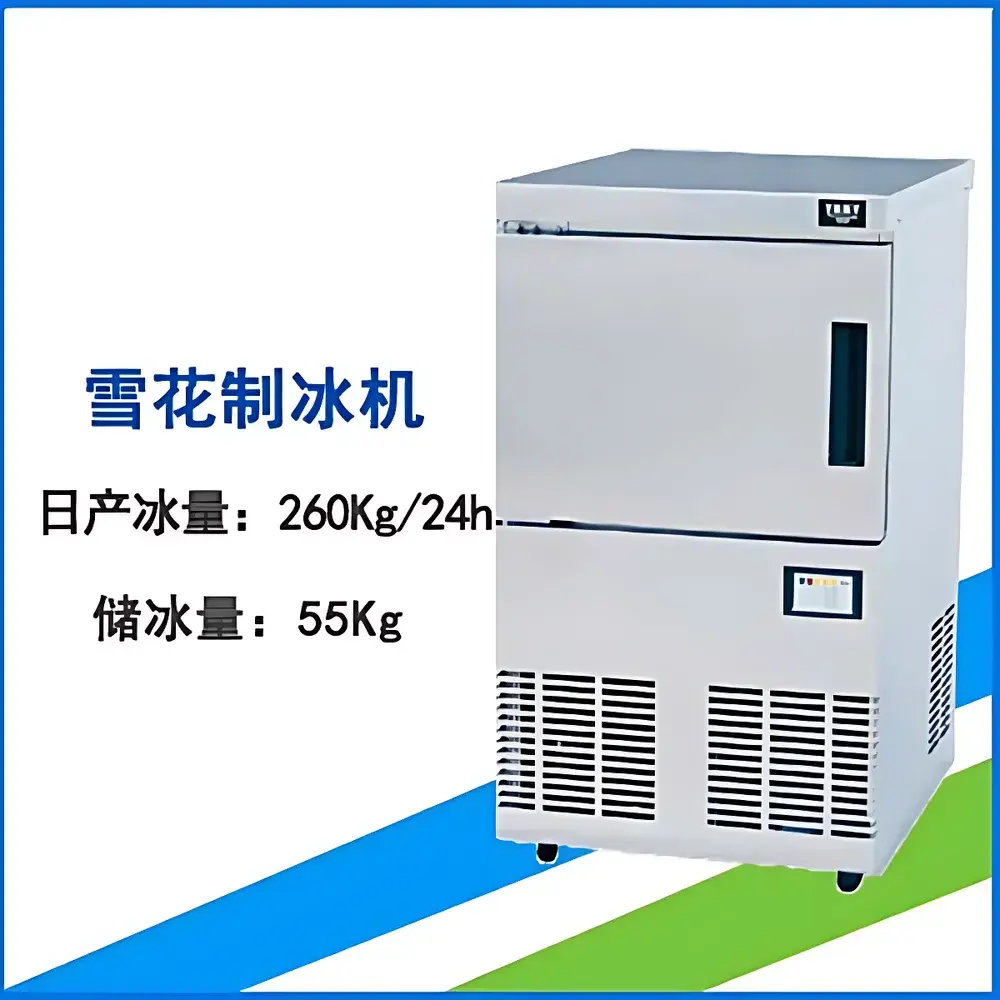
Coolium FM180 Laboratory-Grade Flake Ice Maker
| Brand | Coolium |
|---|---|
| Origin | Beijing, China |
| Manufacturer Type | Authorized Distributor |
| Product Type | Flake Ice Machine |
| Ice Production Capacity | 180 kg/24h |
| Storage Capacity | 50 kg |
| Water Consumption | 7.6 L/h |
| Cooling Method | Air-Cooled |
| Compressor Power | 5/8 HP |
| Net Weight | 122 kg |
| Power Supply | 220 V / 50 Hz / 650 W / 15 A |
| Dimensions (W×D×H) | 700 × 670 × 1020 mm |
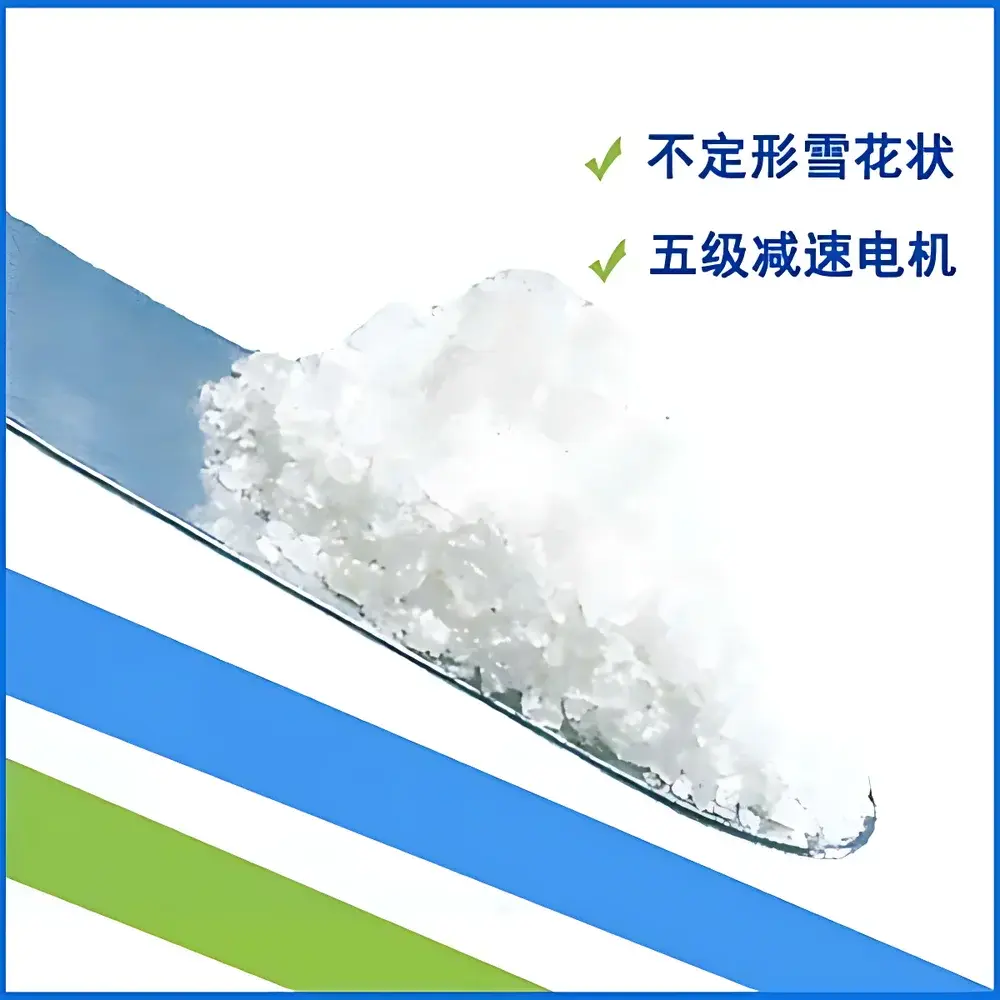
| Ice Form | Fine, Irregular Flake Ice |
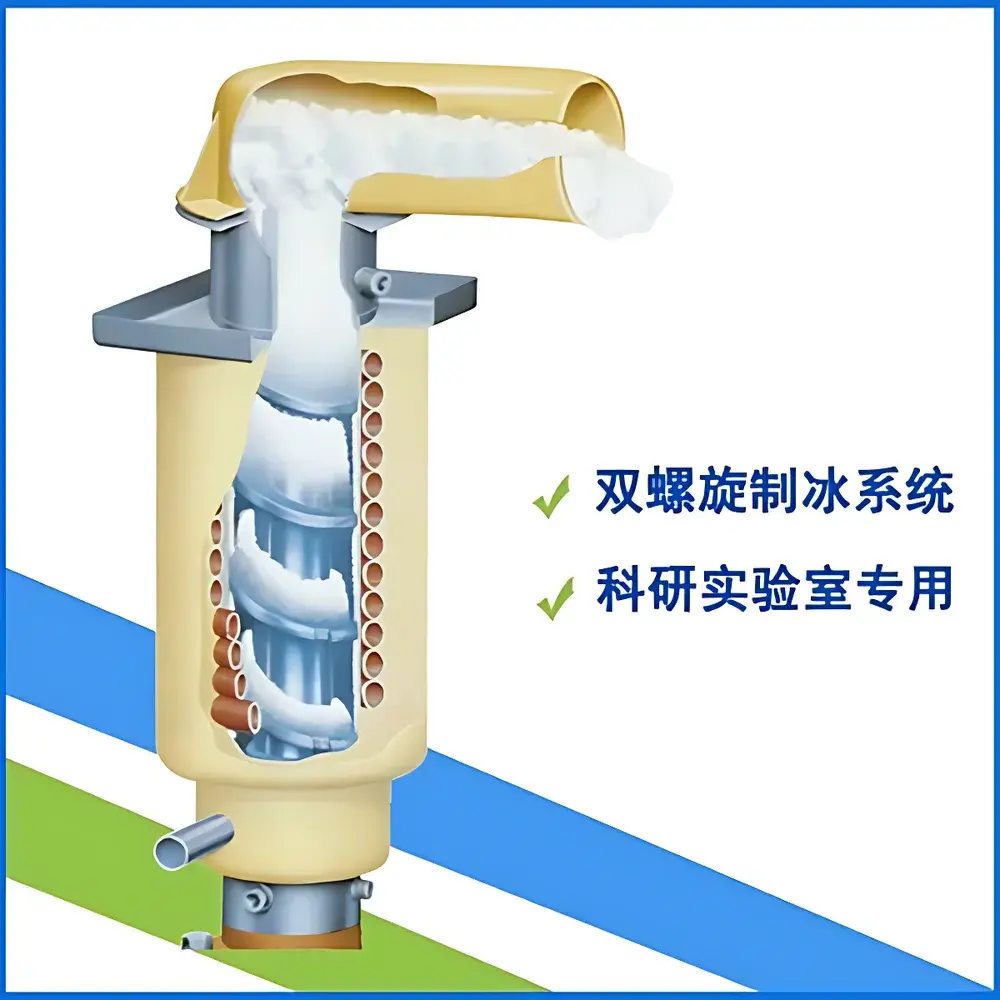
| Drive System | Dual-Spiral Extrusion Mechanism |
| Enclosure Material | Stainless Steel (304) |
| Control System | Microprocessor-Based with Real-Time Monitoring & Auto-Recovery Logic |
Overview
The Coolium FM180 Laboratory-Grade Flake Ice Maker is an engineered solution designed specifically for scientific laboratories requiring consistent, high-purity, rapidly cooling flake ice under controlled environmental conditions. Unlike conventional cube or tube ice machines, the FM180 employs a dual-spiral extrusion freezing mechanism—based on continuous film freezing and mechanical shearing—to produce irregular, sub-5 mm flake ice with high surface-area-to-volume ratio and minimal air entrapment. This morphology ensures rapid thermal transfer, uniform bath temperature distribution, and effective contact with sample containers, making it ideal for enzymatic assays, electrophoresis, PCR setup, tissue homogenization, and cold-chain sample handling. The unit operates without water recirculation loops or chemical additives, preserving sample integrity and meeting baseline requirements for GLP-compliant cold preparation workflows.
Key Features
- Dual-spiral extrusion system enables compact footprint (0.47 m² floor space) while maintaining 180 kg/24h output—optimized for space-constrained lab environments.
- Five-stage gear reduction drive coupled with imported hermetic compressor (5/8 HP) ensures stable rotational torque, low acoustic emission (<58 dB(A) at 1 m), and extended service life under continuous duty cycles.
- Stainless steel 304 enclosure resists corrosion from saline solutions, cleaning agents, and ambient humidity; all internal ice-contact surfaces are electropolished and non-porous.
- Microprocessor-based control board monitors evaporator temperature, condenser pressure, water flow rate, and power phase integrity in real time; initiates fault logging and graceful shutdown upon anomaly detection.
- Auto-recovery function resumes operation from last known operational state after power interruption or transient water supply loss—no manual reset required.
- Integrated ground-fault circuit interrupter (GFCI) and thermal cut-off switches comply with IEC 61000-6-3 (EMC) and IEC 60335-1 (safety) standards for laboratory equipment.
Sample Compatibility & Compliance
The FM180 produces flake ice with particle size distribution centered at 1.2–3.8 mm (measured per ASTM D4169-22 Annex A3 sieve analysis protocol), enabling penetration into narrow-necked vessels, cryovial racks, and centrifuge buckets. Ice purity conforms to ISO 8573-1:2010 Class 4 for solid particulates and meets USP conductivity limits (<1.3 µS/cm) when fed with deionized water (resistivity ≥ 15 MΩ·cm). While not certified for clinical use under FDA 21 CFR Part 820, the unit satisfies key design controls referenced in ISO 13485:2016 Annex C for ancillary lab support equipment. Documentation includes factory calibration certificates for temperature sensors (±0.3°C accuracy) and flow meters (±3% full-scale).
Software & Data Management
The FM180 does not include network connectivity or cloud-based software. Its embedded controller stores up to 32 event logs—including start/stop timestamps, compressor run hours, fault codes (e.g., E03 = low water flow, E07 = high head pressure), and cumulative ice production—accessible via front-panel LCD with scroll navigation. Audit trails are retained for ≥12 months without battery backup. For labs operating under 21 CFR Part 11 requirements, optional RS-485 Modbus RTU interface (sold separately) allows integration with validated building management systems (BMS) or LIMS for electronic record retention and user-authenticated data export.
Applications
- Preparation of ice baths for temperature-sensitive biochemical reactions (e.g., restriction digests, ligations, protein crystallization trials).
- Cooling of analytical instruments’ sample compartments—including HPLC autosamplers, mass spectrometer ion sources, and rheometer Peltier stages.
- Short-term preservation of primary cell suspensions, biopsy specimens, and RNA-extraction intermediates prior to cryostorage.
- Calibration verification of digital thermometers and infrared pyrometers using ice-point reference (0.00 ± 0.02°C, traceable to NIST SRM 1990).
- Supporting ISO/IEC 17025-accredited testing labs where documented cold-source consistency is required for method validation reports.
FAQ
What type of water supply is recommended for optimal ice quality and system longevity?
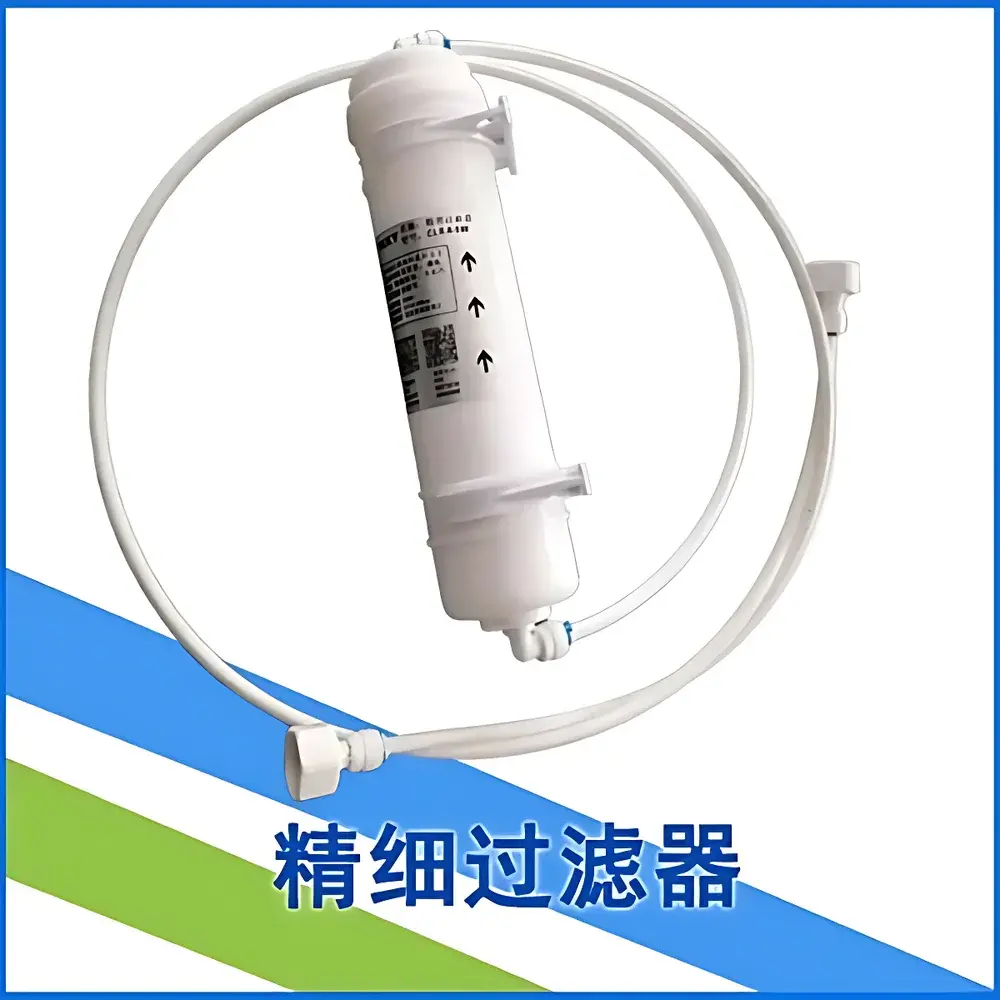
Deionized or reverse-osmosis water (conductivity 120 ppm CaCO₃ requires inline softening or periodic descaling using citric acid-based solutions per maintenance schedule.
Does the FM180 require a dedicated electrical circuit?
Yes. A dedicated 220 V / 50 Hz / 16 A circuit with Type B miniature circuit breaker (MCB) is required. Voltage fluctuation beyond ±10% may trigger protective shutdown; use of an online UPS with sine-wave output is advised in facilities with unstable grid supply.
Can the unit be installed in a ventilated cabinet or enclosed utility room?
No. The air-cooled condenser requires unobstructed ambient airflow: minimum 50 cm clearance on all sides and ≥2.4 m ceiling height. Ambient temperature must remain between 10–32°C; operation above 35°C reduces output by ~12% per 5°C rise.
Is routine maintenance required, and what intervals apply?
Yes. Daily visual inspection of water inlet filter; bi-weekly cleaning of condenser coil with compressed air; quarterly descaling and evaporator surface wipe-down; annual compressor oil level and refrigerant pressure verification by certified technician.
How is ice quality verified during qualification?
Ice samples should be analyzed for particle size distribution (ASTM D4169-22), meltwater conductivity (USP ), and absence of microbial contamination (ISO 11731:2019, if used for sterile applications). A minimum of three consecutive 24-hour production runs must demonstrate ≤5% deviation from rated capacity.



