
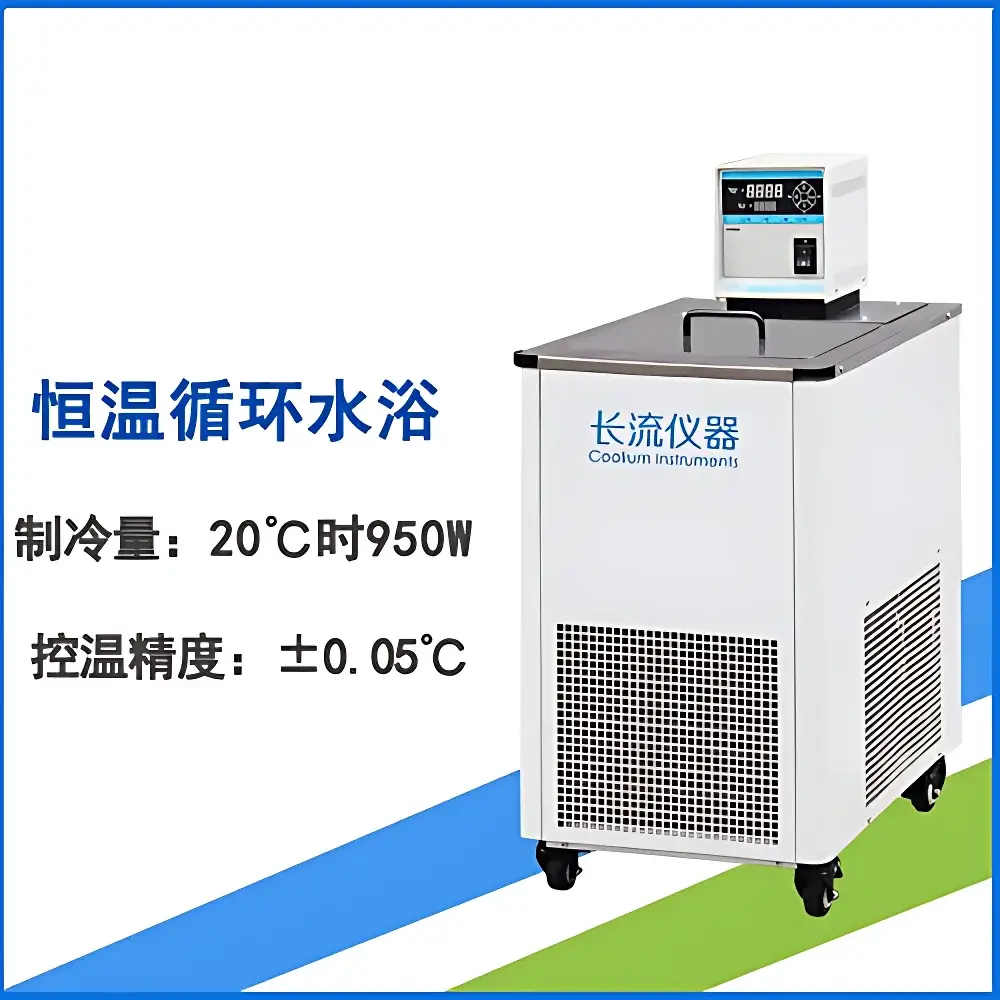
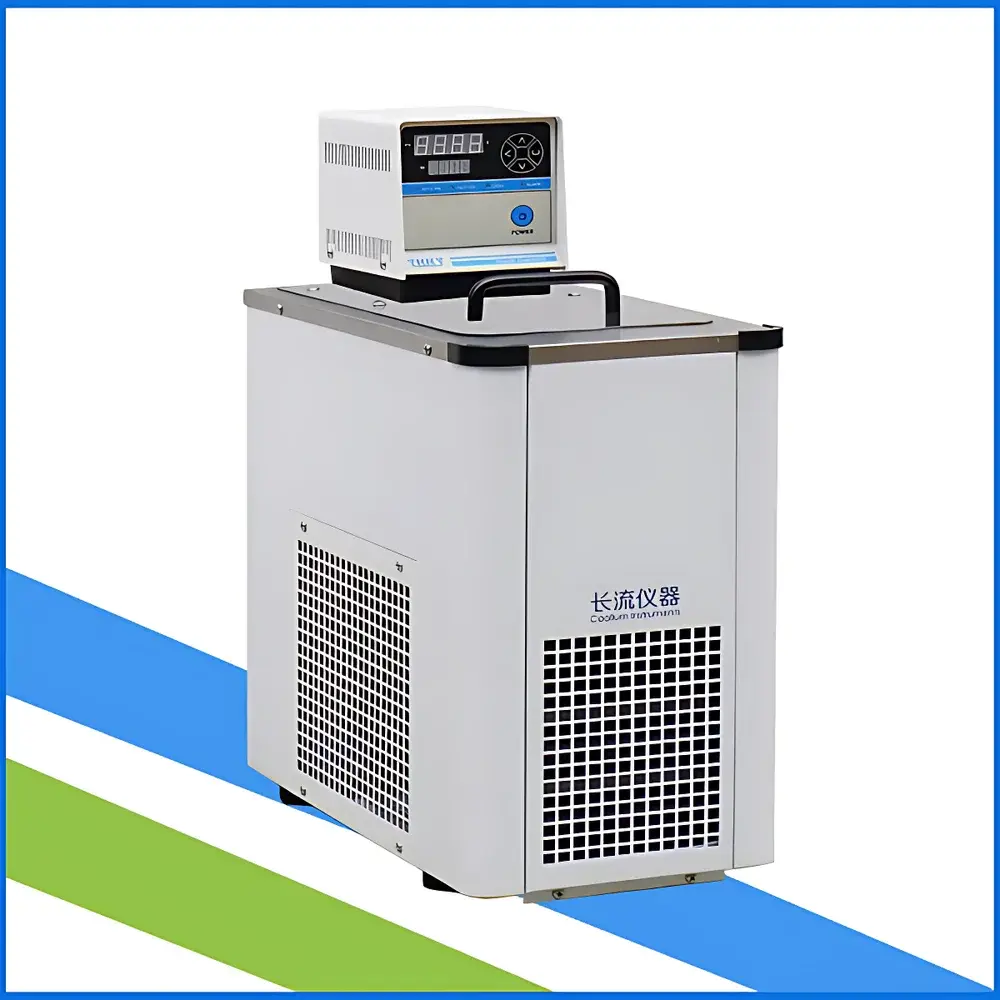
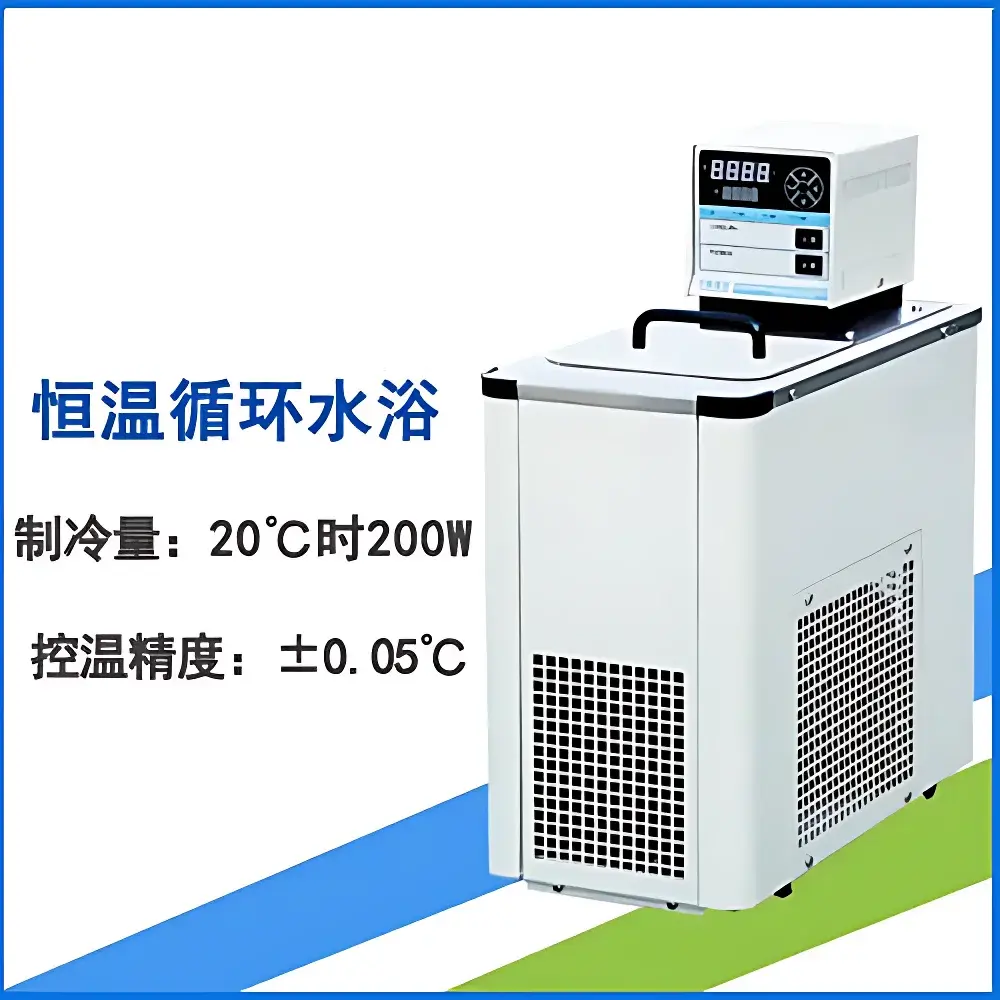
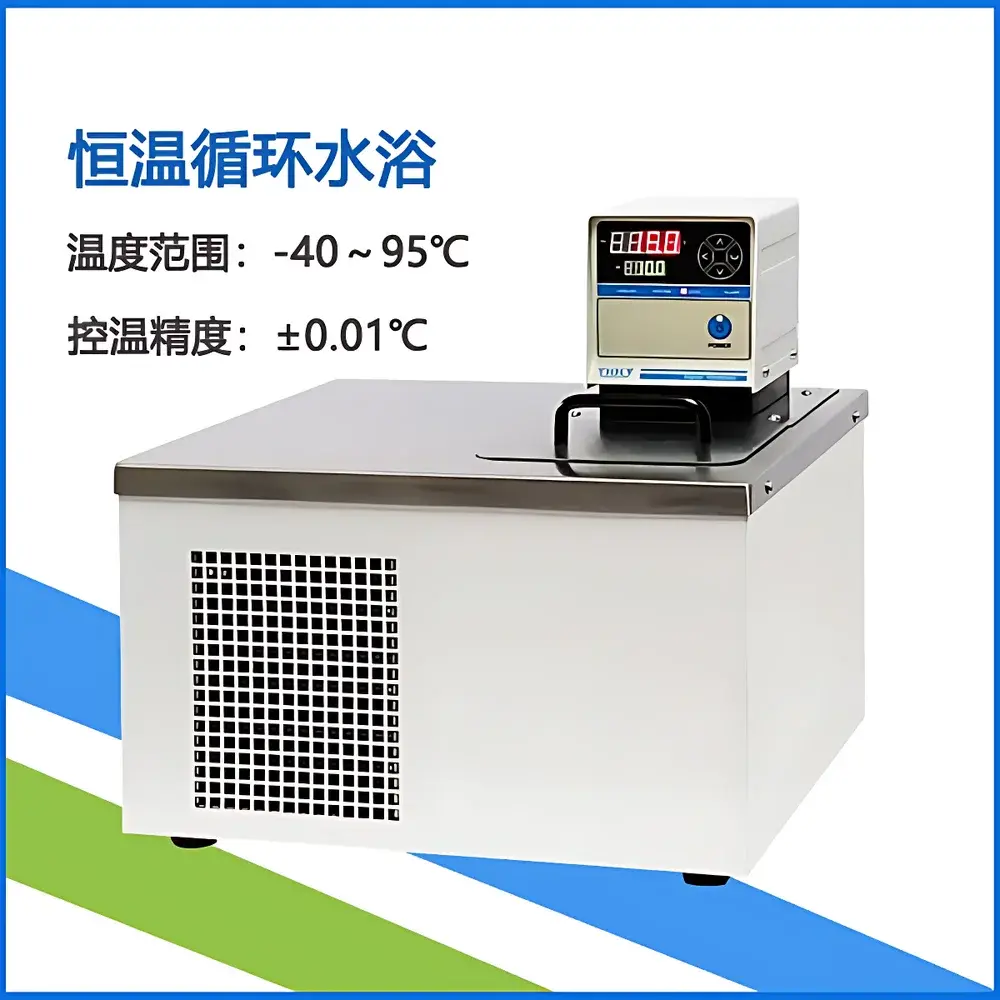
Coolium HX-4020 Vertical Refrigerated Circulating Chiller & Constant-Temperature Water Bath
| Brand | Coolium |
|---|---|
| Origin | Beijing, China |
| Manufacturer Type | Authorized Distributor |
| Product Category | Domestic |
| Model | HX-4020 |
| Price | ¥29,800 |
| Temperature Range | −40 to 95 °C |
| Temperature Stability | ±0.1 °C |
| Bath Volume | 20 L |
| Heating Power | 950 W (at 20 °C) |
| External Dimensions (W×D×H) | 380 × 580 × 775 mm |
| Circulation Flow Rate | 5–10 L/min |
| Circulation Pressure | 0.25 bar |
| Reservoir Depth | 250 mm |
| Power Supply | AC 220 V / 50 Hz / 16 A |
| Net Weight | 66 kg |
| Display Resolution | 0.1 °C or 0.01 °C selectable |
| Safety Features | Over-temperature, short-circuit, and open-circuit alarm |
| Optional | RS485 communication interface, auto-refill system |
Overview
The Coolium HX-4020 is a vertically oriented, dual-function refrigerated circulating chiller and precision constant-temperature water bath engineered for laboratory environments requiring stable thermal control across an exceptionally wide operational range (−40 °C to +95 °C). Unlike conventional water baths relying solely on resistive heating, the HX-4020 integrates a hermetically sealed refrigeration compressor, high-efficiency heat exchanger, and a variable-speed circulation pump into a single compact chassis—enabling active cooling without external coolant or tap-water dependency. Its operation follows closed-loop thermodynamic principles: refrigerant compression and phase change absorb heat from the bath fluid, while PID-controlled electric heating elements provide fine-tuned compensation during ramp-up or low-load conditions. This hybrid architecture ensures rapid temperature equilibration, minimal overshoot, and long-term thermal stability—critical for applications involving sensitive biological samples, polymer rheology, or calibration of temperature-dependent instrumentation.
Key Features
- Integrated refrigeration and heating system with independent compressor and 950 W heating capacity—eliminates need for auxiliary chillers or cold water supply.
- PID-based digital temperature controller with dual-resolution display (0.1 °C standard; optional 0.01 °C mode) and real-time deviation monitoring.
- 20 L stainless steel reservoir with 250 mm depth, optimized for immersion of large-volume vessels or external equipment interfaces.
- Adjustable circulation flow (5–10 L/min) and regulated output pressure (0.25 bar), compatible with back-pressure-sensitive instruments such as electrophoresis power supplies, viscometers, and rotary evaporators.
- Comprehensive safety architecture: over-temperature cutoff, refrigerant pressure monitoring, electrical fault detection (short/open circuit), and dry-run protection for pump integrity.
- Modular rear-panel ports support standardized quick-connect fittings (¼″ NPT or M12); optional RS485 interface enables integration into centralized lab automation systems compliant with Modbus RTU protocol.
Sample Compatibility & Compliance
The HX-4020 accommodates aqueous solutions, silicone oils, and ethylene glycol–water mixtures (up to 30 % v/v) within its fluid path—validated for continuous operation with non-corrosive, low-viscosity heat-transfer media. Its design conforms to IEC 61010-1:2010 for electrical safety in laboratory equipment and meets EMC requirements per EN 61326-1:2013. While not certified for medical device use under ISO 13485, the unit supports GLP-compliant workflows through configurable audit trails (when paired with RS485-connected data loggers), and its ±0.1 °C stability satisfies temperature uniformity criteria referenced in ASTM E1112 (for incubator validation) and USP (for thermal calibration baths). The absence of moving parts in the bath chamber minimizes vibration transmission—essential for optical microscopy staging or microfluidic platform coupling.
Software & Data Management
The HX-4020 operates autonomously via its onboard microcontroller but supports external supervision through optional RS485 serial communication. When interfaced with host software (e.g., LabVIEW, MATLAB, or custom SCADA platforms), users can schedule multi-step temperature profiles, record time-stamped setpoint/actual temperature logs, and trigger alarms via programmable thresholds. All configuration parameters—including PID coefficients, alarm hysteresis, and display resolution—are stored in non-volatile memory and survive power cycles. For regulated environments, third-party data acquisition systems may apply 21 CFR Part 11–compliant electronic signatures and audit trail generation, provided the host application implements required user authentication, change logging, and data integrity safeguards.
Applications
- Temperature-controlled electrophoresis: maintains consistent buffer viscosity and prevents gel distortion during high-voltage runs.
- Rheological testing: serves as thermal jacket for rotational viscometers and capillary rheometers operating below ambient.
- Condenser cooling for rotary evaporation: replaces tap-water systems with precise sub-zero cooling for low-boiling-point solvents (e.g., diethyl ether, pentane).
- Calibration of thermistors, RTDs, and infrared sensors across extended ranges using traceable reference standards.
- Cell culture incubator pre-conditioning and cryopreservation equipment cold-chain verification.
- Material testing: thermal cycling of elastomers, adhesives, and composites per ISO 6270 or ASTM D6988 protocols.
FAQ
Can the HX-4020 operate continuously at −40 °C?
Yes—its compressor and refrigerant circuit are rated for sustained operation at minimum setpoint, provided ambient temperature remains ≤30 °C and ventilation clearance (≥100 mm rear/side) is maintained.
Is deionized water recommended as bath fluid?
Deionized water may accelerate corrosion of stainless steel components due to increased electrochemical activity; a 20–30 % propylene glycol mixture is preferred for sub-zero operation and extended service life.
Does the unit meet CE marking requirements?
It complies with essential requirements of the EU Low Voltage Directive (2014/35/EU) and EMC Directive (2014/30/EU); however, formal CE marking is issued only by authorized Notified Bodies upon request and full technical file review.
What maintenance intervals are specified?
Compressor oil and refrigerant charge require inspection every 24 months; circulation filter cleaning is recommended quarterly; annual verification of temperature sensor drift against NIST-traceable references is advised for metrology-critical use.
Can the bath be used without circulation mode?
Yes—the unit supports static bath operation (pump disabled) for immersion-only applications; however, temperature homogeneity across the 20 L volume is reduced to ±0.3 °C without forced convection.



