
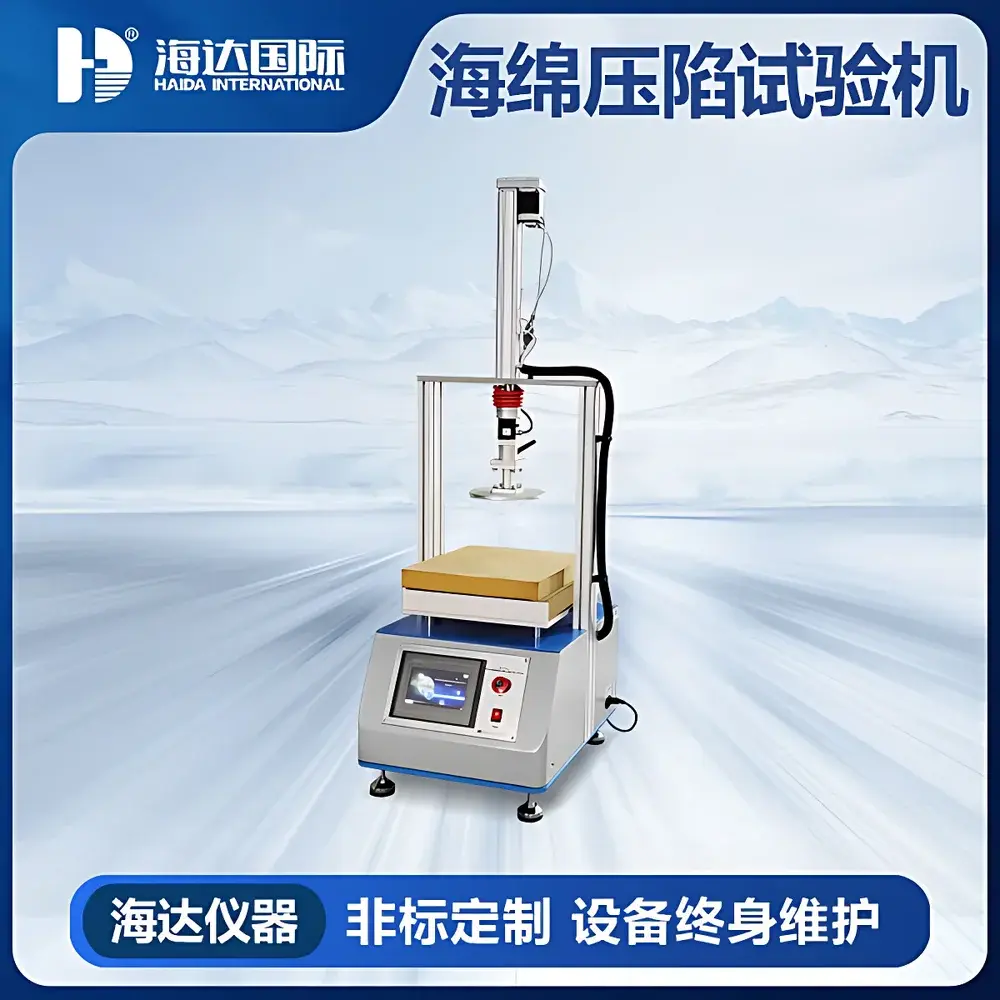
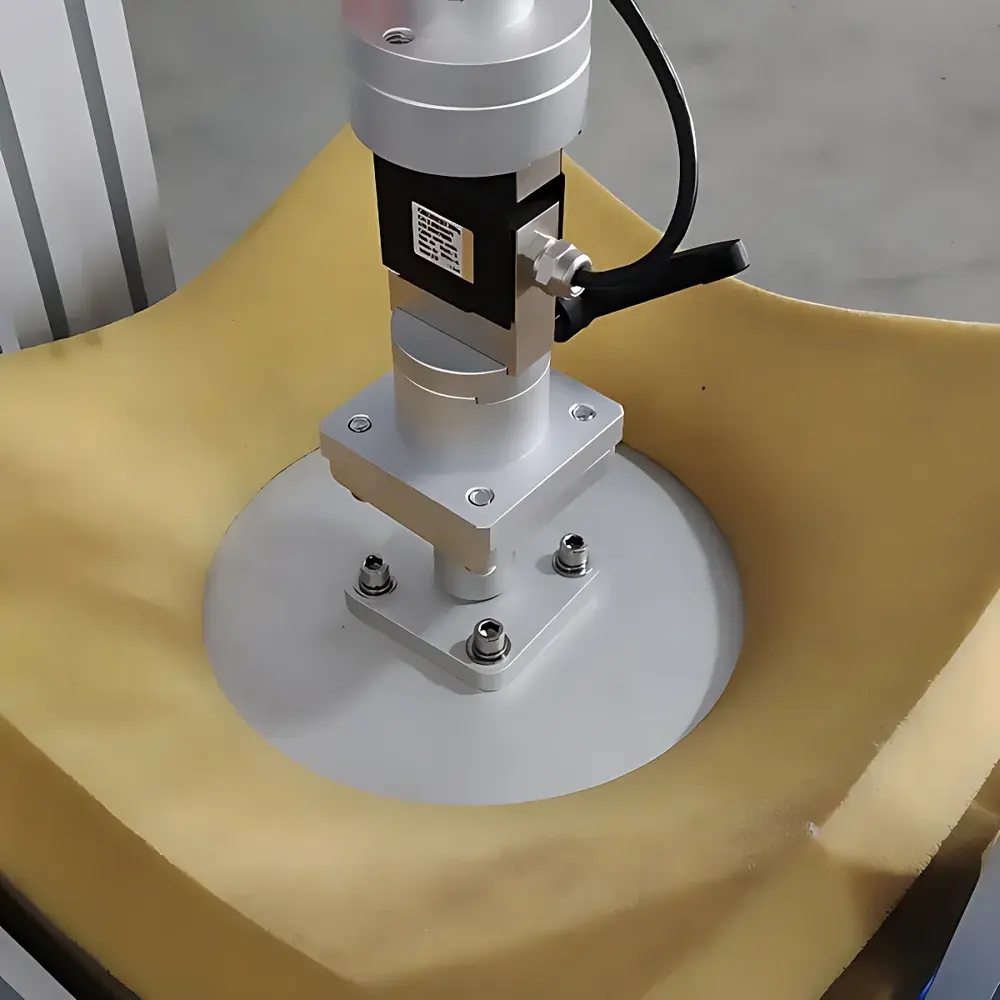
HAIDA HD-F750-5 Foam Indentation Recovery Time Tester
| Brand | HAIDA INTERNATIONAL |
|---|---|
| Origin | Guangdong, China |
| Manufacturer Type | Direct Manufacturer |
| Product Origin | Domestic (China) |
| Model | HAIDA HD-F750-5 Foam Indentation Recovery Time Tester |
| Quotation | Upon Request |
| Load Capacity | 2 kN |
| Control System | PLC-based |
| Display | Touchscreen HMI |
| Test Speed Range | 20–2000 mm/min |
| Load Resolution | 1/250,000 FS |
| Load Accuracy | ≤ ±0.5% FS |
| Maximum Test Stroke | 350 mm |
| Sample Dimensions (L×W×H) | ~380 × 380 × 100 mm |
| Overall Dimensions (L×W×H) | ~600 × 500 × 1600 mm |
| Weight | ~40 kg |
| Power Supply | 1∮ AC 220 V |
| Power Consumption | ~300 W |
| Data Interface | USB |
| Output Format | Standardized test reports (CSV/PDF) |
| Compliant Standards | GB/T 26392–2011 |
Overview
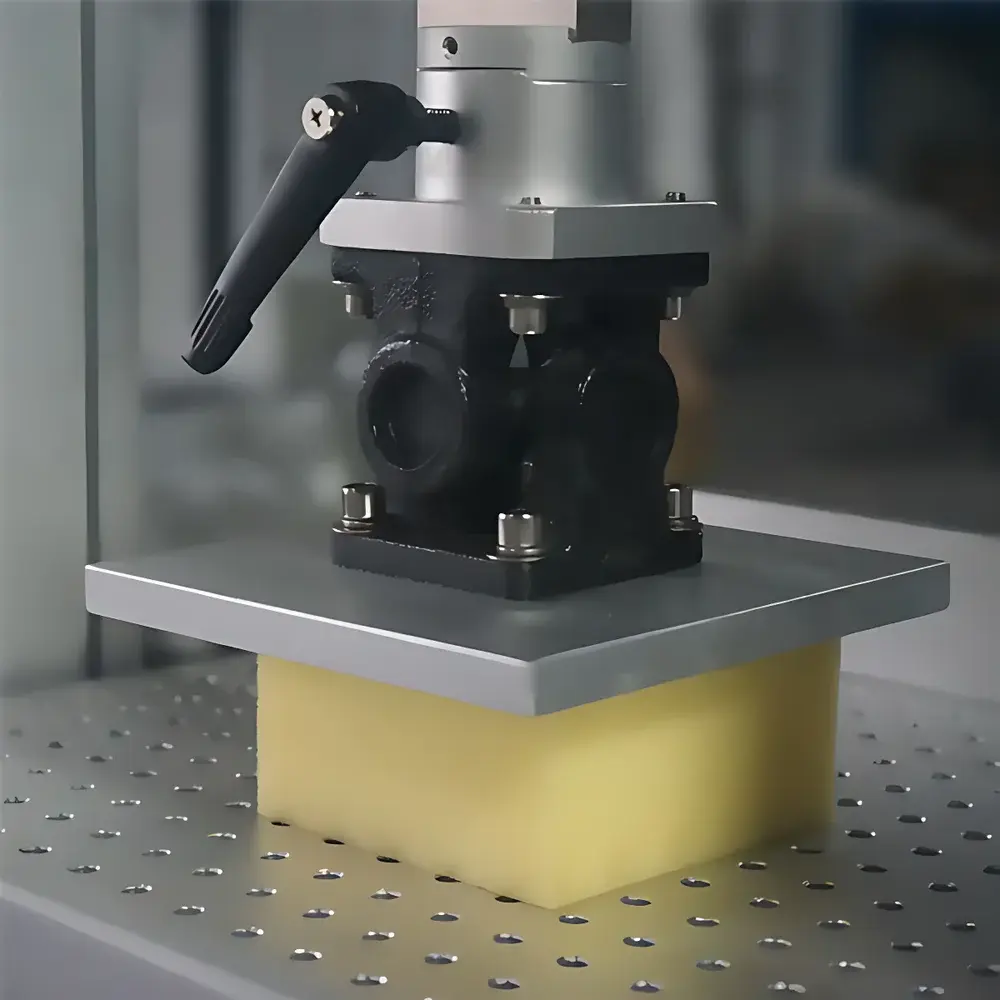
The HAIDA HD-F750-5 Foam Indentation Recovery Time Tester is a precision-engineered mechanical testing instrument designed to quantify the viscoelastic recovery behavior of flexible polymeric foams and sponge materials under controlled compressive loading. Based on the principle of dynamic indentation and time-resolved force-displacement tracking, the system applies a defined preload (4.5 N), followed by rapid compression to 75% of the initial specimen thickness at a nominal speed of (1000 ± 100) mm/min. After a standardized dwell period of 60 seconds, the indenter retracts at the same rate to a position corresponding to 5% residual deformation, initiating high-resolution timing of the material’s return to the original preload threshold. This protocol directly measures the time required for the foam matrix to regain structural equilibrium—termed “recovery time”—a critical parameter in evaluating resilience, hysteresis, and long-term fatigue resistance in cushioning, seating, packaging, and automotive interior applications.
Key Features
- High-precision electromechanical actuation using SMC high-accuracy electric cylinder, delivering repeatable stroke control and minimal mechanical backlash across the full speed range (20–2000 mm/min).
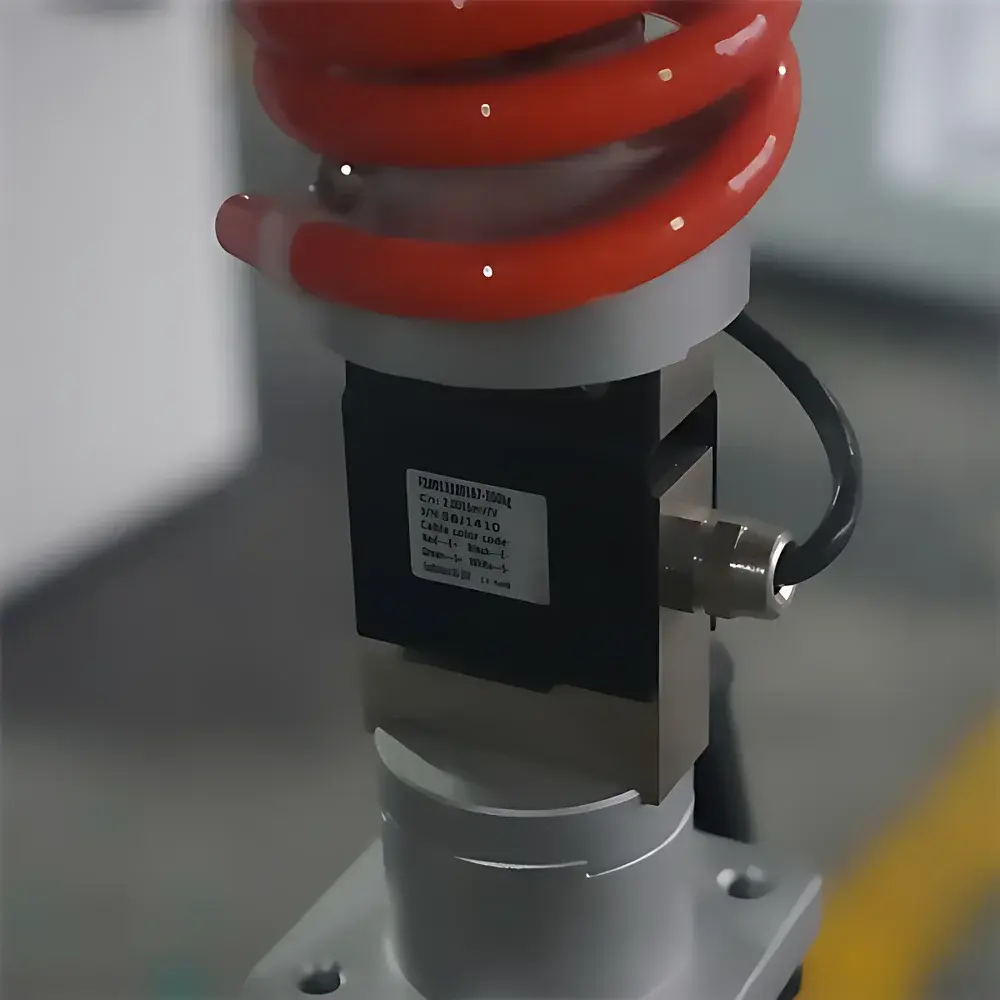
- Imported German load cell (2 kN capacity, ≤ ±0.5% FS accuracy, 1/250,000 internal resolution) ensures traceable force measurement aligned with ISO 7500-1 Class 0.5 requirements.
- Industrial-grade PLC control architecture integrated with a 7-inch capacitive touchscreen HMI, enabling intuitive parameter configuration, real-time displacement/force curve visualization, and one-touch test execution.
- Rigid A3 steel frame fabricated via CNC laser cutting and precision bending, finished with electrostatic powder coating (gloss white + metallic blue) for corrosion resistance and long-term dimensional stability.
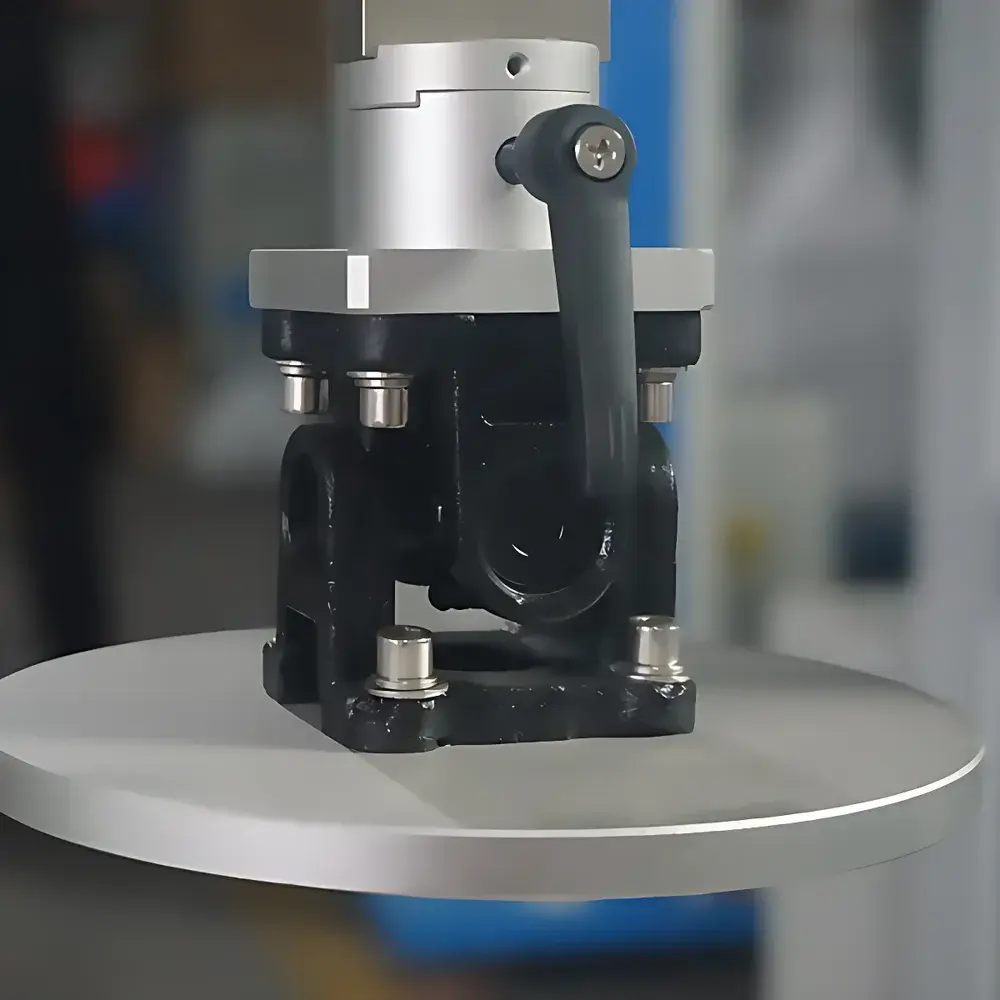
- Dedicated aluminum compression platen (φ203 mm, anodized surface) optimized for uniform stress distribution and minimal edge effects during standard-compliant indentation testing.
- Onboard data logging with timestamped force/displacement/time records, exportable via USB to CSV or PDF formats for external analysis and audit trail generation.
Sample Compatibility & Compliance
The HD-F750-5 accommodates standard foam specimens up to 380 mm × 380 mm × 100 mm (L×W×H), conforming to specimen geometry requirements specified in GB/T 26392–2011 (“Determination of Indentation Recovery Time of Flexible Polyurethane Foams”). The system supports both single-point and grouped batch testing protocols, with automated pass/fail logic based on user-defined recovery time thresholds. While primarily calibrated and validated against Chinese national standards, its mechanical and metrological design aligns with foundational principles referenced in ASTM D3574 (Section 7 – Resilience Testing), ISO 2439 (Indentation Hardness and Recovery), and EN 1972 (Foam Cushioning Performance). The instrument’s hardware architecture and software event logging support GLP-compliant operation when deployed in regulated R&D or QC environments.
Software & Data Management
The proprietary HAIDA TestMaster™ firmware provides full control over test sequence parameters—including preload magnitude, indentation depth (% of initial thickness), dwell duration, retraction speed, and recovery trigger threshold. All test sessions are assigned unique identifiers with embedded metadata (operator ID, date/time, sample ID, environmental notes). Raw data files include synchronized force (N), displacement (mm), and elapsed time (ms) columns at ≥100 Hz sampling rate. The software supports multi-sample comparative overlays, statistical summaries (mean, SD, CV%), unit conversion (N/lbf, mm/in, s/min), and customizable report templates compliant with internal QA documentation workflows. No cloud dependency or third-party licensing is required; all processing occurs locally on the embedded controller.
Applications
- Quality assurance of flexible polyurethane (PU), polyethylene (PE), and viscoelastic memory foams used in furniture, mattresses, and automotive seating.
- Formulation development and batch-to-batch consistency verification in foam manufacturing facilities.
- Resilience benchmarking for packaging materials subjected to transient compression during logistics handling.
- Regulatory compliance testing per GB/T 26392–2011 and supporting technical documentation for product certification submissions.
- Academic research into polymer network relaxation kinetics and time-dependent mechanical response modeling.
FAQ
What standards does the HD-F750-5 comply with?
The instrument implements the test methodology defined in GB/T 26392–2011 and is mechanically compatible with core requirements of ASTM D3574 (Section 7), ISO 2439, and EN 1972.
Can the recovery time threshold be adjusted beyond 4.5 N?
Yes—the preload and recovery trigger force are fully programmable within the 0.1–2000 N range, allowing method adaptation for non-standard materials or internal specifications.
Is calibration traceability provided with the system?
Each unit ships with a factory calibration certificate referencing NIST-traceable force standards; optional annual recalibration services with accredited third-party certificates are available.
Does the system support automated reporting for ISO/IEC 17025 laboratories?
While the HD-F750-5 does not natively implement 21 CFR Part 11 electronic signatures, its deterministic test logic, immutable raw data export, and operator-auditable event logs meet foundational data integrity requirements for ISO/IEC 17025 Clause 7.7.
What maintenance is required for long-term accuracy?
Routine verification includes quarterly load cell zero-check, annual mechanical alignment check of the indenter axis, and biannual lubrication of the linear guide system per the maintenance manual.



