
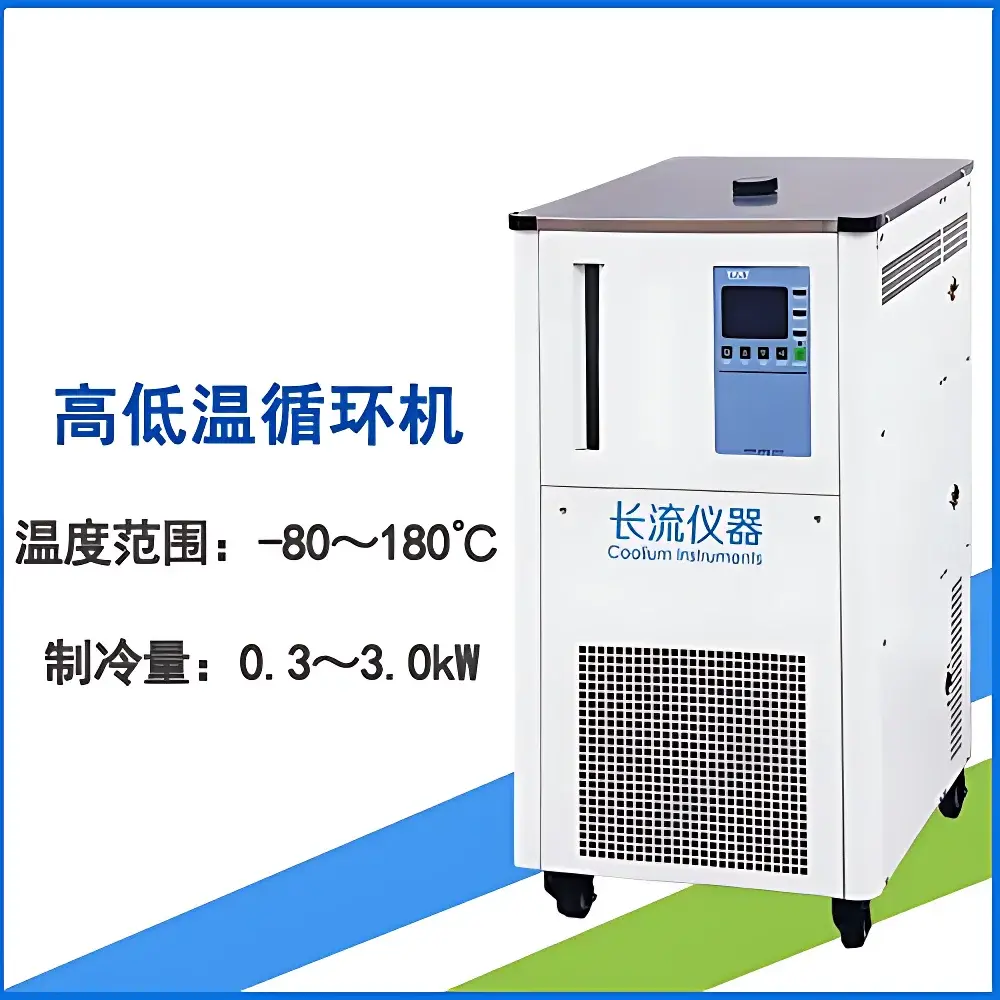
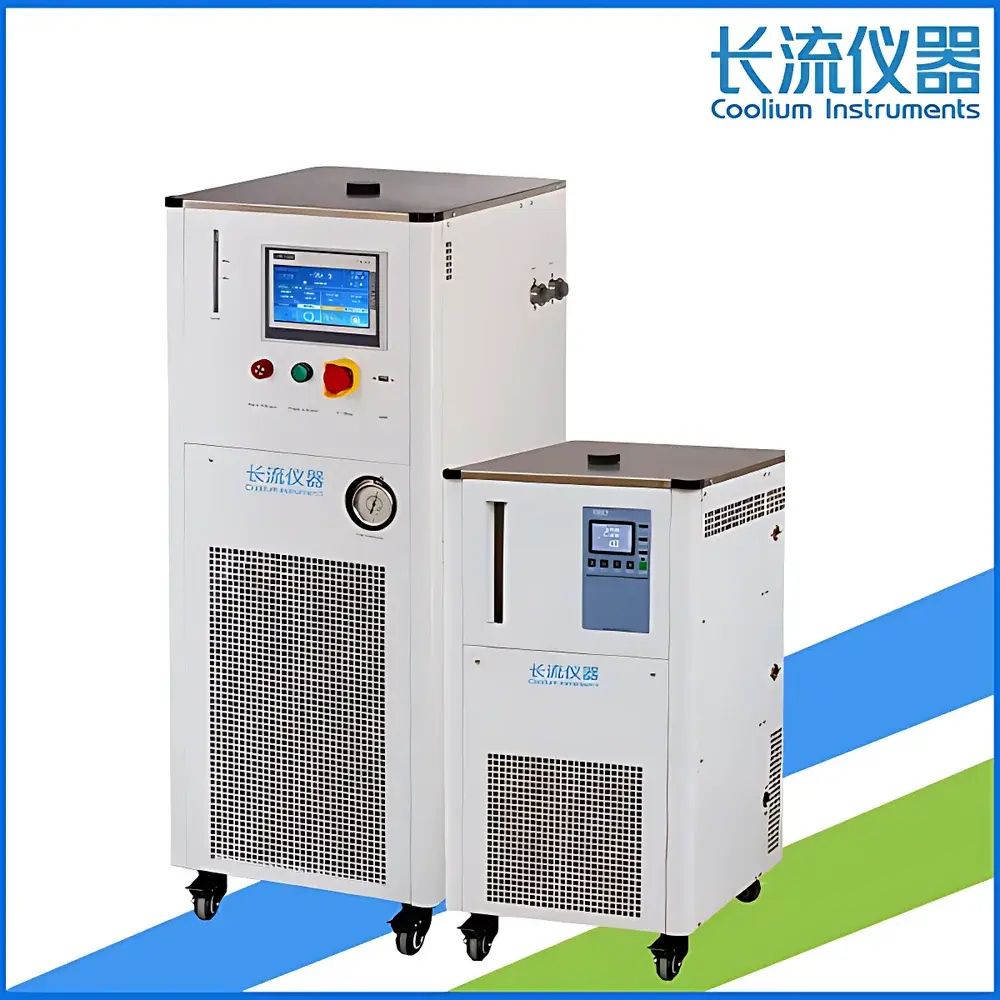
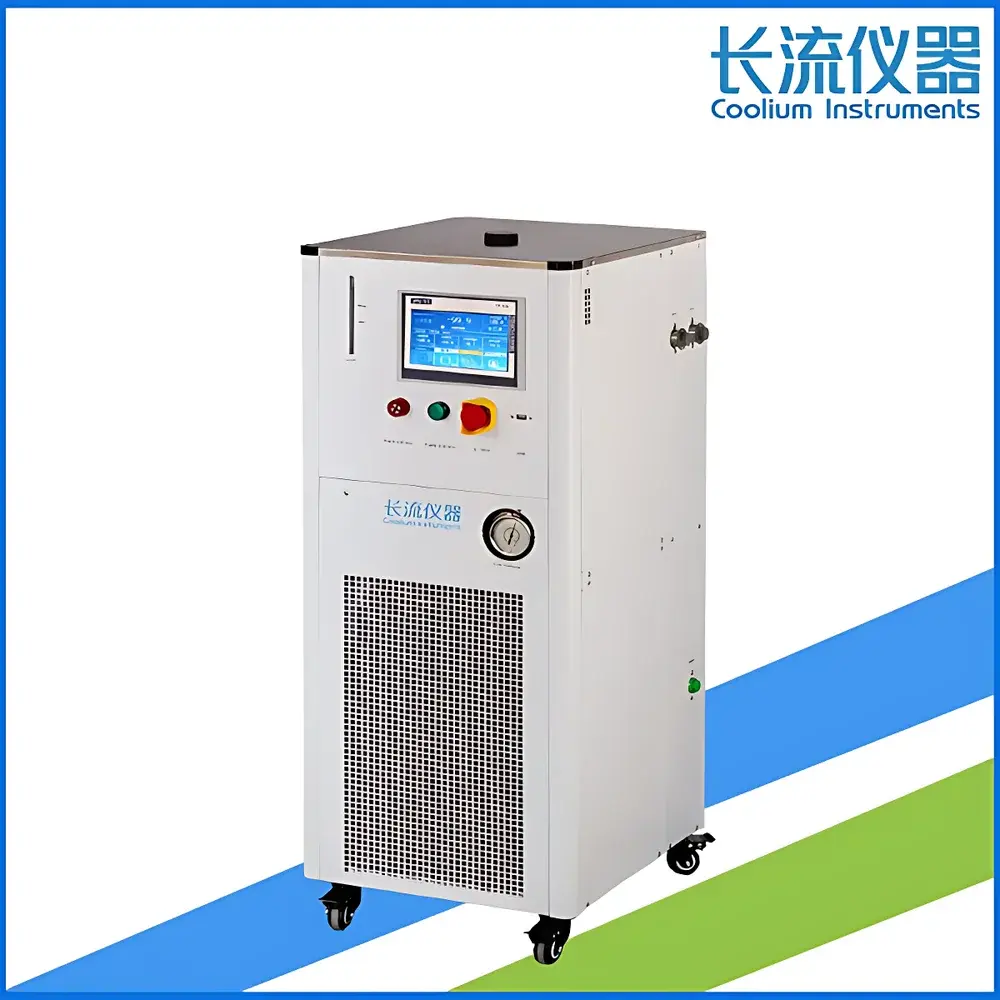
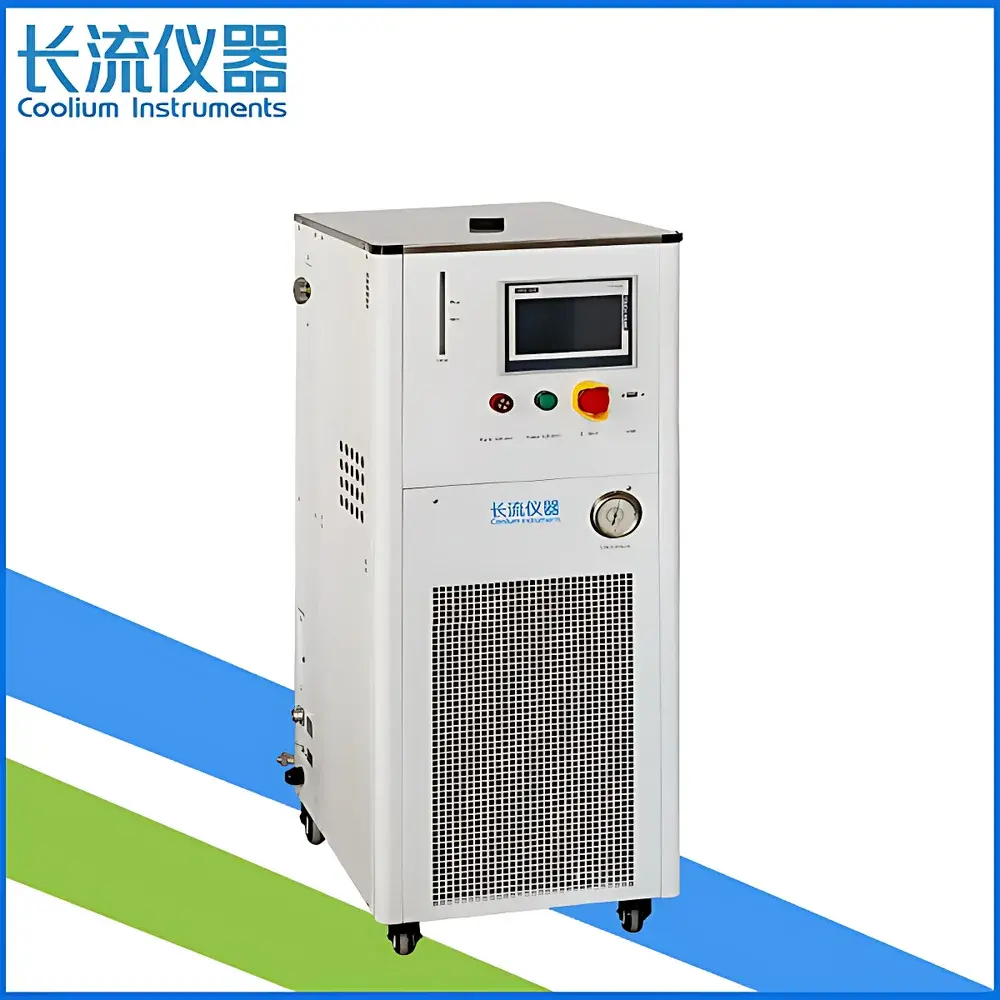
Coolium CH-8055T High-Low Temperature Circulating Chiller
| Brand | Coolium |
|---|---|
| Origin | Beijing, China |
| Model | CH-8055T |
| Instrument Type | Integrated Circulating Chiller |
| Cooling Method | Air-Cooled |
| Temperature Range | −80 °C to +180 °C |
| Temperature Stability | ±0.1 °C |
| Refrigeration Capacity | 0.3–3.0 kW |
| Heating Power | 5.5 kW |
| Circulation Pressure | 1.0 bar |
| Flow Rate | 30 L/min |
| Reservoir Volume | 16 L |
| Power Supply | AC 380 V, 50 Hz, 15 kW |
| Dimensions (W×D×H) | 580 × 750 × 1590 mm |
Overview
The Coolium CH-8055T is an integrated high-low temperature circulating chiller engineered for precise, stable thermal management of external process equipment in laboratory and pilot-scale industrial environments. It operates on a closed-loop thermofluid circulation principle—combining vapor-compression refrigeration with electric resistance heating—to deliver continuous, bidirectional temperature control across an exceptionally wide operational range of −80 °C to +180 °C. Unlike conventional chillers limited to sub-ambient cooling or dedicated heaters restricted to elevated temperatures, the CH-8055T eliminates the need for media substitution or system reconfiguration when transitioning between cryogenic and high-temperature regimes. Its fully sealed fluid circuit incorporates an expansion tank that maintains the heat transfer medium near ambient temperature regardless of loop setpoint, preventing moisture ingress at low temperatures and thermal degradation or oil mist formation at elevated temperatures. This architecture ensures long-term fluid integrity, consistent thermal performance, and compliance with ISO 17025-relevant environmental stability requirements for calibration-critical applications.
Key Features
- Wide-range dual-mode thermal control: seamless transition from −80 °C to +180 °C without fluid exchange or manual intervention
- High-efficiency brazed plate heat exchanger for compact footprint and superior thermal transfer coefficient
- Integrated high-head circulation pump delivering stable 30 L/min flow at 1.0 bar pressure—suitable for multi-point distribution and elevated or remote load configurations
- Real-time liquid level monitoring via direct-view window and electronic sensor, preventing dry-run operation and enabling predictive maintenance
- Multi-layer safety architecture: over-temperature, over-current, ground-fault, emergency stop, and high-temperature pre-cooling protection circuits
- Thermally insulated reservoir (16 L capacity) with low-volatility silicone-based or synthetic heat transfer fluid compatibility
- Robust air-cooled condensing system designed for continuous duty in ambient conditions up to 35 °C
Sample Compatibility & Compliance
The CH-8055T is routinely deployed as a thermal source/sink for jacketed reactors, vacuum chambers, calorimeters, spectroscopic cells, and material testing rigs in pharmaceutical development (ICH Q5, Q7), fine chemical synthesis, and polymer characterization labs. Its closed-loop design meets GLP and GMP prerequisites for traceability and contamination control. While not intrinsically rated for hazardous area use, it complies with IEC 61000-6-3 (EMC emission standards) and IEC 61000-6-2 (immunity), and supports audit-ready operation under FDA 21 CFR Part 11 when paired with validated external data logging systems. The unit’s ±0.1 °C temperature stability and <0.5 °C setpoint accuracy align with ASTM E220 and ISO/IEC 17025 clause 5.4.2 for equipment qualification in accredited laboratories.
Software & Data Management
The CH-8055T features a programmable PID controller with dual-setpoint ramp-soak capability, RS485 Modbus RTU interface (standard), and optional Ethernet/IP or Profibus DP modules for integration into centralized SCADA or LIMS platforms. All temperature profiles, alarm logs, and runtime statistics are timestamped and stored internally for ≥30 days. When connected to compliant third-party software (e.g., LabVIEW, DeltaV, or custom Python-based DAQ), the chiller supports full electronic record retention—including operator ID, parameter changes, and event-triggered snapshots—meeting ALCOA+ principles for data integrity. Audit trail functionality is available via firmware update v2.4+, satisfying requirements for 21 CFR Part 11-compliant environments when used with appropriate access controls and digital signature protocols.
Applications
- Temperature-controlled reaction optimization in API synthesis (e.g., Grignard, lithiation, hydrogenation)
- Stability testing of biologics and formulated drugs per ICH Q1A(R3) guidelines
- Cryogenic conditioning of elastomers, composites, and battery electrode materials prior to mechanical testing
- Thermal cycling of optical components and semiconductor packaging substrates
- Pre-cooling of high-temperature vacuum distillation columns prior to startup
- Calibration support for differential scanning calorimeters (DSC), thermogravimetric analyzers (TGA), and rheometers requiring extended thermal range validation
FAQ
Can the CH-8055T cool from +180 °C directly to −80 °C without intermediate steps?
Yes—the system’s pre-cooling logic enables rapid thermal quenching from maximum setpoint to minimum setpoint without fluid replacement or hardware modification.
What heat transfer fluids are compatible with the −80 °C to +180 °C range?
Recommended fluids include Dowtherm J, Marlotherm SH, or Galden HT270; water-glycol mixtures are not suitable below −20 °C due to freezing risk and viscosity limitations.
Is external insulation of the circulation lines required?
For optimal energy efficiency and condensation prevention below 0 °C—or to minimize thermal drift above 100 °C—industrial-grade flexible insulation (e.g., Armaflex HT) is strongly advised on all external piping.
Does the unit meet CE or UL certification requirements?
The CH-8055T carries CE marking per Machinery Directive 2006/42/EC and Low Voltage Directive 2014/35/EU; UL 61010-1 listing is available upon request for North American installations.
How is calibration verification performed?
Users may perform in-situ verification using NIST-traceable PT100 probes inserted at designated test ports; factory calibration certificates (including as-found/as-left data) are supplied with each unit.



