
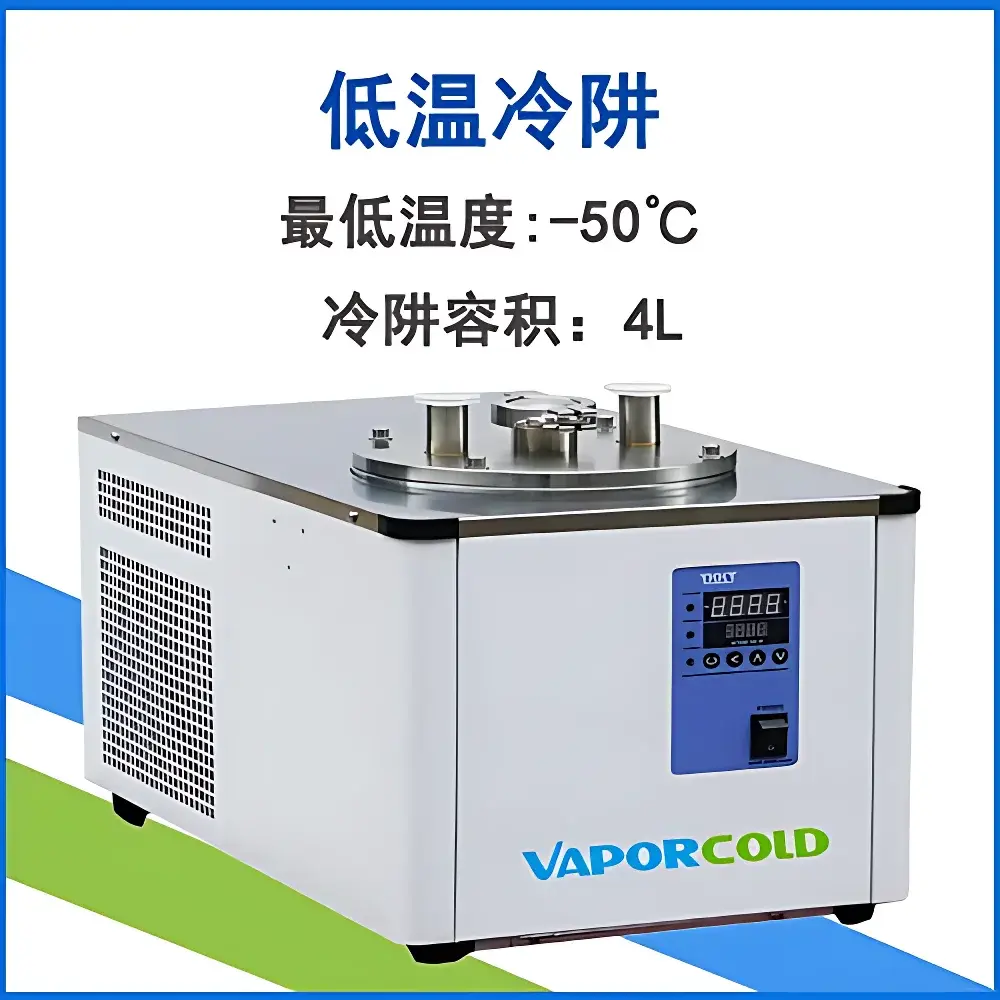
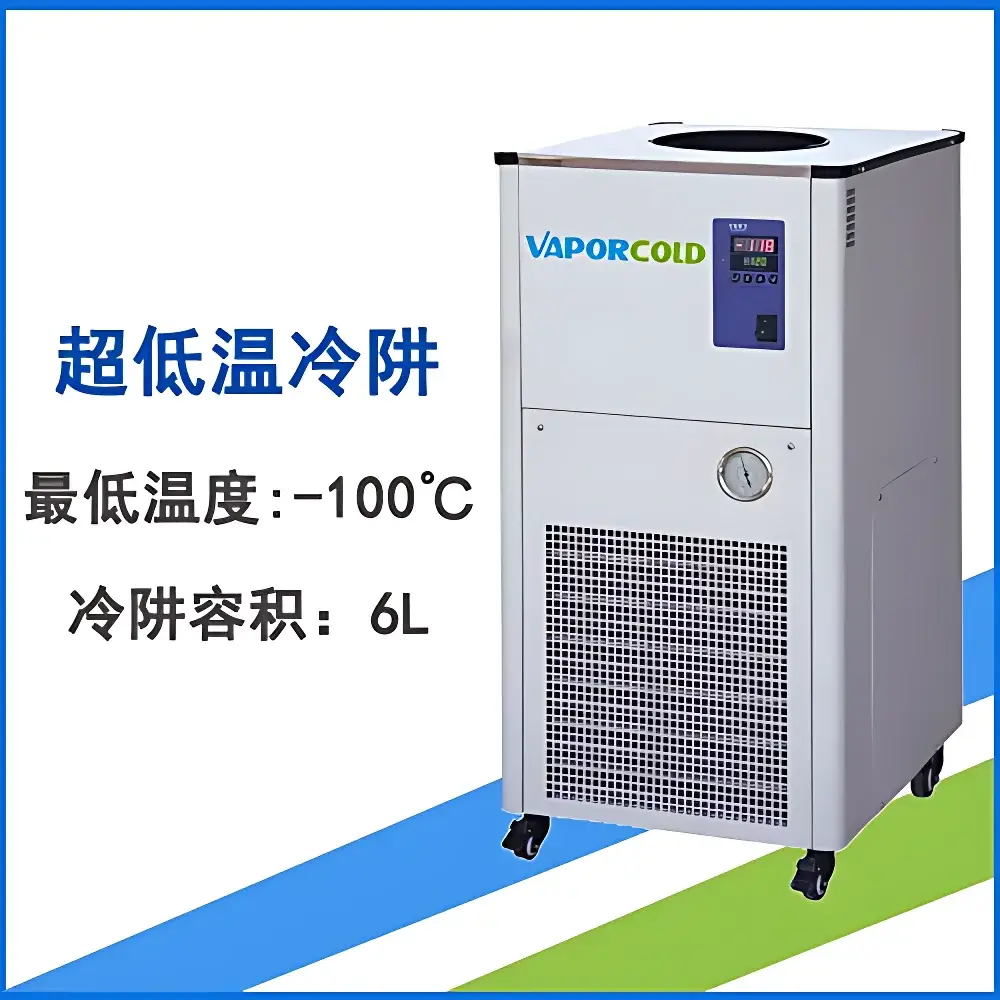
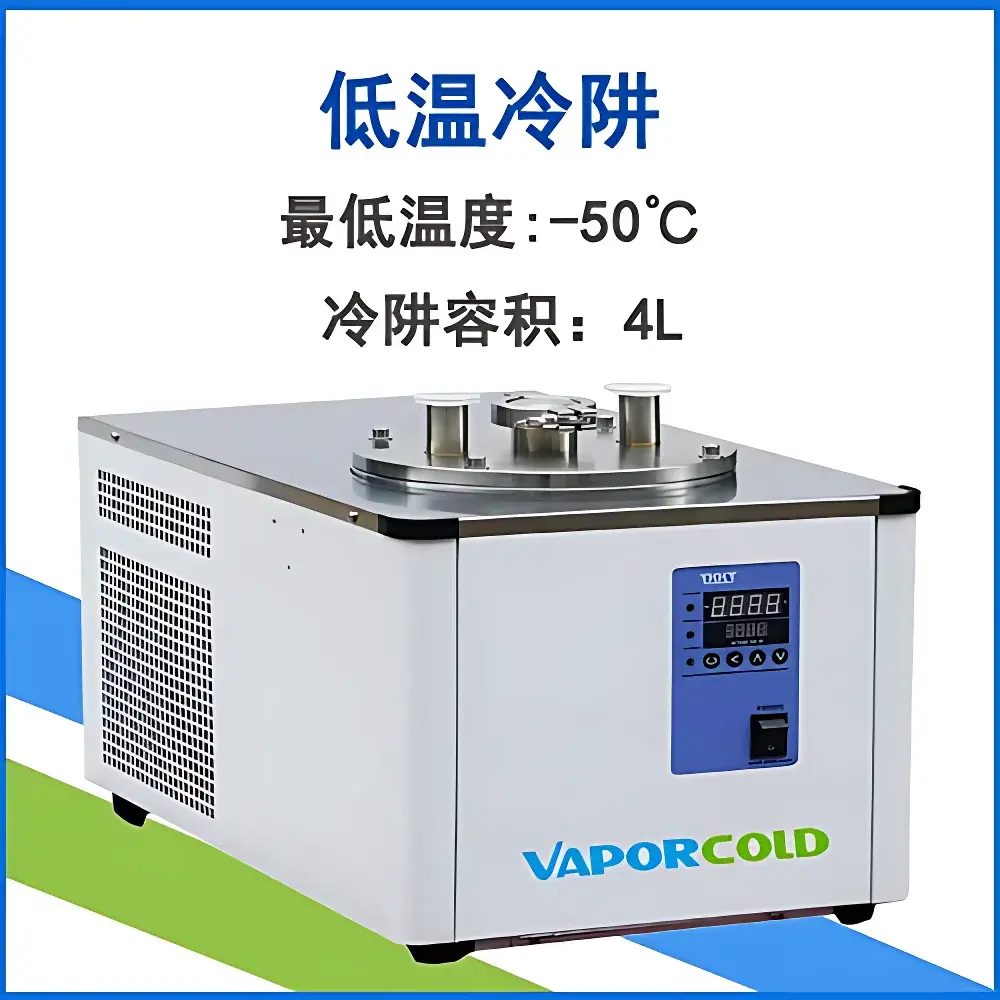
Coolium CT6-100 Ultra-Low Temperature Cold Trap Gas Purifier
| Brand | Coolium |
|---|---|
| Origin | Beijing, China |
| Manufacturer Type | Authorized Distributor |
| Country of Origin | China |
| Model | CT6-100 |
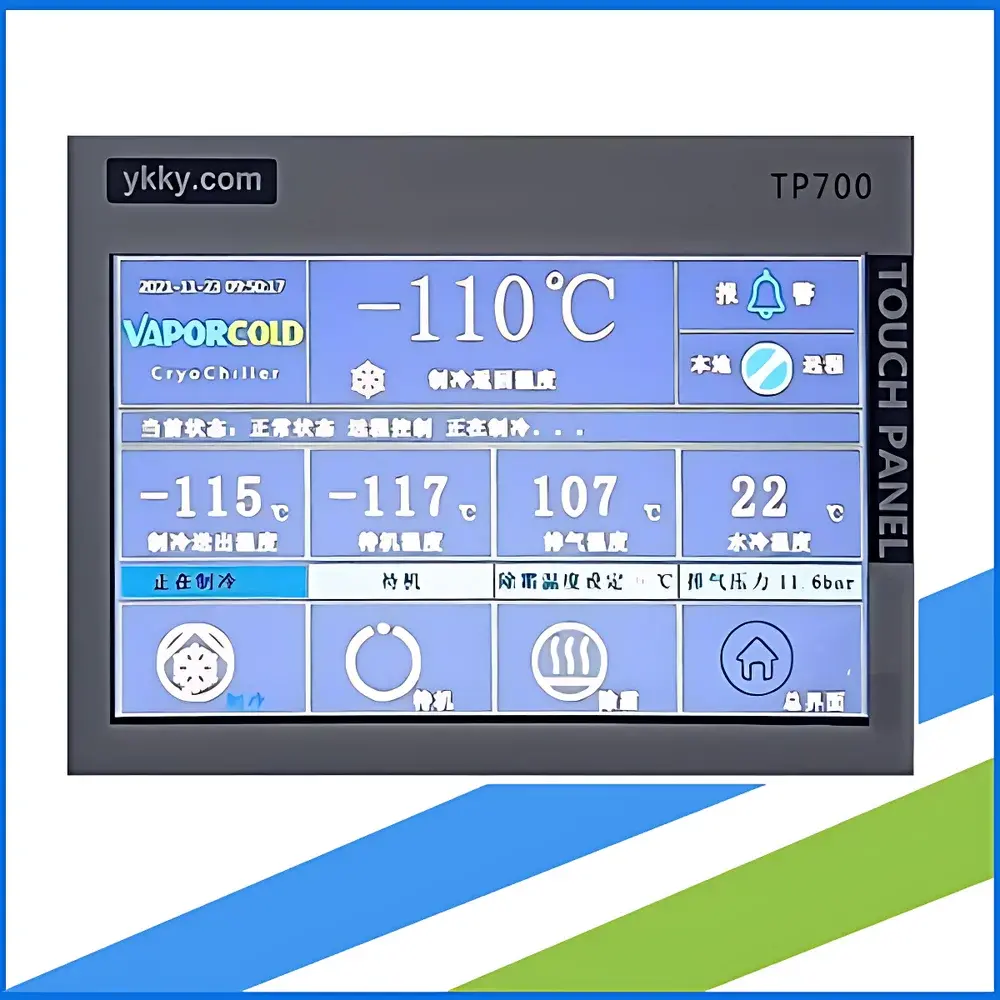
| Cooling Temperature | −110 °C |
| Cold Trap Volume | 4 L |
| Cold Trap Dimensions | Ø160 × 200 mm |
| Cooling Method | Air-Cooled |
| Weight | 77 kg |
| Power Supply | 220 V / 50 Hz / 1.4 kW |
| Overall Dimensions | 500 W × 650 D × 430 H mm |
| Material | Stainless Steel (optional PTFE-coated inner surface) |
| Optional Accessories | Glass condensate collection flask, corrosion-resistant lid variants (for aqueous, acidic, or organic vapor streams), drain valve for condensate removal |
Overview
The Coolium CT6-100 Ultra-Low Temperature Cold Trap Gas Purifier is an engineered solution for high-efficiency vapor capture and gas stream conditioning in vacuum-based laboratory workflows. Operating on the principle of cryogenic condensation, the CT6-100 achieves a stable operating temperature of −110 °C—sufficient to condense water vapor, low-boiling solvents (e.g., acetone, dichloromethane, ethyl acetate), and many volatile organic compounds (VOCs) and acidic gases (e.g., HCl, SO₂) directly onto its chilled stainless-steel cold finger surface. Positioned upstream of rotary vane or diaphragm vacuum pumps, the unit prevents backstreaming of pump oil vapors into sensitive vacuum chambers while simultaneously protecting downstream instrumentation from corrosive or condensable contaminants. Its compact, benchtop form factor enables seamless integration with rotary evaporators, centrifugal concentrators, vacuum ovens, and freeze dryers—without requiring external coolant circulation or liquid nitrogen.
Key Features
- Stainless-steel cold trap chamber with electropolished interior; optional PTFE coating available for enhanced chemical resistance against aggressive solvents and acidic vapors.
- Consistent −110 °C operating temperature achieved via high-efficiency air-cooled cascade refrigeration—eliminating dependency on cryogens or chiller systems.
- 4 L condensate capacity accommodates extended operation under moderate vapor load; compatible with optional glass collection flasks for visual monitoring and solvent recovery.
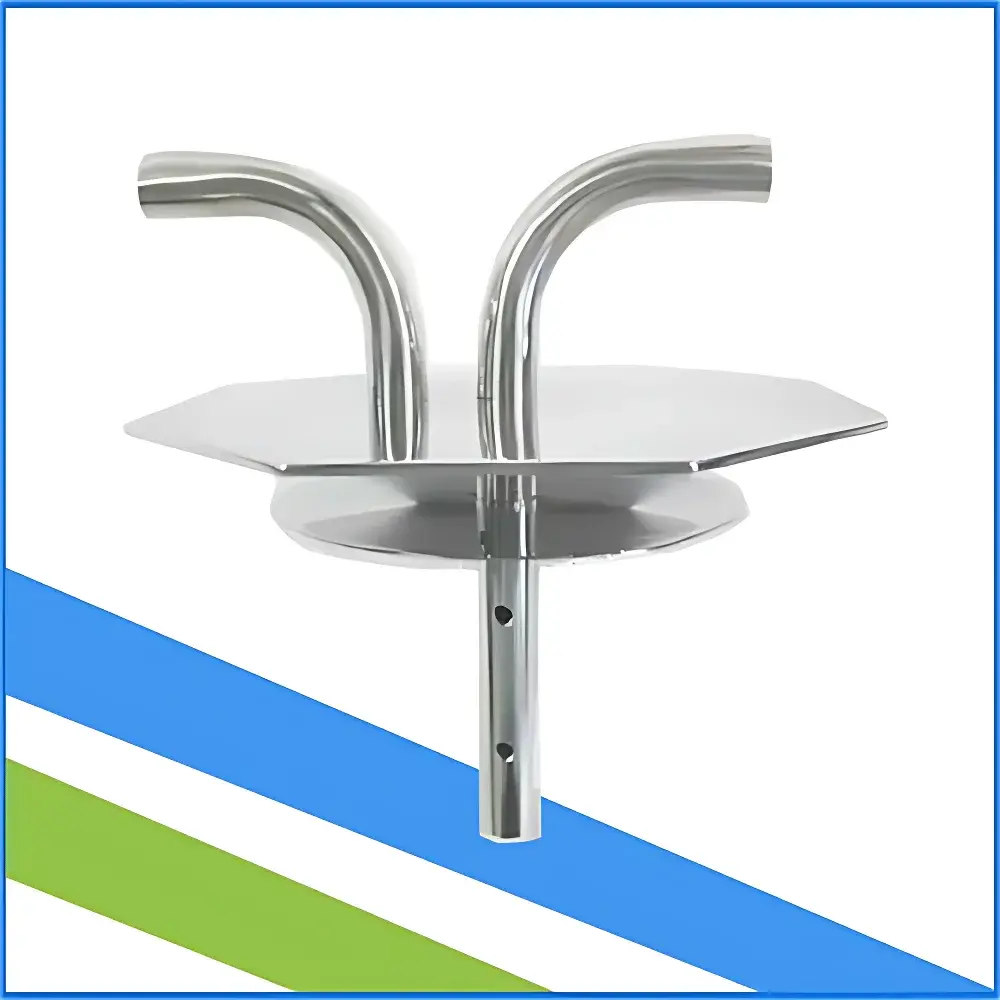
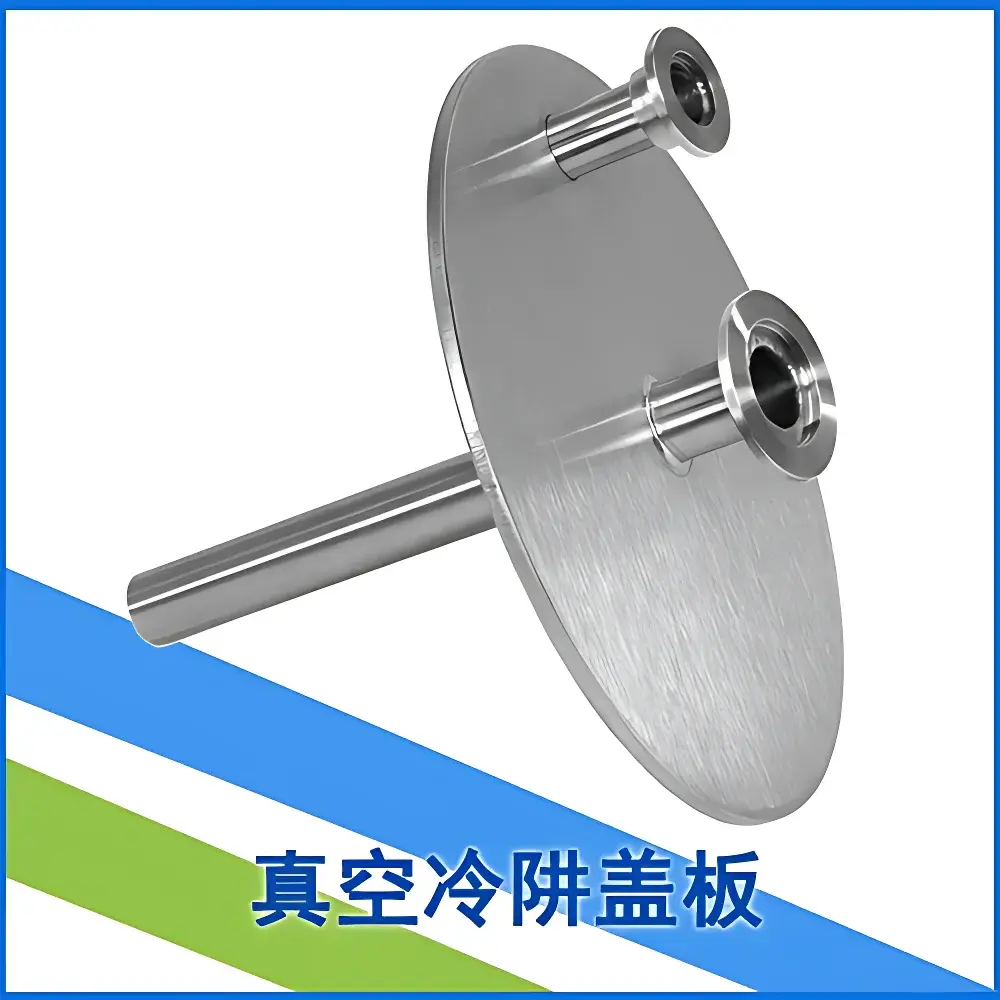
- Modular lid system supports interchangeable configurations: standard stainless-steel, PTFE-lined, or quartz-reinforced variants—selected based on vapor chemistry (aqueous, acidic, halogenated, or highly polar streams).
- Integrated condensate drain valve enables safe, controlled removal of collected liquids without breaking vacuum or exposing internal surfaces.
- Benchtop footprint (500 × 650 × 430 mm) permits placement inside fume hoods or adjacent to vacuum manifolds; robust structural design ensures mechanical stability during prolonged operation.
Sample Compatibility & Compliance
The CT6-100 is validated for use with common laboratory vacuum applications involving water, alcohols, esters, ketones, chlorinated hydrocarbons, and inorganic acid vapors. It meets material compatibility requirements per ASTM F2219 (Standard Guide for Selection of Materials for Vacuum Systems) and conforms to general safety provisions outlined in IEC 61010-1 for electrical equipment used in laboratory environments. While not certified to ISO 13485 or FDA 21 CFR Part 11 (as it is a passive purification device without data logging), its construction supports GLP-compliant workflows when paired with traceable vacuum gauges and documented maintenance logs. All wetted parts are non-leaching and autoclavable—ensuring suitability for pharmaceutical QC and academic research settings where cross-contamination control is critical.
Software & Data Management
The CT6-100 operates as a standalone, analog-controlled instrument with no embedded microprocessor or digital interface. Temperature stabilization is managed by a precision PID controller with dual-stage thermoelectric cooling regulation. No firmware, cloud connectivity, or software installation is required. For laboratories requiring audit-ready documentation, external temperature dataloggers (e.g., calibrated thermocouple probes with USB or Ethernet output) may be mounted at the cold finger base and integrated into existing LIMS or ELN platforms. The unit’s mechanical simplicity ensures long-term reliability and minimal calibration drift—reducing operational overhead in regulated environments.
Applications
- Protection of vacuum pumps during rotary evaporation of heat-sensitive or high-volatility samples.
- Removal of residual moisture and solvent vapors prior to lyophilization or high-vacuum deposition processes.
- Pre-concentration and trapping of VOCs in environmental sampling preparation workflows.
- Gas stream polishing upstream of mass spectrometers, residual gas analyzers (RGAs), or vacuum UV spectroscopy cells.
- Low-temperature pre-freezing of samples prior to transfer into cryo-SEM or cryo-TEM preparation stations.
- Use as a secondary cold bath or low-temperature immersion vessel for reaction quenching or catalyst deactivation studies.
FAQ
What is the minimum achievable temperature, and how is it maintained?
The CT6-100 achieves and holds −110 °C at the cold finger surface under ambient conditions (≤25 °C, ≤60% RH), verified using NIST-traceable Pt100 sensors. Temperature stability is maintained via closed-loop PID control of a two-stage thermoelectric cooling module with forced-air heat dissipation.
Can the CT6-100 be used with corrosive gases such as HCl or HF?
Yes—when equipped with the optional PTFE-coated cold trap chamber and chemically resistant lid assembly. Standard stainless steel is suitable for water and most organic vapors; PTFE enhancement extends compatibility to moderately aggressive inorganic acids (excluding anhydrous HF).
Is the unit compatible with oil-free vacuum pumps?
Yes. Though especially beneficial for oil-lubricated rotary vane pumps, the CT6-100 provides equal value in protecting dry scroll and diaphragm pumps from condensable load-induced performance degradation and premature failure.
How often must condensate be drained during continuous operation?
Drain frequency depends on vapor load. Under typical rotary evaporation conditions (e.g., 500 mL of ethyl acetate at 40 °C bath temperature), full capacity is reached in ~6–8 hours. The drain valve allows for scheduled, vacuum-intact removal without process interruption.
Does the CT6-100 require routine calibration?
No formal calibration is mandated. However, periodic verification of cold finger temperature using an external calibrated probe is recommended every 6 months for GMP-aligned operations. Factory calibration certificate is provided with each unit.



