
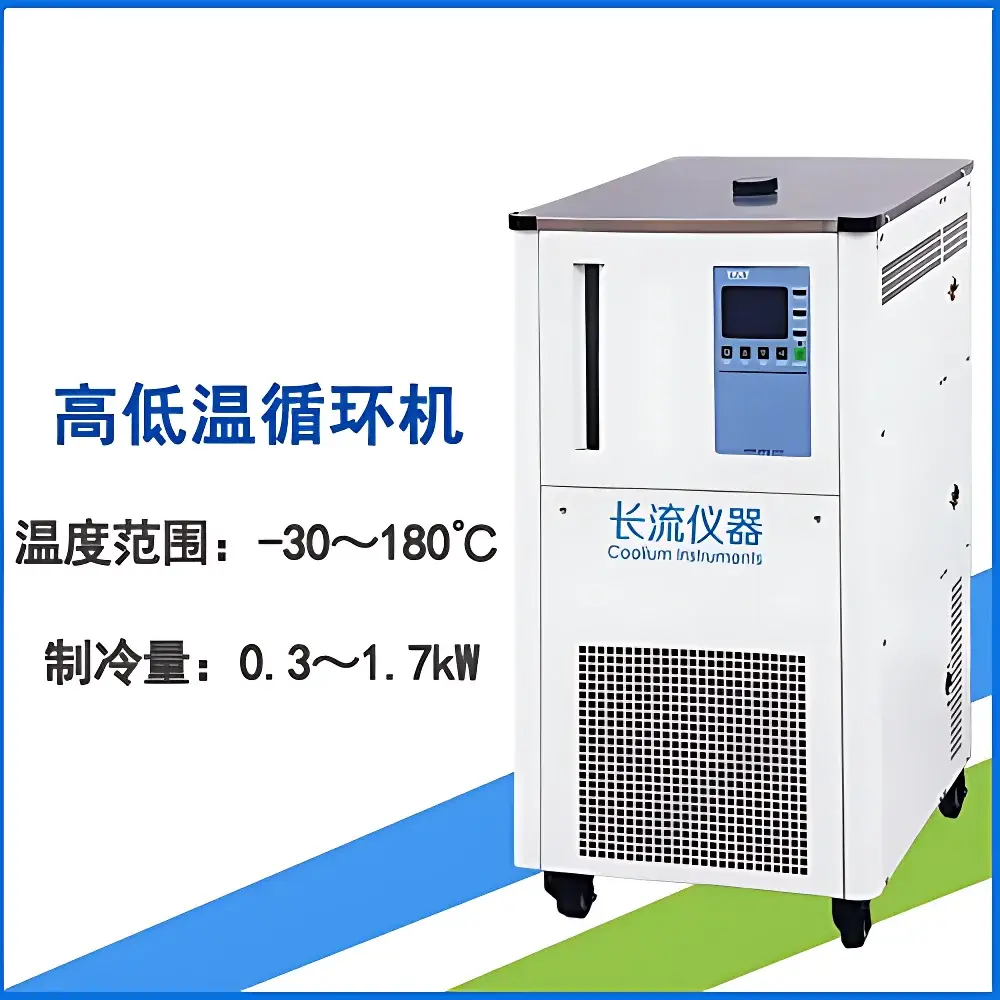
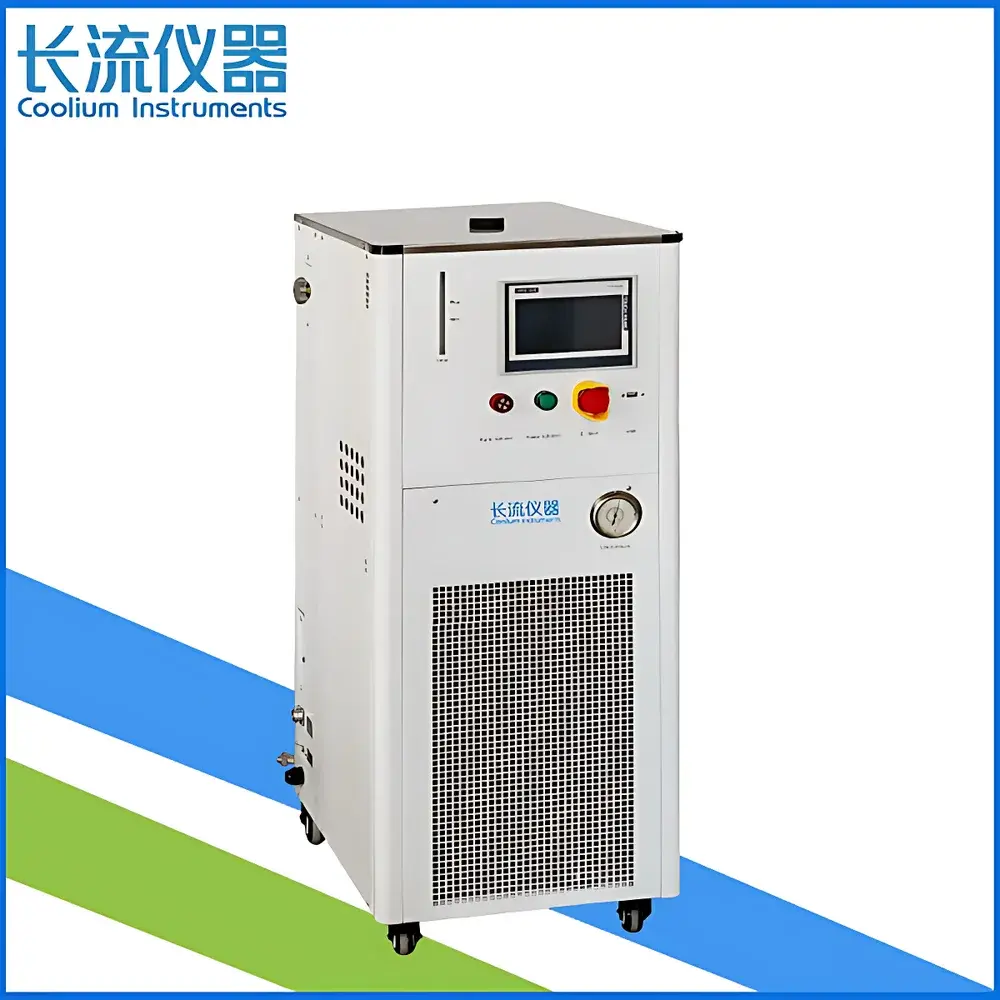
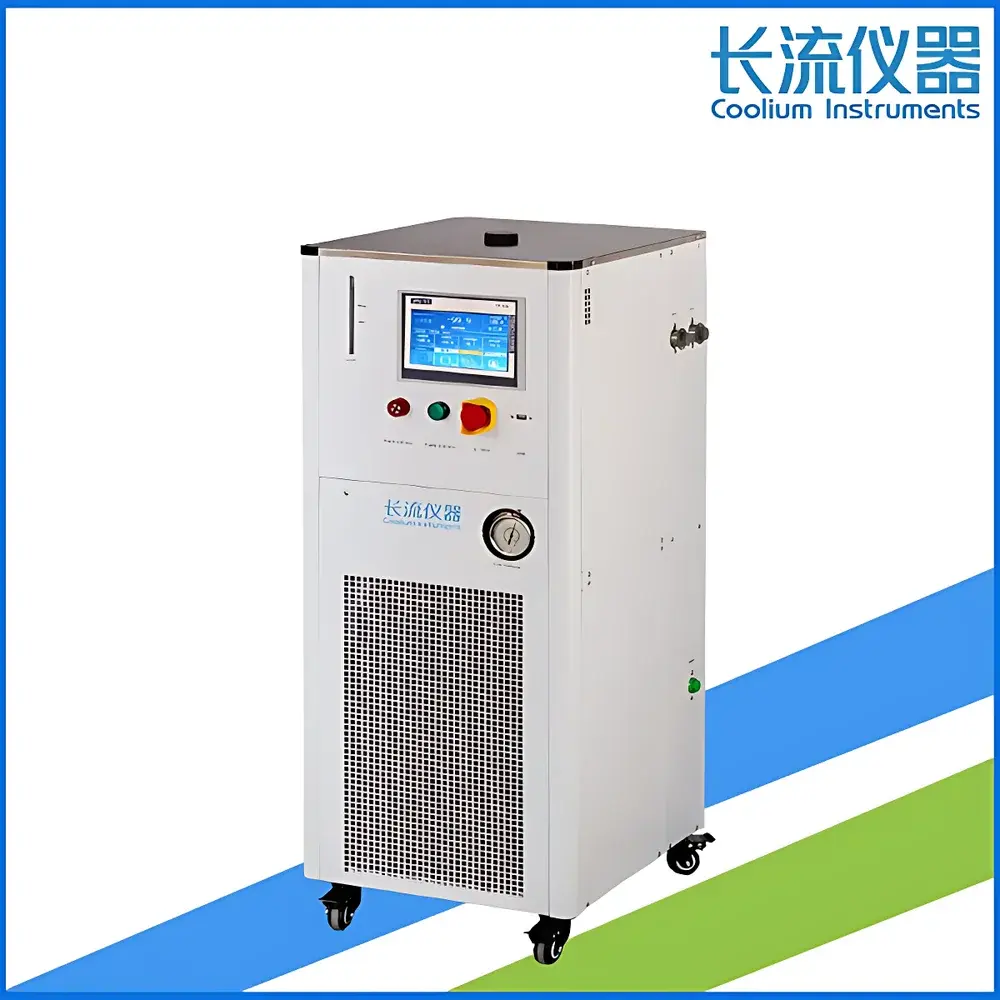
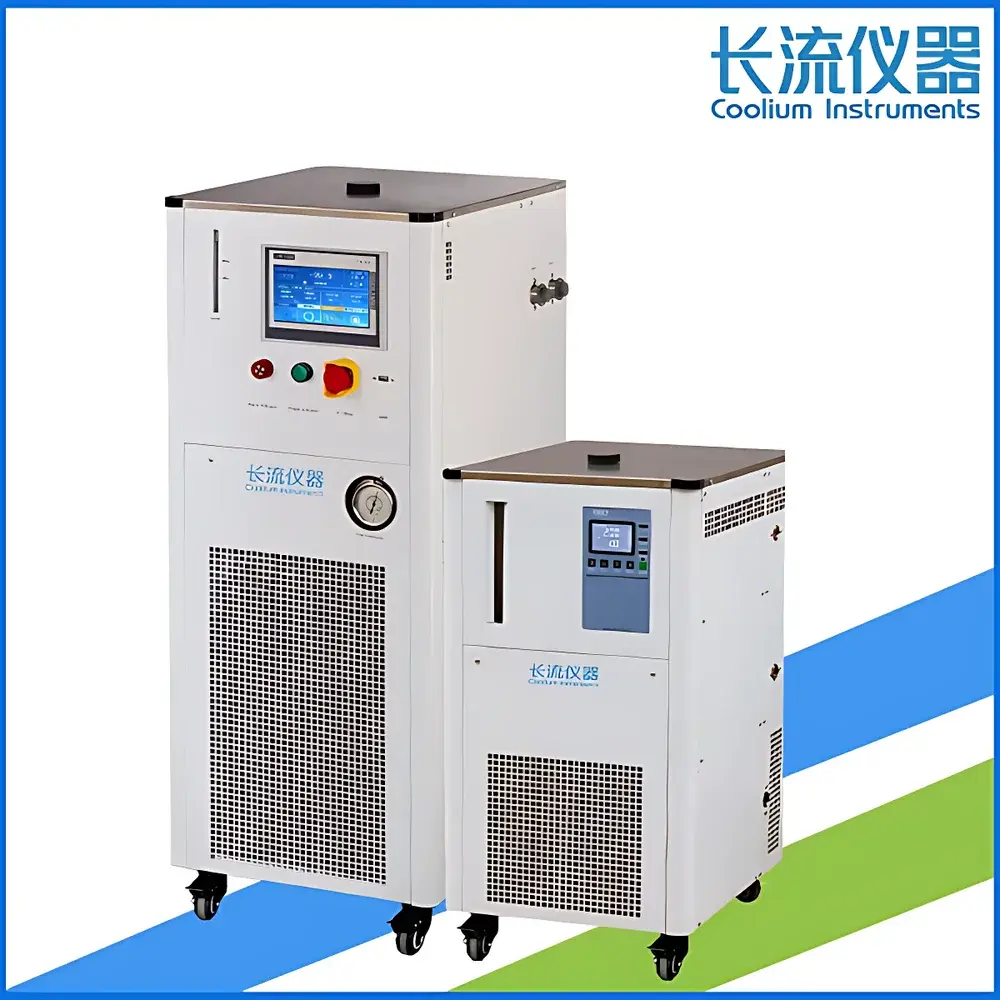
Coolium CH-3020S Integrated Circulating Chiller with Wide-Temperature Range (-30 to +180°C)
| Brand | Coolium |
|---|---|
| Origin | Beijing, China |
| Model | CH-3020S |
| Instrument Type | Integrated Circulating Chiller |
| Cooling Method | Air-Cooled |
| Temperature Range | -30 to +180°C |
| Refrigeration Capacity | 0.3–1.7 kW |
| Temperature Stability | ±0.5°C |
| Circulation Pump Pressure | 0.6 bar |
| Circulation Flow Rate | 15 L/min |
| Reservoir Volume | 10 L |
| Heating Power | 2.5 kW |
| Power Supply | 220 V, 50 Hz, 3.7 kW |
| Dimensions (W×D×H) | 400 × 520 × 860 mm |
Overview
The Coolium CH-3020S is an integrated wide-temperature circulating chiller engineered for precise, stable thermal management of external process equipment in laboratory and pilot-scale environments. It operates on a dual-mode thermodynamic principle: vapor-compression refrigeration for cooling and resistive electric heating for warming—both acting on a single closed-loop heat transfer fluid (e.g., silicone oil or specialized low-freezing-point glycol/water mixtures). Unlike conventional chillers limited to sub-ambient operation or dedicated heaters restricted to elevated temperatures, the CH-3020S delivers continuous, bidirectional temperature control across an exceptionally broad range of –30°C to +180°C without requiring fluid exchange or system reconfiguration. Its sealed circulation architecture incorporates an expansion tank that maintains near-ambient pressure and temperature in the vapor space—eliminating moisture ingress during low-temperature operation and minimizing volatile loss or oxidation at high temperatures. This design ensures long-term fluid integrity, consistent thermal performance, and operational safety across demanding pharmaceutical synthesis, catalytic reaction monitoring, vacuum jacketed vessel conditioning, and material testing applications.
Key Features
- Wide operational temperature span: –30°C to +180°C in a single unit, enabling seamless ramping, hold, and cycling protocols.
- Air-cooled condensing system with compact, fully brazed plate heat exchanger—optimized for high thermal efficiency and minimal footprint.
- Integrated circulation pump delivering 15 L/min flow at 0.6 bar head pressure, supporting moderate-pressure remote loops (e.g., jacketed reactors up to 15 m piping length).
- Real-time liquid level sensing with visual indicator—prevents dry-run damage and supports predictive maintenance planning.
- Multi-layer safety architecture: over-temperature cutoff, high-pressure shutdown, ground-fault detection, current overload protection, emergency stop circuit, and thermal fuse redundancy.
- High-lift pump design accommodates elevation differences and pressure drops in complex secondary circuits.
- Direct temperature ramping capability: capable of initiating cooling from elevated setpoints (e.g., transitioning from +180°C to –30°C without intermediate fluid purge or venting).
Sample Compatibility & Compliance
The CH-3020S is compatible with a broad spectrum of heat transfer media—including water-glycol blends (for sub-zero operation), polyalphaolefin (PAO), and methylsilicone oils—selected per application-specific viscosity, flash point, and chemical compatibility requirements. Its closed-loop construction meets ISO 13849-1 functional safety principles for industrial thermal equipment. While not certified as medical device hardware, its temperature stability (±0.5°C), reproducible ramp rates, and audit-ready operational logging support GLP-compliant workflows in QC laboratories performing ASTM E2925 (thermal stability testing of polymers) or USP (thermal analysis of pharmaceutical excipients). The unit complies with IEC 61000-6-3 (EMC emission limits) and IEC 61000-6-2 (immunity standards), and its electrical design conforms to IEC 61010-1 for laboratory equipment safety.
Software & Data Management
The CH-3020S features an embedded PID controller with programmable ramp/soak profiles, real-time trend display, and event logging (including temperature deviations, alarm triggers, and power cycle history). Optional RS485 Modbus RTU or Ethernet TCP/IP interface enables integration into centralized SCADA or LIMS platforms. When configured with compliant firmware, data logs include time-stamped entries with operator ID fields, satisfying basic FDA 21 CFR Part 11 requirements for electronic records—provided external authentication and audit trail mechanisms are implemented at the supervisory system level. No cloud connectivity or proprietary SaaS platform is included; all configuration and diagnostics remain locally executable via the front-panel touchscreen interface.
Applications
- Temperature control of jacketed glass reactors and stainless-steel pilot reactors in API synthesis and fine chemical manufacturing.
- Thermal conditioning of vacuum chambers, cryostats, and environmental test enclosures requiring bidirectional thermal actuation.
- Stabilization of laser sources, spectrometers, and X-ray diffractometers sensitive to thermal drift.
- Calibration of temperature sensors (RTDs, thermocouples) across extended ranges per ISO/IEC 17025 traceability frameworks.
- Accelerated aging studies under controlled thermal cycling (e.g., IEC 60068-2-14 for electronics reliability testing).
- Support of rheological measurements where bath temperature must track within ±0.3°C during viscosity sweeps (ASTM D2196).
FAQ
Can the CH-3020S cool from +180°C directly to –30°C without fluid replacement?
Yes—the sealed expansion tank and optimized refrigerant circuit allow uninterrupted transition across the full temperature range without manual intervention or fluid change.
What types of heat transfer fluids are recommended for operation below –20°C?
Low-viscosity silicone oils (e.g., DC-200 series) or inhibited ethylene glycol/water mixtures with freezing points ≤ –40°C are validated for use; consult the fluid manufacturer’s thermal stability data above +150°C.
Is the unit suitable for GMP cleanroom environments?
The CH-3020S has no internal filtration or HEPA-grade air intake; it is intended for controlled laboratory spaces—not classified cleanrooms—though its low particulate generation and absence of oil mist make it compatible with adjacent buffer zones.
Does the system support external temperature feedback control?
Yes—via optional 0–10 V or 4–20 mA input, enabling cascade control using a process sensor located at the load (e.g., reactor jacket outlet) rather than the chiller’s internal bath sensor.
What maintenance intervals are recommended for optimal long-term performance?
Compressor oil and refrigerant levels should be verified annually; air-side condenser coils require quarterly cleaning in dusty environments; circulation filter elements (if installed downstream) should be replaced every 6 months or per fluid contamination assessment.
Related Products



