
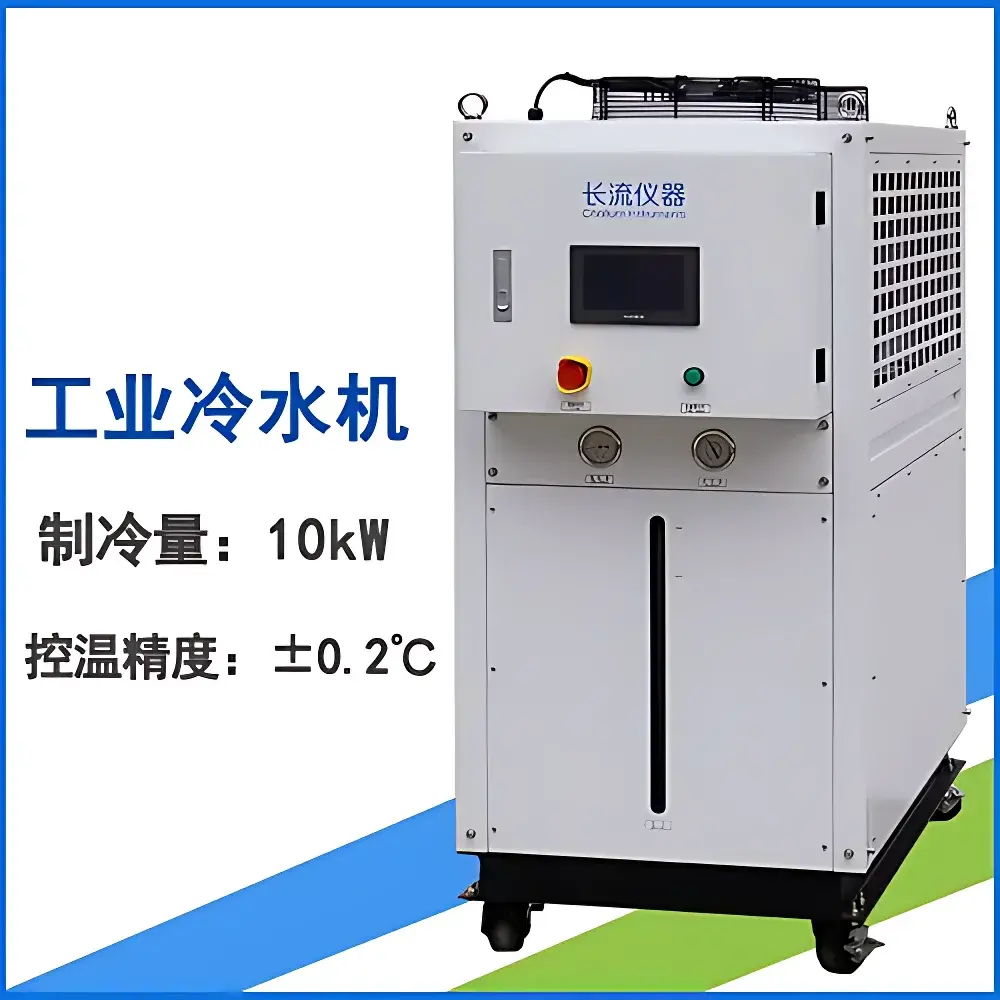
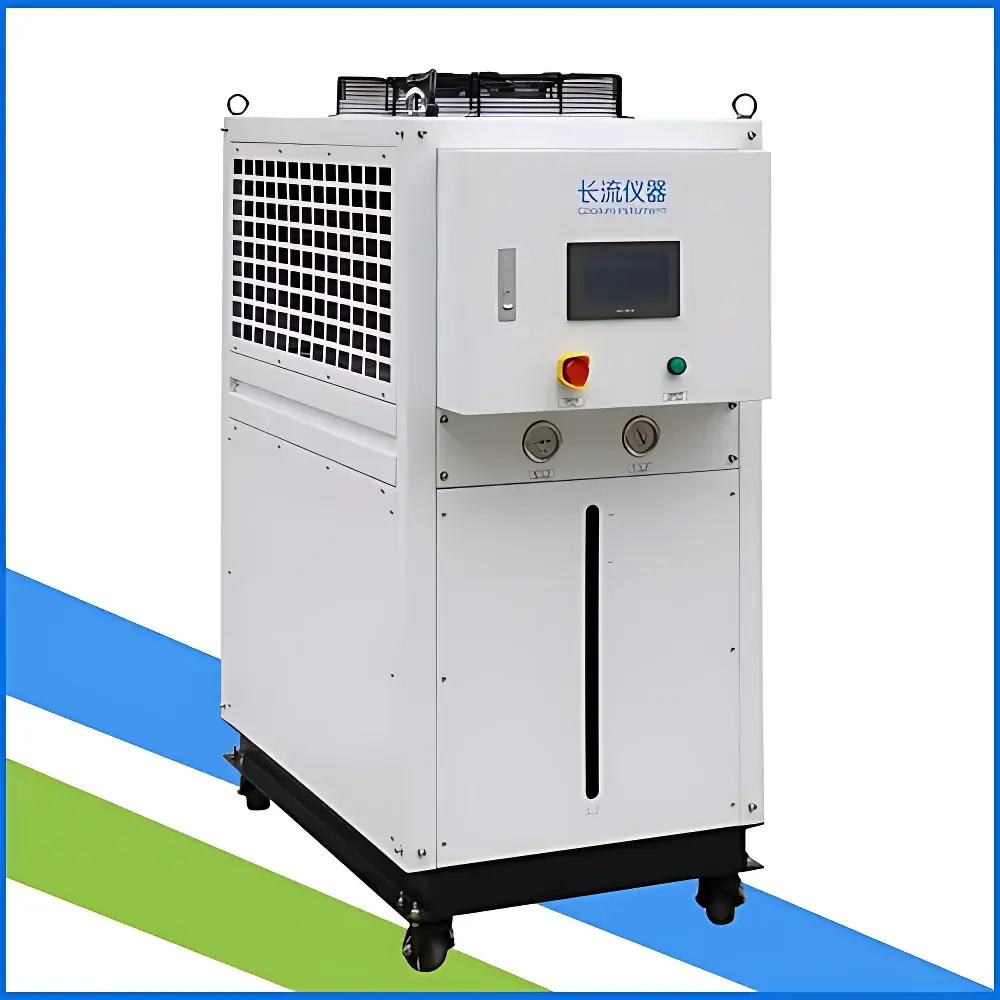
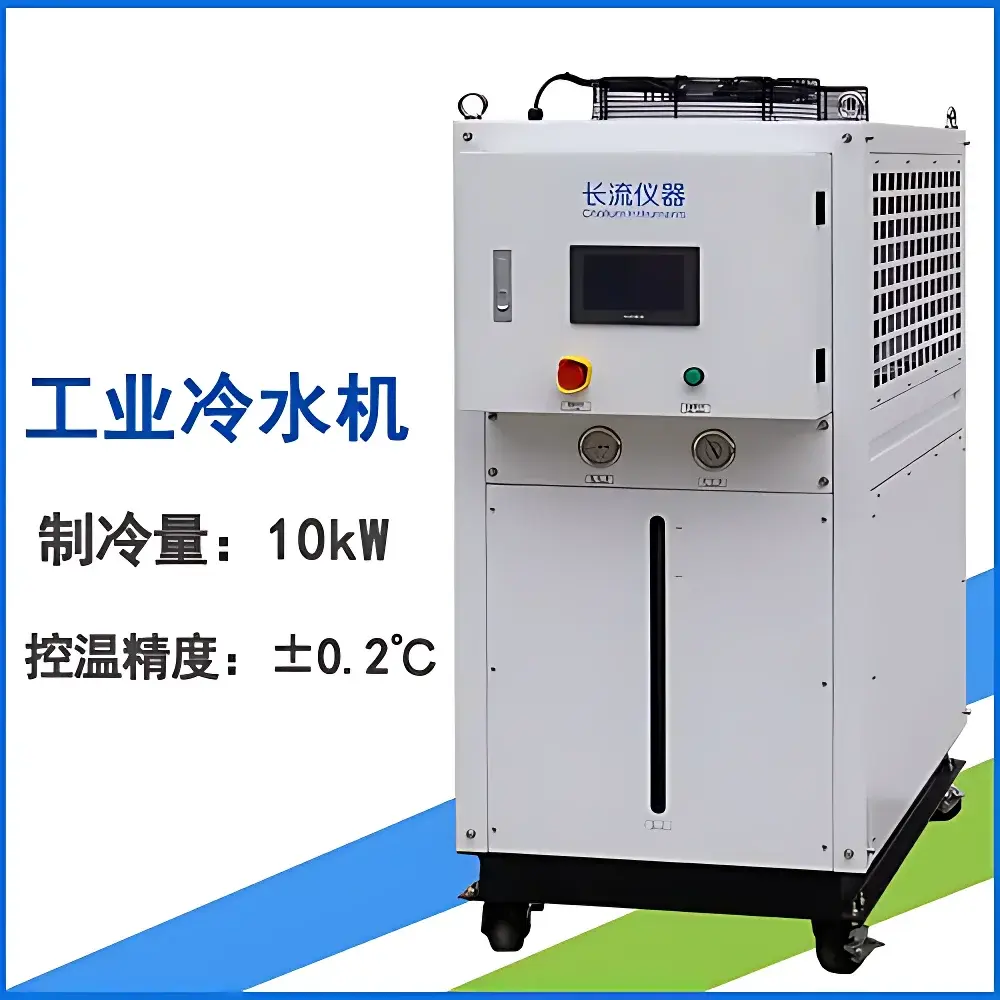
Coolium LX-10K-1 Industrial Circulating Chiller
| Brand | Coolium |
|---|---|
| Origin | Beijing, China |
| Model | LX-10K-1 |
| Instrument Type | Integrated Unit |
| Cooling Method | Water-Cooled |
| Temperature Control Range | 5–35 °C |
| Temperature Stability | ±0.2 °C |
| Refrigeration Capacity | 30 kW @ 20 °C |
| Circulating Pump Pressure | 6.0 bar |
| Circulating Flow Rate | 100 L/min |
| Reservoir Volume | 300 L |
| Operating Mode | Continuous |
Overview
The Coolium LX-10K-1 Industrial Circulating Chiller is a high-capacity, precision temperature control system engineered for continuous-duty thermal management in demanding laboratory and industrial environments. It operates on a vapor-compression refrigeration cycle with water-cooled condensation, delivering stable, low-drift thermal regulation across its full operating range of 5–35 °C. Designed for integration with heat-generating instrumentation—including electron microscopes, vacuum deposition systems, ion beam sources, and high-power laser platforms—the LX-10K-1 maintains process-critical fluid temperatures with ±0.2 °C stability under dynamic load conditions. Its robust architecture supports uninterrupted operation over extended cycles, making it suitable for applications requiring long-duration thermal equilibration or multi-instrument coolant distribution.
Key Features
- High refrigeration capacity of 30 kW at 20 °C ambient—optimized for high-heat-load instruments such as TEM/SEM column cooling, RF plasma generators, and high-vacuum furnace jackets.
- Dual-display, dual-color digital temperature controller with real-time setpoint and actual temperature readouts; supports programmable ramp-soak profiles and PID parameter tuning.
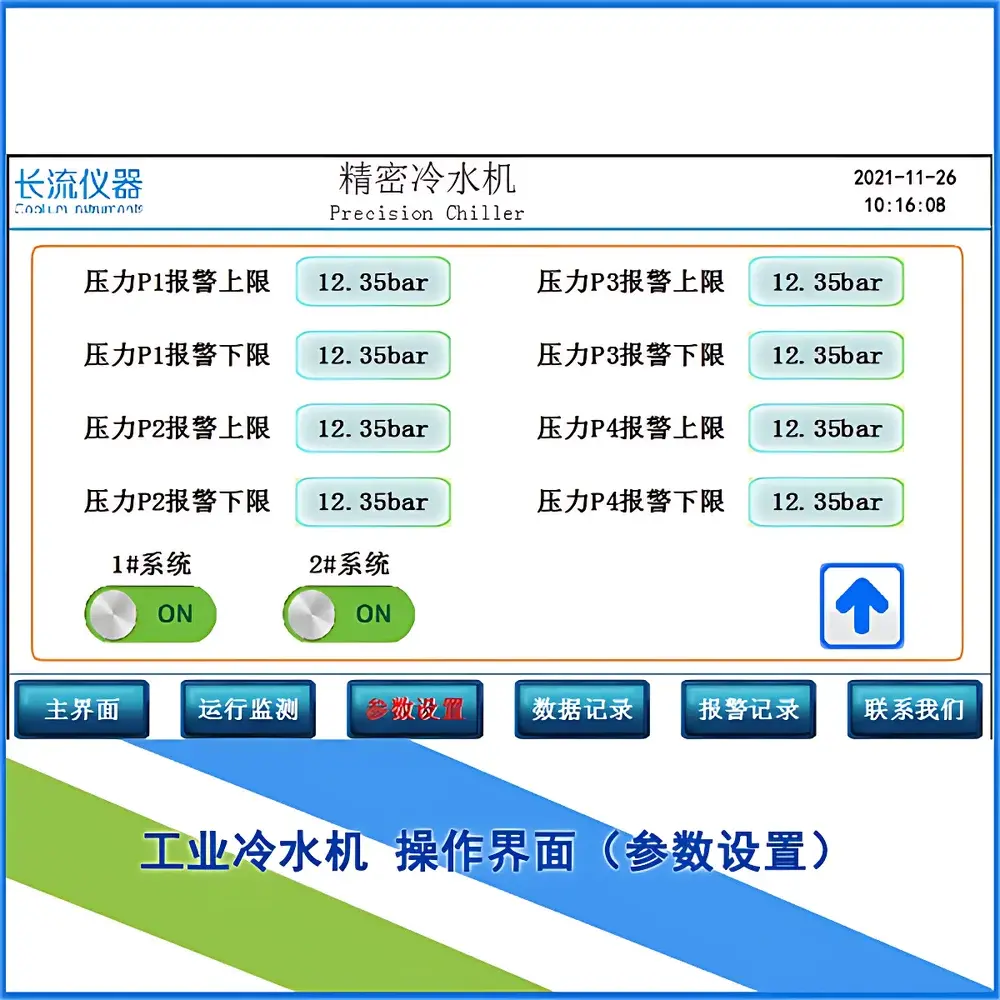
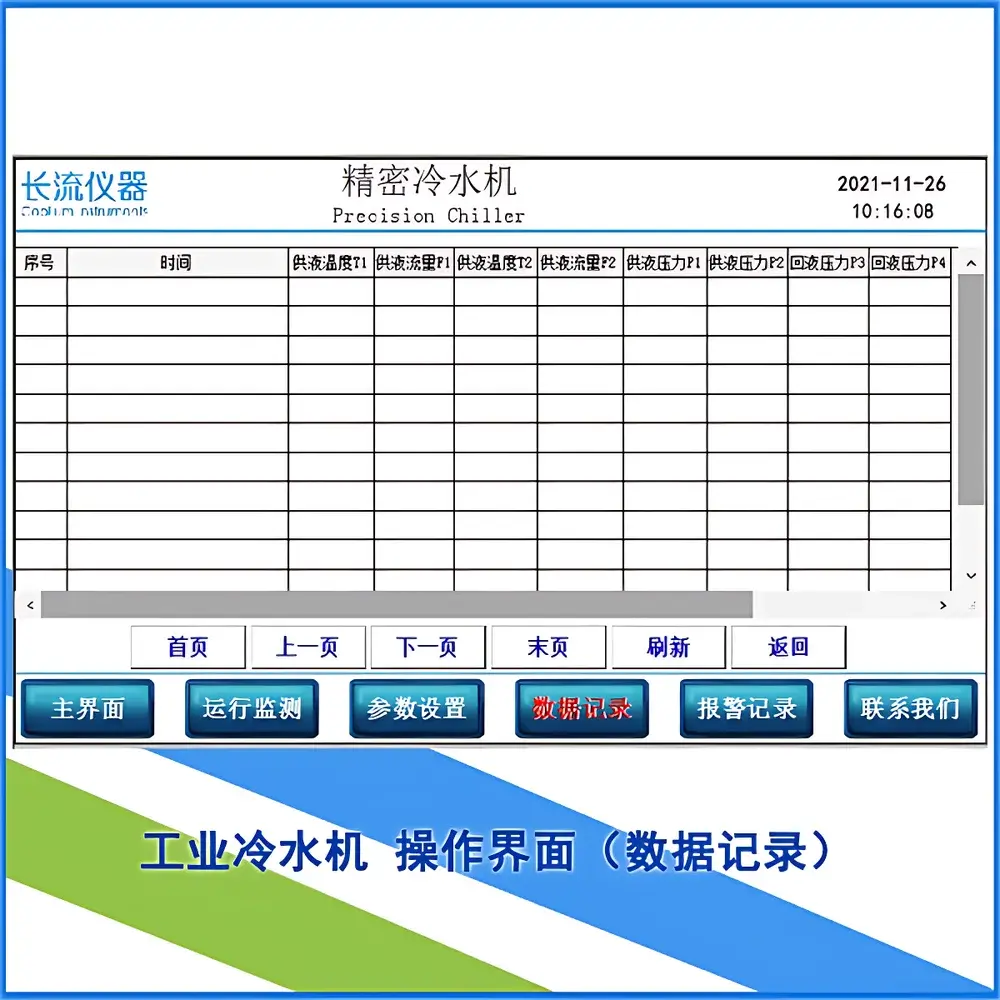
- Integrated non-paper data logger records temperature, pressure, flow, and compressor status at user-defined intervals (1–60 min); stored data is exportable via USB for audit-ready traceability.
- Optional deionization module and inline conductivity monitoring (0.1–20 µS/cm range) enable compliance with ultrapure water specifications required by semiconductor metrology tools and analytical spectrometers.
- Comprehensive safety interlocks: high/low refrigerant pressure cutout, phase sequence detection, motor overload protection, reservoir level sensor, and dry-run prevention for the circulation pump.
- Stainless steel reservoir (300 L) with insulated lid and integrated air venting to minimize evaporation and contamination ingress; compatible with corrosion-resistant glycol-water mixtures up to 30% v/v.
Sample Compatibility & Compliance
The LX-10K-1 is not a sample analysis device but a thermal management subsystem. Its compatibility is defined by fluid interface requirements rather than sample type. It accommodates standard aqueous coolants, inhibited ethylene glycol/water blends (up to 30%), and deionized water with conductivity ≤1 µS/cm when equipped with optional purification. The unit meets CE marking requirements for electromagnetic compatibility (EN 61326-1) and low-voltage directive (2014/35/EU). Its control software architecture supports audit trails and user access levels aligned with GLP and GMP documentation practices. While not FDA 21 CFR Part 11–certified out-of-the-box, its data logging functionality can be validated per internal SOPs for regulated QC/QA workflows involving temperature-sensitive instrumentation calibration or qualification.
Software & Data Management
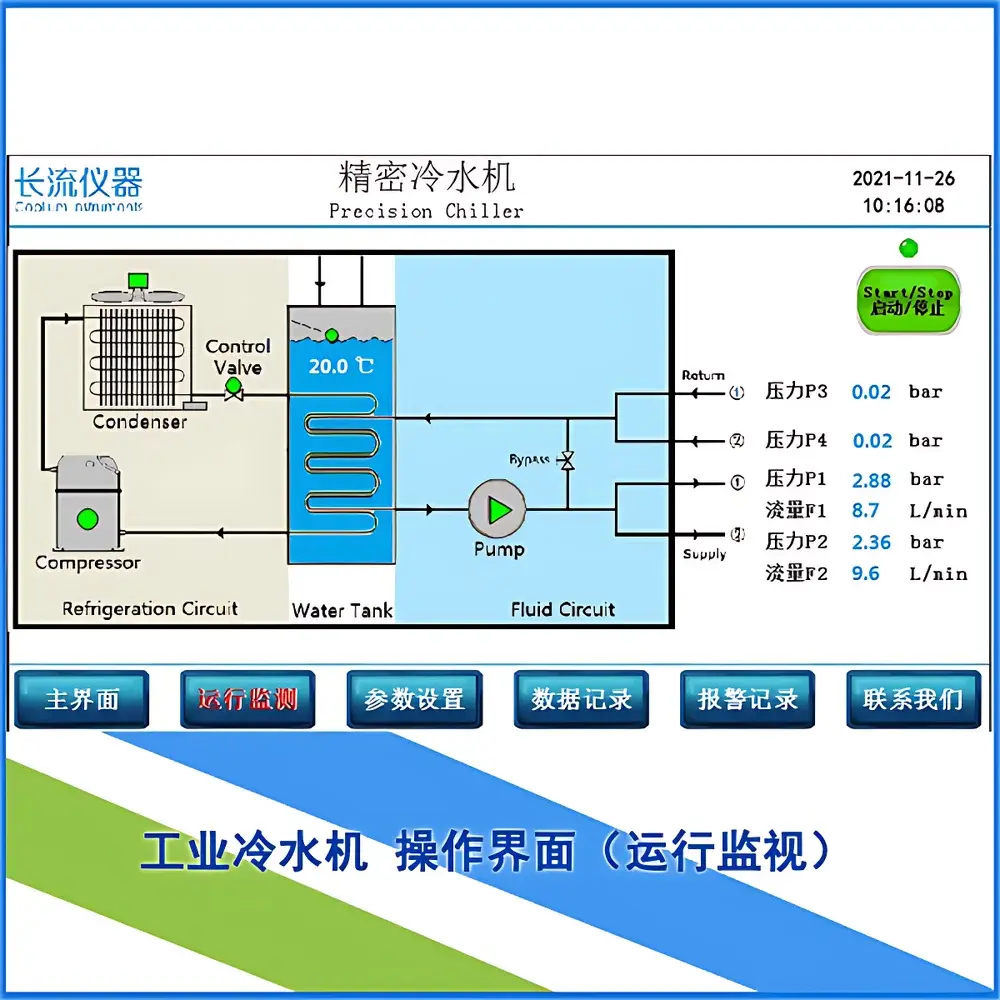
The embedded controller features a local HMI with tactile keypad navigation and real-time graphical display of thermal trends (temperature vs. time). All operational parameters—including setpoint history, alarm logs, and cumulative compressor runtime—are timestamped and retained for ≥12 months. Data export is supported via USB 2.0 port in CSV format, enabling direct import into LIMS or statistical process control (SPC) platforms. Remote monitoring and control are available through optional RS485 Modbus RTU or Ethernet TCP/IP interfaces, allowing integration into building management systems (BMS) or centralized lab infrastructure dashboards. Firmware updates are performed offline via USB, ensuring integrity and version control without network exposure.
Applications
- Electron Microscopy: Maintains stable cold stage and column cooling for transmission and scanning electron microscopes, minimizing thermal drift during high-resolution imaging and EDS mapping.
- Vacuum & Thin-Film Systems: Provides consistent coolant supply to magnetron sputtering targets, e-beam evaporators, and ion implanters—critical for preventing target warping and maintaining deposition rate reproducibility.
- Accelerator & Plasma Physics: Supports RF cavity cooling and beamline component thermal stabilization in synchrotron and cyclotron facilities where thermal expansion must remain sub-micron over multi-hour runs.
- Industrial Process Control: Used in injection molding, electroplating, and ultrasonic cleaning lines to regulate die, bath, or transducer temperatures—directly impacting cycle time, coating uniformity, and reagent longevity.
- High-Power Laser Systems: Manages diode stack and crystal head temperatures in CW and pulsed solid-state lasers, preserving beam quality and optical alignment stability.
FAQ
What is the maximum allowable coolant temperature differential between inlet and outlet under full load?
At rated 30 kW capacity and 100 L/min flow, the typical ΔT is 0.7–1.1 °C depending on fluid specific heat and inlet temperature.
Can the LX-10K-1 operate with propylene glycol-based coolant?
Yes—provided concentration remains ≤30% v/v and viscosity at operating temperature does not exceed 5 cP; pump performance curves and pressure drop corrections must be applied during system design.
Is external condenser water temperature regulated by the chiller itself?
No—the unit requires externally supplied chilled water (typically 10–25 °C) at stable pressure (2.5–4.0 bar) and minimum flow (≥15 m³/h) to the condenser circuit; failure to meet these conditions triggers automatic shutdown.
Does the unit support NIST-traceable temperature calibration?
The built-in PT100 sensor is factory-calibrated to ±0.15 °C accuracy at 20 °C; users may perform field verification using a calibrated reference thermometer inserted into the reservoir’s dedicated calibration port (DN15).
What maintenance intervals are recommended for continuous 24/7 operation?
Compressor oil and filter replacement every 8,000 operating hours; condenser coil inspection and cleaning every 6 months; annual verification of pressure switch setpoints and refrigerant charge integrity by certified HVAC-R technician.



