
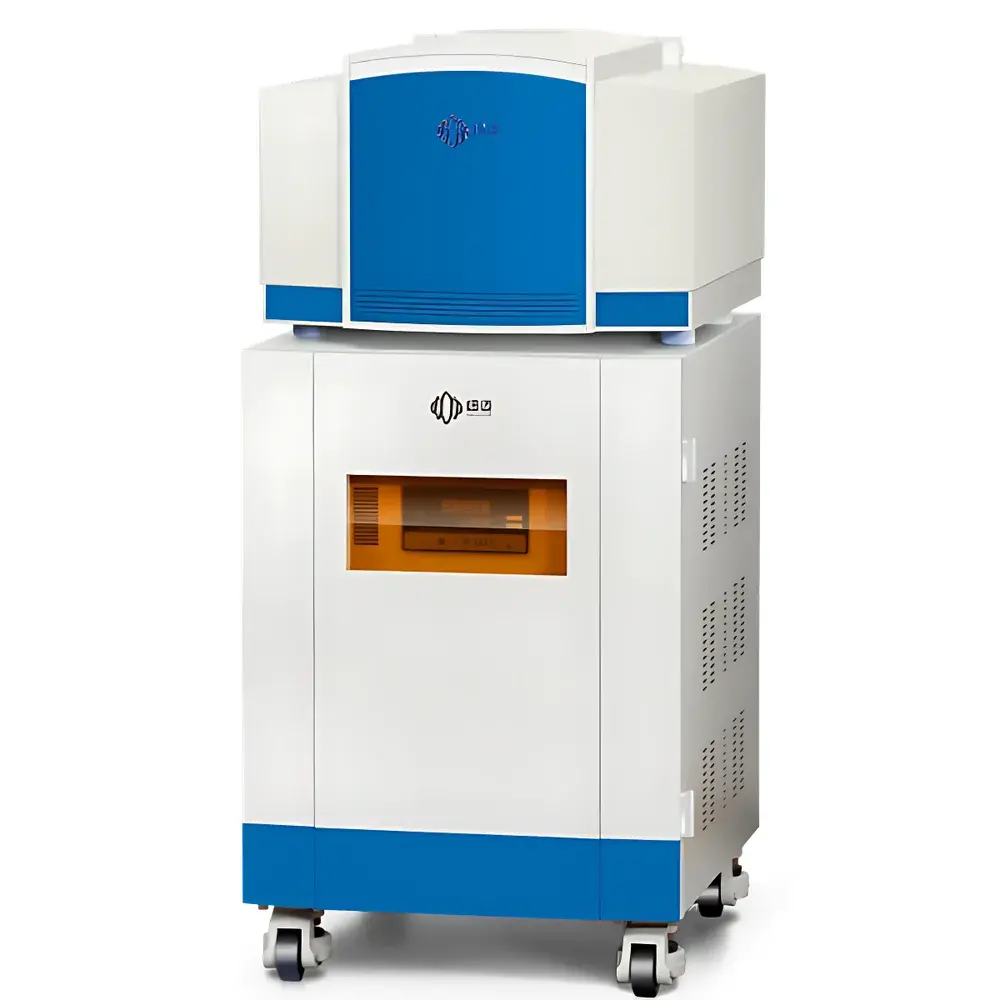
NIUMAG PQ001 Low-Field NMR Powder Affinity Analyzer
| Brand | NIUMAG |
|---|---|
| Origin | Jiangsu, China |
| Manufacturer Type | Authorized Distributor |
| Country of Origin | China |
| Model | PQ001 |
| Pricing | Available Upon Request |
Overview
The NIUMAG PQ001 Low-Field NMR Powder Affinity Analyzer is a dedicated benchtop instrument engineered for quantitative assessment of solid–liquid interfacial affinity in particulate systems. Unlike conventional wettability or contact-angle methods that probe macroscopic surface behavior, the PQ001 leverages low-field nuclear magnetic resonance (LF-NMR) spectroscopy—specifically transverse relaxation time (T2) distribution analysis—to resolve molecular-scale interactions between powder surfaces and liquid phases. When a solvent is introduced to a dry powder sample, surface-bound and bulk-phase solvent molecules exhibit distinct spin–spin relaxation dynamics due to differences in mobility and confinement. The PQ001 measures the T2 decay curve of the imbibed liquid, from which the relative proportion of immobilized (surface-adsorbed) versus mobile (bulk-like) solvent is derived. The initial slope of the cumulative integral of the T2 distribution—often referred to as the “affinity index”—correlates directly with surface energy heterogeneity and functional group density. This principle enables non-destructive, solvent-agnostic evaluation of powder wettability, dispersibility, and surface compatibility without optical opacity constraints or sample preparation artifacts.
Key Features
- Integrated 0.5 T permanent magnet system with temperature-stabilized probe (±0.1 °C), ensuring high signal reproducibility across repeated measurements.
- Automated sample loading and solvent dosing module compatible with standard 10 mm OD glass NMR tubes (sample volume: 0.5–2.0 mL).
- Dual-mode acquisition: Fast single-echo CPMG sequence (for routine screening) and multi-echo optimized protocol (for high-resolution T2 mapping).
- Real-time spectral processing engine delivering T2 distribution, affinity index, bound-fluid fraction, and relaxation time thresholds within <60 seconds post-acquisition.
- Rugged industrial-grade chassis with electromagnetic shielding compliant with IEC 61326-1 for laboratory and pilot-plant environments.
- No ionizing radiation, no vacuum requirements, and minimal consumables—designed for daily QC use in regulated manufacturing settings.
Sample Compatibility & Compliance
The PQ001 accommodates a broad spectrum of dry powders—including pharmaceutical actives and excipients, battery cathode/anode materials (e.g., NMC, graphite), catalyst supports (Al2O3, SiO2), ceramic precursors, and food-grade starches—provided particle size falls within the 10 nm–500 µm range and bulk density exceeds 0.1 g/cm³. Solvent compatibility spans polar protic (water, ethanol), polar aprotic (acetone, DMF), and non-polar media (hexane, toluene). Instrument design adheres to ISO/IEC 17025 calibration traceability frameworks; raw FID data and processed T2 spectra are stored in vendor-neutral HDF5 format. Optional audit trail and electronic signature modules support alignment with FDA 21 CFR Part 11 and EU Annex 11 requirements for GMP-compliant environments.
Software & Data Management
NIUMAG’s AffinitySuite v3.2 provides intuitive workflow-driven operation—from method setup and automated calibration (using reference glycerol/water standards) to comparative affinity ranking across batches. All processing algorithms are fully transparent and user-modifiable: users may adjust inversion regularization parameters, define custom T2 threshold boundaries, and export peak-area ratios for LIMS integration. Batch reports include statistical summaries (mean affinity index ± SD, n ≥ 3), overlayable T2 distributions, and pass/fail flags against pre-set specification limits. Data integrity safeguards include immutable file timestamps, role-based access control, and optional networked backup to secure NAS endpoints.
Applications
- Pharmaceutical formulation: Quantifying API–excipient wettability to predict dissolution rate and granulation efficiency.
- Battery material R&D: Screening carbon-coated cathode powders for electrolyte uptake kinetics and interfacial SEI stability.
- Coating & ink development: Correlating pigment surface treatment (silane, fatty acid) with dispersant efficacy in aqueous/organic vehicles.
- Food & nutraceuticals: Assessing starch modification degree via water-binding capacity and retrogradation propensity.
- Quality control: Detecting batch-to-batch variation in silica fume hydrophobicity or activated carbon surface oxidation state.
FAQ
How does the PQ001 differ from contact angle measurement?
Contact angle assesses macroscopic wetting on compressed pellets and is highly sensitive to surface roughness and heterogeneity. The PQ001 probes intrinsic surface affinity at the particle level in native, un-compacted form—eliminating compression artifacts and enabling direct correlation with slurry rheology.
Can it quantify hydrophobicity/hydrophilicity quantitatively?
Yes—the affinity index is calibrated against reference standards (e.g., untreated vs. octadecyltrichlorosilane-treated silica) and yields unitless, rank-orderable values suitable for DoE and QbD workflows.
Is method validation support available?
NIUMAG provides IQ/OQ documentation templates, linearity/range studies per ICH Q2(R2), and collaborative validation assistance for GLP/GMP submissions.
What maintenance is required?
Annual magnet shimming and RF coil performance verification; no cryogens or vacuum pumps—maintenance intervals exceed 18 months under typical lab usage.
Does it require specialized NMR expertise?
No—AffinitySuite abstracts pulse sequence physics into application-specific wizards; operator training typically completes in under 4 hours.



