
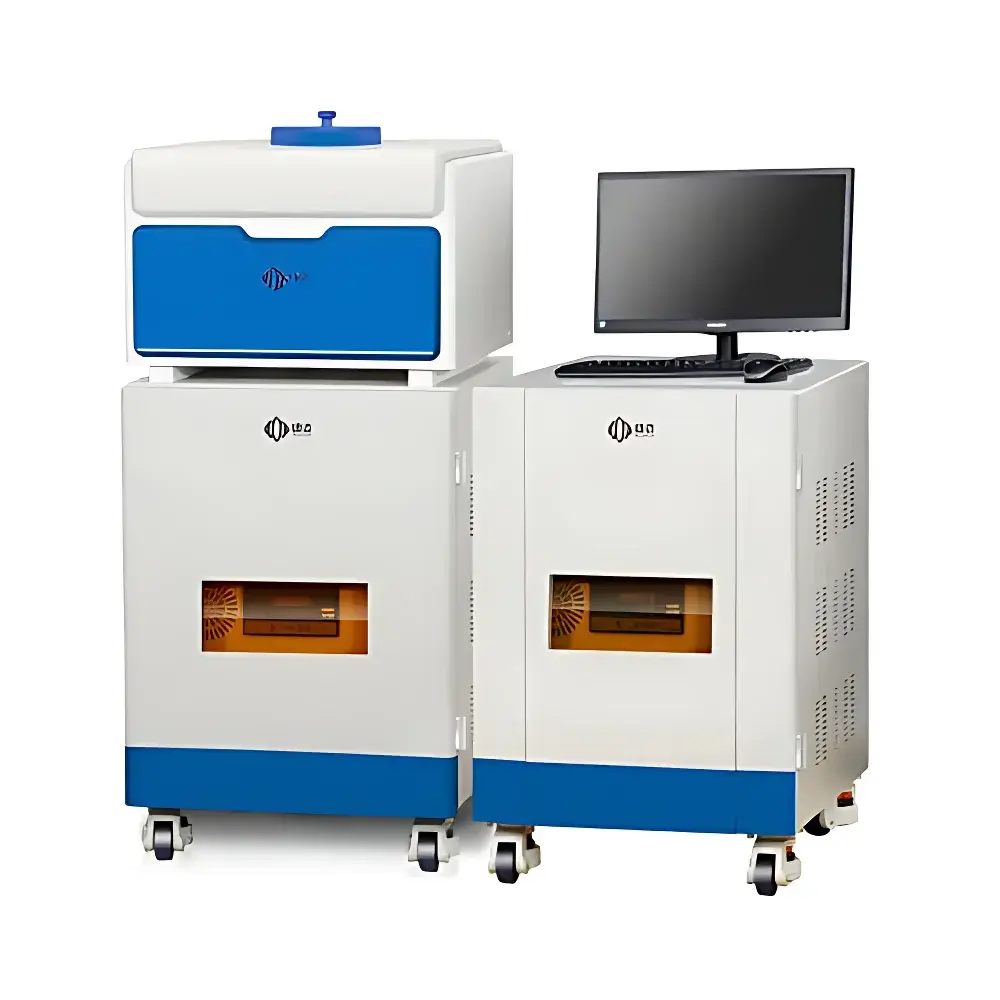
NIUMAG VTMR Series Low-Field Variable-Temperature Nuclear Magnetic Resonance Analyzer
| Brand | NIUMAG |
|---|---|
| Origin | Jiangsu, China |
| Manufacturer Type | Authorized Distributor |
| Country of Origin | China |
| Model | VTMR-niumag |
| Pricing | Available Upon Request |
| Magnet Type | Permanent Magnet |
| Magnetic Field Strength | 0.5 ± 0.05 T |
| Standard Temperature Range | Room Temperature to 130 °C |
| Optional Cryo/High-Temp Module | −100 °C to 200 °C |
| Imaging Capability | Optional |
| Measurement Modes | T₁ & T₂ Relaxometry, NMR Imaging (MRI), Quantitative Analysis |
| Typical Acquisition Time | ≤2 min per sample |
| Sample Forms | Solutions, Gels, Solids, Powders, Particulates |
| Core Technology | FLAT (Fast Low-Amplitude Transient) Pulse Sequence for Short-T₂/Weak-Signal Detection |
Overview
The NIUMAG VTMR Series is a purpose-engineered low-field variable-temperature nuclear magnetic resonance (NMR) analyzer designed for industrial R&D and quality control laboratories requiring robust, non-destructive characterization of material structure and dynamics across controlled thermal conditions. Operating at a stable 0.5 T permanent magnet field, the system leverages fundamental NMR principles—spin-lattice (T₁) and spin-spin (T₂) relaxation—to quantify molecular mobility, phase distribution, crosslink density, polymer chain dynamics, and interfacial interactions without chemical modification or sample destruction. Its integrated temperature control architecture enables precise in-situ thermal ramping—from ambient to 130 °C standard, or extended to −100 °C to 200 °C with optional cryo-heating modules—making it uniquely suited for real-time monitoring of curing, aging, gelation, crystallization, and solvent diffusion processes. The proprietary FLAT (Fast Low-Amplitude Transient) acquisition protocol significantly enhances signal fidelity for short-T₂ species (e.g., elastomers, filled rubbers, porous solids), overcoming conventional sensitivity limitations in low-field NMR.
Key Features
- Permanent magnet platform ensuring long-term field stability (<0.01% drift/year) and zero cryogen dependency
- Standard temperature-controlled probe with ±0.1 °C regulation from room temperature to 130 °C; optional dual-zone module supporting rapid thermal cycling between −100 °C and 200 °C
- FLAT pulse sequence optimized for weak-signal detection in heterogeneous, rigid, or highly viscous systems
- Sub-2-minute acquisition time for routine T₁/T₂ mapping, enabling high-throughput screening and inline process validation
- Modular hardware design: MRI capability available as an add-on with gradient coil set and dedicated reconstruction firmware
- Fully integrated RF electronics with broadband tuning (1H, 19F, 7Li, 23Na configurable) and digital signal processing at 16-bit resolution
Sample Compatibility & Compliance
The VTMR accommodates diverse physical states—including liquids, gels, emulsions, powders, granules, molded elastomers, and composite laminates—in standard 10–25 mm OD glass or PTFE tubes. No sample preparation (e.g., dissolution, derivatization, or labeling) is required, preserving native morphology and enabling repeat measurements on identical specimens. All measurement protocols comply with ISO 17025 traceability requirements when operated within calibrated environmental conditions. Data acquisition workflows support audit-ready documentation aligned with GLP and GMP environments, including electronic signatures, user access controls, and full experimental metadata logging (temperature history, pulse sequence parameters, shimming status). Optional 21 CFR Part 11 compliance package provides electronic record integrity, change tracking, and role-based permissions.
Software & Data Management
NIUMAG’s proprietary NMIQ software suite provides unified control of spectrometer, temperature module, and imaging subsystems. It includes pre-built application libraries for rubber crosslink density (ASTM D6204-22 compliant), polymer phase separation, moisture migration, and competitive adsorption quantification. All raw FID data are stored in vendor-neutral HDF5 format with embedded metadata (field strength, temperature timestamp, coil loading factor). Batch processing supports automated T₂ distribution deconvolution using NNLS (non-negative least squares) and multi-exponential fitting with Akaike Information Criterion (AIC)-guided model selection. Export options include CSV, MATLAB .mat, and Bruker-compatible ParaVision format for cross-platform analysis interoperability.
Applications
- Rubber & Elastomer R&D: Quantitative crosslink density mapping during vulcanization; soft/hard segment ratio in thermoplastic elastomers; plasticizer migration kinetics
- Materials Aging Studies: Real-time T₂ evolution during thermal oxidative degradation of polyolefins or epoxies; crack initiation detection via localized signal voids in MRI mode
- Colloid & Dispersion Stability: Particle aggregation onset detection through T₂ shortening; surfactant adsorption isotherms via competitive proton exchange
- Pharmaceutical Solid Dosage Forms: Hydration state profiling in amorphous dispersions; excipient–API miscibility assessment
- Energy Materials: Lithium-ion battery electrode wettability and electrolyte penetration depth; pore-filling efficiency in solid-state electrolytes
FAQ
What temperature accuracy and stability does the VTMR achieve during dynamic thermal ramps?
The standard probe maintains ±0.1 °C accuracy over 25–130 °C with ramp rates up to 5 °C/min; the optional cryo-heating module achieves ±0.3 °C accuracy across −100 °C to 200 °C.
Can the VTMR be integrated into automated production lines or pilot-scale reactors?
Yes—Ethernet/IP and Modbus TCP interfaces enable PLC-level integration for triggered acquisition, temperature synchronization, and real-time data streaming to MES/SCADA platforms.
Is NMIQ software validated for regulated environments?
A 21 CFR Part 11-compliant version is available with full validation documentation (IQ/OQ/PQ protocols), electronic audit trail, and password-protected method locking.
How does FLAT differ from conventional CPMG for short-T₂ samples?
FLAT employs low-flip-angle, variable-delay excitation to minimize stimulated echo artifacts and improve SNR in systems where T₂ < 100 µs—particularly critical for carbon-black-filled rubber or ceramic composites.
Does NIUMAG provide application-specific method development support?
Yes—NIUMAG’s global applications team offers remote method optimization, on-site feasibility studies, and co-development of ASTM/ISO-aligned test protocols under NDA.



