
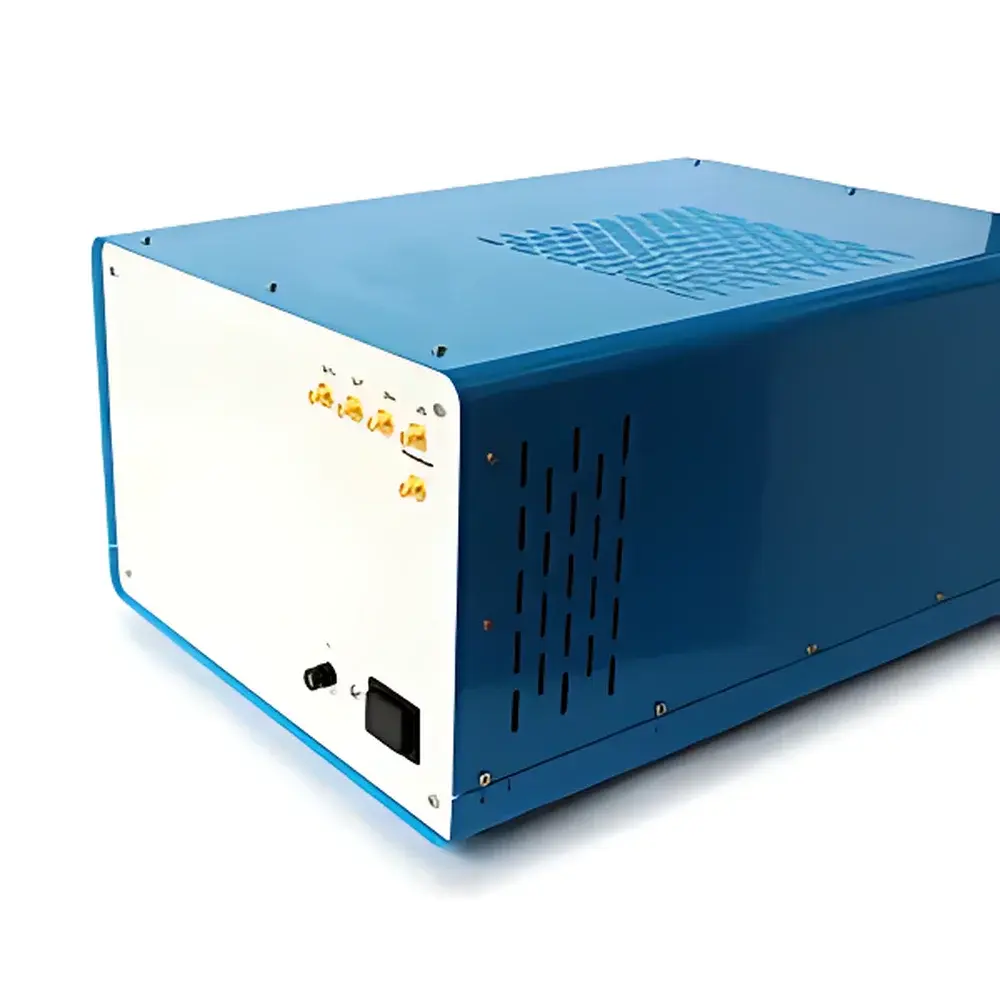
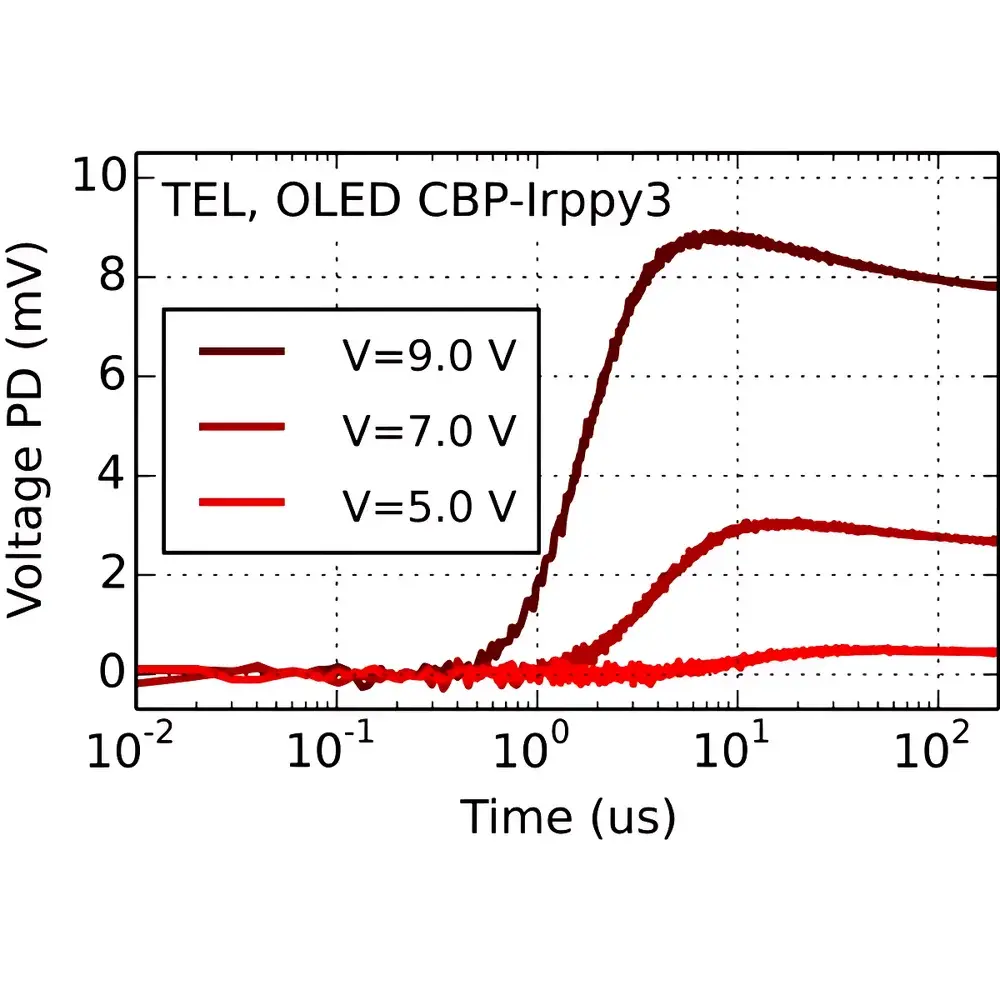
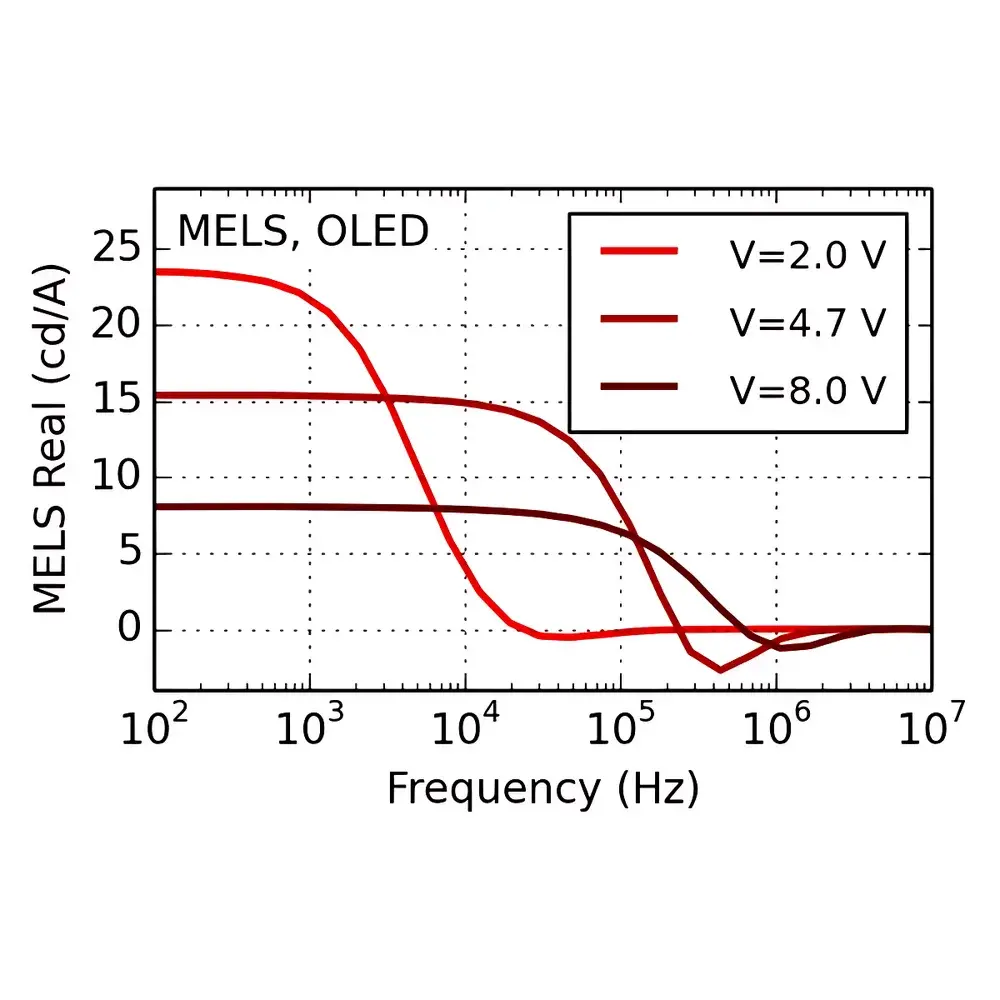
Fluxim TEL Transient Electroluminescence Measurement System
| Brand | Fluxim |
|---|---|
| Origin | Switzerland |
| Model | TEL |
| Key Features | DC/AC/Transient operation modes |
| Measurement Capabilities | TEL, TPC, TPV, Photo-CELIV, Dark-CELIV, IMPS, IMVS, IS, CV, C-f, DLTS, SCLC, Pulse Voltage, MIS-CELIV, Delaytime-CELIV, Injection-CELIV |
| Sampling Rate | 60 MS/s |
| Time Resolution | 18 ns |
| Frequency Range | 10 mHz – 10 MHz |
| Current Resolution | <100 pA |
| LED Rise Time | 100 ns |
| Current Range | ±100 mA |
| Voltage Range | ±12 V (extendable to ±60 V with SMU module) |
| Spectral Coverage (Multi-LED) | 360–1100 nm |
| Temperature Range (optional cryo/heating stage) | −120 °C to +150 °C |
Overview
The Fluxim TEL Transient Electroluminescence Measurement System is a high-precision, modular instrumentation platform engineered for quantitative carrier dynamics characterization in organic and hybrid optoelectronic devices. Based on time-resolved electroluminescence detection synchronized with controlled electrical excitation waveforms, the system enables direct probing of radiative recombination kinetics, charge injection barriers, emissive state lifetimes (e.g., triplet lifetimes in phosphorescent OLEDs), and carrier transport asymmetry under operational bias conditions. Unlike steady-state photoluminescence or EL intensity measurements, the TEL mode captures nanosecond-scale luminescence decay transients following pulsed or modulated voltage stimuli—providing unambiguous access to carrier lifetime, recombination order, trap-assisted decay pathways, and exciton–polaron interaction timescales. The system integrates seamlessly with standard device architectures—including single-carrier, bilayer, bulk heterojunction, and multilayer OLEDs, perovskite LEDs (PeLEDs), and thin-film solar cells—supporting both research-grade fundamental studies and process development requiring traceable, reproducible carrier parameter extraction.
Key Features
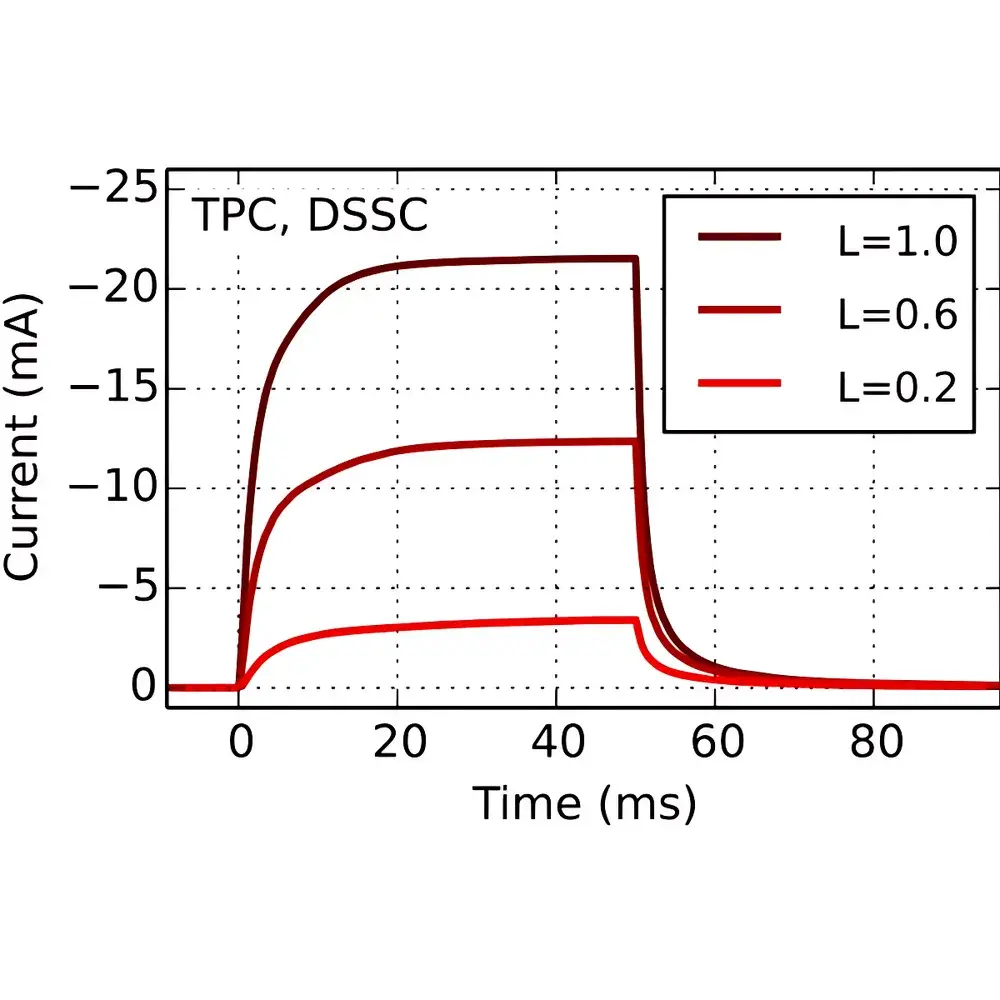
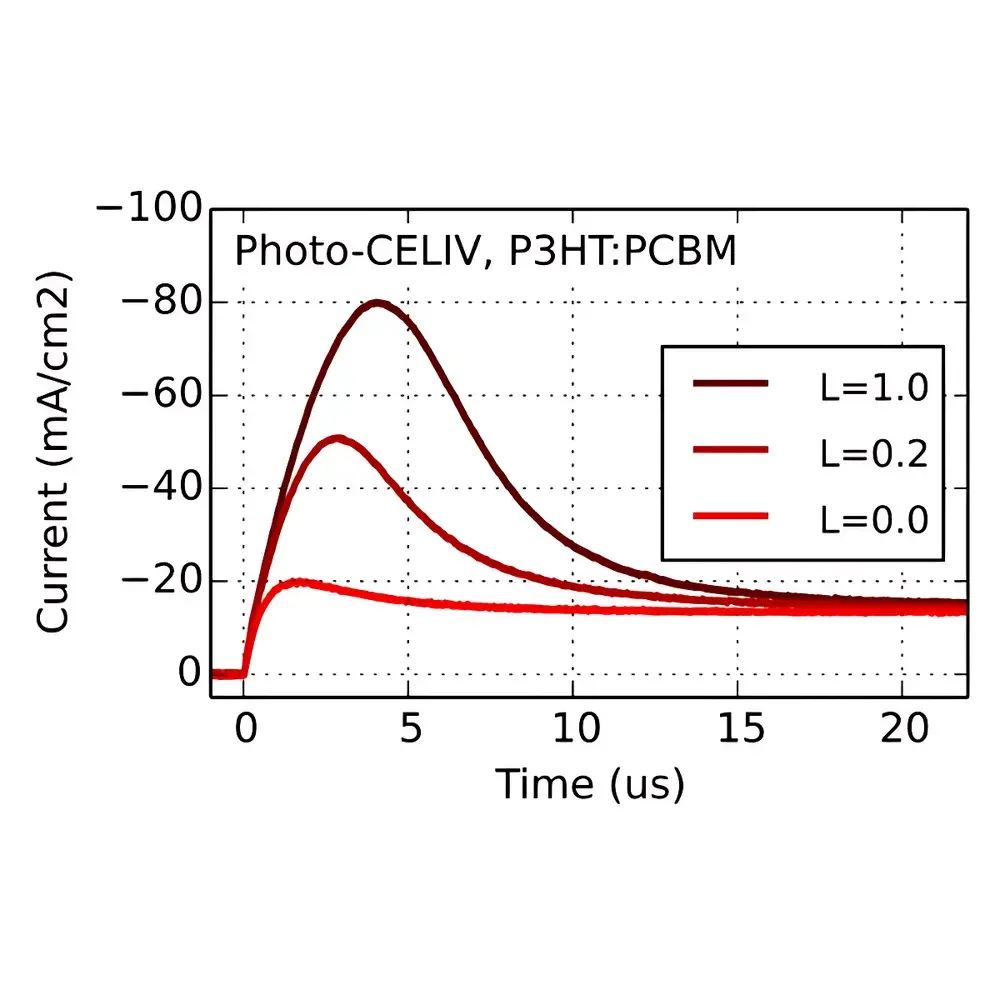
- Simultaneous multi-mode acquisition: DC I–V, AC impedance (IS), transient electroluminescence (TEL), transient photocurrent (TPC), transient photovoltage (TPV), and CELIV-family techniques (Photo-, Dark-, MIS-, Injection-, and Delaytime-CELIV) within a single hardware architecture.
- Ultra-high temporal fidelity: 60 MS/s real-time sampling with 18 ns intrinsic time resolution ensures accurate capture of fast electroluminescence rise/fall kinetics and sub-microsecond carrier extraction dynamics.
- Low-noise current measurement: <100 pA RMS current resolution across ±100 mA range; extended to 1 pA with optional SMU module for ultra-low-current SCLC and dark-injection analysis.
- Programmable excitation sources: Fast-switching voltage pulses (±12 V standard, ±60 V optional), sinusoidal AC bias (10 mHz–10 MHz), and spectrally tunable LED illumination (360–1100 nm) with 100 ns rise time for synchronized photoexcitation.
- Modular thermal control: Interchangeable cryogenic and heating stages support temperature-dependent carrier dynamics studies from −120 °C to +150 °C—critical for quantifying activation energies of trap emission or thermally activated recombination.
- Fully synchronized optical detection: Integrated high-speed photodiode or optional fiber-coupled spectrometer enables wavelength-resolved TEL decay analysis for material-specific emissive state identification.
Sample Compatibility & Compliance
The TEL system accommodates standard device geometries used in academic and industrial R&D labs: glass/ITO/PEDOT:PSS/active layer/Ca/Al (OLED), ITO/TiO₂/perovskite/Spiro-OMeTAD/Au (PSC), and inverted configurations with ZnO or SnO₂ electron transport layers. Device contact is achieved via guarded probe stations or vacuum chuck interfaces compatible with glovebox integration. All measurement protocols adhere to ISO/IEC 17025 principles for measurement uncertainty estimation. Data acquisition and post-processing workflows comply with GLP and GMP requirements where applicable, including full audit trails, user-access controls, and electronic signature support per FDA 21 CFR Part 11 when deployed with validated software configurations. Calibration traceability is maintained to NIST-traceable voltage and current standards.
Software & Data Management
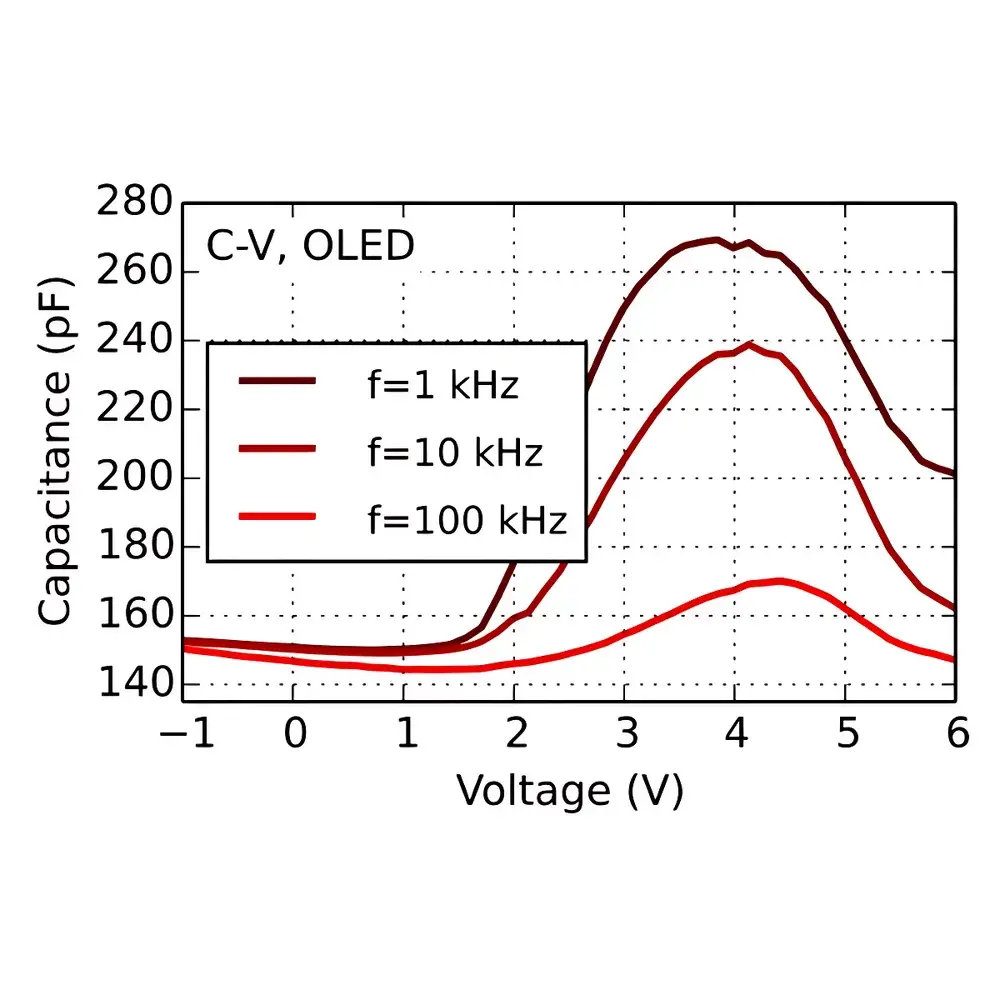
The proprietary Fluxim PAIOS 4.0 software suite provides unified control, real-time visualization, and advanced model-based fitting for all supported techniques. Raw transient datasets are stored in HDF5 format with embedded metadata (timestamp, instrument settings, environmental conditions). Built-in analytical modules include: (1) mono-/bi-exponential TEL decay fitting with χ² minimization; (2) carrier mobility extraction via SCLC space-charge-limited current modeling; (3) trap density profiling using DLTS-derived Arrhenius plots; (4) recombination coefficient calculation from TPV/TPC amplitude vs. light intensity scaling; and (5) equivalent circuit modeling (ECM) for IS and C–f data using Kramers–Kronig validated algorithms. Export options include CSV, MATLAB .mat, and standardized MDF (Measurement Data Format) for third-party analysis tools. Batch processing and script automation (Python API) support high-throughput screening and DOE-driven optimization.
Applications
- Quantitative evaluation of charge injection efficiency and interfacial energy level alignment in OLED emitters and host–guest systems.
- Triplet exciton lifetime mapping in phosphorescent and TADF-based devices under varying drive conditions.
- Correlation of TEL decay kinetics with non-radiative recombination losses in perovskite LEDs and quantum dot LEDs.
- Trap depth and density profiling in metal oxide electron transport layers (e.g., ZnO, SnO₂) via temperature-dependent TEL and DLTS.
- Carrier mobility anisotropy assessment in vertically stacked tandem solar cells using spatially resolved TEL imaging (with optional scanning stage).
- Validation of drift-diffusion simulations by direct experimental input of τₙ, μₙ, Nₜᵣₐₚ, and εᵣ parameters extracted from combined TEL, CV, and IS datasets.
- Accelerated degradation studies tracking evolution of emissive zone integrity and trap formation during operational stress testing.
FAQ
What distinguishes TEL from conventional EL or PL lifetime measurements?
TEL measures electroluminescence decay under controlled electrical injection, directly linking radiative recombination kinetics to carrier transport and injection physics—unlike PL, which probes only photoexcited states independent of device-level charge injection barriers or built-in fields.
Can the system measure both OLEDs and perovskite solar cells without hardware modification?
Yes—the modular design allows seamless switching between OLED-optimized (low-voltage, high-sensitivity TEL) and PV-optimized (high-current, wide dynamic range TPC/TPV) configurations via software-defined signal routing and gain calibration.
Is the 18 ns time resolution achievable across the full ±100 mA current range?
Yes—hardware-triggered acquisition with on-board FPGA-based timestamping ensures consistent resolution irrespective of signal amplitude, validated against NIST-traceable pulse generators.
How does the system handle capacitive transients that may obscure true carrier recombination signals?
Integrated adaptive baseline correction, multi-frequency lock-in demodulation (for IMPS/IMVS), and differential current–voltage referencing suppress displacement current artifacts—enabling clean separation of capacitive, resistive, and recombination-related components.
Are firmware updates and application notes available to academic users?
Fluxim provides quarterly firmware releases, peer-reviewed application notes (e.g., “Extracting Langevin prefactors from Delaytime-CELIV”), and remote technical support via secure lab-to-lab video collaboration channels.



