
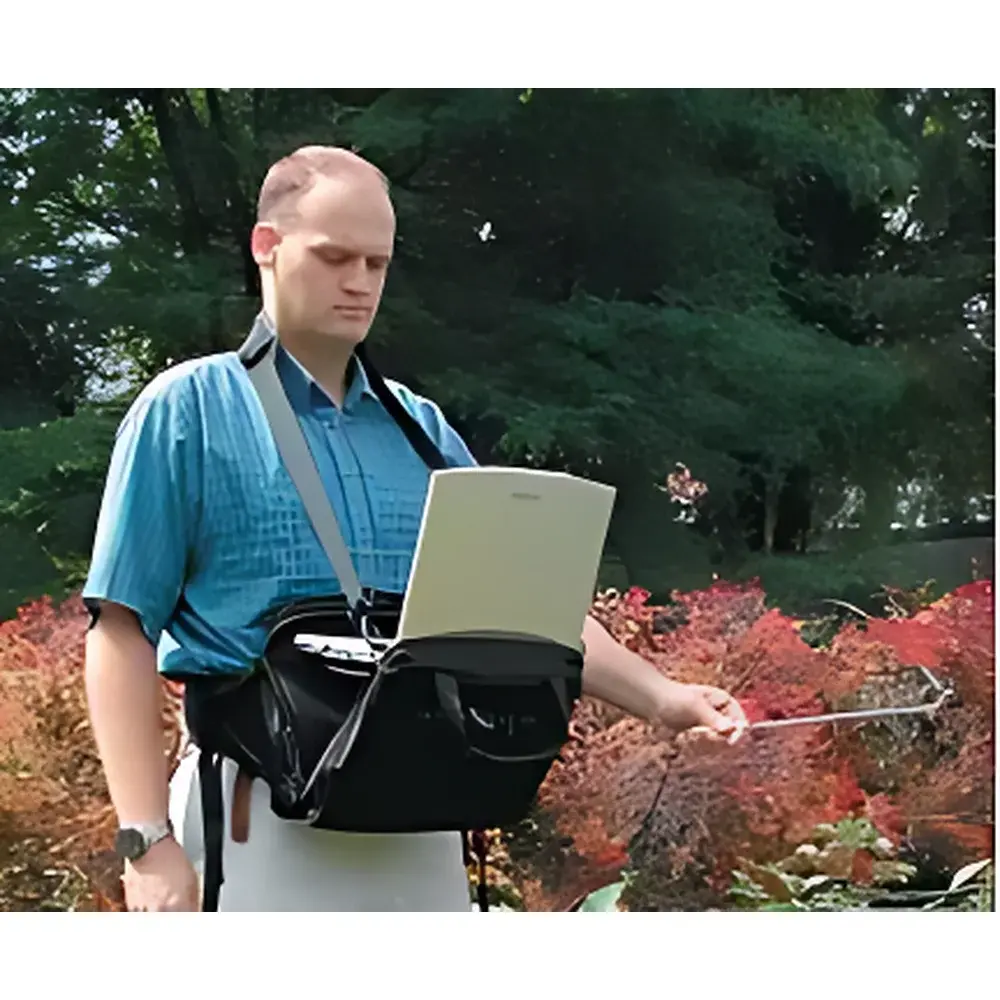
Apogee PAR-NIR & UV-PAR Portable Spectroradiometer
| Origin | USA |
|---|---|
| Manufacturer Type | Authorized Distributor |
| Origin Category | Imported |
| Model | APOGEE |
| Pricing | Available Upon Request |
| Wavelength Range | 350–1000 nm (PAR-NIR) / 300–850 nm (UV-PAR) |
| Dimensions | 15.5 × 9.5 × 4 cm (PAR-NIR), 15.5 × 11 × 8 cm (UV-PAR) |
| Weight | 500 g (PAR-NIR), 900 g (UV-PAR) |
| Detector | 2048-pixel linear CCD array (14 × 200 µm) |
| Spectral Resolution | 0.5 nm |
| Wavelength Repeatability | < 0.05 nm |
| Thermal Wavelength Drift | < 0.001 nm/°C |
| Integration Time | 4–6500 ms |
| Exposure Time | 4 µs–60 s |
| Dynamic Range | 1–4096 counts (±0.5%) |
| Signal-to-Noise Ratio | 1000:1 |
| Linearity Range | 0–2.1 AU (<0.5% deviation) |
| Power Input | +5 VDC, 220–250 mA |
| Optical Fiber Cable | 2 m, SMA-terminated |
| Cosine Corrector | Integrated, NIST-traceable calibration |
Overview
The Apogee PAR-NIR and UV-PAR Portable Spectroradiometers are compact, field-deployable optical instruments engineered for high-fidelity spectral radiometric measurements across terrestrial, aquatic, and industrial environments. Based on a thermally stabilized 2048-pixel linear CCD array and precision diffraction grating optics, these devices operate on the principle of fixed-grating spectroradiometry—capturing full-spectrum irradiance data in a single exposure with calibrated wavelength accuracy traceable to NIST standards. Unlike scanning monochromator-based systems, the Apogee platform delivers rapid, snapshot spectral acquisition ideal for time-resolved monitoring of dynamic light fields—such as diurnal canopy reflectance shifts, underwater spectral attenuation profiles, or LED lighting spectral power distribution (SPD) validation. Designed for ambient operation from −10 °C to 50 °C, each unit integrates an optically optimized cosine corrector that conforms to ISO/CIE requirements for hemispherical irradiance measurement, ensuring angular response compliance per CIE 177:2007 and ASTM E308-22.
Key Features
- Two application-optimized models: PAR-NIR (350–1000 nm) for photosynthetic and near-infrared vegetation indices; UV-PAR (300–850 nm) for ultraviolet stress response and photobiological hazard assessment
- Thermally compensated optical bench minimizing wavelength drift (<0.001 nm/°C), enabling stable field deployments without active temperature control
- NIST-traceable factory calibration delivered with individual certificate of conformance, including spectral responsivity, linearity, and cosine error characterization
- Ergonomic, ambidextrous housing with IP54-rated enclosure—suitable for extended outdoor use in rain, dust, and variable solar loading conditions
- Integrated 2-meter SMA-terminated optical fiber cable with detachable cosine corrector—facilitating remote probe placement while maintaining mechanical stability during handheld or tripod-mounted operation
- Low-power USB-powered architecture (5 VDC, ≤250 mA) compatible with field-grade power banks and laptop-based acquisition—no external battery packs or AC adapters required
Sample Compatibility & Compliance
The Apogee spectroradiometers support direct irradiance, radiance, reflectance, transmittance, and quantum flux (PPFD, YPF) quantification without sample preparation or consumables. The cosine corrector enables compliant measurement of planar irradiance under natural skylight, artificial sources (e.g., horticultural LEDs, UV-C lamps), or water-leaving radiance when coupled with submersible accessories. All units comply with ISO 17166:2019 (CIE S 014-2/E:2022) for photobiological safety, ASTM E2915-23 for spectral instrument verification, and FDA guidance for spectral characterization of light-emitting medical devices. Data outputs adhere to ASTM E2721-21 (Standard Practice for Reporting Spectral Irradiance Data) and are structured for interoperability with USDA ARS CropScan databases, NASA’s Ocean Color Web metadata schema, and EU Horizon 2020 environmental observatory frameworks.
Software & Data Management
Instrument control and spectral processing are performed via Apogee’s cross-platform SpectraView software (Windows/macOS/Linux), which supports real-time spectrum visualization, batch export in CSV, ENVI, and SI-23 formats, and automated calculation of derived metrics—including NDVI, PRI, EVI, CIE 1931 chromaticity coordinates, correlated color temperature (CCT), and photosynthetically active radiation (PAR) integrals. Raw spectra include embedded EXIF-style metadata (GPS timestamp, integration time, detector temperature, calibration ID). Software enforces audit-trail logging per 21 CFR Part 11 requirements when configured in validated laboratory mode, recording user actions, calibration events, and data export history with digital signature capability. Exported datasets are FAIR-compliant (Findable, Accessible, Interoperable, Reusable) and compatible with Python (NumPy/Pandas), R (hyperSpec), and MATLAB hyperspectral toolboxes.
Applications
- Ecophysiology: In situ leaf-level reflectance spectroscopy for pigment estimation (chlorophyll-a/b, anthocyanin, carotenoids) and drought stress detection
- Aquatic Optics: Downwelling irradiance profiling in coastal zones and coral reef habitats to parameterize radiative transfer models (e.g., Hydrolight input)
- Horticultural Lighting: Validation of spectral quality metrics (R:FR ratio, phytochrome photostationary state, UV-B dose rate) per ASABE S663.1
- Mineral Remote Sensing: Field-based identification of iron oxide, clay, and carbonate absorption features in outcrop surveys
- Industrial QA: Spectral verification of UV-curing lamps, grow lights, and daylight-mimicking architectural lighting per IEC 62471 and ENERGY STAR SSL Program Requirements
FAQ
What spectral calibration standards are used for factory calibration?
Each unit is calibrated against NIST-traceable tungsten-halogen and deuterium lamp standards at three temperature-stabilized points (25 °C, 35 °C, 45 °C) to characterize thermal drift and detector linearity.
Can the instrument measure underwater irradiance directly?
Yes—when paired with Apogee’s optional pressure-rated cosine corrector (up to 10 m depth) and waterproof fiber adapter, it complies with UNESCO-IOC protocols for marine optical profiling.
Is spectral data export compatible with ENVI or ArcGIS?
Yes—CSV exports include wavelength headers and spectral values; ENVI BIL/BIP files are generated natively with geotag-ready metadata fields.
How often is recalibration recommended?
Annual recalibration is advised for GLP-compliant operations; field verification using Apogee’s portable reference standard (SR-1800) is recommended before critical campaigns.
Does the software support automated time-series logging?
Yes—SpectraView includes configurable interval acquisition (1 sec to 24 hr intervals), GPS-synchronized timestamps, and SD-card buffering for unattended deployment up to 72 hours.
Related Products







