
MCL Think Nano Nano-Route®3D Nanopositioning and Micropositioning Software
| Brand | MCL Think Nano |
|---|---|
| Origin | USA |
| Manufacturer Type | Authorized Distributor |
| Product Category | Imported |
| Model | Nano-Route®3D |
| Product Type | Motorized Translation Stage Control Software |
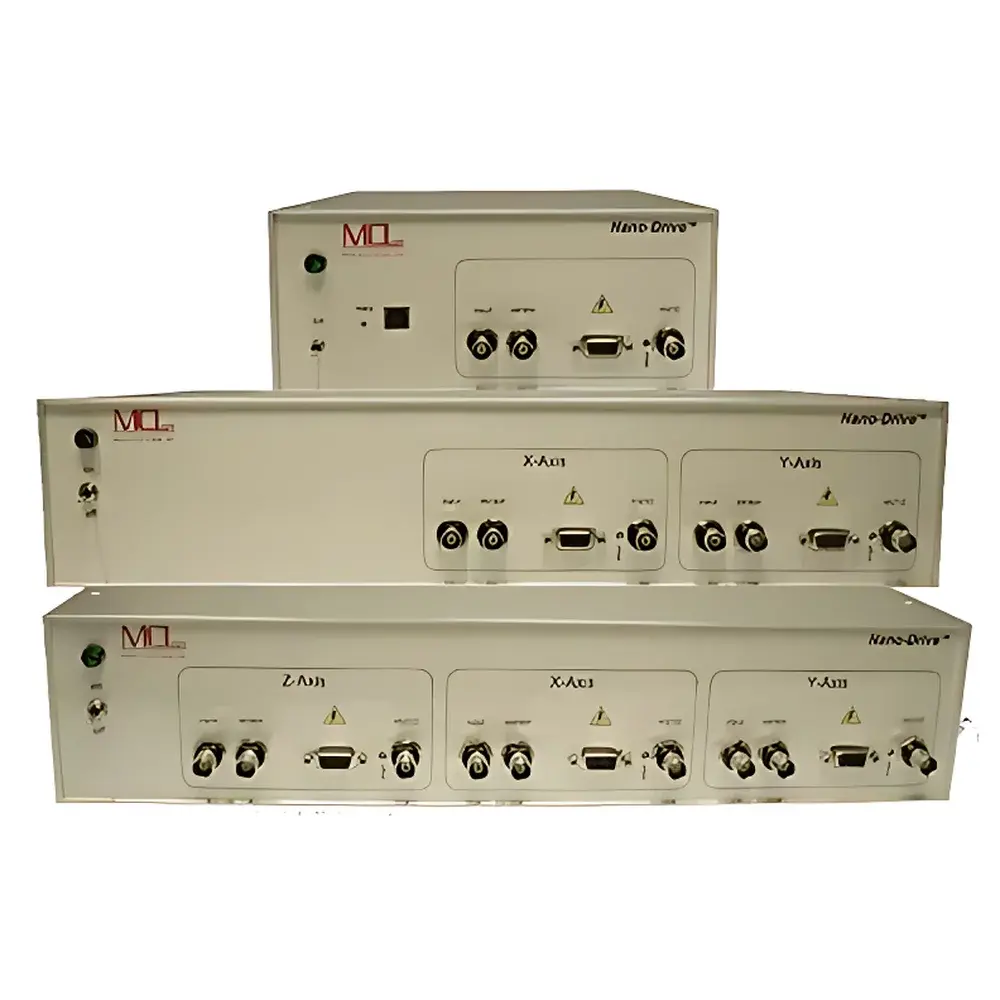
| Compatibility | LabVIEW-Based, USB-Enabled Nano-Drive® Controllers |
Overview
Nano-Route®3D is a rigorously engineered LabVIEW-based motion control and data acquisition software platform developed by Mad City Labs (MCL Think Nano) for precision nanopositioning and micropositioning systems. Designed exclusively for integration with MCL’s USB-enabled Nano-Drive® digital controllers, the software implements deterministic, low-latency communication to achieve sub-nanometer positional reproducibility in multi-axis translation stages. Its architecture leverages LabVIEW’s real-time execution engine to synchronize motion commands with high-fidelity sensor feedback—enabling closed-loop operation where position error correction is performed at hardware-accelerated rates. Nano-Route®3D serves as both an out-of-the-box operational interface and a scalable development environment for automated microscopy workflows, single-molecule tracking, optical trap calibration, and scanning probe modalities requiring programmable trajectory generation with temporal fidelity down to millisecond resolution.
Key Features
- Intuitive graphical user interface supporting rapid route definition without prior LabVIEW expertise
- Automatic controller enumeration and attribute detection upon USB connection
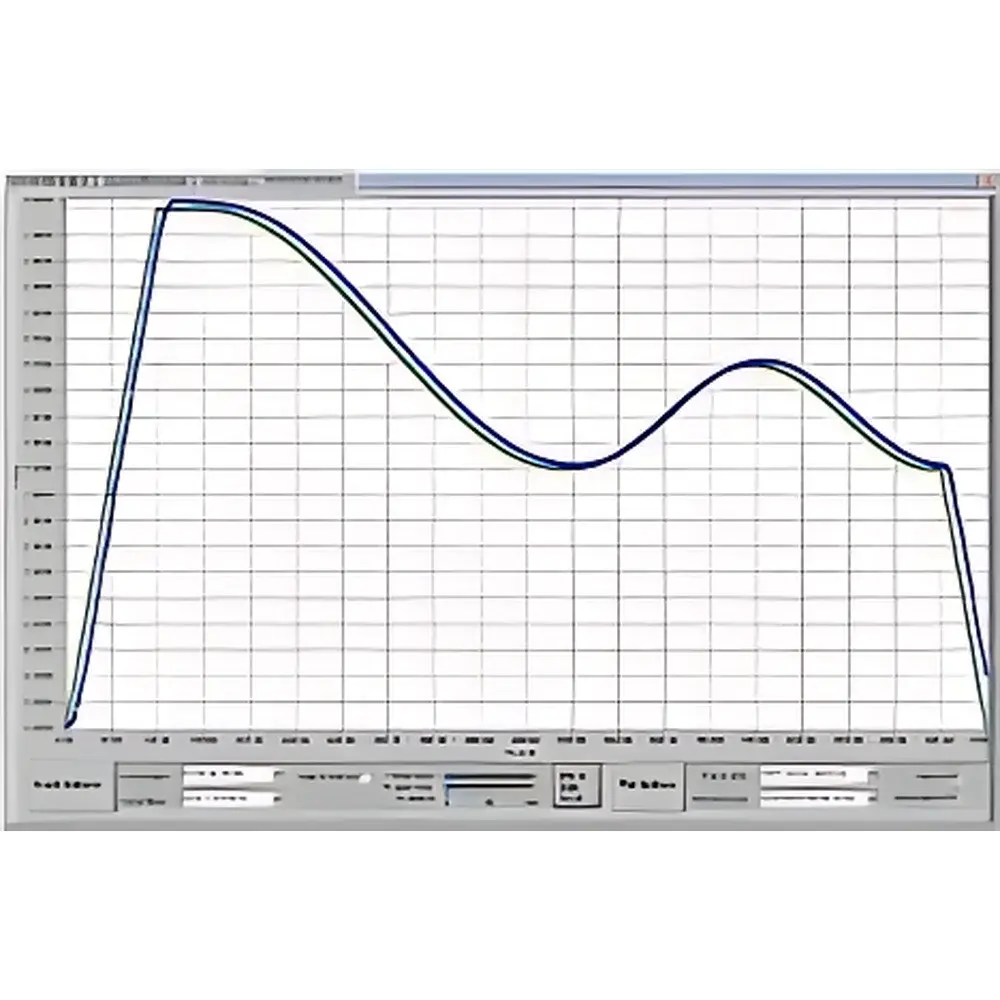
- Flexible route generation: point-to-point “Go To” commands, time-based linear/ramp trajectories, and parametric path functions (e.g., Lissajous, spiral, raster)
- Dual execution modes: single-write (stepwise command issuance) and waveform mode (bulk download of precomputed DAC waveforms for jitter-free motion)
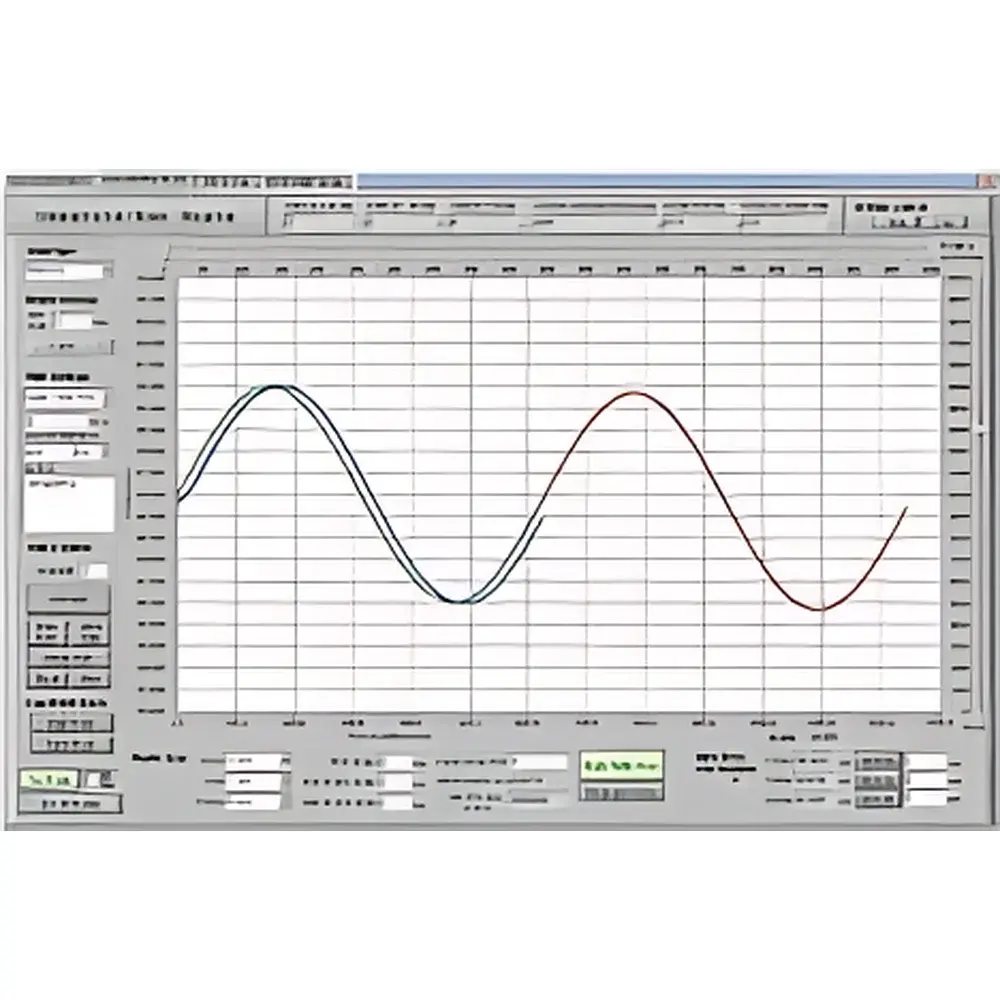
- Real-time live position monitoring via integrated ADC channels—displayed alongside commanded DAC values in synchronized time-series plots
- Interactive route preview window with drag-and-edit node manipulation prior to execution
- Exportable position/time/sensor data in CSV and TDMS formats for post-acquisition analysis in MATLAB, Python, or Excel
- Native LabVIEW compatibility with full VI source access, enabling extension via custom subVIs or integration into larger experimental automation frameworks
Sample Compatibility & Compliance
Nano-Route®3D is validated for use with all MCL Think Nano motorized translation stages—including XYZ piezo-driven stages, flexure-guided platforms, and hybrid electromagnetic-piezo systems—when paired with Nano-Drive® USB controllers (models ND-100, ND-200, ND-300). The software complies with USB 2.0 specifications for isochronous data transfer and supports Windows 10/11 (64-bit) with NI LabVIEW Runtime Engine v2020 or later. While not certified under FDA 21 CFR Part 11, its audit-trail-capable logging architecture—recording timestamped command sequences, sensor responses, and system state changes—supports GLP/GMP-aligned documentation practices in academic and industrial R&D environments. All motion profiles adhere to manufacturer-specified stage travel limits and voltage compliance thresholds to prevent mechanical overtravel or actuator saturation.
Software & Data Management
Data integrity is maintained through synchronized dual-channel acquisition: one channel records commanded DAC output (motion reference), while the second captures real-time analog sensor feedback (typically capacitive or strain-gauge position signals). Both streams are time-stamped with microsecond resolution and visualized in overlay plots with adjustable scaling, cursors, and annotation tools. Export functionality includes metadata headers (controller ID, firmware version, sampling rate, axis mapping), ensuring traceability across experiments. For regulatory workflows, users may enable automatic log archiving with configurable retention policies. Integration with third-party imaging platforms—including ImageJ (via ImageJVI plugin), MetaMorph, Scope-Pro, μManager, and SlideBook—is achieved through standardized instrument drivers and documented API hooks, eliminating proprietary protocol dependencies.
Applications
Nano-Route®3D is deployed in advanced optical laboratories for applications demanding spatiotemporal coordination between positioning and image capture: automated Z-stack acquisition in super-resolution microscopy; drift-corrected time-lapse imaging of live-cell dynamics; synchronized stage scanning during structured illumination or light-sheet illumination; calibration of interferometric displacement sensors; and closed-loop feedback control in adaptive optics systems. Its deterministic timing model makes it suitable for pump-probe experiments where stage repositioning must align within ±5 ms of laser pulse triggers. Researchers at institutions including Vanderbilt University and Indiana University have utilized Nano-Route®3D for quantitative analysis of cytoskeletal dynamics and organelle trafficking under confocal and TIRF modalities.
FAQ
Is Nano-Route®3D compatible with non-MCL positioning hardware?
No—Nano-Route®3D communicates exclusively with MCL’s Nano-Drive® USB controllers using proprietary firmware-level protocols.
Can I modify the source code of Nano-Route®3D?
Yes—full LabVIEW project files are provided with every licensed installation, permitting modification, debugging, and reuse under standard academic and commercial LabVIEW licensing terms.
Does Nano-Route®3D support real-time external triggering?
Yes—hardware trigger inputs (TTL) can initiate route execution or pause/resume operations, enabling synchronization with cameras, lasers, or external DAQ systems.
What export formats are supported for acquired position data?
CSV (comma-separated values) and NI TDMS (Technical Data Management Streaming) formats, both retaining native time stamps and channel metadata.
Is technical support available for custom LabVIEW VI development?
Yes—MCL Think Nano offers engineering consultation and bespoke VI development services for application-specific motion sequencing, multi-instrument orchestration, or regulatory-compliant reporting modules.




