
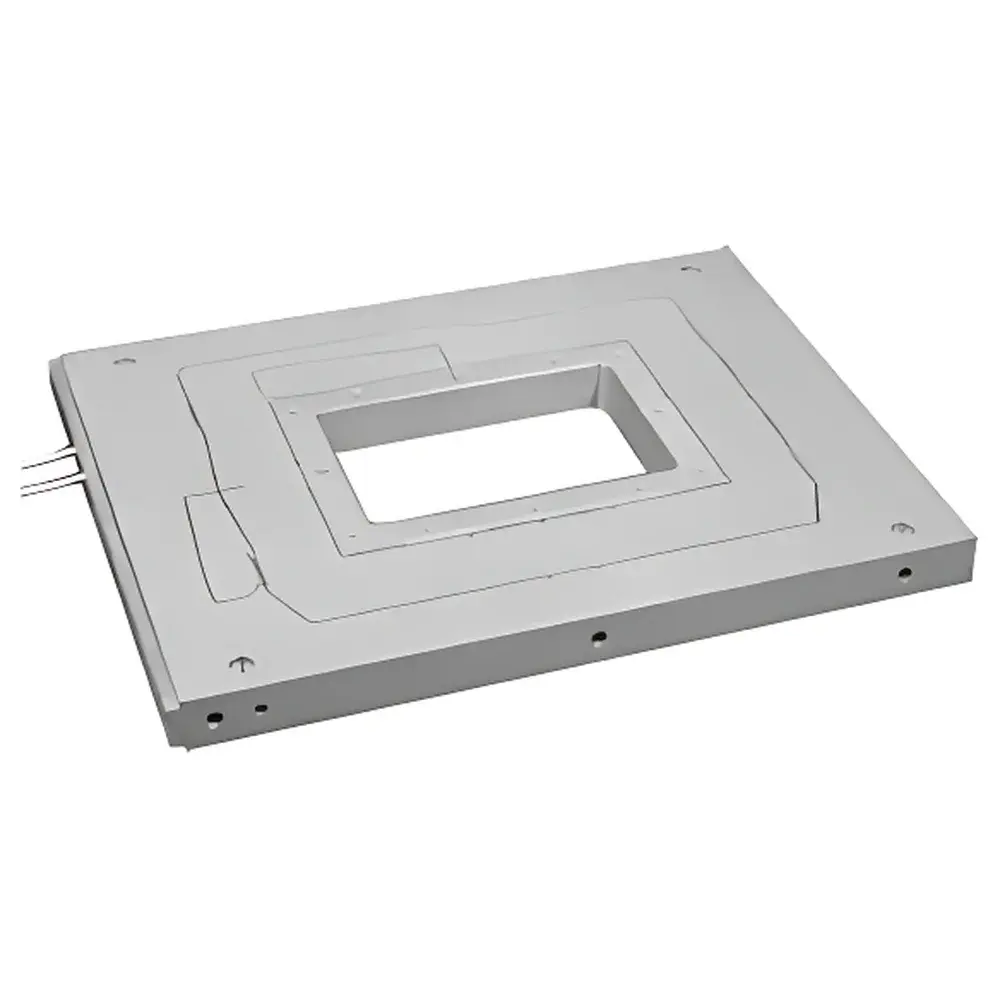
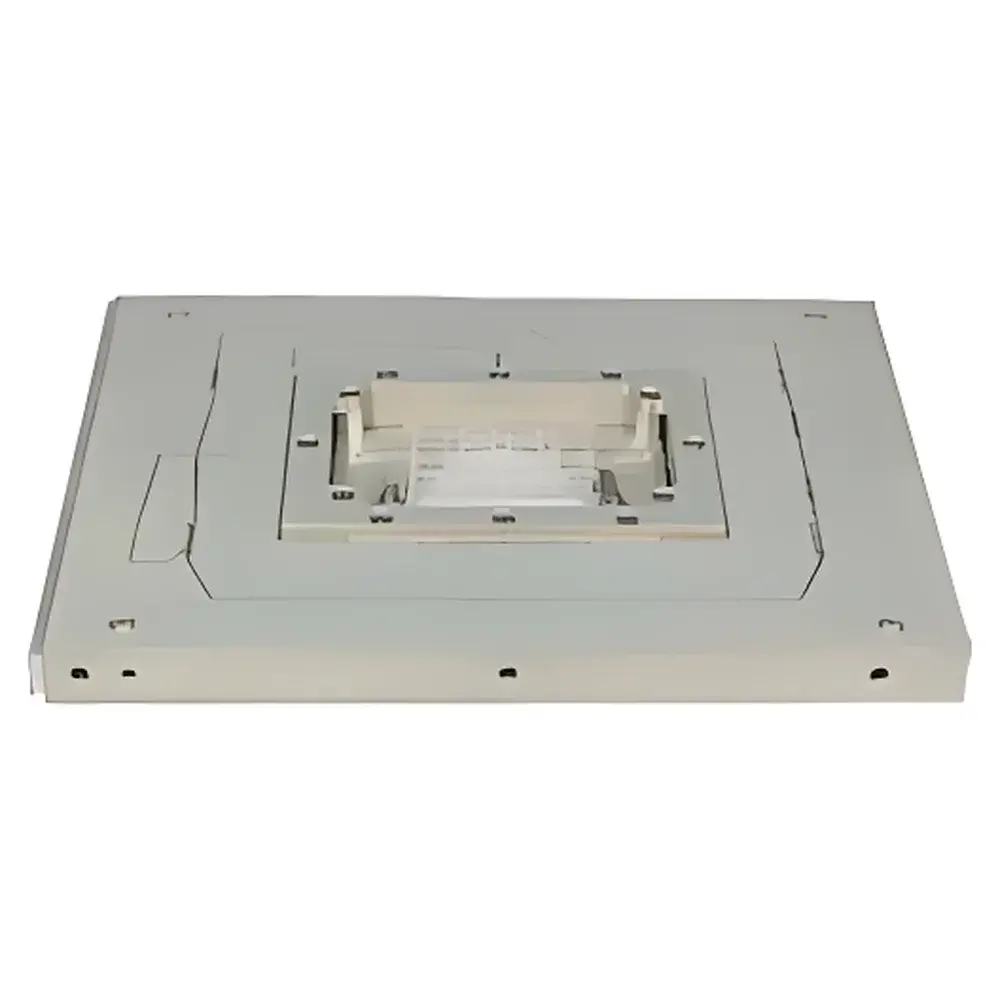
MCL Think Nano Nano-BioS Series Ultra-Low-Profile Dual-Axis Piezoelectric Translation Stage
| Brand | MCL Think Nano |
|---|---|
| Origin | USA |
| Model | Nano-BioS Series |
| Motion Range | 100 μm × 100 μm |
| Resolution | 0.2 nm / 0.4 nm / 0.6 nm |
| Closed-Loop Control | Yes |
| Body Material | Anodized Aluminum (standard), Invar or Titanium (optional for 100/200 μm models) |
| Stiffness | 1.0 N/μm |
| Roll/Pitch Angular Deviation | ≤1 μrad |
| Yaw Angular Deviation | ≤3 μrad |
| Max Horizontal Load | 0.5 kg |
| Max Vertical Load | 0.2 kg |
| Resonant Frequency (X) | 400 / 350 / 300 Hz ±20% |
| Resonant Frequency (Y) | 280 / 230 / 180 Hz ±20% |
| Controller | Nano-Drive® |
Overview
The MCL Think Nano Nano-BioS Series is an ultra-low-profile, dual-axis piezoelectric translation stage engineered for high-precision sample positioning in space-constrained optical and scanning instrumentation. Designed specifically for integration into inverted microscopes, atomic force microscopes (AFMs), super-resolution platforms, and optical tweezers systems, the Nano-BioS leverages proprietary PicoQ® closed-loop sensing technology to deliver absolute position feedback with picometer-level resolution and exceptional repeatability. Its monolithic, anodized aluminum architecture ensures mechanical stability and thermal robustness, while the large rectangular central aperture—optimized for standard 3-inch microscope slides and Lab-Tek chambered slides—enables unobstructed optical access and direct compatibility with re-entrant sample holders. Unlike traditional stepper- or servo-driven stages, the Nano-BioS operates on electroceramic actuation principles, eliminating backlash, hysteresis, and mechanical wear—critical for long-duration, drift-sensitive experiments such as time-lapse fluorescence imaging or nanolithography alignment.
Key Features
- Ultra-low profile design: Minimal Z-height enables seamless retrofitting into inverted microscope stands and compact AFM heads without optical path interference.
- Three standard travel ranges: Nano-BioS100 (100 μm × 100 μm), Nano-BioS200 (200 μm × 200 μm), and Nano-BioS300 (300 μm × 300 μm), each calibrated for consistent linearity and minimal crosstalk.
- PicoQ® integrated capacitive position sensors provide real-time, absolute displacement measurement with sub-nanometer resolution (0.2–0.6 nm depending on model) and <0.01% full-scale nonlinearity.
- High mechanical stiffness (1.0 N/μm) and angular stability (roll/pitch ≤1 μrad, yaw ≤3 μrad) ensure minimal parasitic motion during high-magnification imaging or force spectroscopy.
- Material options include anodized aluminum (standard), low-expansion Invar, or titanium—selected based on thermal drift requirements and load conditions.
- Compatible with MCL’s Nano-Drive® controller, supporting analog voltage input (±10 V), digital USB/Ethernet communication, and programmable waveform generation for scanning protocols.
Sample Compatibility & Compliance
The Nano-BioS Series accommodates standard biological sample formats—including 75 mm × 25 mm glass slides, Lab-Tek II chambered coverslips, and custom re-entrant holders—via its 30 mm × 30 mm central aperture. The stage’s horizontal and vertical load ratings (0.5 kg and 0.2 kg respectively) are validated per ISO 20957-4 for laboratory equipment safety under static and dynamic operational conditions. While not certified for medical device use, its construction adheres to RoHS-compliant materials standards and supports GLP-compliant experimental workflows when paired with Nano-Drive®’s audit-trail-enabled firmware (supporting timestamped position logging and user-access control). The system meets electromagnetic compatibility requirements per FCC Part 15 Class B and CE EN 61326-1 for laboratory environments.
Software & Data Management
The Nano-BioS integrates natively with MCL’s Nano-Drive® software suite, which provides GUI-based stage control, multi-axis trajectory programming (raster, spiral, Lissajous), and real-time position monitoring with data export to CSV or HDF5. API support includes Python (via PyNanoDrive), MATLAB Instrument Control Toolbox, and LabVIEW drivers—enabling synchronization with third-party acquisition systems (e.g., Andor SDK, Nikon NIS-Elements, Bruker NanoScope). All position commands and sensor feedback are timestamped with microsecond precision; optional firmware upgrades enable 21 CFR Part 11-compliant electronic signatures and audit trails for regulated QC/QA applications. Firmware updates are delivered via secure HTTPS and validated using SHA-256 checksums.
Applications
- Super-resolution microscopy (STORM, PALM, STED): Sub-pixel sample repositioning for multi-field mosaic acquisition and drift correction.
- Closed-loop AFM scanning: High-bandwidth XY actuation synchronized with Z-feedback for true three-dimensional surface mapping.
- Optical tweezers calibration and trap array reconfiguration: Nanometer-accurate particle manipulation across extended fields of view.
- Nanolithography alignment: Registration of mask-to-wafer or multi-layer resist exposures requiring <5 nm overlay tolerance.
- Fluorescence correlation spectroscopy (FCS) and single-molecule tracking: Stable, vibration-isolated positioning for prolonged dwell-time measurements.
- Automated slide scanning in digital pathology: Integration with motorized microscope stages for tiled whole-slide imaging at 20×–63× magnifications.
FAQ
What distinguishes the Nano-BioS from the original Nano-Bio Series?
The Nano-BioS introduces enhanced PicoQ® sensor integration, improved angular stability specifications (≤1 μrad roll/pitch), and expanded material options (Invar/Titanium), while retaining identical form factor and aperture geometry.
Can the Nano-BioS be used in vacuum environments?
Standard models are rated for ambient air operation only; vacuum-compatible variants (with outgassing-tested adhesives and ceramic-coated actuators) are available upon engineering consultation.
Is Z-axis motion supported?
No—the Nano-BioS is strictly XY. For three-axis functionality including focus control, the Nano-LPS Series offers identical footprint with integrated Z-piezo and matched aperture design.
How is thermal drift compensated during long acquisitions?
While the aluminum body exhibits ~23 ppm/K expansion, the closed-loop PicoQ® sensors continuously correct for thermally induced offset; for sub-100 pm stability over >1 hour, Invar-body models are recommended.
Does the Nano-Drive® controller support trigger synchronization with camera acquisition?
Yes—hardware TTL triggers (input/output) are provided for frame-accurate coordination with sCMOS or EMCCD cameras, including start-of-exposure and end-of-integration signaling.





