
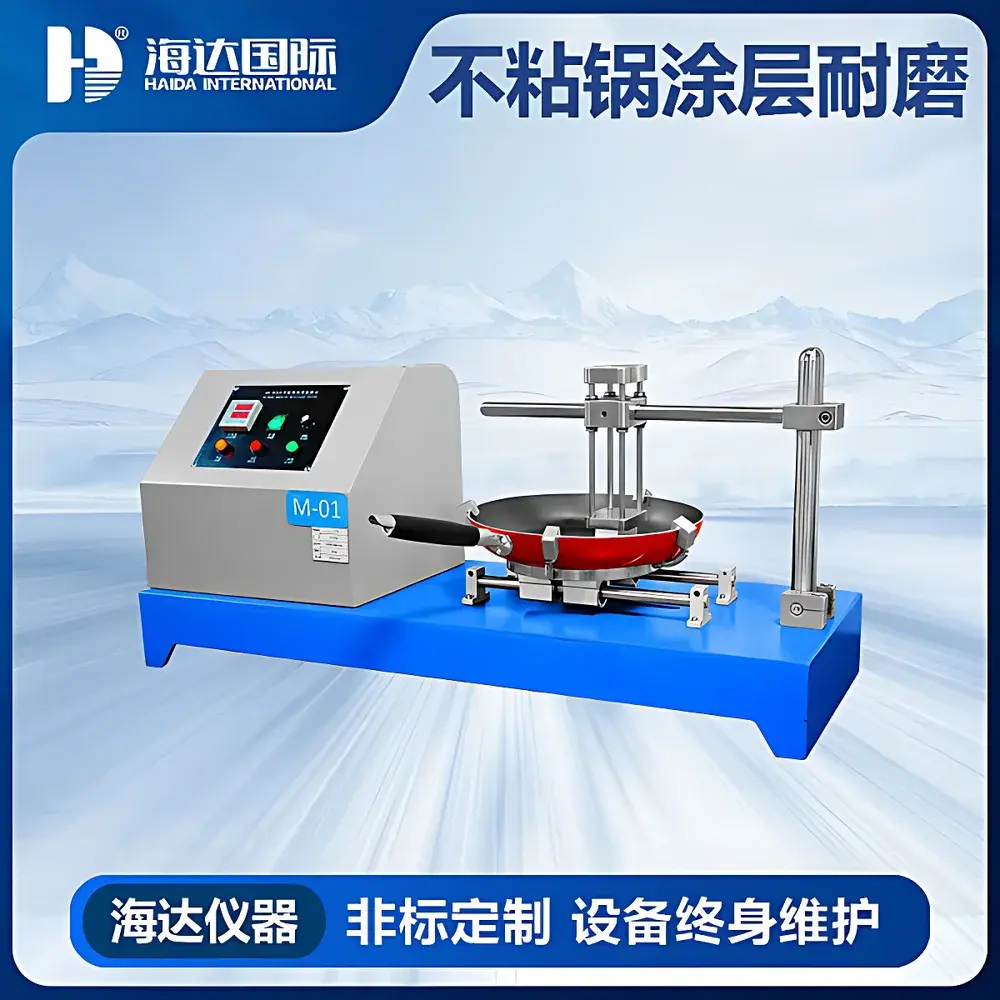
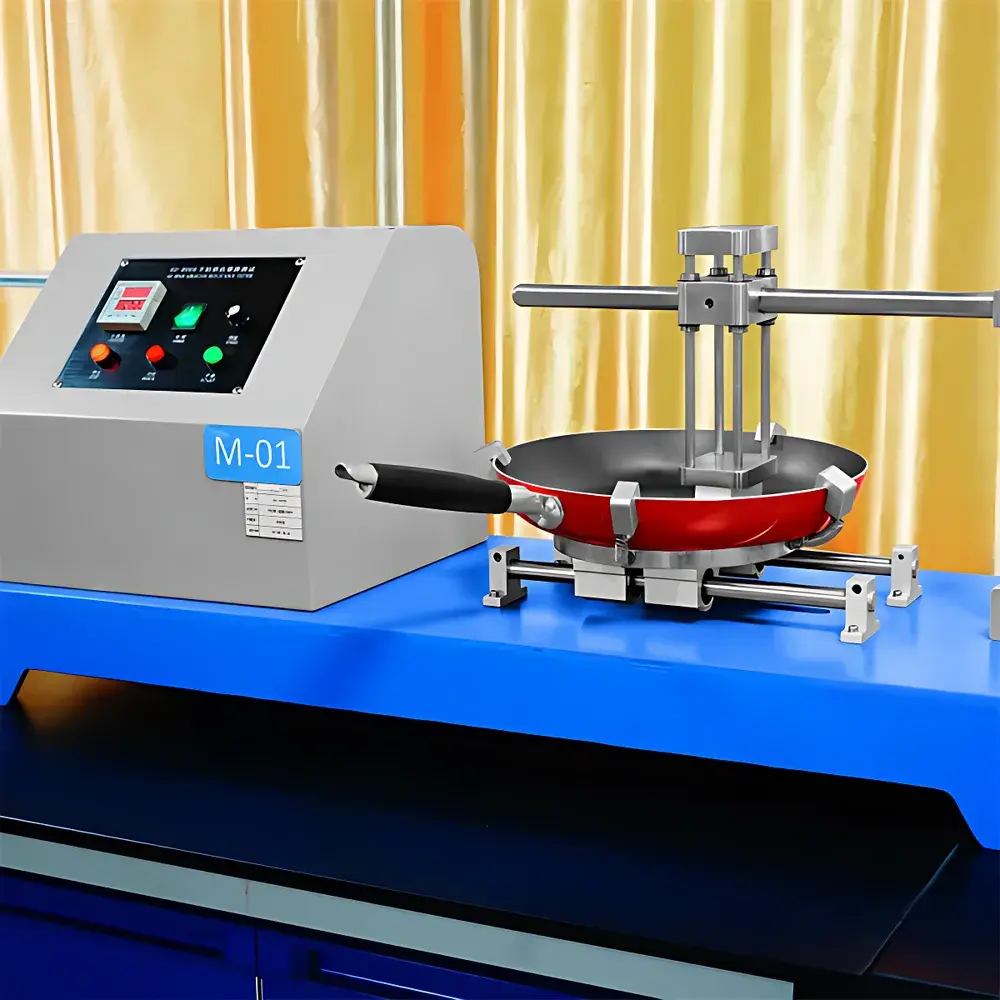
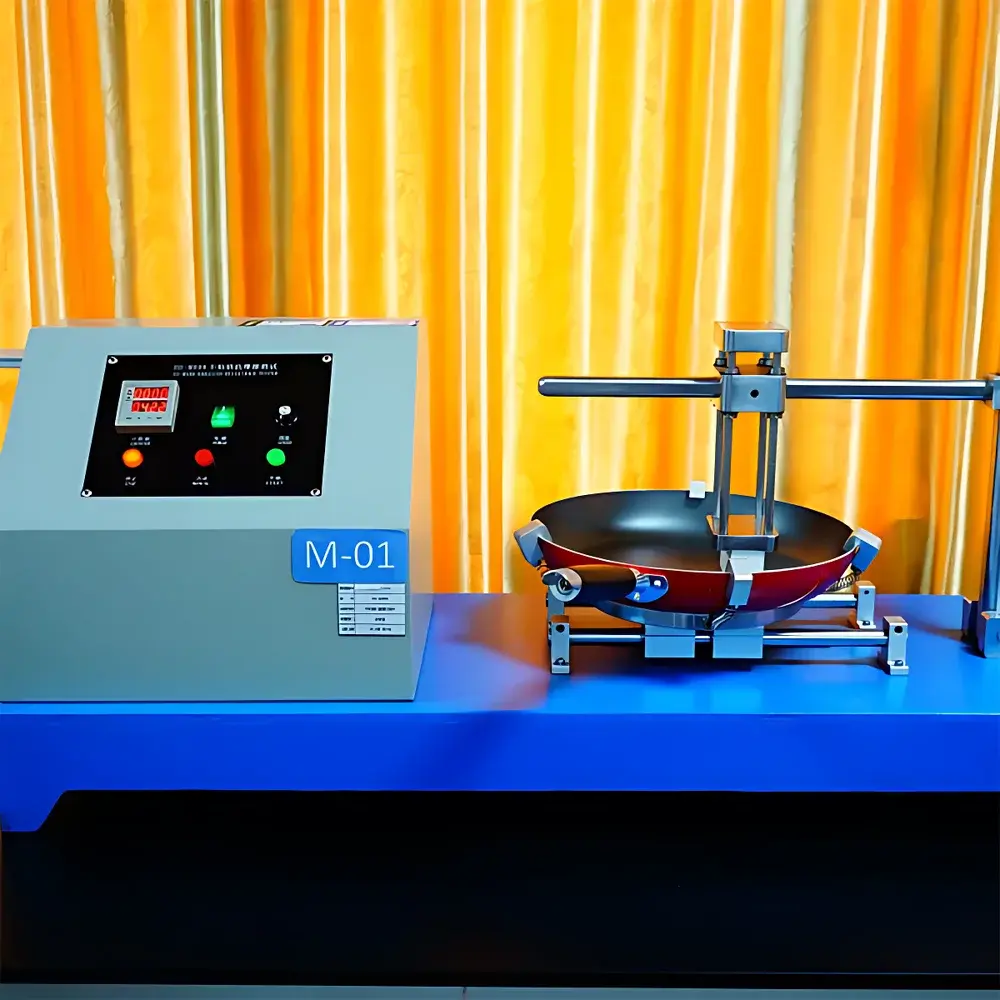
HAIDA HD-M008 Non-Stick Cookware Abrasion Resistance Tester
| Brand | HAIDA INTERNATIONAL |
|---|---|
| Origin | Guangdong, China |
| Manufacturer Type | Direct Manufacturer |
| Product Origin | Domestic (China) |
| Model | HAIDA HD-M008 Non-Stick Cookware Abrasion Resistance Tester |
| Quotation | Available Upon Request |
| Applied Standard | BS 7069-1:1988 (Clause A.1) |
| Normal Load | 15 N ± 0.2 N |
| Abrader Block Dimensions | 70 mm ± 5 mm (L) × 30 mm ± 5 mm (W) |
| Stroke Length | 100 mm |
| Test Speed | 6.5 m/min ± 0.2 m/min |
| Cycle Count Range | 1–999,999 cycles (user-programmable) |
| Max Sample Size | 200 mm × 200 mm × 300 mm (L×W×H) |
| Min Sample Size | 150 mm × 150 mm × 100 mm (L×W×H) |
| Overall Dimensions | Approx. 1000 mm × 400 mm × 500 mm (L×W×H) |
| Weight | Approx. 500 kg |
| Power Supply | 1Ø AC 220 V, 50/60 Hz |
| Motor Rating | 90 W adjustable-speed motor |
| Total Power Consumption | ~200 W |
Overview
The HAIDA HD-M008 Non-Stick Cookware Abrasion Resistance Tester is a precision-engineered mechanical endurance testing instrument designed specifically for evaluating the long-term abrasion resistance of fluoropolymer-based non-stick coatings applied to domestic and commercial cookware. Operating on the principle of controlled reciprocating linear motion under defined normal load and velocity, the system subjects coated substrates to standardized cyclic frictional stress—mimicking real-world usage conditions such as repeated utensil contact, cleaning actions, and thermal cycling-induced surface fatigue. The tester complies with BS 7069-1:1988 (Clause A.1), a widely recognized specification for the assessment of coating durability in kitchenware applications. Its robust architecture ensures high repeatability across multiple test runs, making it suitable for quality control laboratories, R&D departments, and third-party certification bodies engaged in material performance validation under ISO/IEC 17025-accredited environments.
Key Features
- Dual high-precision linear guide rails ensure stable, low-friction reciprocating motion with minimal lateral deviation and consistent stroke repeatability over extended cycle durations.
- Structural frame, electrical enclosure, and pressure plate are fabricated from solid-grade structural steel; components undergo CNC bending, laser cutting, and MIG welding followed by powder-coated finish in HAIDA’s signature gloss-white and metallic-blue dual-tone scheme for corrosion resistance and visual traceability.
- Adjustable-speed 90 W brushless DC motor delivers precise velocity control at 6.5 m/min ± 0.2 m/min, maintaining constant kinetic energy input throughout the test sequence.
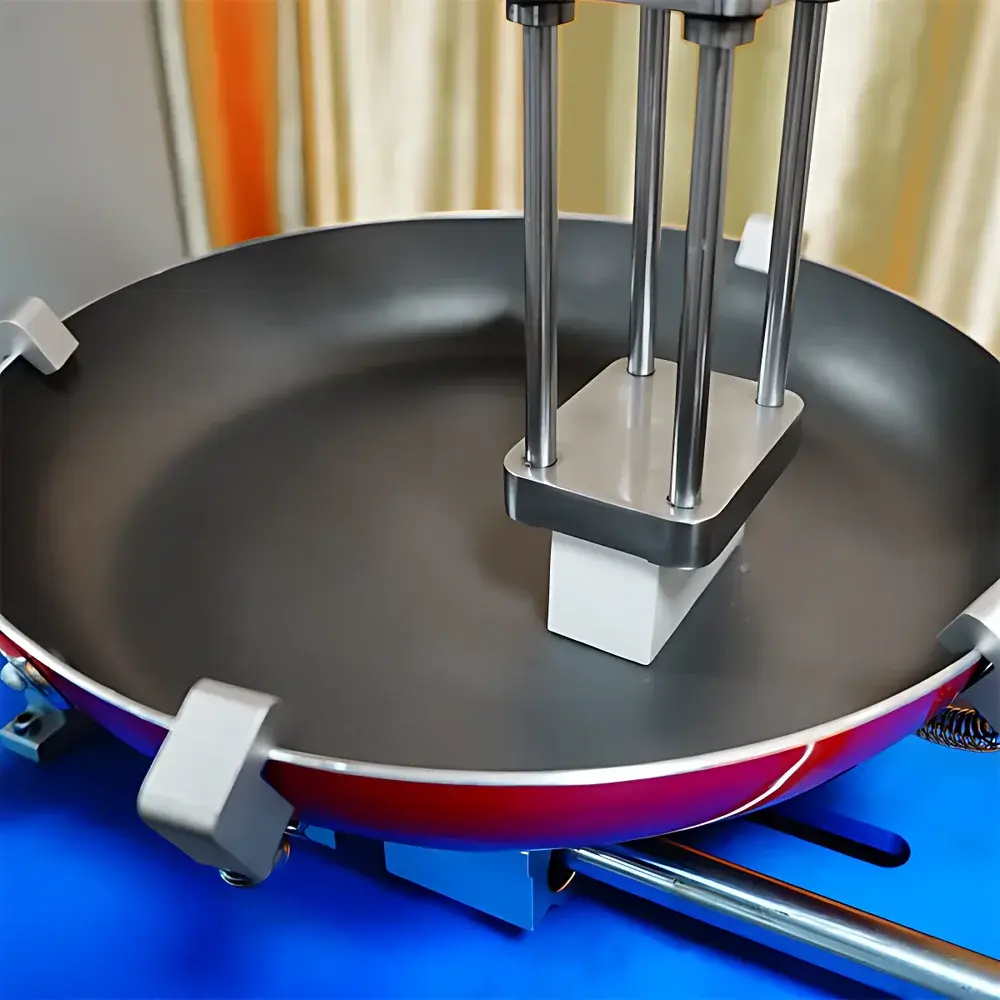
- Calibrated loading mechanism applies a rigorously maintained normal force of 15 N ± 0.2 N via a certified stainless-steel abrader block (70 mm × 30 mm footprint), ensuring uniform contact pressure distribution across the test surface.
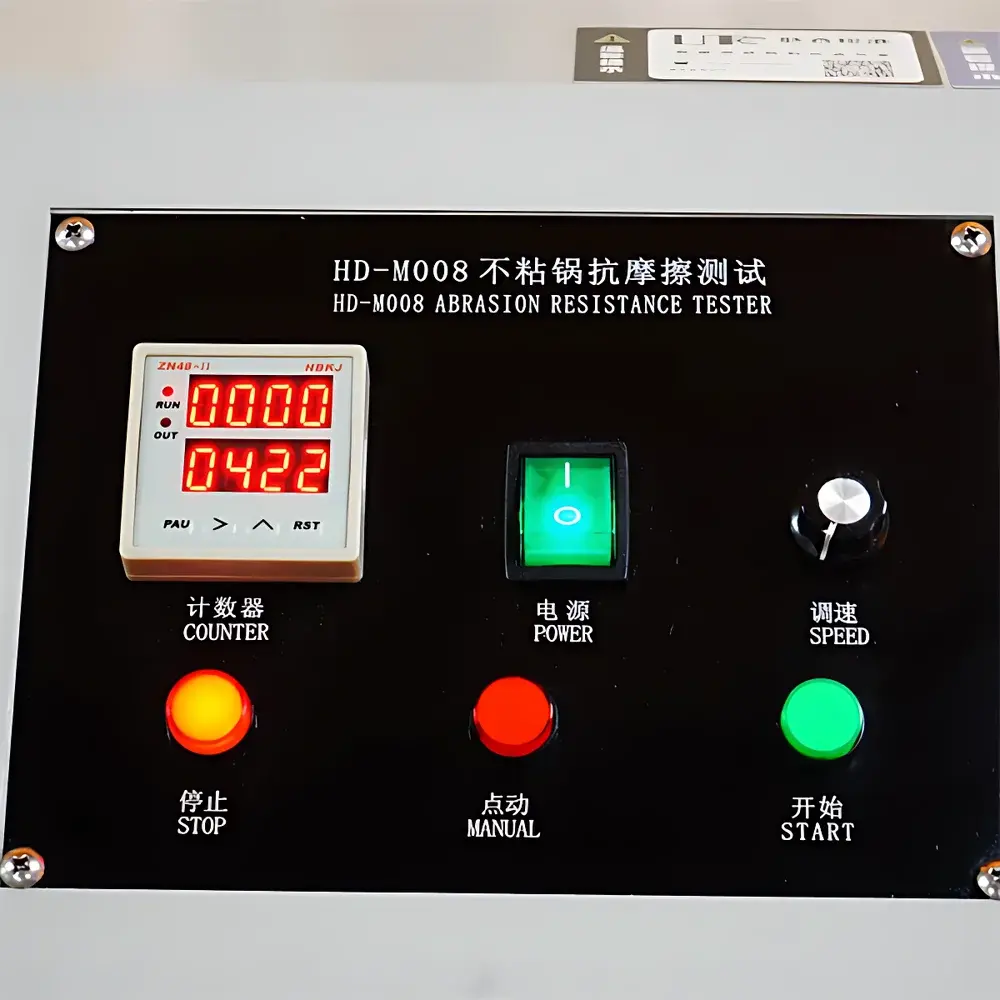
- Microprocessor-based controller supports programmable cycle counts from 1 to 999,999 with automatic stop-on-completion functionality, integrated digital counter with non-volatile memory retention, and real-time status indication.
Sample Compatibility & Compliance
The HD-M008 accommodates flat or gently curved cookware specimens within dimensional limits of 150–200 mm (L) × 150–200 mm (W) × 100–300 mm (H), enabling evaluation of both full-size pans and representative coupon samples. It supports standard substrate materials including aluminum alloy, stainless steel, and cast iron with PTFE, PFA, FEP, or ceramic-reinforced coatings. The instrument is engineered to support compliance workflows aligned with BS 7069-1:1988, and its operational parameters are compatible with supplementary assessments referenced in ASTM D4060 (Taber Abraser equivalence mapping), ISO 20344 (personal protective equipment abrasion), and internal OEM durability protocols. All mechanical calibrations are traceable to national metrology institutes, and documentation includes factory calibration certificates compliant with ISO 9001:2015 requirements.
Software & Data Management
While the HD-M008 operates via embedded firmware without external PC dependency, it features RS-232 serial interface for optional integration into laboratory information management systems (LIMS) or custom data acquisition platforms. Cycle count logs, runtime timestamps, and fault codes can be exported in ASCII format for audit trail generation. For regulated environments—including those operating under FDA 21 CFR Part 11 or EU Annex 11 guidelines—the device supports manual record-keeping per GLP/GMP principles, with built-in counters meeting ALCOA+ data integrity criteria when used with controlled documentation practices. Optional firmware upgrades may introduce USB logging capability and password-protected parameter locking for multi-user facilities.
Applications
- Quantitative benchmarking of non-stick coating formulations during polymer development and supplier qualification.
- Pre-shipment quality verification for cookware manufacturers adhering to EN 12985, GB/T 32095, or proprietary brand durability thresholds.
- Failure mode analysis following accelerated wear testing—correlating abrasion cycles to coating delamination onset, gloss loss, or adhesion degradation measured via cross-cut tape test (ASTM D3359).
- Supporting technical documentation for CE marking, CCC certification, and export compliance dossiers requiring mechanical durability evidence.
- Academic research into tribological behavior of low-surface-energy coatings under humid, thermally cycled, or detergent-exposed conditions.
FAQ
What standards does the HD-M008 directly reference?
The instrument is configured and validated against BS 7069-1:1988 Clause A.1, which specifies methodology for assessing abrasion resistance of non-stick coatings using linear reciprocating motion.
Can the test load be adjusted beyond 15 N?
No—the mechanical loading system is fixed at 15 N ± 0.2 N to maintain strict conformance with BS 7069-1. Custom configurations require formal engineering review and recalibration certification.
Is sample clamping automated or manual?
Clamping is manually executed using an ergonomic lever-actuated vise system with micrometer-adjusted parallelism control to ensure uniform substrate alignment prior to test initiation.
Does the unit include calibration tools or certificates?
Yes—each shipment includes a factory-issued calibration certificate traceable to CNAS-accredited standards, along with torque wrenches, load verification weights, and stroke verification gauges.
What maintenance intervals are recommended?
Linear rail lubrication every 500 hours of operation; motor brush inspection every 2,000 hours; annual verification of load cell linearity and encoder resolution by authorized service personnel.



